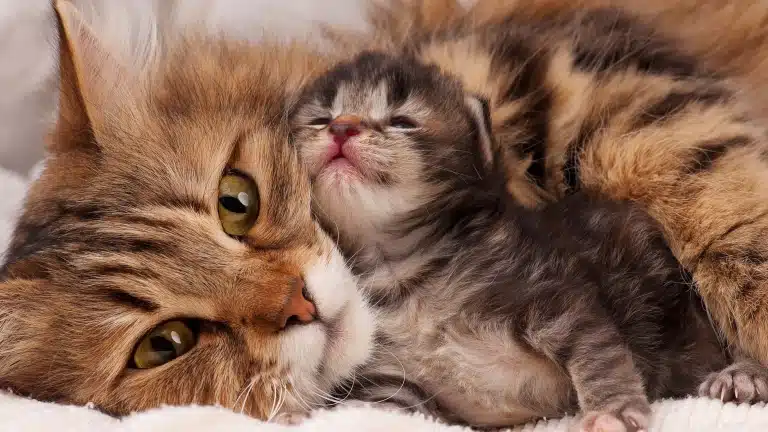
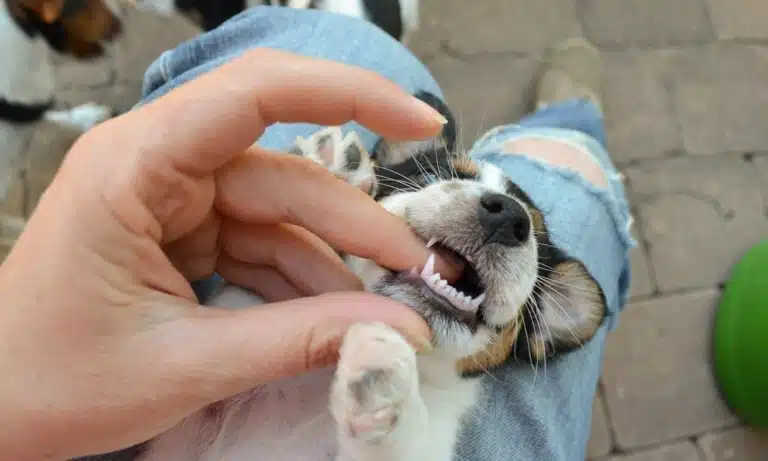
Just born babies, kittens and puppies, as well as all other newborn mammals have only temporary teeth. It is inherent in nature that all animal species of the mammal group have temporary milk teeth after birth. For the first weeks, babies are fed only with mother’s milk, four-legged babies are all the time with their mother, under her reliable wing and care. Good owners are also worried about the mother, because the birth mother is quite frightened and shocked after the stress she has undergone, especially if it was the first time. The health, well-being and mood of the mother always affects the health of the babies, so it is important to take care of her. Loving owners will always take care of the mother’s diet, never forget to change the water to clean water, and treat her to a tasty treat. Time passes quickly, women in labor feed kittens and puppies with breast milk, and in a few weeks the baby grows up and can be safely transferred to “adult food”.
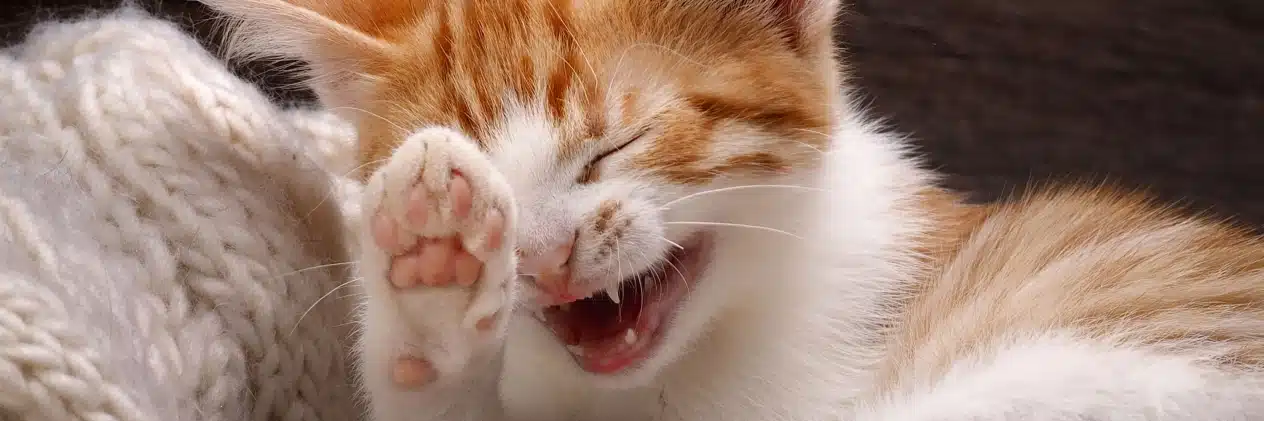
Four-legged babies, kittens and puppies, are born with no teeth at all. Day by day the cubs develop, grow up and gradually the first milk teeth begin to appear. Baby teeth are the teeth of newborn mammals that have a soft base and no root. They begin to erupt in babies during the first few weeks, from about 3 to 5 weeks of age. In different groups of mammals, the teething process can vary by a few days. Usually this process does not cause much discomfort or pain for the baby, of course the teething area is itchy, but kittens and puppies scratch their gums when sucking milk and this makes it easier for them to tolerate the scratching. In puppies this process is more difficult, so it is important to provide special toys and chew bones during this period. After 5 weeks of age, owners often introduce kittens and puppies to “fodder”, but it is important to realize that the teeth are soft and fodder should be chosen carefully.
Milk teeth of kittens and puppies
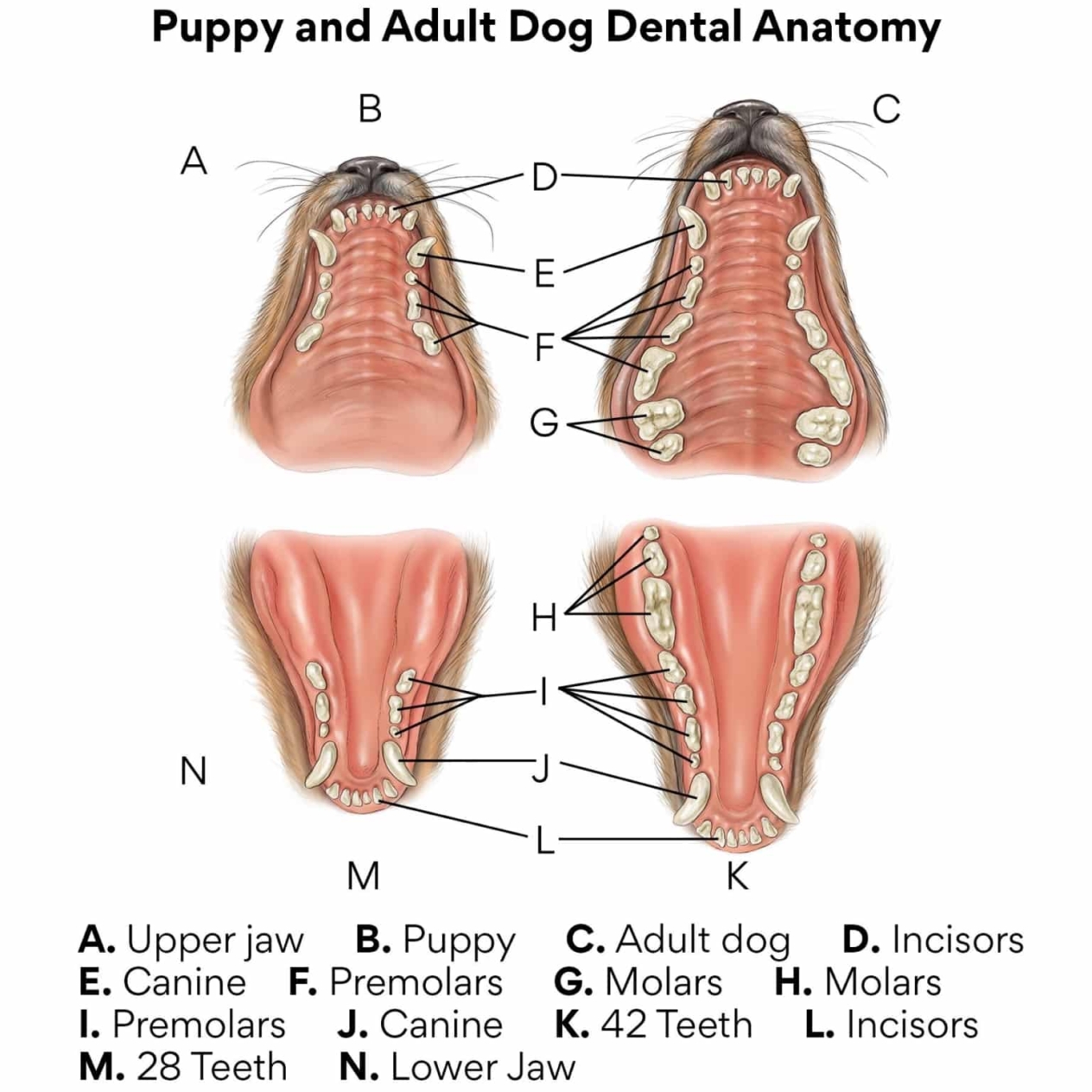
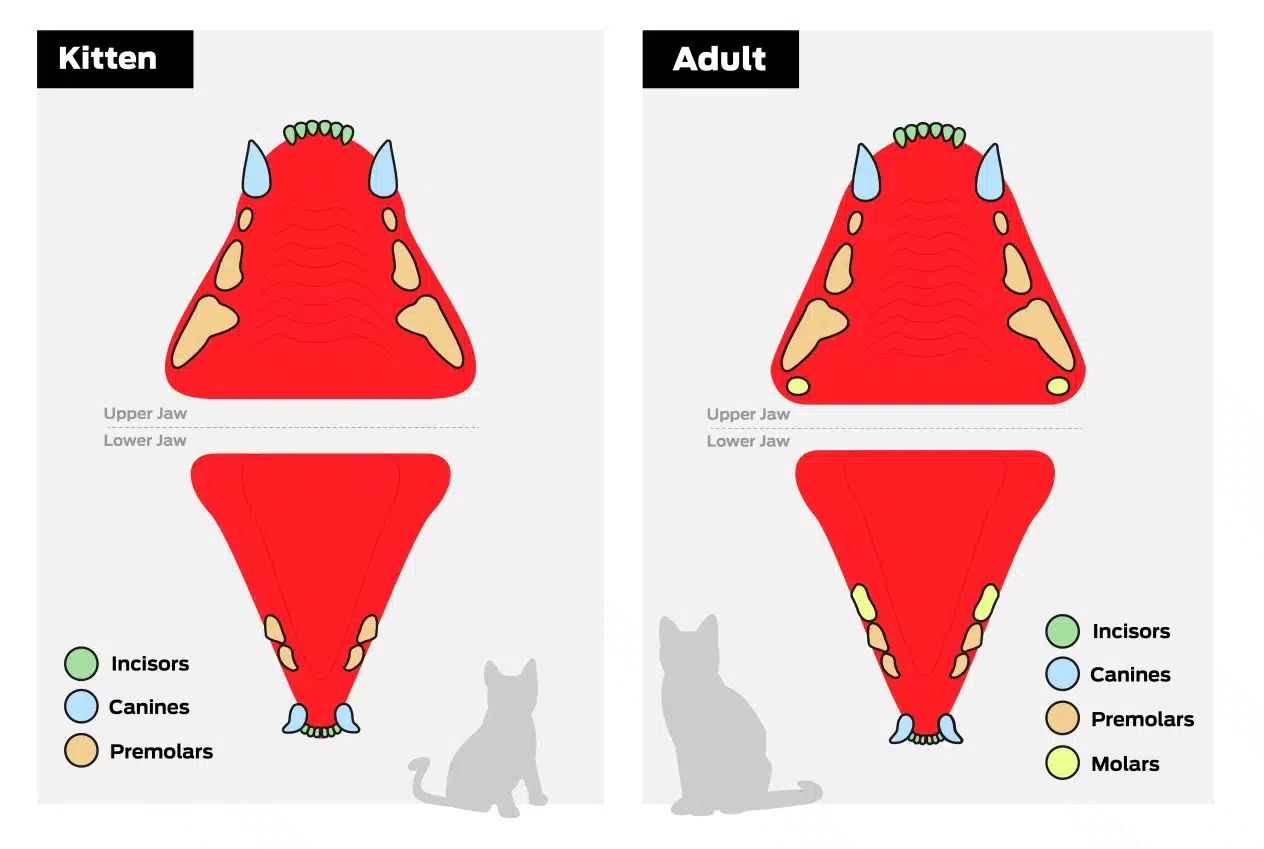
Now we will look at the difference in the appearance of milk teeth in kittens and puppies. For example, in kittens, milk teeth erupt on day 13-14 and a total of 26 milk teeth grow in a kitten’s mouth. These 26 milk teeth include – 12 incisors, 4 canines and 10 premolars. Regarding the incisors, the 12 incisors are always in the front, 6 each on the upper and lower jaw. Kitties have and 4 canines, 2 on each jaw, they are oblong and sharp shaped. Kittens also have 10 premolars, which are small angular teeth. Babies have 6 premolars on the upper jaw and only 4 on the lower jaw. Root molars will appear later in adulthood. It takes 2 months for a row of milk teeth to form in kittens and this applies to all breeds of cats.
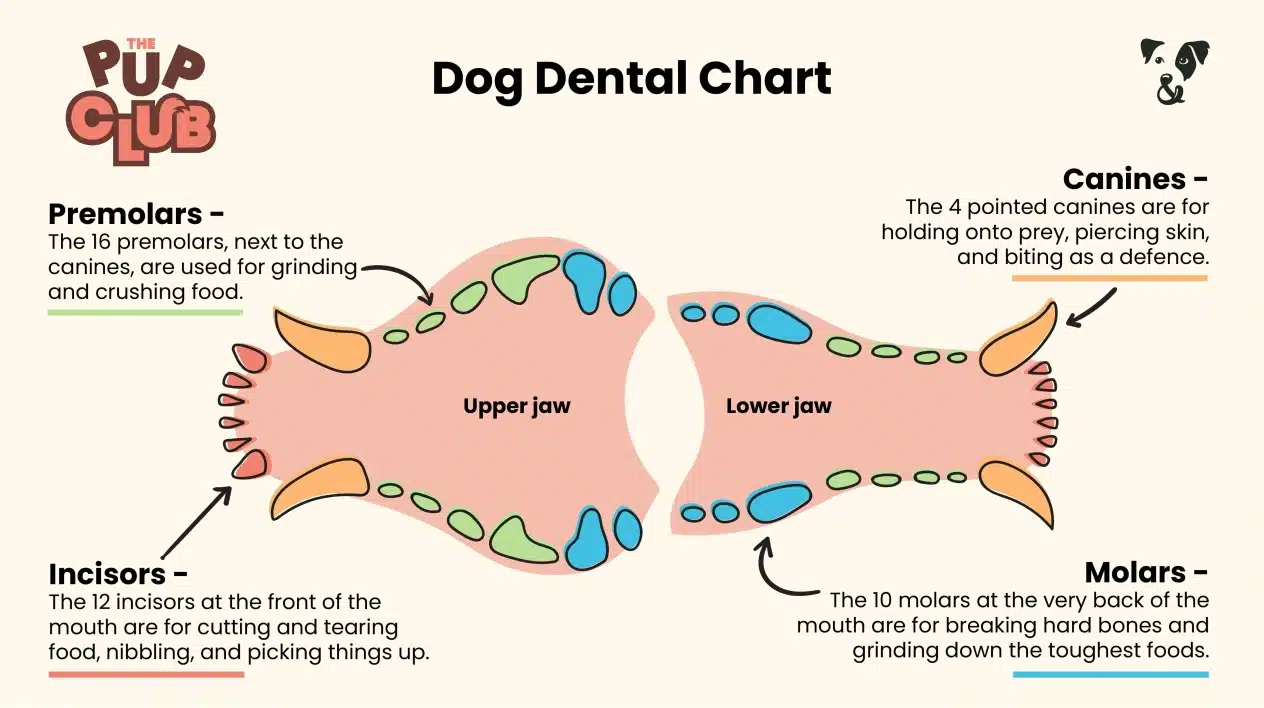
In puppies, teeth erupt on 14-21 days and are fully formed by 8 weeks. Puppies have a total of 32 teeth in their mouths, but 28 milk teeth are the first to erupt. The incisors and canines are the first to appear, followed later by the premolars. Of these 28 milk teeth, there are 12 incisors, 4 canines, and 12 premolars. Unlike kittens, puppies have a longer tooth formation process, which lasts up to 2.5 months. The incisors appear first and in the future, when they are permanent, they will serve to capture food. And canines, which are concentrated on the sides of the incisors in the future will serve the adult dog for tearing food. The angular ones are behind the canines for chewing food. Molars will also appear in a permanent bite, which will not yet be present until week 8.
Types of teeth
Babies have two sets of teeth each: milk (temporary) and permanent (adult) teeth. The milk teeth always erupt at an early age in animals and then change to permanent teeth. However, the types of teeth in puppies and kittens are the same.
Theincisors are small teeth that are located at the front of the jaw. They are located in the upper and lower jaws in kittens and puppies. In puppies, they will be stronger and wider. Their purpose is to grasp food.
Fangs are sharp, oblong-shaped teeth. Fangs are located in the upper and lower jaws on both sides of the quadrupeds. Unlike cats, they will be stronger and larger in dogs. Their purpose is to hold and pierce prey.
Small molars – located between the canines and the molars. In cats, 6 small molars are located in the upper jaw and 4 in the lower jaw. Puppies have 6 each on the upper and lower jaws. Adult dogs can have different numbers of molars – it depends on the breed. In animals, these teeth are used for chewing food.
Corner teeth – their location is the back of the mouth in the upper and lower jaws, they are molars and are designed to grind food.
The main problems that can arise in babies when changing their dentition
When changing dentition in small animals, it is impossible to avoid difficulties and problems. Just like a small infant, a child born to a mother, a dog or cat mom’s infant can be capricious and misunderstandable when teething and changing dentition. The main thing here is to notice the problem in time:
- The milk tooth does not have time to fall out.
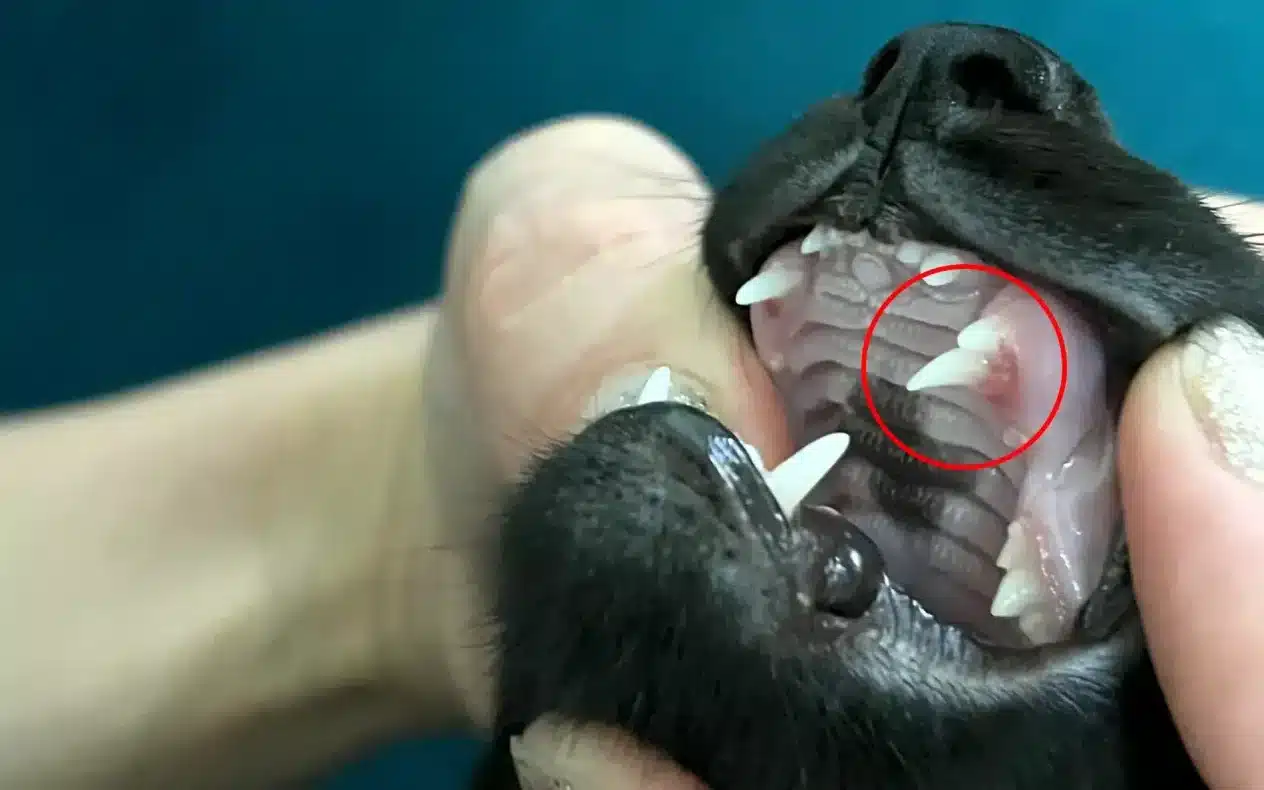
When a milk tooth does not have time to fall out, a root tooth can grow next to it. This happens most often with canines and the situation requires immediate extraction of the baby tooth. Contacting a specialist is a must.
- Chipped baby tooth.
The teeth of little Fluffy are quite fragile, it is forbidden to give the baby too dry and too hard food, even if the period of “complementary feeding” has already begun . The baby can break a tooth, and bacteria can get into the open pulp and it is quite dangerous.
- Growth of extra incisors.
During the period of tooth replacement, an excessive number of incisors often grows, which is uncomfortable for the pet, just as it is uncomfortable for the pet to have delayed tooth growth or missing molars.
- Bleeding and inflammation.
Bleeding and inflammation of the teeth of little Ponytails is a natural process that they often cannot avoid. Unfortunately, owners when teeth change and bleed a lot cannot provide the mandatory help, because they are not qualified specialists. The bleeding is stopped by specialists and medical drugs as prescribed.
In the above cases, it is important to contact a veterinarian immediately and not to self-medicate. There is always a risk of bacterial contamination in small and large bleedings and remember regular gum hygiene.

How to help and cheer up your Pet
The first thing a caring owner should do is take a small puppy or kitten to the veterinary clinic. It is possible to support Tail at the clinic and not leave him, and after bringing him home, devote some time to him. While at the clinic, you can purchase a “chew” or soft rubber toy that will not traumatize the baby’s gums and teeth. Select the appropriate food for the needs and preferably take one that will support the hygiene of the animal’s mouth. During this difficult period, the owner can give the kitten or puppy more time by playing with it or just walking outside.
Taking care of the health of your four-legged babies will help to avoid complications and ensure their comfortable development. Changing the dentition of four-legged animals is a natural and important process that cannot be avoided and always requires a lot of attention from the owner to the behavior and health of their Pets. In most cases, the change of dentition goes without problems, but it is important to monitor the condition of the teeth and gums during this period to prevent possible complications. Slight salivation, the desire to chew objects and short-term discomfort are normal manifestations of this process. At the same time, if there are any doubts and suspicions, large and abundant bleeding, or if you see that you can not cope with the infection and do not know what is the best way to disinfect, the best option is to contact a qualified specialist. Proper care, a balanced diet, and regular checkups will help ensure the healthy development of the permanent dentition and the overall well-being of your pet.