
Monitoring heart rate can help you spot signs of illness, overload or dehydration in time. There are many reasons to do this: in the case of cardiovascular or infectious diseases, during training or competition with your dog, after active walks, in hot weather to prevent heat stroke, or in cold weather when the body uses more energy to heat itself. Even at home, when your pet seems lethargic or overexcited, taking a pulse will help you know if there is cause for concern.
How to properly take your dog’s pulse
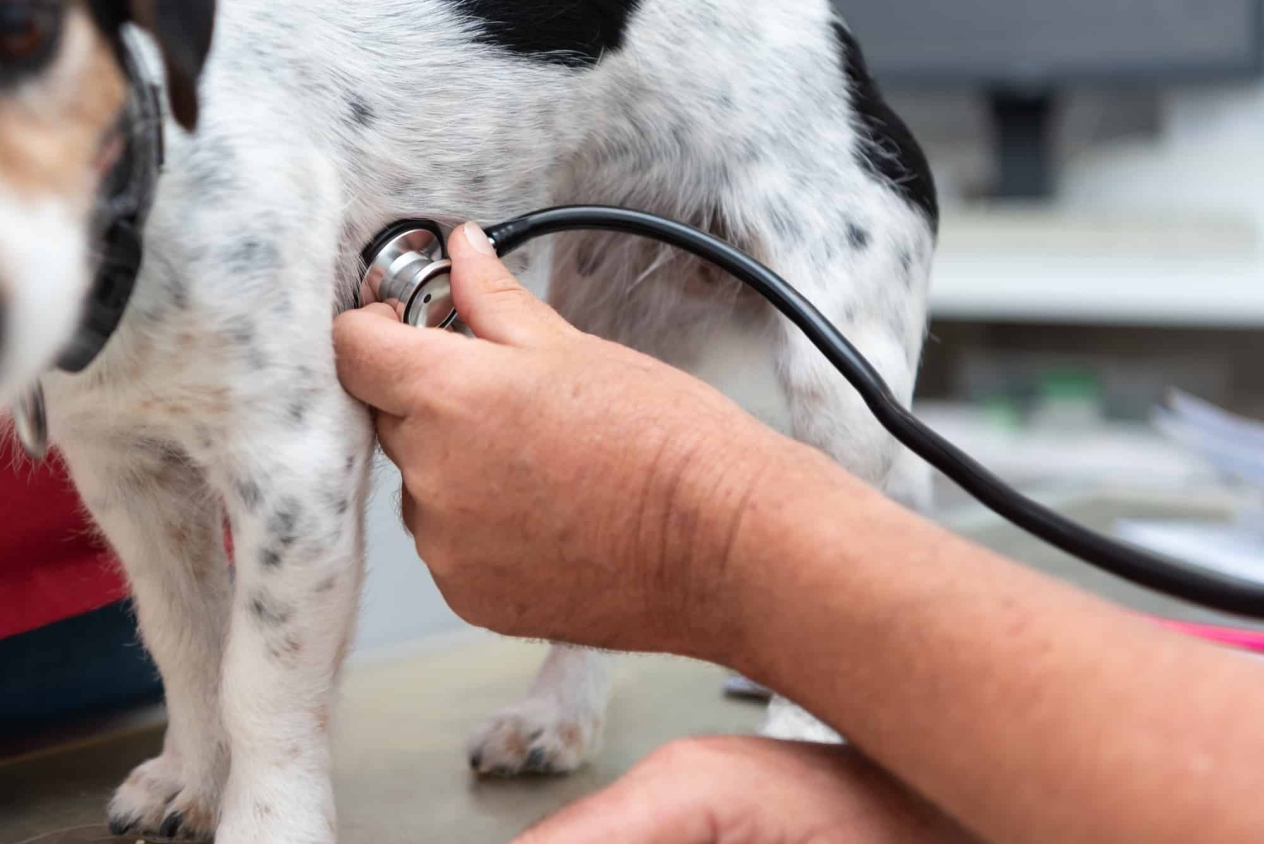
To measure the pulse, you need peace of mind and a few minutes of time. It is most convenient to do this when the dog is relaxed and lying down or standing quietly. A dog’s pulse is best felt on the femoral artery, which runs on the inside of the back leg, about midway between the groin and the knee. Gently place two or three fingers (but not your thumb, as it has its own pulsation) on this area and press lightly until you feel rhythmic beats.
Use a stopwatch or timer on your phone to count. The most accurate way is to count your heartbeats for 15 seconds and then multiply the resulting number by 4. This will give the number of beats per minute. An adult healthy dog’s resting heart rate is usually 60-120 beats per minute, and up to 160 in puppies. If the heart rate is significantly higher or lower than normal, repeat the measurement again after a few minutes, and if the result deviates again, contact your veterinarian.
It is important to take into account that after physical exertion or stress, the pulse accelerates, so measurements to check the health are better to be carried out at rest, when the animal is not worried and does not move actively.
Conclusion
Regular heart rate monitoring is an easy way to take care of your dog’s health and notice changes in his condition in time. We are responsible for those we have tamed, so take care of our pet’s hearts, because no one will do it better than us, the ones who love them most.