
There is a persistent myth: big dogs are the dangerous ones. In fact, in household statistics and in the daily practice of veterinarians, cynologists and groomers, small dogs bite much more often. It’s just not talked about out loud because the consequences of such bites don’t usually make the news. The reason is not because of breeds or “bad temperament” but because of the way people treat small animals.
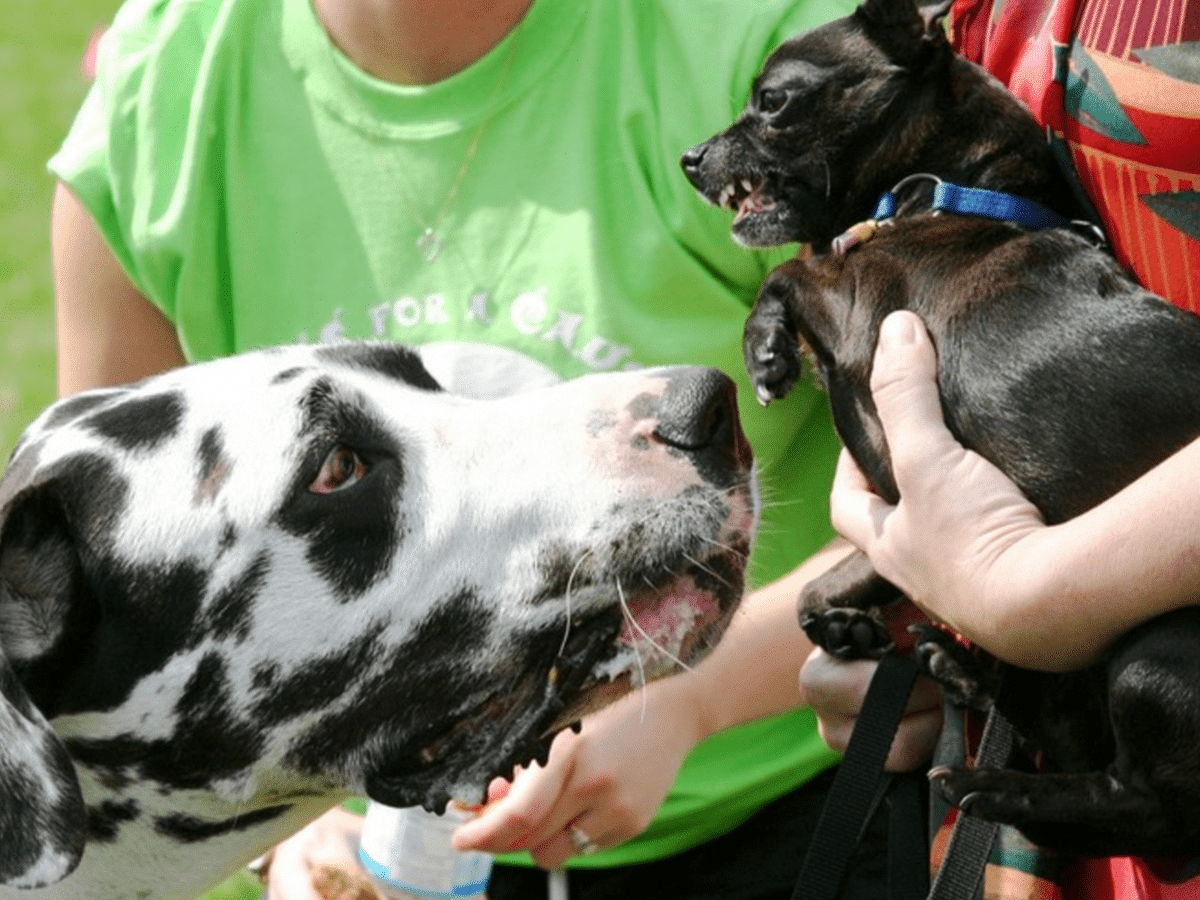
Small dogs are not taken seriously – and that’s a major mistake
A big dog is usually respected: they don’t climb on it without permission, they don’t grab it suddenly, they don’t squeeze it with their bodies. A small one is automatically perceived as a toy. It is picked up without warning, hugged, pressed, give children to “play”, not paying attention to the signals of stress. Growling, turning her head away, tensing her body are ignored because “come on she’s little”. At a certain point, the dog does the only thing left to do – bite to finally be heard.
Small dogs live in a constant state of threat
The world for a small dog is a chaos of big feet, loud noises, and sudden movements. What is neutral to a large dog looks like danger to a small dog. When you add to this the lack of socialization, “hands on” walks, a life without clear rules and boundaries, the nervous system is constantly under stress. In such a state, a bite is a defensive reaction, not aggression. This is why decorative breeds, in particular the Chihuahua or Yorkshire Terrier, often show sharp reactions if they have not been taught to trust the environment.
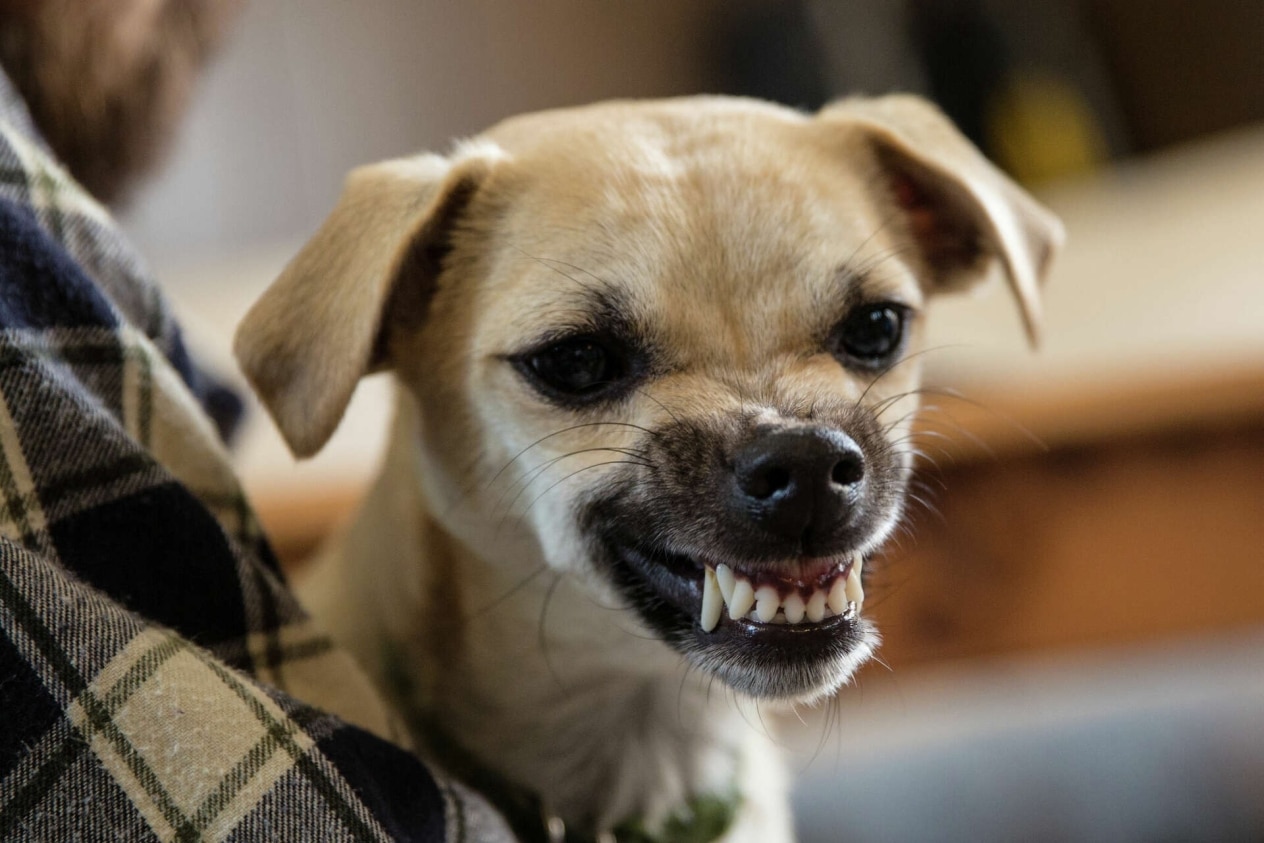
They are raised “on indulgence,” not like dogs
Small dogs are allowed to do things that larger dogs would never be allowed to do: jumping on people, growling “for laughs”, guarding food, toys or their owner’s hands. This is seen as a fun trait rather than a behavior problem. The result is a dog with no rules, no understanding of boundaries, and no calm communication skills. When faced with discomfort or fear, such an animal knows no other way to respond than to bite.
Conclusion
Small dogs bite more often not because they are “mean” but because they are not respected as dogs. Size does not negate the need for nurturing, socialization, rules and boundaries. When a small dog is taken seriously, cognizant of its signals, taught to tolerate touch, routines and new situations calmly, the risk of bites is reduced many times over. Aggression almost always starts with human carelessness.