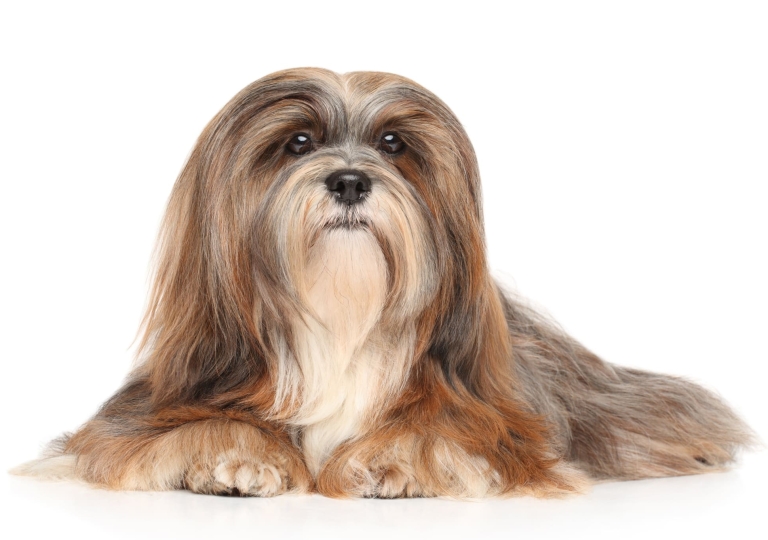
Lhasa apso grooming in Kyiv
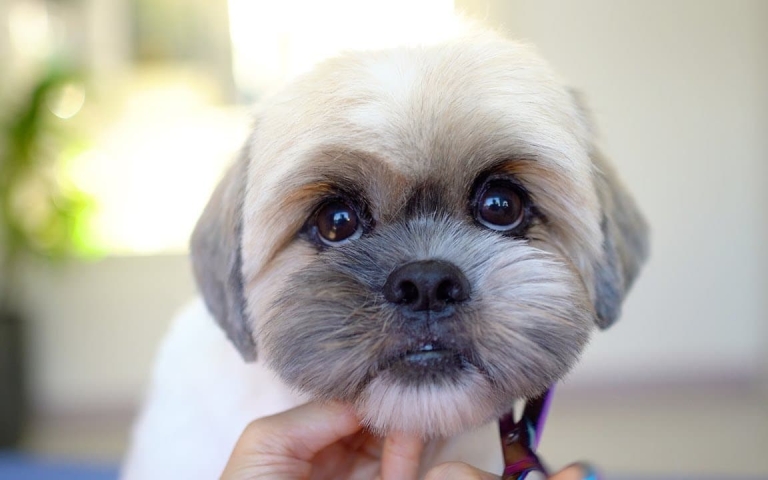
Delicate Lhasa Apso haircut, deep combing of the undercoat and preservation of the breed's natural beauty in the V.O.G DOG SALON chain

The Lhasa Apso is an ancient Tibetan breed that lived for centuries at monasteries in the Himalayas and was considered a symbol of good luck and a home amulet. The name comes from the capital of Tibet, Lhasa. These dogs were not a decorative accident – they were bred to closely guard the interior of monasteries. Their small size was combined with vigilance, courage, and strong character.
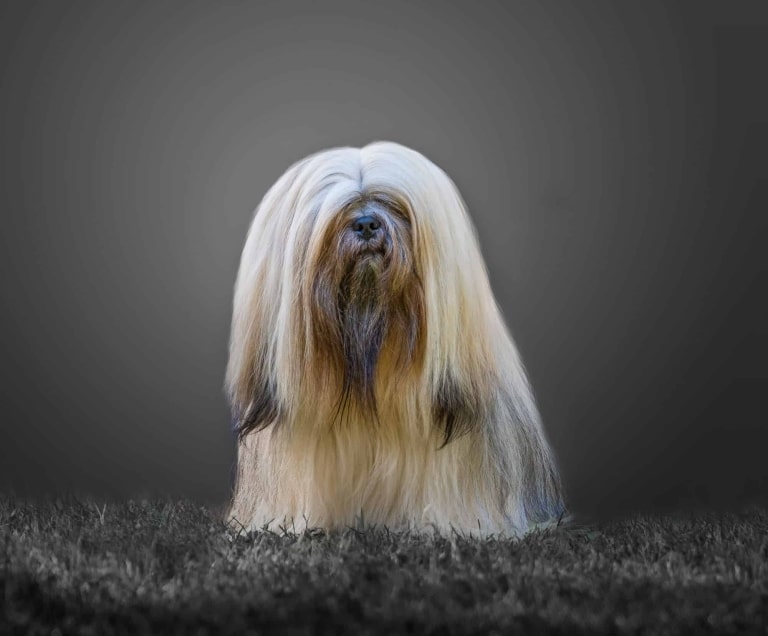
The Lhasa Apso has a compact, well-balanced build. The average height at the withers is about 23-25 cm, the weight usually ranges from 5 to 8 kg. Despite its small format, it is a strong, hardy dog with a thick, long coat that originally protected it from the harsh mountain climate.
The Lhasa Apso is an independent, intelligent, and confident breed. It is devoted to its family but can be reserved with strangers. These dogs can sense their owner’s mood well and do not like rude treatment. They need respect for their space. It is not a very hyperactive breed, but regular walks and mental exercise are important for it. The Lhasa Apso lends itself well to training if you work with it calmly and consistently. It does not tolerate shouting, but responds well to a confident tone and stability.
In general, the breed is considered a long-liver – the average life expectancy is 12-15 years, and sometimes even longer with proper care. Possible health issues include eye and skin problems and allergic reactions. Due to the long coat, it is important to check the condition of the skin, eyes, and ears regularly.
The Lhasa Apso needs careful eye care, as the coat can irritate the mucous membranes. It is also important to monitor teeth and weight, because the small format makes any extra kilogram a significant burden.
Grooming for Lhasa Apso is the basis of her comfort. The long, dense, heavy coat tangles quickly if not brushed regularly. Without systematic care, tangles form that pull the skin, cause irritation, and can cause dermatological problems.
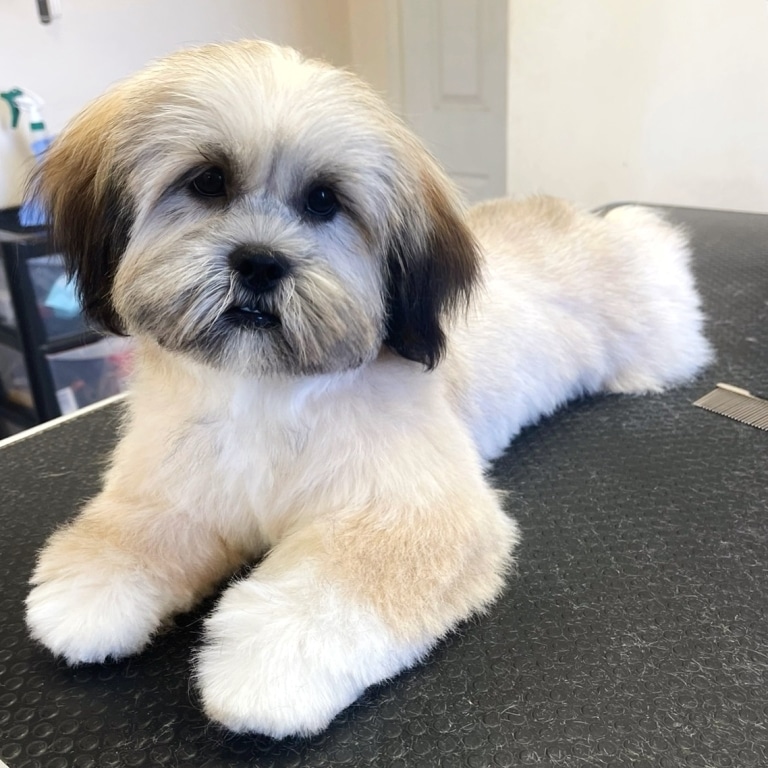
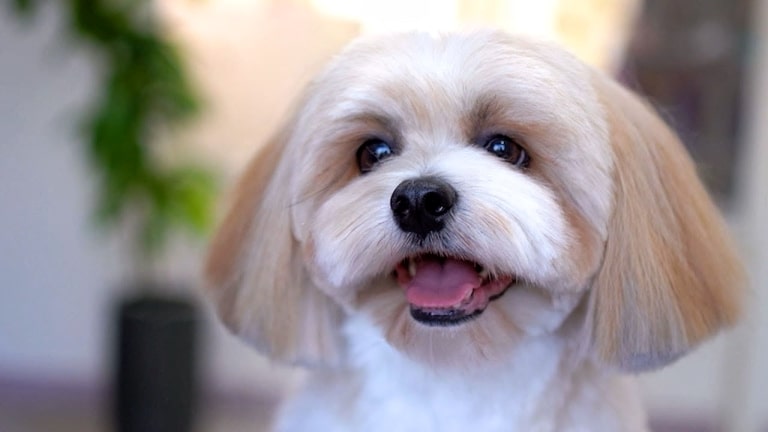
There are several formats of Lhasa Apso haircuts: the exhibition version with the maximum length preserved and salon models that make grooming more convenient for the owner. Most owners choose a practical medium-length haircut that allows them to maintain the breed’s appearance and at the same time simplify daily combing.
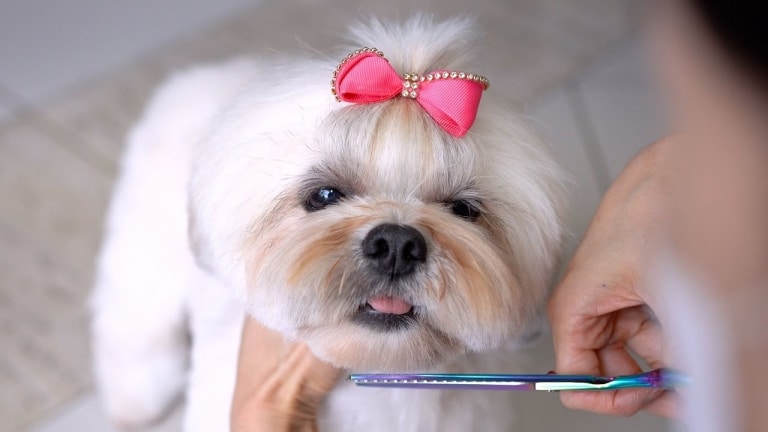
Professional grooming includes deep combing, proper washing with the selection of cosmetics, drying with hair pulling, neat anatomy-based trimming, paw treatment, intimate area hygiene, ear and eye care. It is very important to work delicately, because the skin under the thick coat is sensitive.
Self-grooming at home without experience often leads to an uneven haircut or skin injury. The Lhasa Apso needs a groomer who understands the structure of its coat, knows the breed proportions, and knows how to work carefully.
In the V.O.G DOG SALON chain, Lhasa Apso grooming is performed taking into account all breed standards and individual characteristics of the dog. Groomers select the format of the haircut to suit the owner’s lifestyle, coat condition, and temperament of the animal. We do not work in a template – each dog receives a personalized approach.
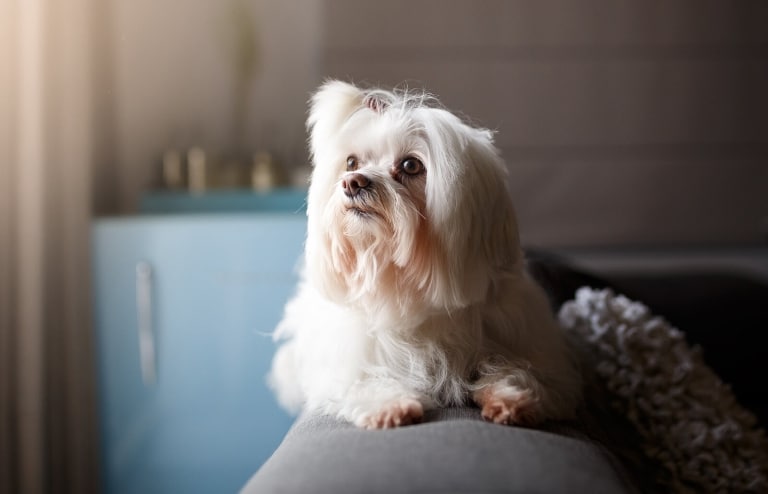
- Deep combing and tangle detangling:
This is the foundation of everything. The Lhasa Apso's coat grows constantly and tends to shed, especially behind the ears, under the armpits, chest, belly, and paws. Professional grooming includes a step-by-step disassembly of tangles without pain, the correct technique of working in layers, and complete removal of dead hair. This is not just aesthetics - it is the prevention of skin irritation and inflammation.
- Proper washing with the selection of cosmetics:
Lhasa Apso wool needs high-quality cleaning to the skin. Shampoos are used in accordance with the skin condition - moisturizing, regenerating or for sensitive skin. After shampooing, a conditioner or mask is required to prevent breakage and facilitate combing. Improper washing without professional products makes the coat dry and brittle.
- Complete drying with hair pulling:
This is a critical procedure. Lhasa Apso cannot be simply "dried". The wool must be completely dried with stretching in the direction of growth, otherwise it will fluff, tangle and lose its breed appearance. High-quality drying creates a neat, even silhouette.
- Lhasa apso haircut or breed silhouette:
Depending on the owner's wishes, this can be an exhibition version with maximum length or a practical salon haircut. The body, paws, hygiene areas, and muzzle are trimmed. It is important to maintain the correct proportions of the head and body so as not to lose the breed expression.
- Hygienic clipping of intimate areas:
This is a mandatory procedure for cleanliness and comfort. Excess hair is removed from the abdomen, under the tail, and groin to prevent contamination and irritation.
- Eye care:
Due to its long hair, the Lhasa Apso often develops tearing eyes. The hair around the eyes is trimmed or styled so as not to irritate the mucous membranes. Regular cleaning prevents darkening of the coat and inflammation.
- Cleaning of the ears:
The ears are checked and cleaned with special products. Due to the thick coat, dirt and moisture can accumulate in the ear canal, causing inflammation.
- Claw trimming and grinding:
Long nails change the posture and cause discomfort for the animal. Regular trimming and, if necessary, grinding ensures proper paw posture.
- Care for paws and interdigital areas:
The hair between the toes is gently removed so that it does not stray and accumulate dirt. The pads are checked for cracks.
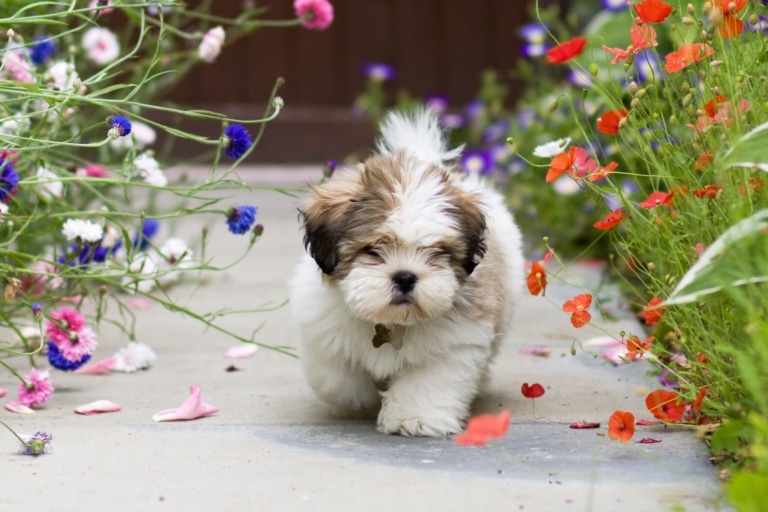
No, it's a breed with a coat that grows all the time, just like human hair. It does not have a pronounced seasonal shedding like many other dogs. But this does not mean that grooming is not necessary - dead hair remains in the mass and quickly forms tangles without regular brushing.
On average, every 4-6 weeks, depending on the chosen length and rate of coat growth. If a long breed format is maintained, grooming is required even more frequently to maintain a neat and healthy coat.
Yes. It is a compact breed that feels comfortable in an apartment. It does not require excessive physical activity, but it loves regular walks and the owner's attention.
Lhasa Apso is independent and self-confident. It does not tolerate rudeness but responds well to calm and consistent training. It is an intelligent dog that becomes attached to its family but can be wary of strangers.
Yes, but only if you treat the dog with respect. It does not like sudden movements and excessive obsession. If the child is taught to interact with the animal properly, there are no problems.
Possible features include eye problems, allergic reactions, and sensitive skin. Regular examinations, proper nutrition, and systemic care help minimize the risks.
Theoretically, you can leave the coat long, but it requires daily careful brushing and professional grooming. Without this, the coat falls off quickly, which causes discomfort and can lead to skin problems.
Usually every 3-4 weeks or as part of regular grooming. Too frequent washing without the right cosmetics can dry out the skin, and too little washing can contribute to the accumulation of dirt and tangles.
Because the structure of Lhasa Apso's coat is complex and requires the correct washing, drying, and shearing techniques. Self-grooming without experience often results in tangles or uneven haircuts. Regular professional grooming maintains healthy skin, comfort, and a neat appearance of the dog.
Yes, if the owner is ready for regular coat care. The Lhasa Apso is not difficult to behave with, but it requires consistency and responsibility.
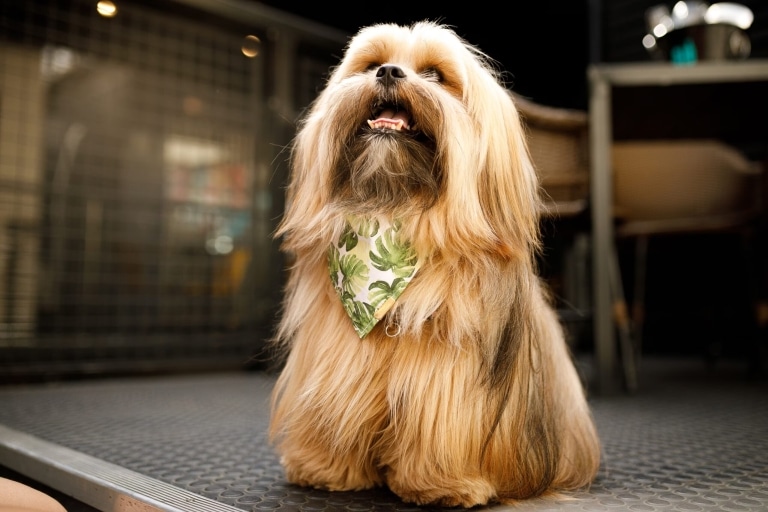

I am Amina, and I believe that a good groomer is not only someone who skillfully uses clippers and scissors, but also a great specialist who has a deep understanding of animal behavior. I am guided by this simple definition in my work and constantly strive to improve. With your Tail, I will always find understanding during the procedures and will definitely take into account all your wishes. I also ensure that every visit of your pet will be completely comfortable for him.
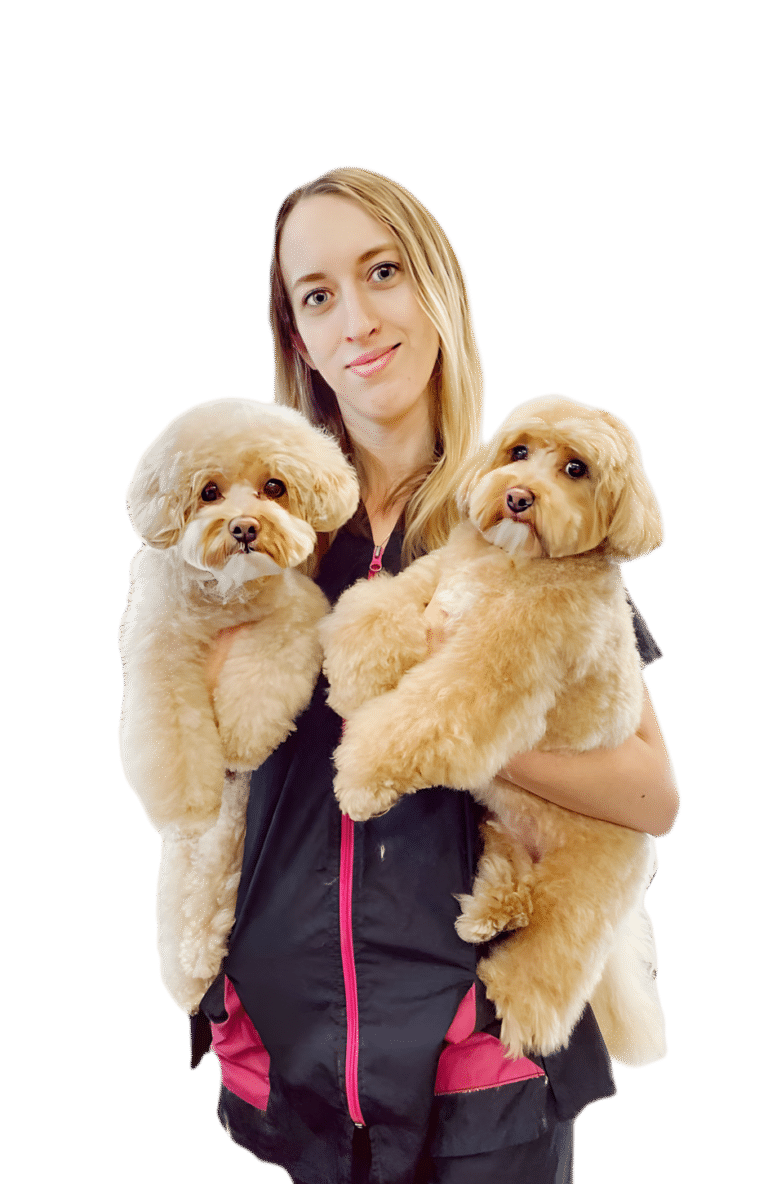
Meet Iryna – a TOP Groomer Stylist, a master with golden hands and an exceptional sense of style, who has been creating wonders in the grooming world for over 4 years!
Her favorite furry clients are the unique POMERANIANS, but she easily works with all charming breeds such as POODLES, MALTESE, MALTIPOO, COCKAPOO, CAVAPOO, YORKIES, and even the most demanding CATS.
Iryna’s professionalism is confirmed by her participation in prestigious master classes held by leading grooming experts:
- “Asian Style: Drop Coat” and “Asian Style: Volume Coat” (Anna Pozdnyakova);
- Poodle cut “Scandinavian Lion” (Oleksandra Popova);
- Jack Russell Terrier hand-stripping (Anna Ishchenko);
- Pomeranian grooming “Correct Grooming” (Yuliia Voitova);
- Bichon grooming “Asian Style” (Alina Papian).
In Iryna’s hands, your pet becomes a true work of art, where individuality, harmony, and natural beauty come first. Her secret lies in her deep understanding of every pet’s needs, endless love, and genuine care.
Iryna uses only a humane and gentle approach, ensuring your furry friend feels comfortable, calm, and surrounded by positive vibes during the whole process. That’s why every pet leaves the salon happy, beautiful, and completely satisfied!
By choosing Iryna, you’re choosing unmatched style, outstanding quality, and true artistry that brings your Loyal Companion’s unique look to life.
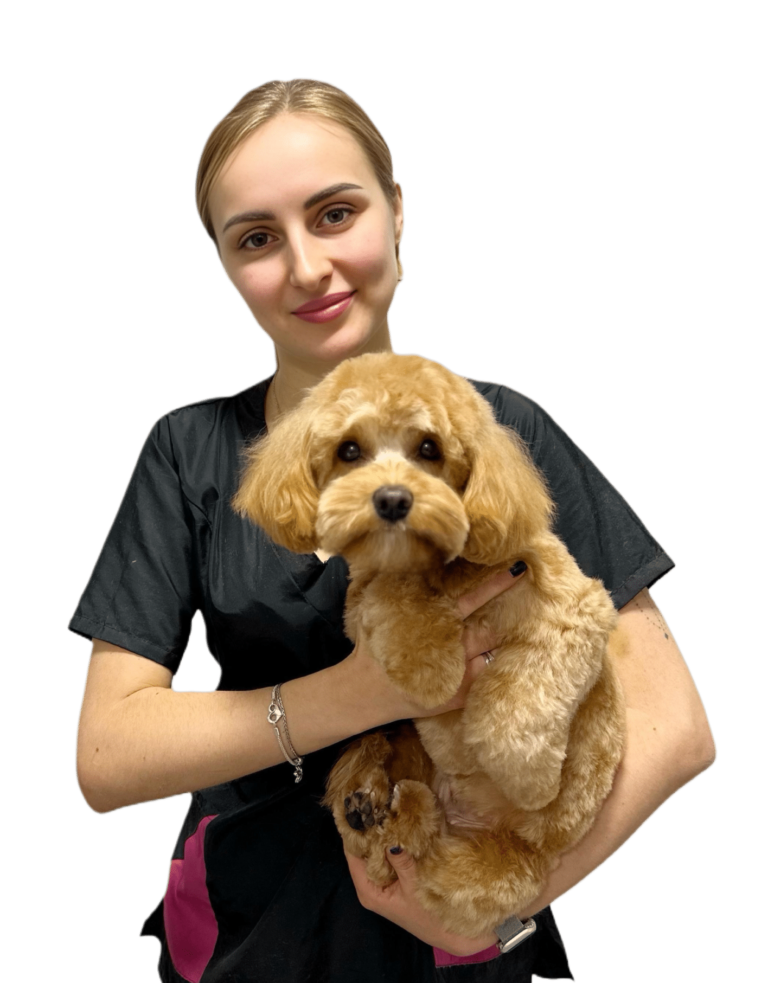
Svetlana is not just a groomer, she is a real craftswoman who turns every grooming session into a work of art. For her, caring for animals is more than just a profession; it is a passion and a calling that she has perfected over the years. Her skill and impeccable technique allow her to create individual images that emphasize the uniqueness of each Tail. Svetlana approaches each animal with great love and attention, understanding that for its owner, the Beloved is part of the family.
After Svetlana's visits, your Beloved will look well-groomed and beautiful and will shine with health and happiness. Her work is a harmony that fills the life of every client with joy. As a TOP Groomer stylist, Svitlana achieves perfection in every look. She strives not just to provide a service, but to create real masterpieces, making each visit unique and special for each client.
Her approach is based on a deep understanding of the needs and character of each animal, which allows her to create stylish and comfortable images for Tails. Svetlana takes into account all nuances: from the structure of the fur to the peculiarities of behavior, which makes the result not just beautiful, but ideal from all points of view. If you want to get the maximum possible comfort for your Pet and satisfaction from the grooming process - then you should come to Svetlana!
Kiev, Pechersk district, M. Mikhnovsky Boulevard (Friendship of Nations), 27
Kiev, Pechersk district, Lesya Ukrainka Boulevard, 14
Kiev, Solomyanka district, V. Lobanovsky Avenue, 6a
Kiev, Desniansky district, Red Kalina (Mayakovsky) Avenue, 68a
Kiev, Shevchenko district, Sholudenka Street, 14
Kiev, Darnytsky district, Knyazhy Zaton Street, 2/30
Kiev, Dnipro district, I. Kotlyarevsky (Work) Boulevard, 7
Kiev, Holosiivskyi district, 4 Seasons Residential Complex, Maksymovycha Street, 3d
Kyiv, Obolonskyi District, V. Ivasiuka Avenue, 6B (building 2)
Kiev, Shevchenkivskyi district, Shchusev Street, 4
European Street, 2a (Eurocity Residential Complex, near Vyshneve town)
Kiev, Darnytskyi district, st. Knyazhiy Zaton, 11