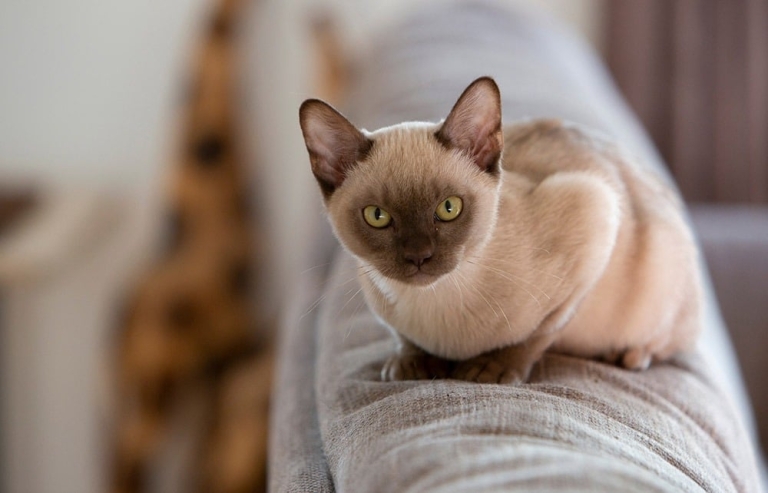
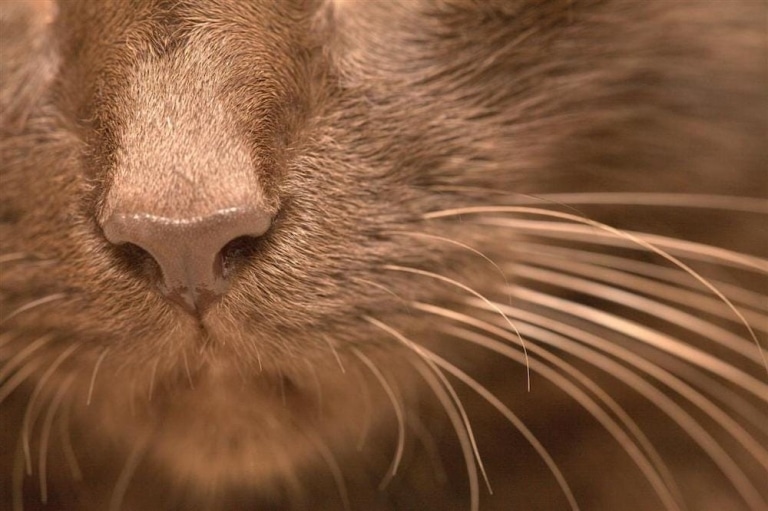
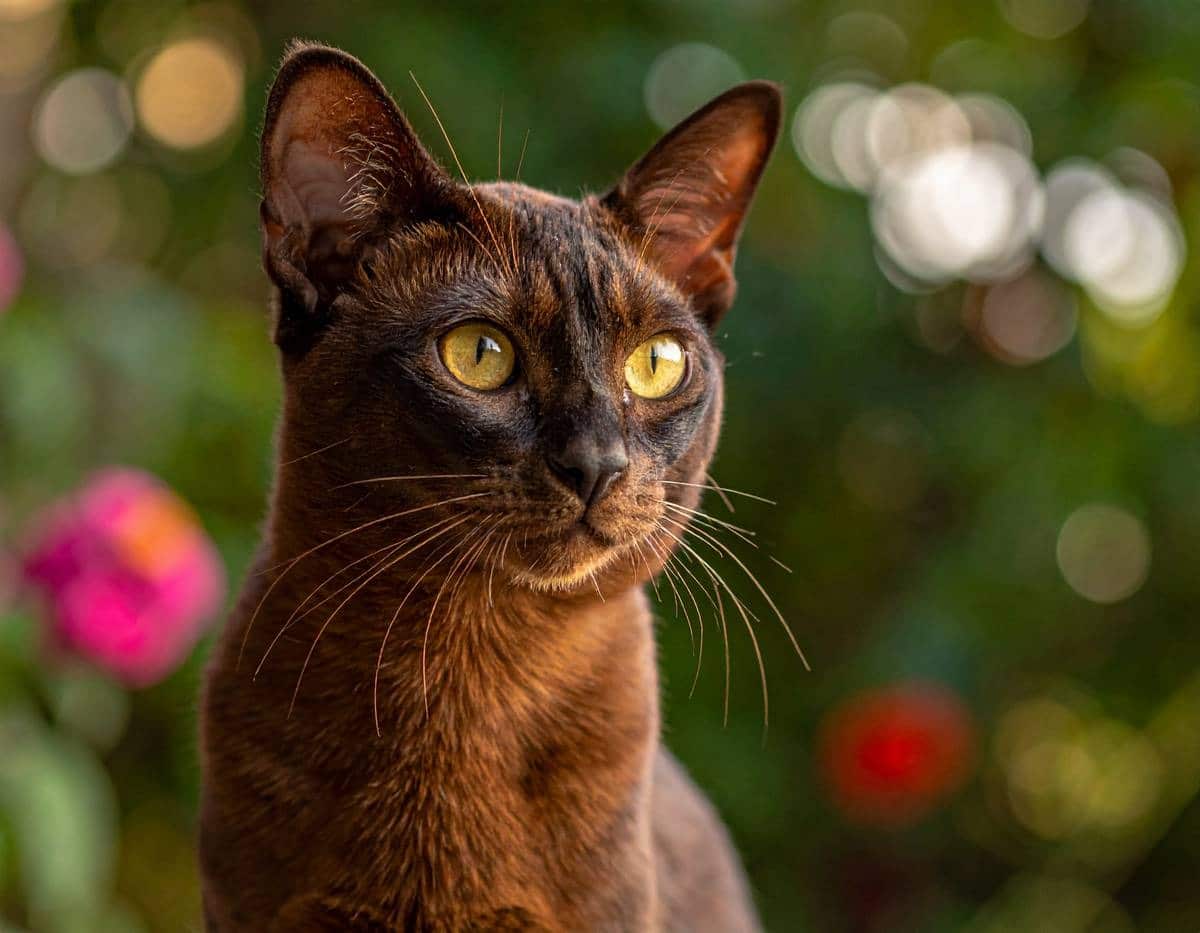
Chocolate little panthers – that’s how you can describe the Havana Brown cat breed. You don’t have to go on an adventure to Africa to admire a graceful wild animal! You can have a miniature copy of the panther at home. And the tropics at home! It does not matter that the color of the coat is not black, but chocolate, because the coat is dazzlingly shiny and smooth. Chocolate Havana Brown will become a family favorite. She has a sociable and playful character, loves to talk – lean on the owner’s legs and purr. Often you will catch a glance of the cat, eyes, questioningly looking at you – “Shall we play? I’m bored.”
General description of the cat breed Havana Brown
Medium-sized, muscular cats (semi-foreign type) with a small oblong head. Straight wide ears allow you to hear you perfectly. Almond green eyes look into the soul. The tips of the ears and paw pads are a delicate purple color. The weight of males ranges from 3.5 to 4.5 kg, cats from 2.5 to 3.5 kg. Life expectancy is from 10 to 15 years. Young kittens have special markings on their fur, but over time they disappear.
What the cat differs from others – Rich chocolate color of the coat.
The origin of the Havana Brown
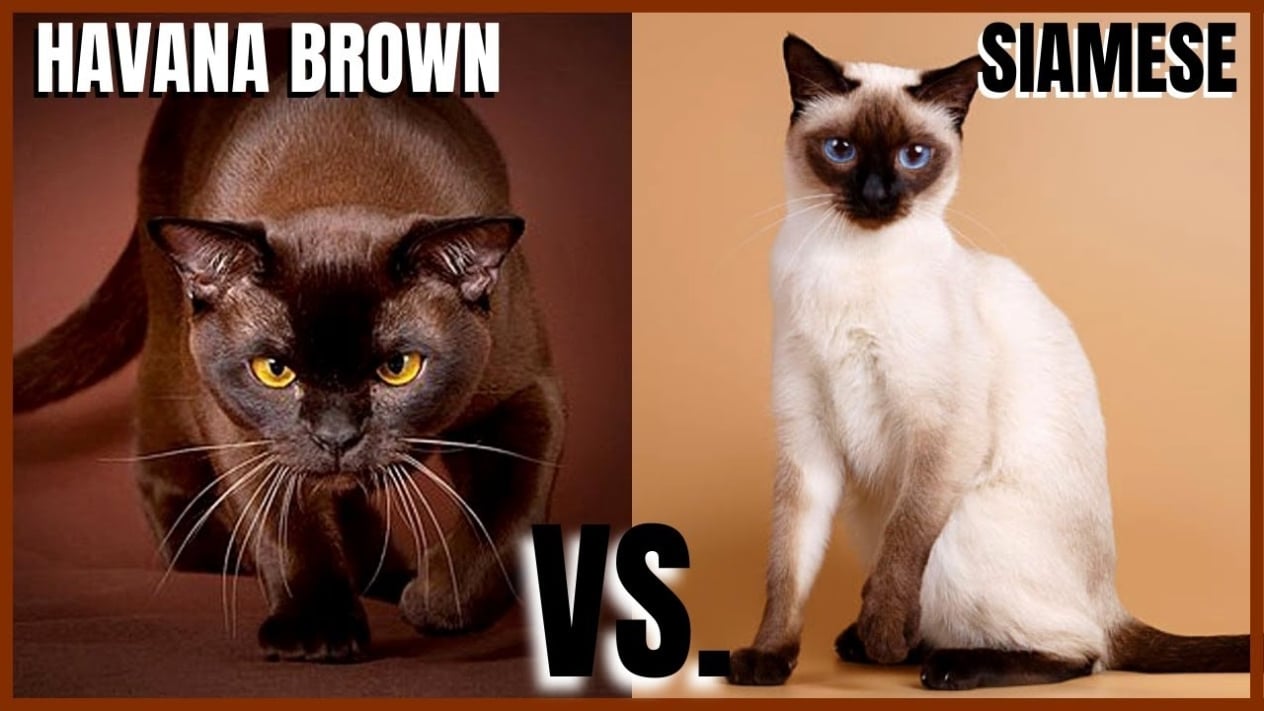
The history of the breeding of the Havana Brown cat breed is very confusing. It is impossible to say exactly who first invented the breed and how much today’s name of the breed corresponds to the original source. After all, in Europe, the cat was called Swiss, in Great Britain – Brown Oriental Shorthair, in the U.S. was fixed the name Havana Brown, which means the color of Cuban cigars. Let’s go back a bit to the beginning of history. The breed came about as a result of a cross between a short-haired cat and a Siamese cat. The progenitor Havana Brown was first presented at an exhibition in England in 1890. It was a chocolate-colored monochrome Siamese cat imported from tropical Thailand. The wild panthers probably inspired the feline beauty connoisseurs there to breed this breed. The breed aroused interest in England, but it faded over time. As Siamese cats were in demand with blue eyes, and dark brown cats had green eye color. Only after 1950 interest in the breed returned. It is worth noting that the cats were bred not only in the UK, but also in Switzerland. Therefore, these cats were first called “cats from the Swiss mountains”. After a re-breeding, the breed appeared in the USA and it was there that it received its official name in 1959. However, in England it is still called the Brown Oriental Shorthair cat today. The Cat Fanciers’ Association recognized the breed in 1964.
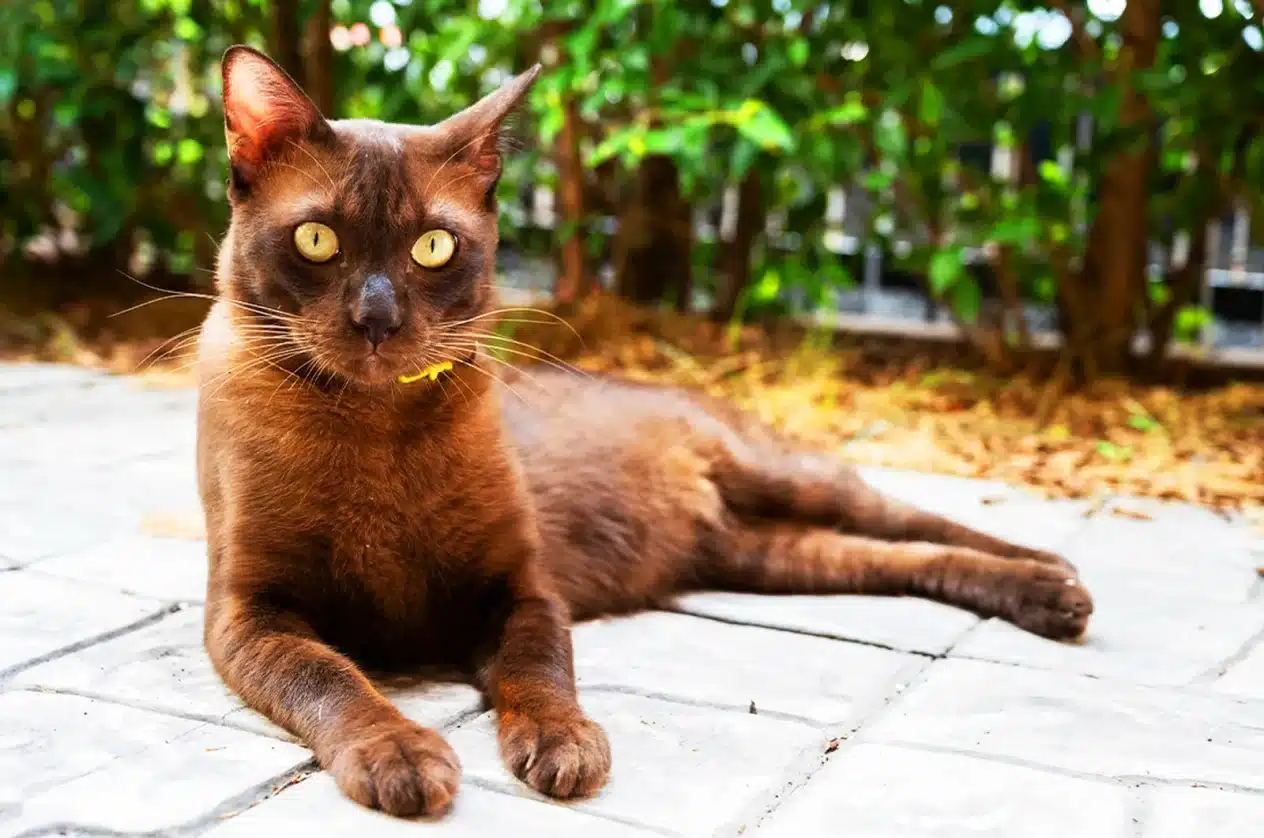
“The Swiss Mountain Cat doesn’t like the cold
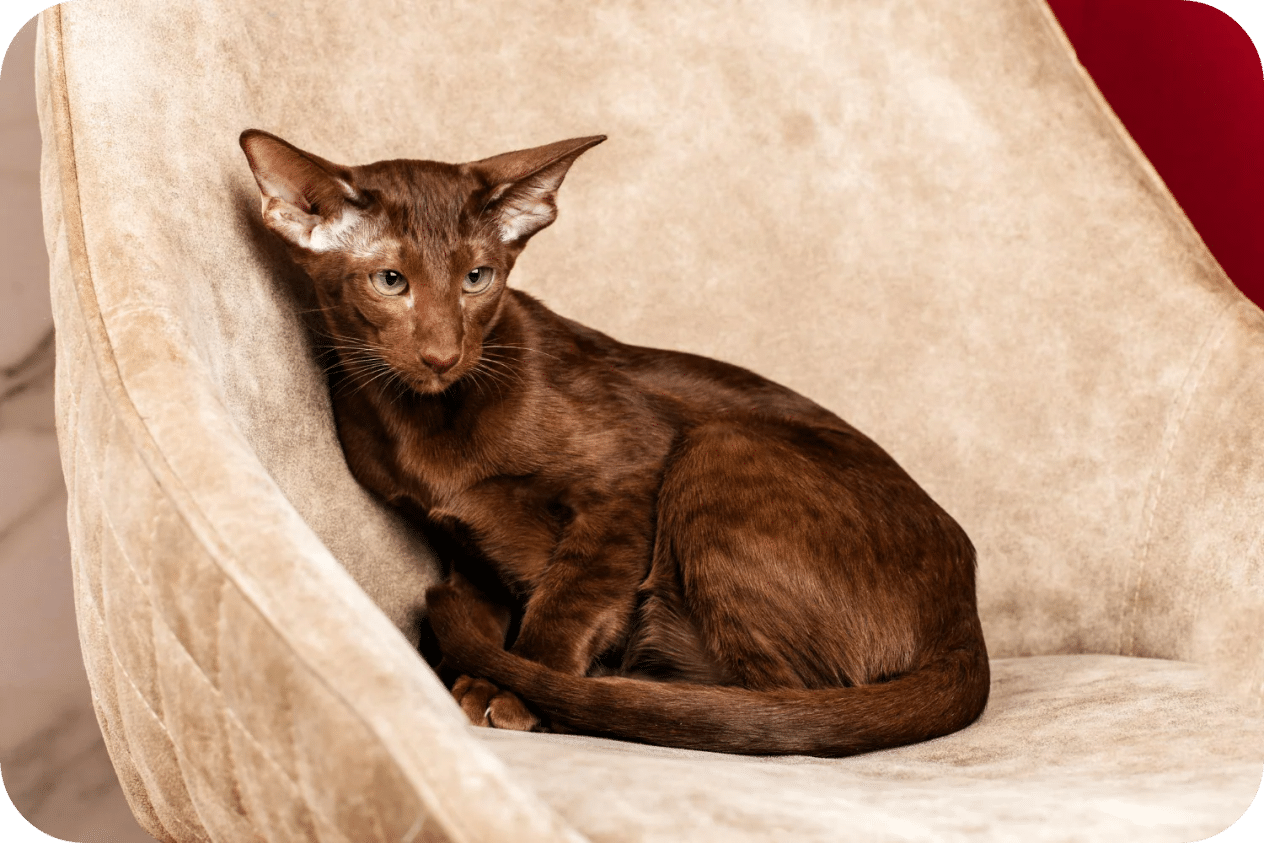
Havana Browns have excellent health. Good breeding has allowed the breed to be bred without any genetic diseases. But although European chocolate cats were bred in the mountains, where the climate is cold and there should be hardened lungs, this did not happen. The cat has a heart, or rather “lungs” for warm climates. Havana Brown can suffer from respiratory diseases, especially at a young age. Therefore, you should avoid hypothermia Pet and watch out for drafts. It is also necessary to take care of the oral cavity, because from the Siamese cat passed on the trait of a tendency to gingivitis. But all these shortcomings may not bother the cat at all, if you carefully take care of him.
Character of Havana Brown
Havana Brown is an active, friendly cat. She, like a panther likes to jump, run, explore the world. Unlike a wild forest animal, is extremely sociable. Has a character reminiscent of a dog. Likes to meet the owner, look into the eyes and constantly play and contact. Interestingly, cats of the breed Havana Brown more often than other cats like to touch something with their paws. They are also calledVelcro cats because of their desire for constant contact. Often Murchik can come to you to touch and feel the warmth of your hand. They have no problem finding a common language with children, because they have common interests – to see, try and climb up to jump.
Interesting fact: Havana Browns love traveling. If you do go to the jungle, then remember that cats can easily brighten up your company.
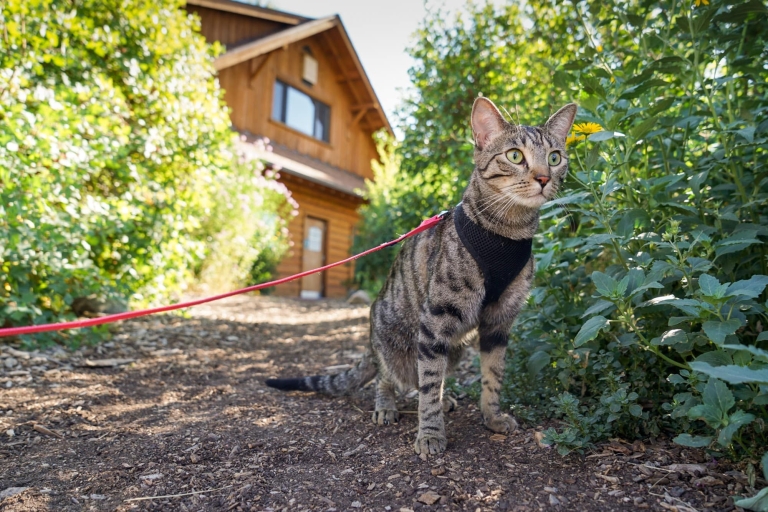
Havana Browns are cats that are highly intelligent and trainable. This is probably why their temperament takes on canine characteristics. Cats love interactive cat puzzles, games of hide and seek or fetch. If the cat is praised and given a favorite treat, the animal will gladly learn your invented game or trick. Can be trained – behavior on a leash.
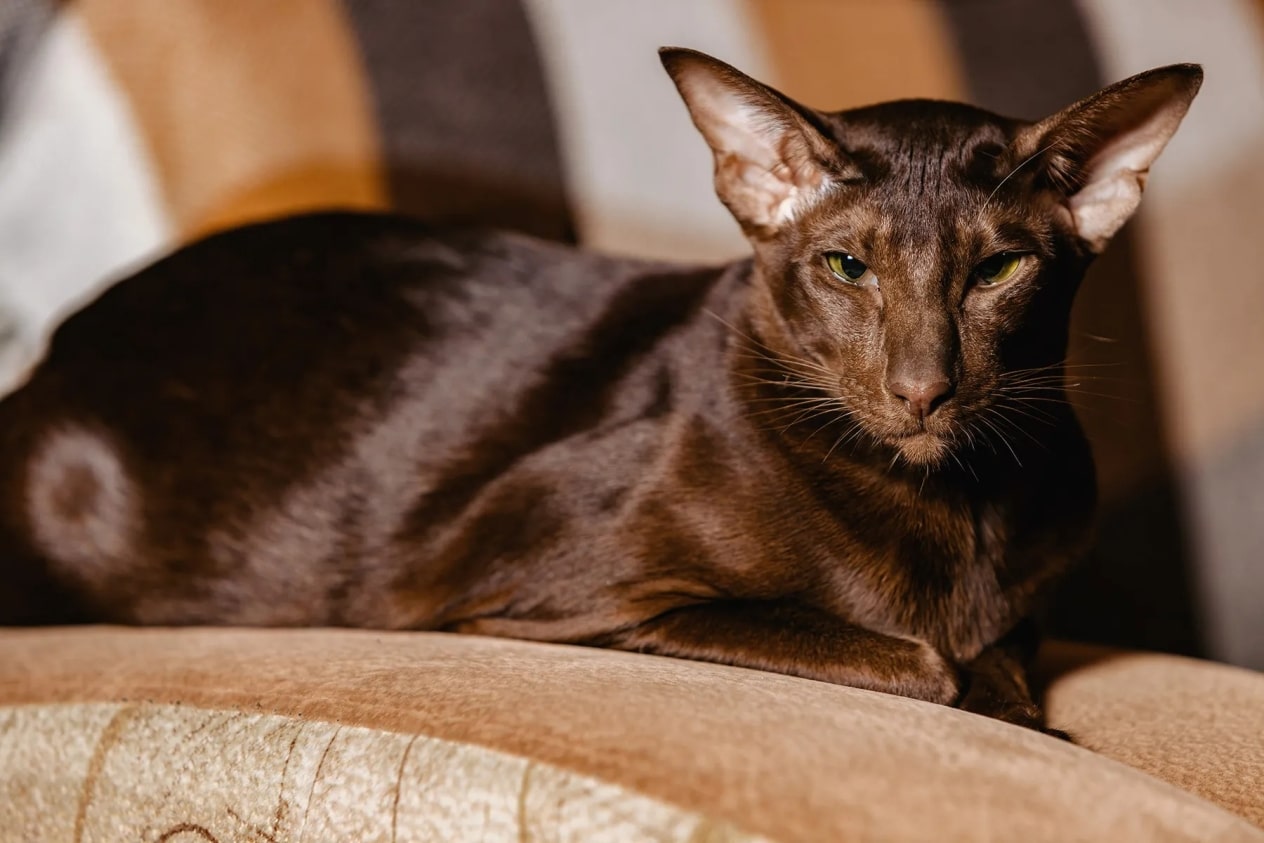
Grooming Havana Brown
Cats’ fur is short, smooth and shiny, so they can’t tangle themselves. These are not Persian cats! Care for Havana Brown does not require much effort. You only need to comb the coat once a week with a soft brush to remove dead hairs. This procedure will help maintain the shine and healthy appearance of the coat, and will also help to reduce small surprises from hairs in the room. You should not get carried away with scratching the coat, as this will lead to harm. Havana Brown can be bathed once every few months, or even less frequently, using a shampoo for short-haired cats. If the kitty walks on the street, then it is enough to wipe the paws with a damp cloth. Once a week it is necessary to gently clean the ears – with a cotton disk with the application of a means for ear care, which is easily sold in pet stores. The cat likes to climb high objects and trees, so you should take care of the condition of the claws. Every 2-3 weeks you should trim them to avoid excessive growth and scratched furniture.
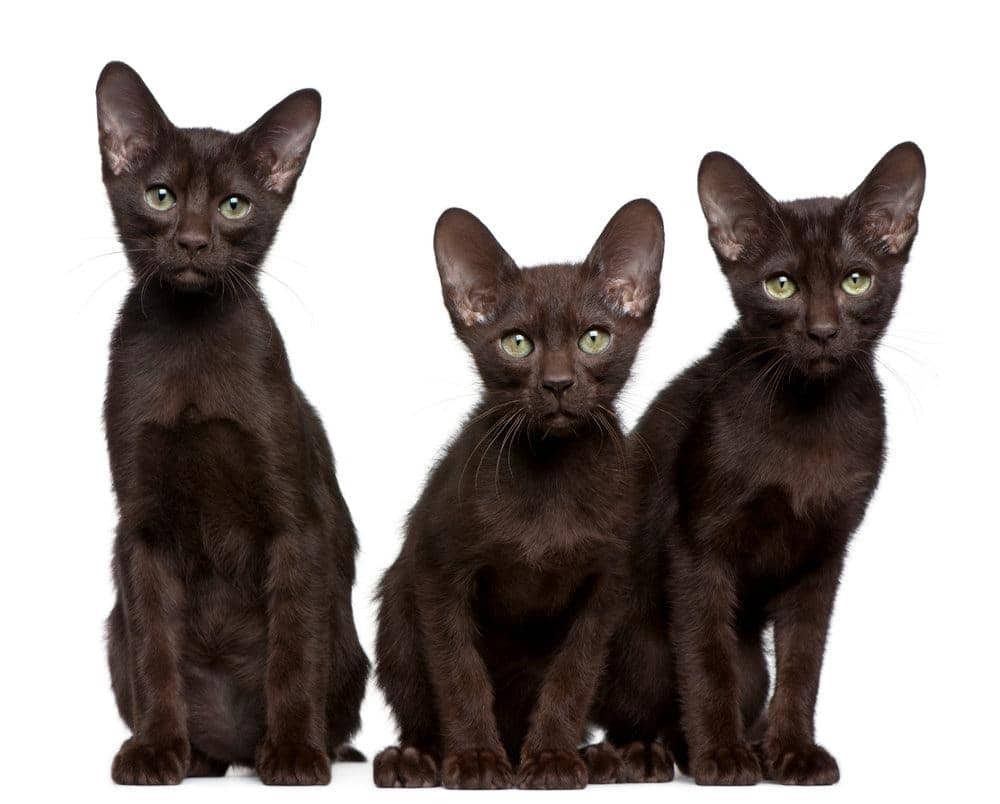
If you have a representative of Havana Brown settled in your home, we congratulate you. This is a rare and expensive breed. It is distinguished by a high level of development, loves attention and is extremely friendly. Remember that the cat requires constant tactile communication and play. Havanas will feel well in the apartment if they are provided with climbing and cat toys.