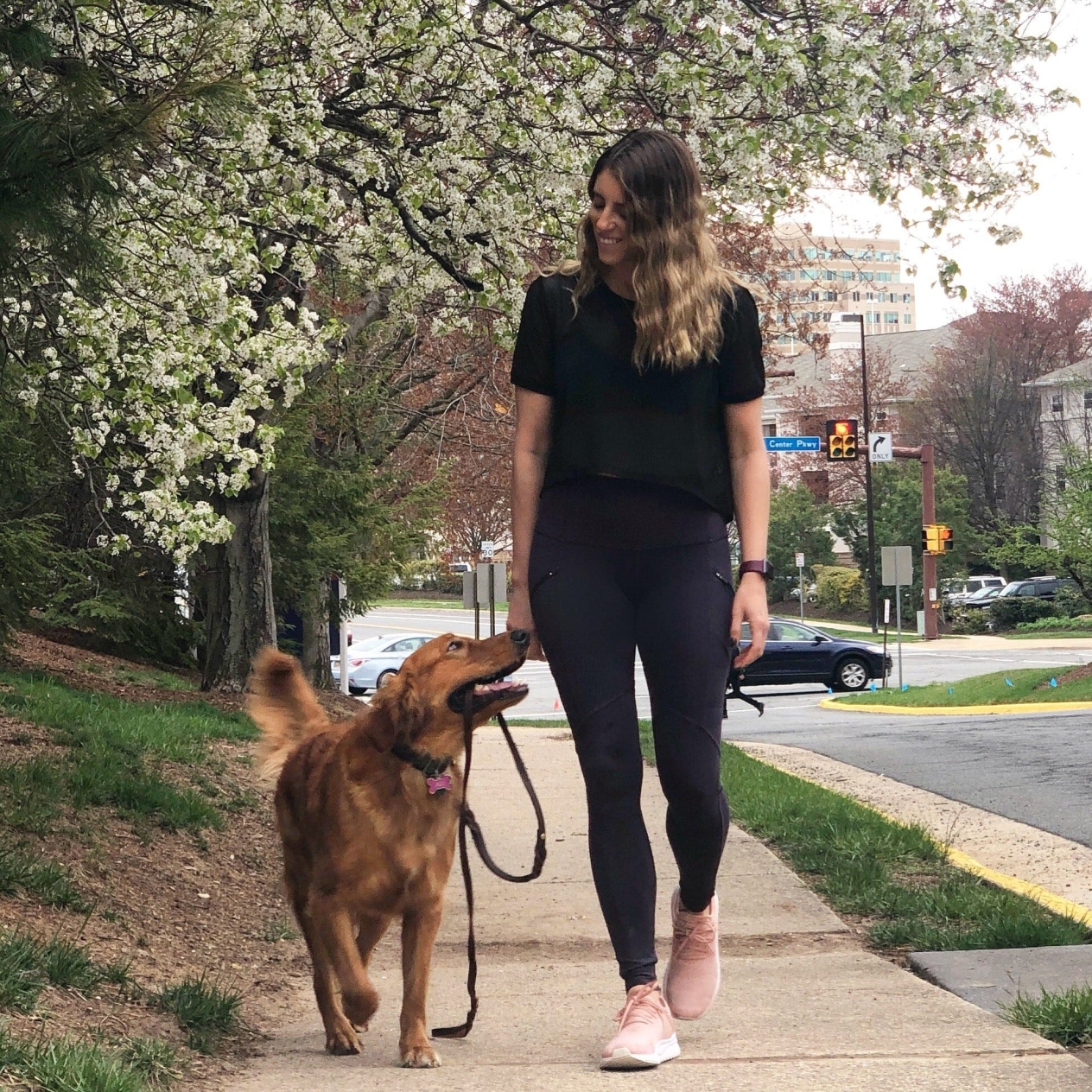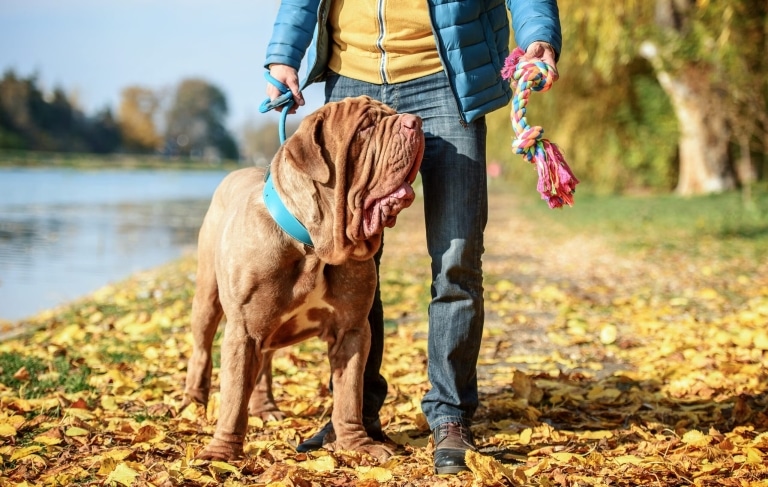
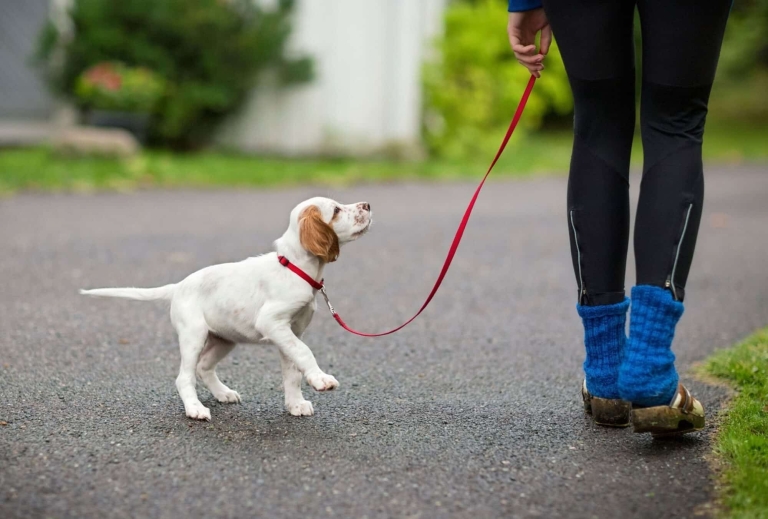
Time spent outdoors with your dog is always good for both the owner and the Pet. And a leash for him is a necessary accessory for a safe and comfortable walk. Therefore, in order that active vacation with a four-legged person does not become a test for you, you need to learn how to teach your dog to walk calmly on a leash in crowded places and obey.
In this article we will talk about why the dog pulls the leash, how to wean him from this, when to start such training and how long it can last. We advise you to be patient and familiarize yourself with our advice.
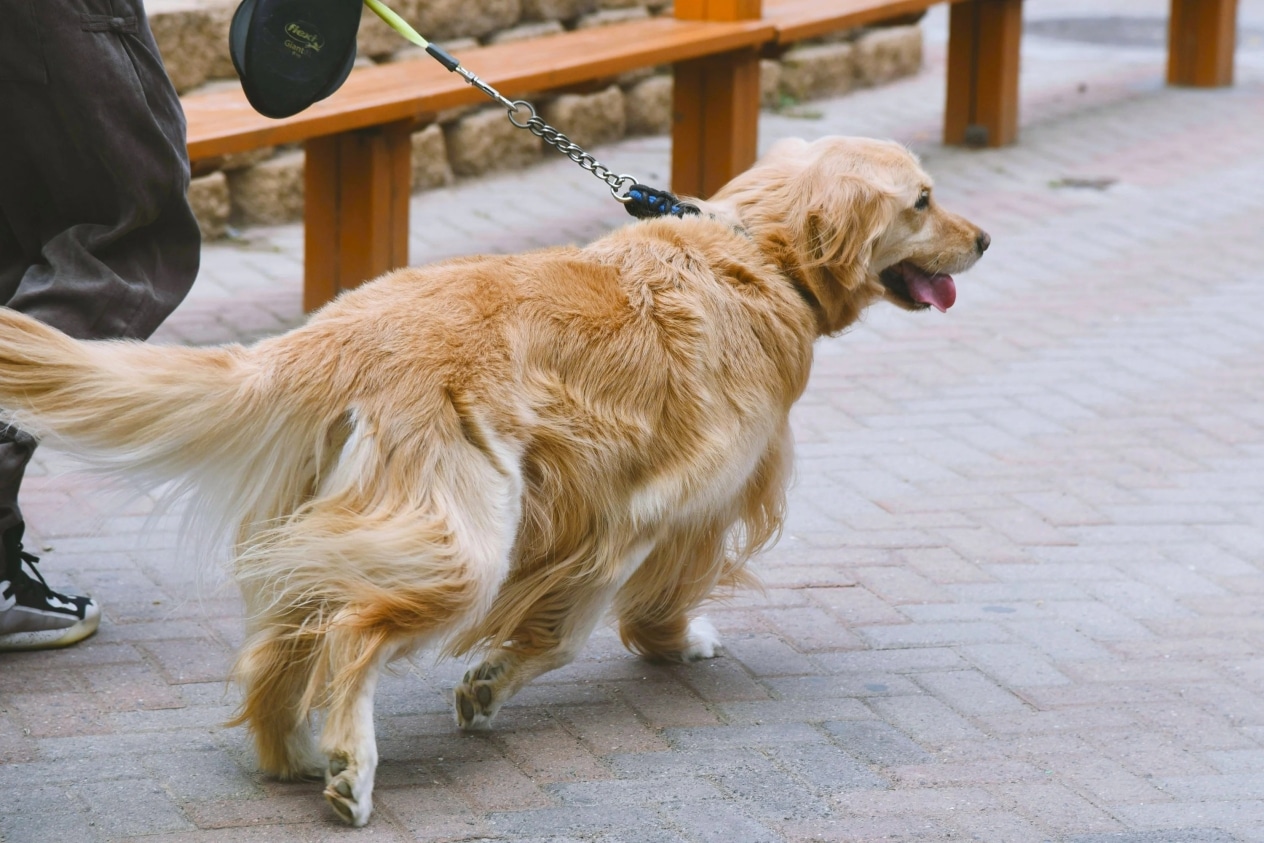
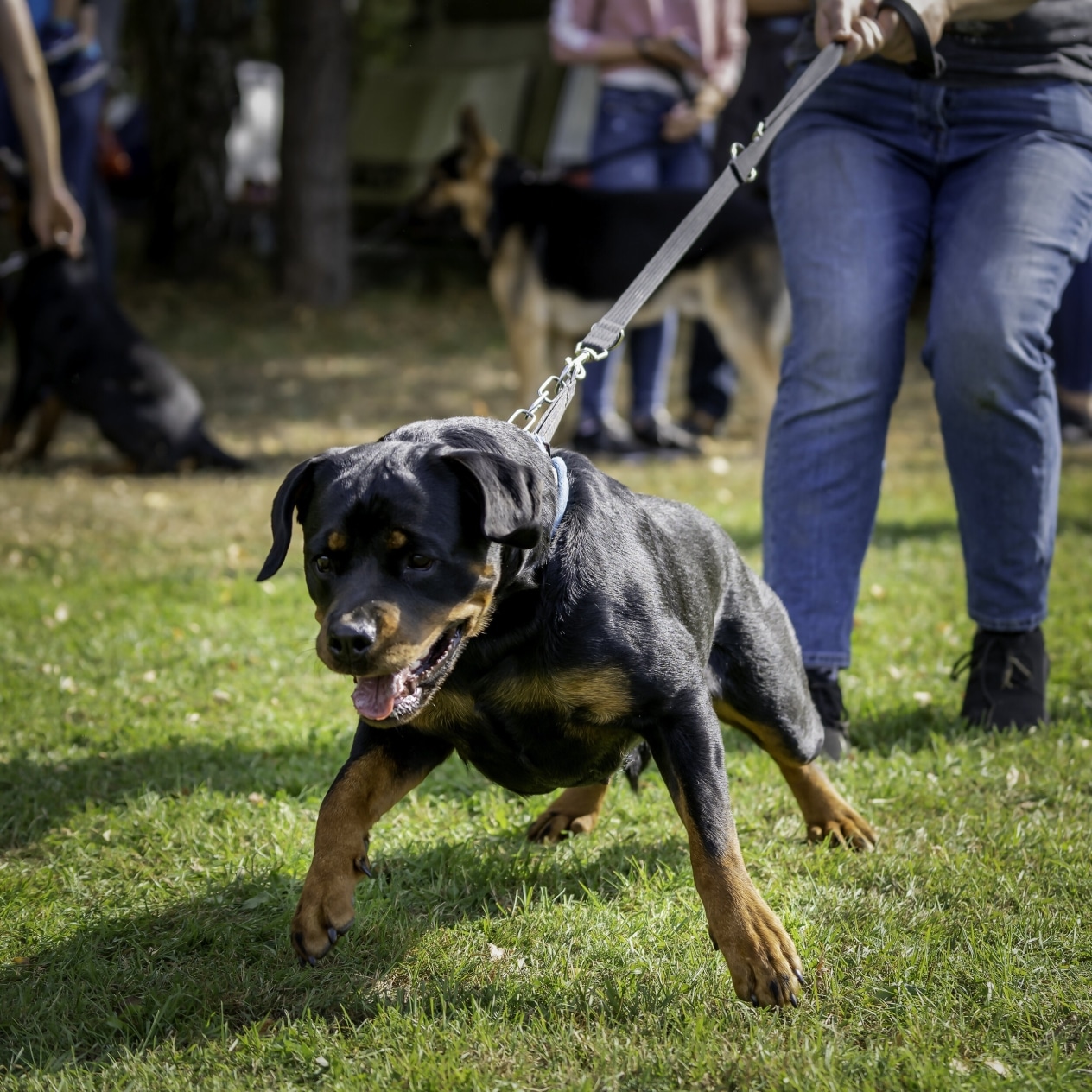
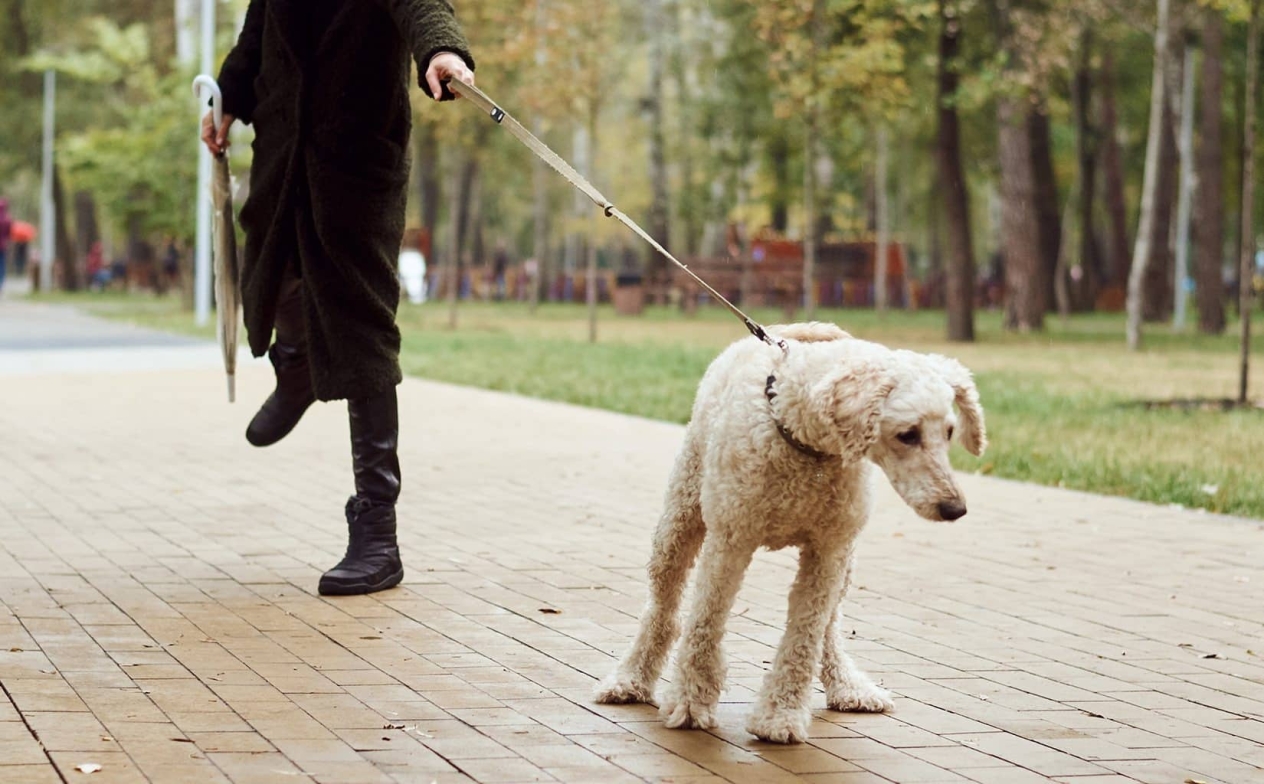
There are several main reasons why a dog pulls on the leash:
- Improperly fitted harnesses
Accessories are to a dog like clothes are to a person. If it is uncomfortable in them, i.e. something of the accessories is big or small, twisted or rubbing, pressing or restricting movement, it will definitely affect the emotional state of the animal. Your friend will be nervous, move faster and sharper, lunge at others and get irritated from touching. Therefore, before starting a walk, check whether the leash you have has the proper length for the free movement of the dog and whether the harness is comfortably worn. It is recommended to choose a leash that is between 3 and 5 meters long and a comfortable harness that is adjustable and can be adjusted to fit your dog.
- The dog is chronically stressed
Your pet’s daily regimen should be thoughtfully planned. This is especially true when it comes to physical activity. The dog should walk enough, get enough exercise, not be bored almost 24 hours in a closed room, walk in places new to him and socialize with relatives. If these basic needs of mobility of the pet are not closed, he is forbidden a lot, he does not walk much, he can not go where he is interested or jump over obstacles, then constant stress is guaranteed to him. And you are guaranteed problems with his restless behavior during outdoor walks. That’s why it’s important to review your dog’s daily routine and include all the basic activities.
- Your dog is suffering from situational stress or inappropriate socialization
Does your dog walk calmly when the streets are almost deserted, but becomes uncontrollable and off leash when other people, dogs or objects (bicycles, cars) come into view? This is usually incorrect socialization of the animal or it is stressed because of an unfamiliar situation.
To avoid this, start introducing your puppy to other dogs, people, places and situations in a timely and gradual manner. The best age for this is early, between 3 and 10 weeks of age. Create pleasant associations with new surroundings and objects and provide a safe environment while introducing him to someone or something new.
- The dog feels pain, cold or heat, hunger or thirst
Discomfort due to pain can also cause your dog to pull on the leash. Otherwise, she simply can’t let you know that she’s not doing well. To rule out the possibility of pain in your pet during a walk, you should get regular health checkups, including lab tests.
Unpleasant sensations due to unmet basic needs will make your four-legged one hint to you about them. If your dog is hot, he will try to pull you into the shade, if he is cold, he will move much faster to keep warm. Hunger will make him find food, and thirst will make him seek out the nearest puddle or watering hole.
You only have to be attentive to your pet and its cues.
- You keep moving even if the dog pulls on the leash
You don’t have to follow your dog when he pulls on the leash, because you are showing him that this behavior is desirable and correct. You should do it differently: when the leash is pulled, stop immediately and do not give the dog the opportunity to move on. Gradually he will learn that pulling on the leash will mean stopping for him.
- Lack of contact between dog and owner
A tired or stressed owner can directly affect the animal. Therefore, we do not advise you to go for a walk with your dog if you are irritated, very tired and not emotionally attuned to his activities. It is quite possible that the dog will sense your condition and pull the leash to run away from you in the other direction. In this case, you should first rest, eat, take a shower and, after calming down, walk your dog. If you can’t cope with your emotions at all, ask your loved ones to replace you or order professional help – a walking service. Remember that you are entitled to a break from your pet, especially when you can’t handle the amount of responsibilities in your daily life.
- Lack of proper training and positive reinforcement
When teaching skills, the owner must properly explain to the four-legged dog what they want from it. For this, it is common to use positive reinforcement. This is what is called providing a reward or a positive reaction from the owner to the desired behavior of the animal, which encourages him to repeat the correct action in the future. Therefore, praise your dog exactly when he performs actions that you like. For example, let go of the leash, keep moving with the animal at a calm pace, tell him “Yes!” or give him a treat. These markers of correct behavior will show your dog that he is behaving in a way that is unmistakable, that you are praising him, and may motivate him in the future.
So, having pointed out the main reasons why your dog may pull on the leash, we have partially discussed actions that can help you avoid it.
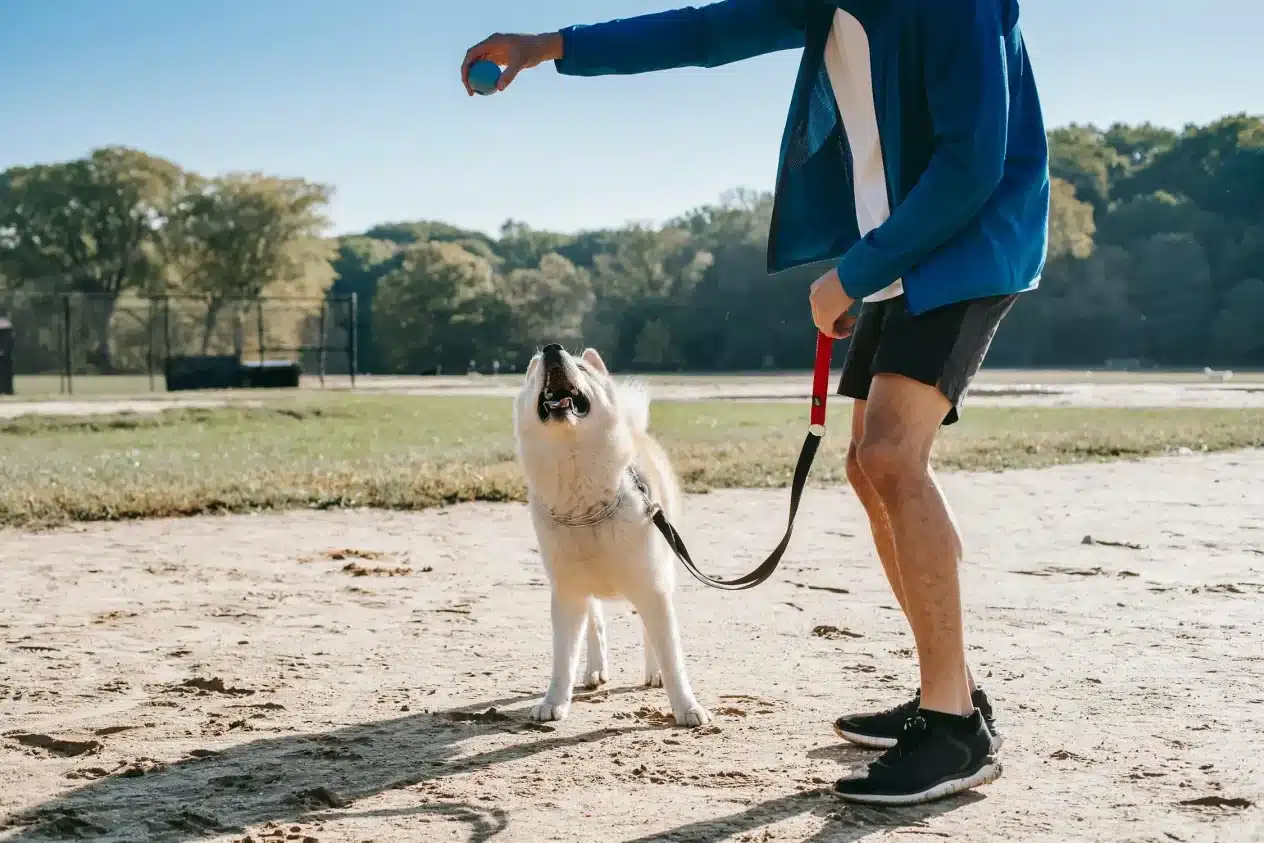
The main rules to avoid leash pulling are as follows
- Choose the right leash for your dog.
The length, width and thickness of the leash is chosen individually for each dog and its owner. We recommend buying only a quality leash carabiner that can rotate 360° and will securely attach to the collar. It will also prevent the leash from getting tangled between the dog’s legs. The leash handle should also be comfortable for you and will not rub on your hands.
- Do not let your dog pull on the leash.
As soon as you feel tension, immediately return the leash to its slack state with one sharp jerk, or several if necessary. The dog must understand that a tighter leash means discomfort and a halt to the walk. Don’t feel sorry for your dog at this point, as it is better to teach him once than to struggle with this for the rest of his life.
- Praise your dog and reward him with a treat.
As soon as the dog stops pulling on the leash and slows down, be sure to praise him or give him a treat. This will give your dog a comfort zone around you. If you do it right, your dog will soon learn this rule.
- Gradually increase the distance between you and your dog.
Start with short walks in quiet places where there are no distractions for your dog. Then increase the length of the walks and the difficulty of the travel route. Be sure to avoid places where the dog can become very agitated. This will prevent your pet from becoming emotional and pulling on the leash due to fear, stress and excitement.
- Remember that every dog is different.
Look for the approach that works best for your faithful friend. If the leash tension problem persists, it’s worth contacting a professional. A professional dog behaviorist will always provide you and your dog with quality help. And then a calm walk with your dog is guaranteed!