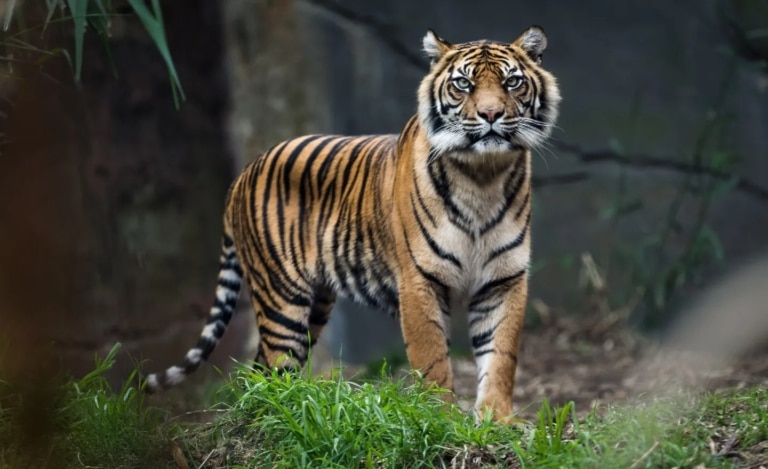
In Ukraine there is no clear official “white list” of exotic animals that are allowed to be kept at home, but there are black lists, i.e. those species that are prohibited by law. First of all, these are predatory animals, poisonous snakes, large parrots and wild mammals listed in the Red Book or falling under the international CITES Convention. However, many less dangerous and unprotected exotics are allowed as long as they do not pose a threat to humans and nature. To avoid breaking the law, the animal must be purchased from a certified kennel or official seller with provenance papers. It is equally important to know that some species, although not explicitly banned, may require a permit to keep.
List of authorized exotic animals and what you should know about them
Among the permitted species, there are many interesting animals that are suitable for home keeping if you give them the right conditions.
1. Sugar Flyers – small marsupials with large eyes, similar to miniature squirrels. Very cute, social and active at night. They need a tall cage with branches, special food (fruit, protein food), and lots of attention as they suffer from loneliness.
2. African dwarf hedgehogs – not spiny wild hedgehogs, but ornamental hedgehogs. Very popular as a first exotic. Require warmth (at least 22 °C), quietness and special food, preferably veterinary. Although they look simple, they can easily get sick due to stress.
3- Achatines are giant snails that live in a terrarium. They need moisture, warmth, and calcium in their diet. Do not make noise, do not stink, suitable even for children, but live up to 10 years.
4. Reptiles – this includes king pythons (non-venomous, calm), bearded agamas (a type of lizard that reacts to humans), red-eared turtles. All need ultraviolet light, heating, proper diet. The agama, for example, requires live food, while the turtle requires fresh water and a large aquaterrarium.
5. Parrots (not all!) – it is allowed to contain wavy, Corellas, often – Jaco (but the latter require documents). Birds require a large cage, flights, toys and attention, because they can get depressed. Do not forget about noise – parrots are very loud.
6. Amphibians – axolotls are a real trend right now. They live in cool water, don’t need heating, but are vulnerable to chemicals in the water. They eat frozen food, need filtration and regular aquarium cleaning.
7. Ferrets decorative – intelligent, active, very similar to kittens in behavior. Can walk around the apartment, but like to chew things. Need castration (otherwise there will be a strong odor) and proper nutrition.
8. Chinchillas are fluffy rodents with very soft fur. Do not tolerate moisture, love dust baths, eat only dry food. Need a spacious cage, quietness and temperature control – they are very sensitive to heat.
9. Spider tarantulas, exotic insects (praying mantises, crickets, sticks) – interesting, but only for experienced and not very impressionable people. Need high humidity, heat, live food (sometimes even mice for spiders), and of course, a separate container for each species.
10. Fish and marine invertebrates – marine aquariums with corals, shrimp, clownfish look amazing, but this is the most expensive category. You need expensive equipment, salt for water, stable parameters.
Responsibility of the owner: conditions, care and real difficulties
To have an exotic animal is first of all a great responsibility. Even if the species is not prohibited, almost every exotic requires special conditions of content, ignoring which can lead to disease or even death of the pet. For example, an achatina without calcium begins to dissolve its own shell, and an axolotl in warm water gets skin infections. Most reptiles and amphibians need ultraviolet lights to synthesize vitamin D3 – without it, rickets occurs. More importantly, many of these animals can’ t tolerate being alone or, conversely, can’ t live in pairs – like sugar fliers that get bored at night or spiders that can eat each other. This means that the future owner should know the biology of the species before buying the animal. Also to consider: exotics are not a toy. They should not be dragged around on their hands or poked in the eyes. They do not always react to a person as usual cats or dogs, and in case of stress they can hide, lose their appetite or even attack.
Another important aspect is veterinary care. In most cities of Ukraine, finding a good doctor for a parrot, python or hedgehog is a problem. Therefore, treatment can be expensive and not always effective. Moreover, certain animals carry diseases dangerous for people: for example, reptiles are often carriers of salmonella.
Finally, there is the question of the legality of the purchase. Never take an exotic animal “from hand” without documents – it may be illegal, and most importantly – you do not know in what conditions it lived. Buying an animal in a proven kennel, you not only act according to the law, but also support humane breeding conditions.

Therefore, before enthusiastically throwing yourself at the photo of a ferret in Instagram or a snail from TikTok, you should think a hundred times: are you ready to become a caretaker for a creature from another world, with its own requirements, rhythms and fragile psyche? Exotics are beautiful, unusual and often very interesting, but only when one is ready to be fully responsible for a living creature.