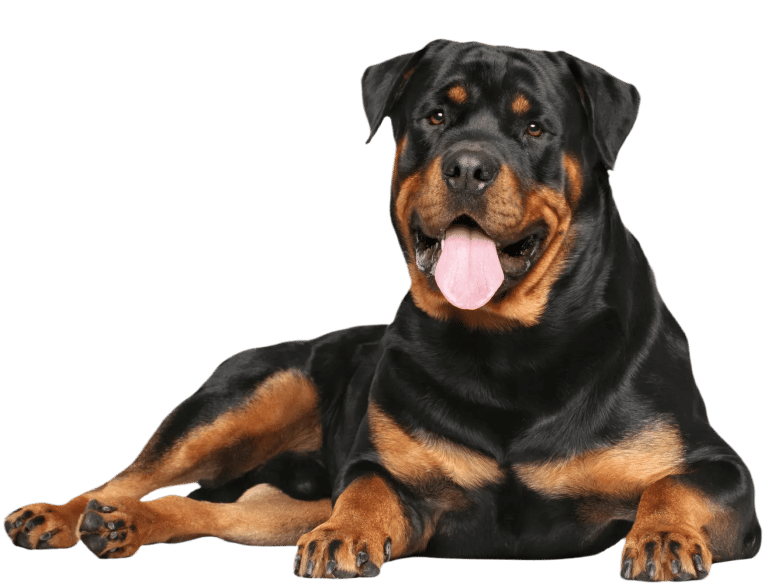
Rottweiler grooming in Kyiv
Professional care for the short but thick coat of the Rottweiler

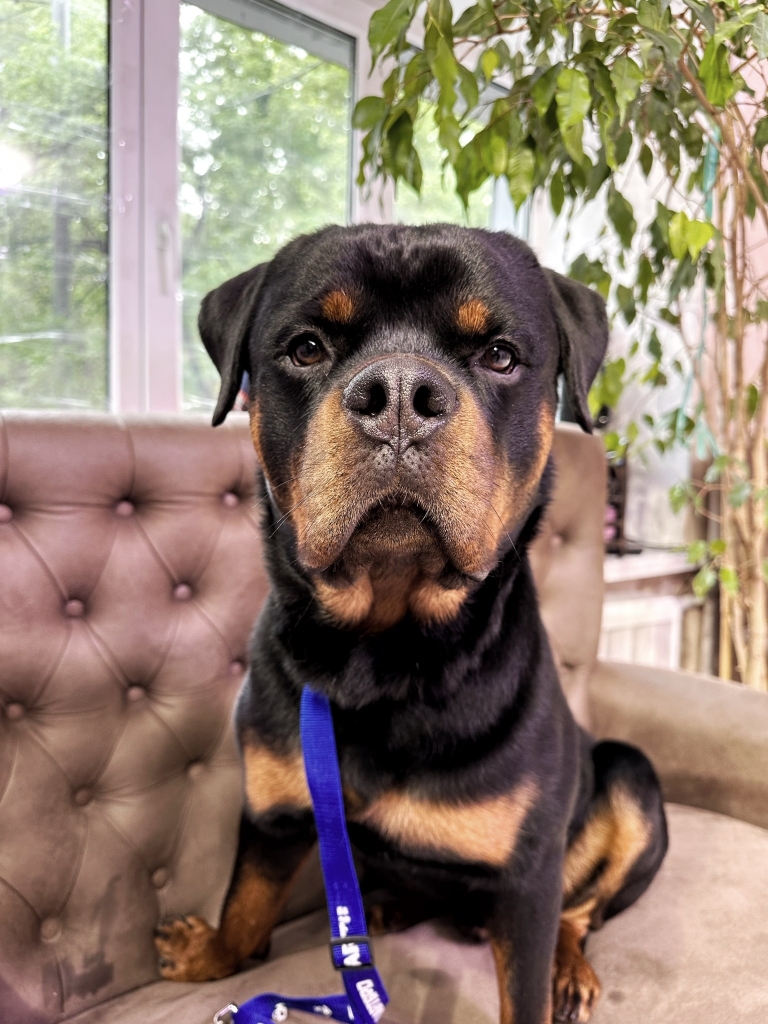
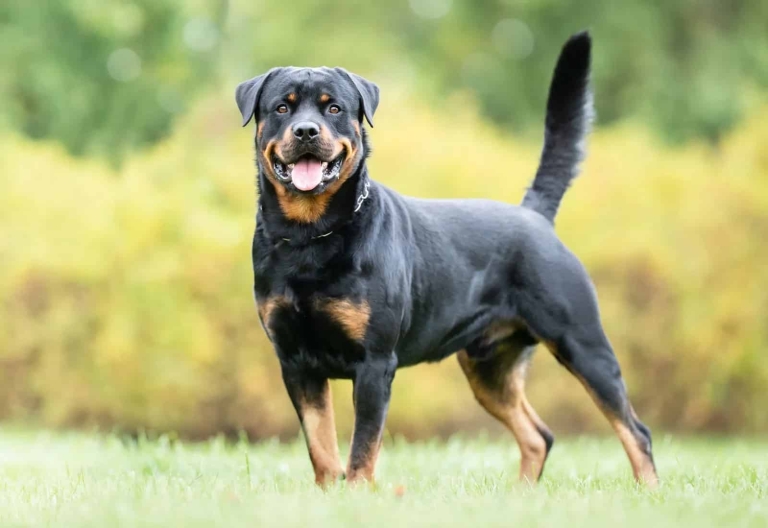
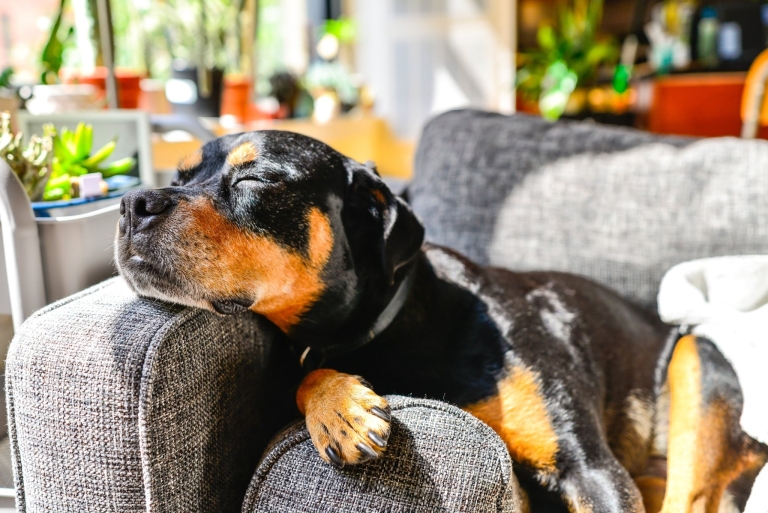
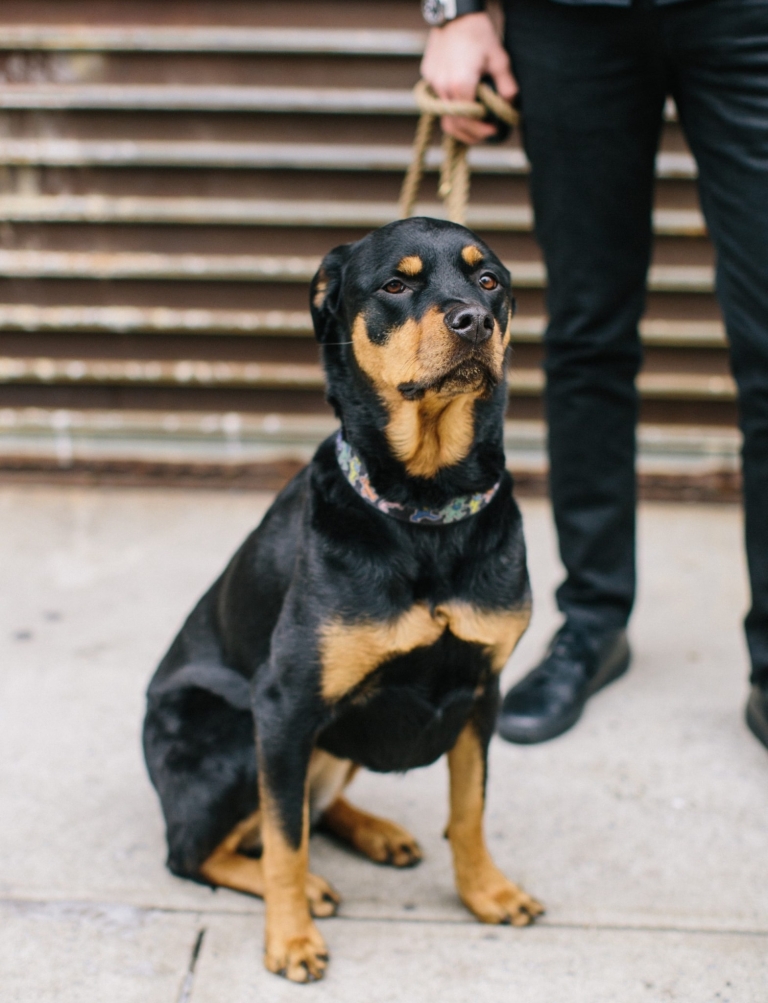
The Rottweiler is one of the oldest and most famous working breeds, dating back to the times of Ancient Rome. Their ancestors accompanied legionnaires, guarded camps, and drove cattle. Later, in the German city of Rothweil, these dogs became indispensable butchers’ assistants and property guards, which determined the modern name of the breed. The Rottweiler has a powerful, muscular build, a broad sternum, and a short, dense coat with a thick undercoat that protects it well from the weather.
This is a large dog: the average height at the withers for males is 61-68 cm, for females – 56-63 cm. The weight usually ranges from 40 to 60 kg, depending on the sex and conditions of detention. The Rottweiler always gives the impression of strength and confidence.
Rottweilers are known for their balanced but determined character. They are loyal dogs that are great for guarding, but at the same time, they are gentle and calm around the family. They are intelligent, quick learners, and appreciate the authority of their owners. Proper upbringing and socialization make a Rottweiler a reliable friend and guardian.
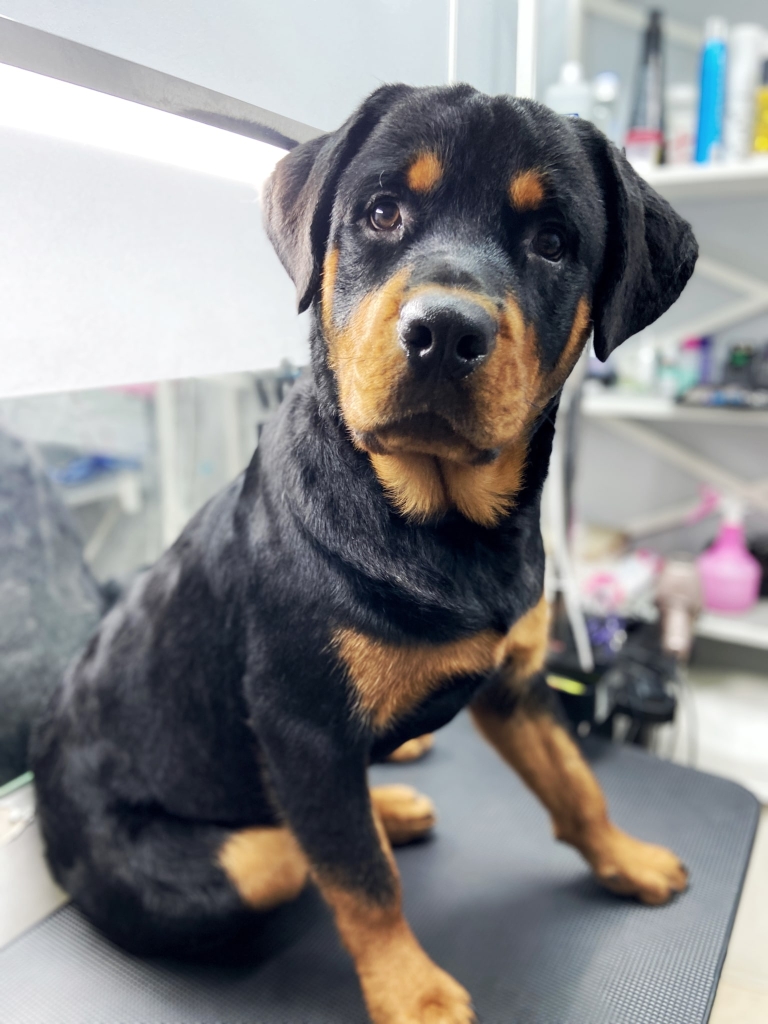
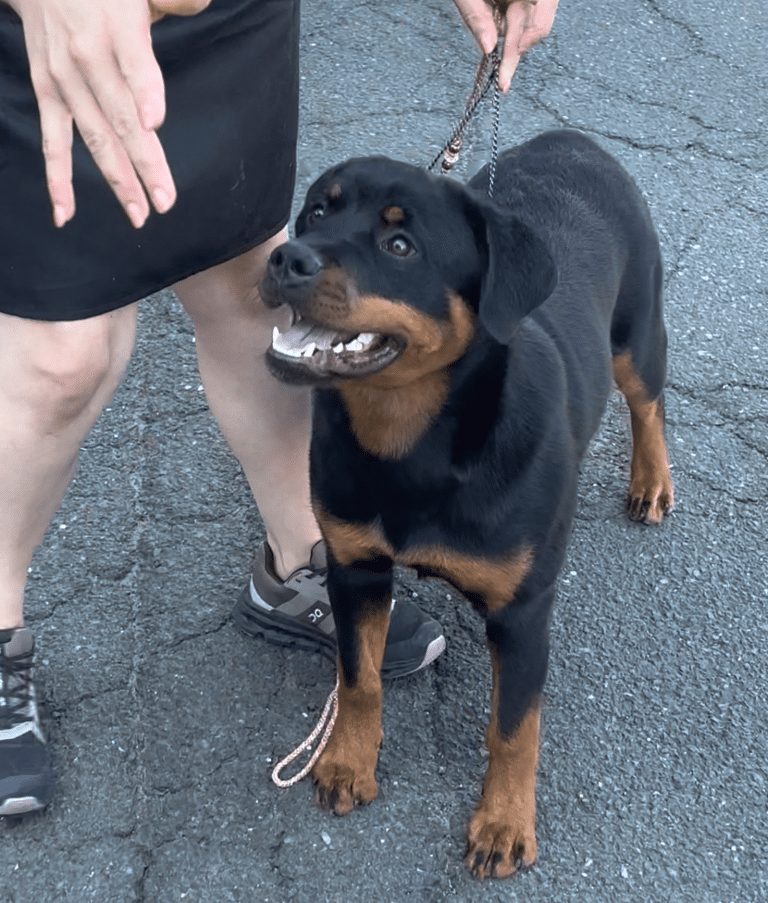
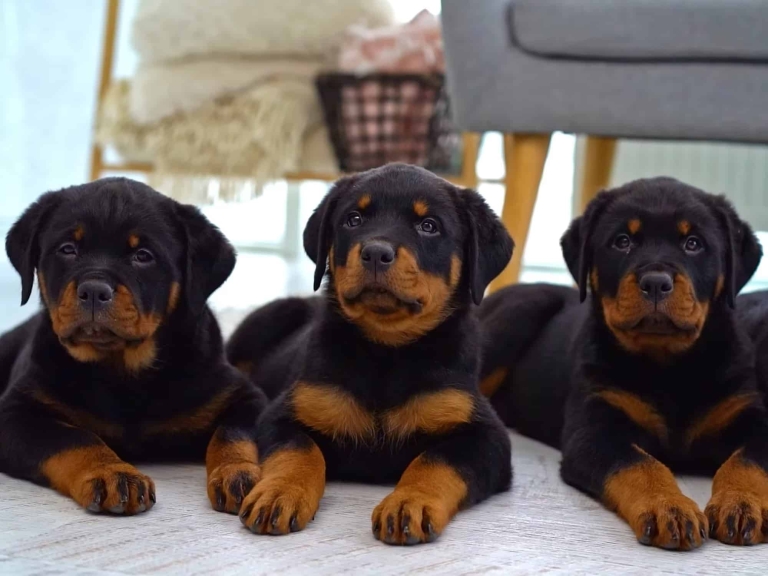
Kids of this breed are active, playful, and very inquisitive. They grow up quickly, so they need proper discipline and strict upbringing from an early age. In childhood, the Rottweiler needs even more careful grooming, as the undercoat is actively forming.
Classically, there are German Rottweiler and American Rottweiler, which differ in appearance standards and use in different countries. The so-called Royal Rottweiler is often mentioned separately – this is not an officially recognized standard, but rather a popular name for the largest representatives of the breed. The Royal Rottweiler has a more massive skeleton and impressive size, so it impresses with its strength and majesty.
Despite its short coat, the Rottweiler needs regular and competent grooming. Its undercoat is thick, so during molting, the hair falls out in large quantities. Basic procedures:
Combing – it is recommended to comb the Rottweiler 1-2 times a week, and during periods of active molting – daily. This reduces the amount of hair in the house and allows the skin to breathe.
Bathing – optimally once every 1.5-2 months or as needed. Use special shampoos for dogs with sensitive skin.
Skin care – Rottweiler’s skin can be prone to irritation, so the right cosmetics and regular check-ups can help avoid problems.
Nailtrimming is an important procedure, as too long nails affect posture and movement.
Cleaning ears and teeth helps maintain hygiene and prevents infections.
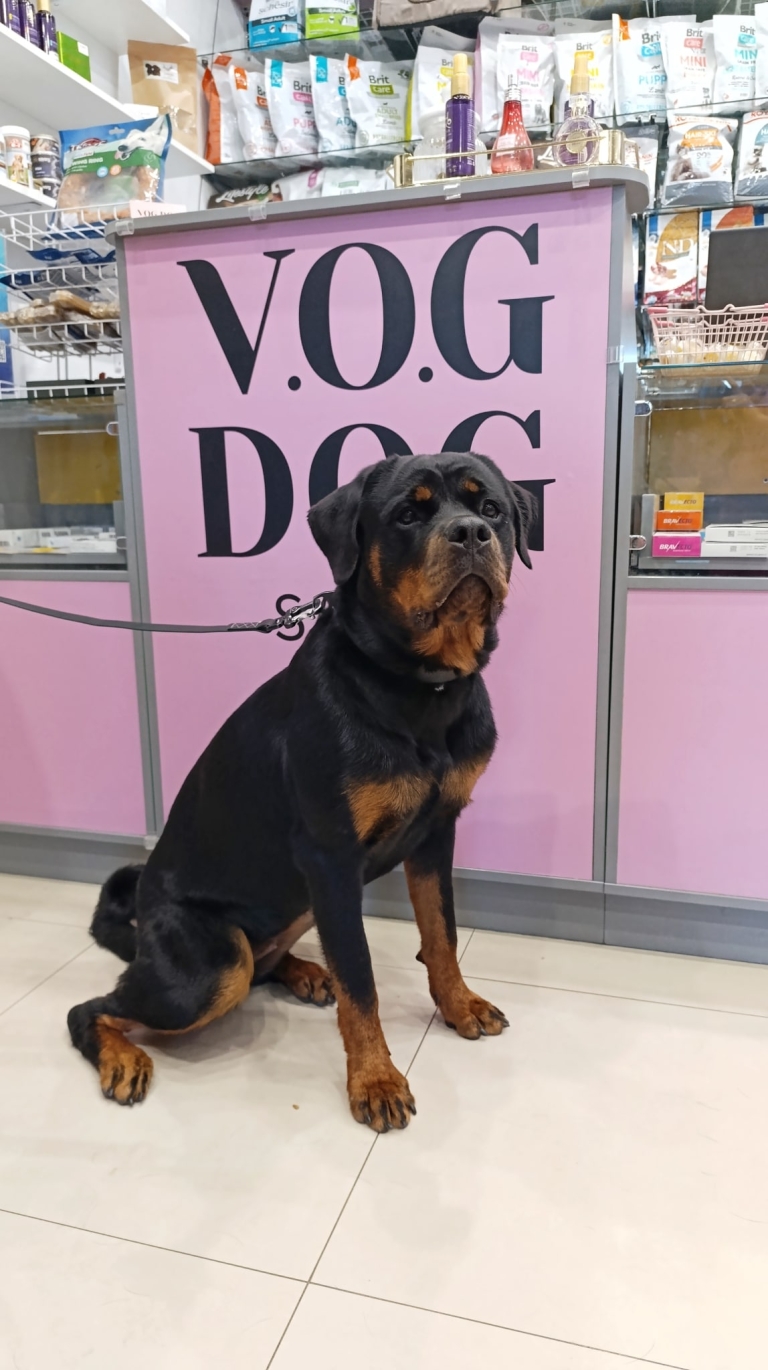
At our V.O.G DOG SALON in Kyiv, we know how to properly care for large breeds. Our groomers know how to work with Rottweilers, select individual care products, and ensure the comfort and calmness of the animal. Sign up your Rottweiler for grooming and he will always look well-groomed, healthy, and happy.
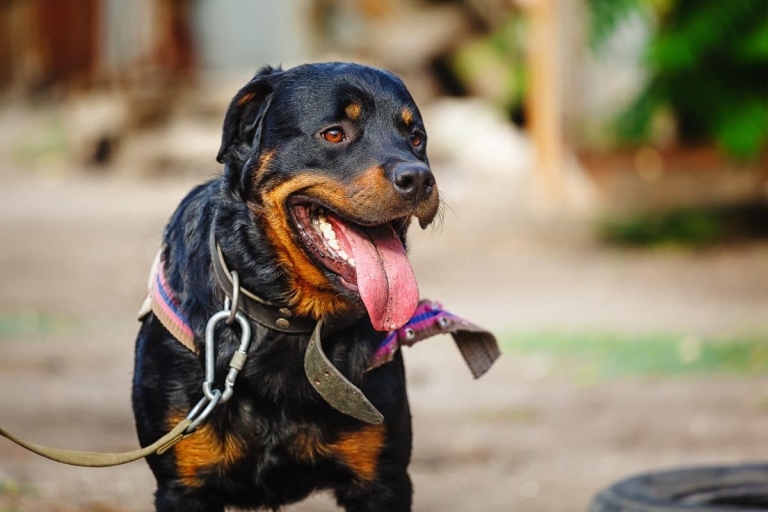
- Bathing with professional cosmetics:
Before bathing, the dog is thoroughly brushed to remove some of the dead hair. In the bath, the Rottweiler stands on a special anti-slip coating to help him feel confident. The water temperature is controlled - neither hot nor cold. First, the coat is well moistened, after which the groomer applies shampoo with light massage movements, washing the coat and undercoat. Particular attention is paid to the neck, chest, and hind legs, where the coat is the densest. Then, a conditioner or mask is used to cover the hair scales and add shine. Everything is thoroughly washed off so that no cosmetics remain on the skin.
- Combing and deshedding:
After bathing, the coat is dried with a force-dryer - a powerful stream of air that blows out the remaining undercoat. The groomer works from the neck to the tail to make the coat lie properly. Next, special tools are used - a furminator, carder, or fluffer, depending on the density of the undercoat. The combing is done gradually: first, large areas (back, sides), then more delicate areas (belly, tail, paws). This removes dead hair, stimulates blood circulation, and allows the skin to "breathe".
- Skin care:
After the main procedures, the coat is examined again. If the Rottweiler has dryness or irritation, regenerating serums are used, which are applied locally to problem areas. The groomer can also do a light massage while applying conditioner or balm, which calms the dog and improves blood circulation.
- Claw trimming:
The nails are trimmed with a special clipper. The groomer works gently to avoid touching the sensitive pulp inside the claw. After trimming, the tips are polished with a nail drill or file to make them smooth and not cling to the floor. This prevents cracks and discomfort when walking.
- Cleaning the ears:
The ears are wiped with cotton pads with a special lotion that dissolves dirt and wax. All movements are gentle and careful so as not to injure the delicate skin of the ear canal. If necessary, remove excess hairs at the entrance to the ear to ensure ventilation.
- Dental hygiene:
The salon can clean your teeth with a special brush or wipes with an antiseptic solution. This helps to remove plaque and freshen breath. For prevention, groomers often advise owners to use chewing gum or regular brushing at home.
- Paw care:
Inspect the paw pads for cracks or damage. If necessary, apply a moisturizing balm. Dirt and hair are cleaned out between the toes to prevent tangles and moisture accumulation.
- The final stage:
After all the procedures, the dog is combed again, and an antistatic spray or a finishing conditioner for shine may be applied to the coat. Before and after photos are taken so that the owner can see the difference. The Rottweiler leaves the salon clean, fresh, and with a beautiful shiny coat.
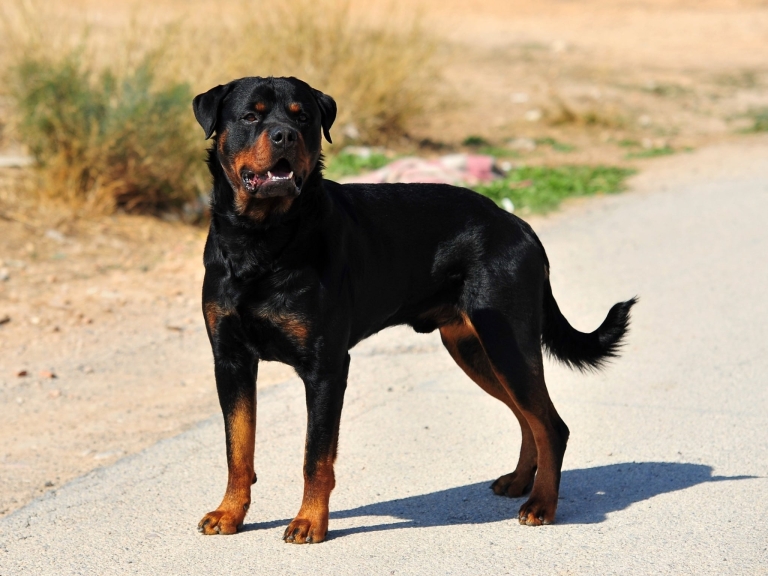
Yes, it is necessary. The Rottweiler has a thick undercoat that actively sheds twice a year. Without regular combing, the coat will fall out in tangles, and the skin can "steam". The salon uses deshedding and force-drying, which remove dead hair much more effectively than brushing at home.
On average, once every 1.5-2 months. You should not bathe more often to avoid drying out the skin. If the dog gets dirty on a walk, you can wash his paws or belly locally. For a complete bath, you need professional cosmetics with a balanced pH.
No, you can't shave his coat. It has a protective function, and the undercoat helps regulate body temperature. Proper grooming is combing, washing, and cosmetic masks, not clipping. The only thing that is regularly trimmed is the claws.
If you hear a characteristic "clatter" on the floor while walking, the claws have outgrown. Long claws change posture and cause discomfort. They need to be trimmed about once every 3-4 weeks.
Yes, but only if you take him for daily walks and exercise. The Rottweiler is an active breed that needs at least two long walks a day. In an apartment, it is important to keep the coat clean and groom in time, otherwise shedding will be very noticeable.
The diet should be balanced and rich in protein and fatty acids (omega-3 and omega-6). This means either high-quality ready-made super-premium food or a carefully prepared diet of natural products. A lack of vitamins immediately affects the coat and skin.
Rottweilers often have a protective instinct and may distrust strangers. That's why at V.O.G DOG SALON we make an adaptive acquaintance: the groomer first allows the dog to sniff the tools, speaks in a calm voice, and works without sudden movements. If necessary, procedures are performed in the presence of the owner.
It is important for a Rottweiler to be treated for fleas and ticks, as well as worming. Also, large breeds are prone to joint problems, so it's worth discussing cartilage and ligament support with your veterinarian.
Rottweilers are very devoted to their families, but because of their strength and protective instinct, they need to be handled responsibly. Children should not be left alone with a Rottweiler without an adult, especially if the dog is still young and has not been fully trained.


I am Amina, and I believe that a good groomer is not only someone who skillfully uses clippers and scissors, but also a great specialist who has a deep understanding of animal behavior. I am guided by this simple definition in my work and constantly strive to improve. With your Tail, I will always find understanding during the procedures and will definitely take into account all your wishes. I also ensure that every visit of your pet will be completely comfortable for him.
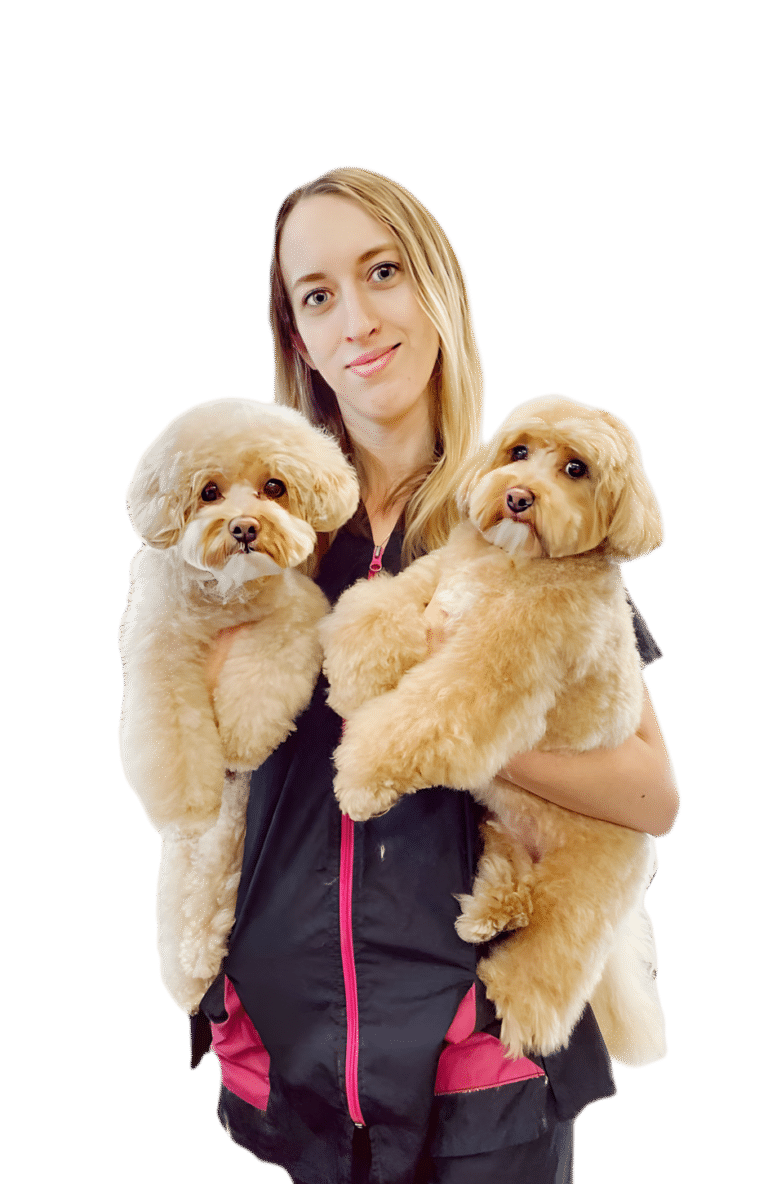
Meet Iryna – a TOP Groomer Stylist, a master with golden hands and an exceptional sense of style, who has been creating wonders in the grooming world for over 4 years!
Her favorite furry clients are the unique POMERANIANS, but she easily works with all charming breeds such as POODLES, MALTESE, MALTIPOO, COCKAPOO, CAVAPOO, YORKIES, and even the most demanding CATS.
Iryna’s professionalism is confirmed by her participation in prestigious master classes held by leading grooming experts:
- “Asian Style: Drop Coat” and “Asian Style: Volume Coat” (Anna Pozdnyakova);
- Poodle cut “Scandinavian Lion” (Oleksandra Popova);
- Jack Russell Terrier hand-stripping (Anna Ishchenko);
- Pomeranian grooming “Correct Grooming” (Yuliia Voitova);
- Bichon grooming “Asian Style” (Alina Papian).
In Iryna’s hands, your pet becomes a true work of art, where individuality, harmony, and natural beauty come first. Her secret lies in her deep understanding of every pet’s needs, endless love, and genuine care.
Iryna uses only a humane and gentle approach, ensuring your furry friend feels comfortable, calm, and surrounded by positive vibes during the whole process. That’s why every pet leaves the salon happy, beautiful, and completely satisfied!
By choosing Iryna, you’re choosing unmatched style, outstanding quality, and true artistry that brings your Loyal Companion’s unique look to life.
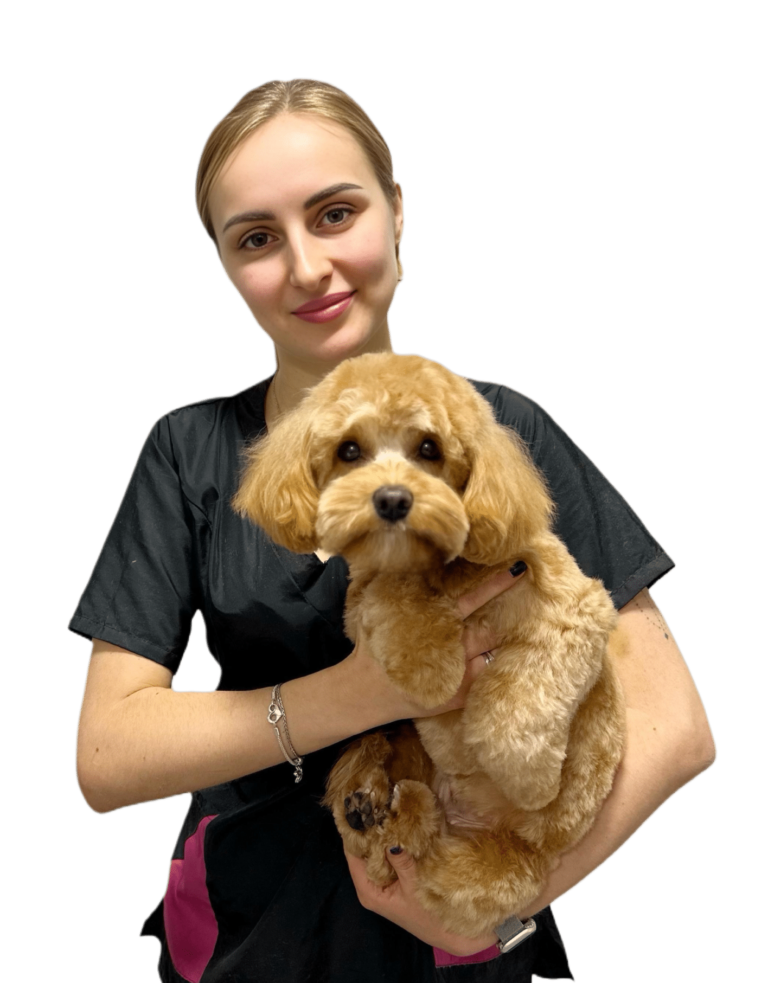
Svetlana is not just a groomer, she is a real craftswoman who turns every grooming session into a work of art. For her, caring for animals is more than just a profession; it is a passion and a calling that she has perfected over the years. Her skill and impeccable technique allow her to create individual images that emphasize the uniqueness of each Tail. Svetlana approaches each animal with great love and attention, understanding that for its owner, the Beloved is part of the family.
After Svetlana's visits, your Beloved will look well-groomed and beautiful and will shine with health and happiness. Her work is a harmony that fills the life of every client with joy. As a TOP Groomer stylist, Svitlana achieves perfection in every look. She strives not just to provide a service, but to create real masterpieces, making each visit unique and special for each client.
Her approach is based on a deep understanding of the needs and character of each animal, which allows her to create stylish and comfortable images for Tails. Svetlana takes into account all nuances: from the structure of the fur to the peculiarities of behavior, which makes the result not just beautiful, but ideal from all points of view. If you want to get the maximum possible comfort for your Pet and satisfaction from the grooming process - then you should come to Svetlana!
Kiev, Pechersk district, M. Mikhnovsky Boulevard (Friendship of Nations), 27
Kiev, Pechersk district, Lesya Ukrainka Boulevard, 14
Kiev, Solomyanka district, V. Lobanovsky Avenue, 6a
Kiev, Desniansky district, Red Kalina (Mayakovsky) Avenue, 68a
Kiev, Shevchenko district, Sholudenka Street, 14
Kiev, Darnytsky district, Knyazhy Zaton Street, 2/30
Kiev, Dnipro district, I. Kotlyarevsky (Work) Boulevard, 7
Kiev, Holosiivskyi district, 4 Seasons Residential Complex, Maksymovycha Street, 3d
Kyiv, Obolonskyi District, V. Ivasiuka Avenue, 6B (building 2)
Kiev, Shevchenkivskyi district, Shchusev Street, 4
European Street, 2a (Eurocity Residential Complex, near Vyshneve town)
Kiev, Darnytskyi district, st. Knyazhiy Zaton, 11