Haircut Japanese hin in Kiev
Professional grooming of the Japanese Hynx, taking into account breed features and coat structure
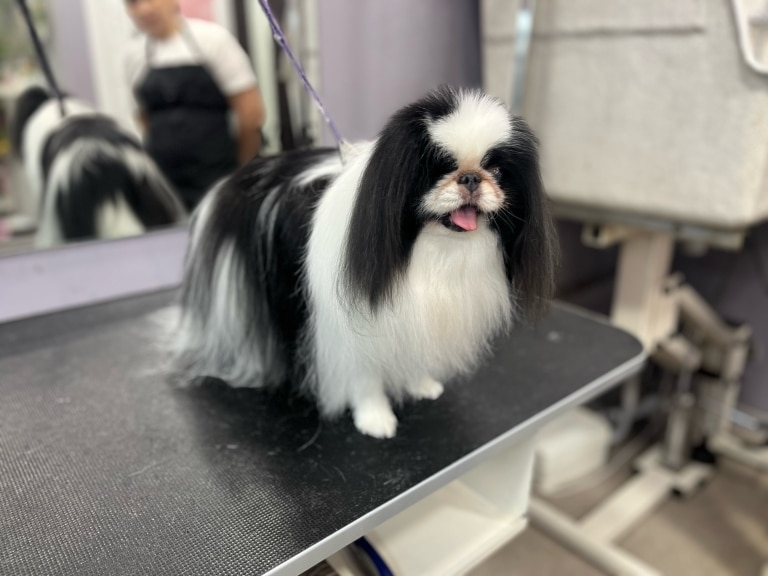
TheJapanese Hin is an ornamental dog breed with a deep history and a distinct aesthetic. It is believed that hins came to Japan from China or Korea several centuries ago as gifts to the imperial court, where they were kept not as ordinary dogs, but as elegant companions. That is why the breed was formed not for work, but for close human contact, quiet indoor life and impeccable appearance.
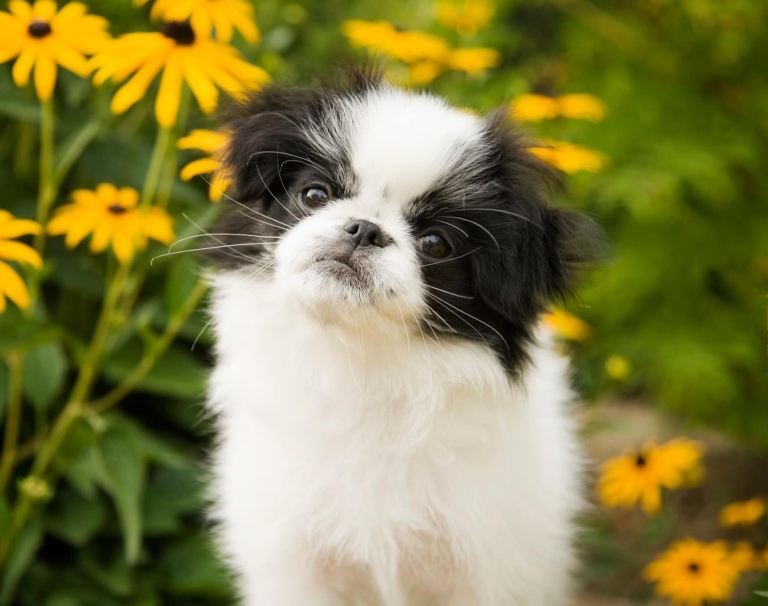
The Japanese Hin is a dog of small size. Growth is usually about 20-27 cm at the withers, weight ranges from 1.8-4 kg. The breed has no official varieties, but conditionally dogs are sometimes divided by body type – more compact or slightly elongated, as well as by color. The most common colors are white with black or white with red spots, and the symmetry of the color of the muzzle is considered especially valuable.
In character, the Japanese Hin is balanced, delicate, attentive to the mood of the owner. He is not prone to obsession, but is very attached to the family, feels well in the apartment, does not need excessive physical exertion and usually easily adapts to the rhythm of life of the owner. It is a dog that appreciates calmness, comfort and regular but careful care.
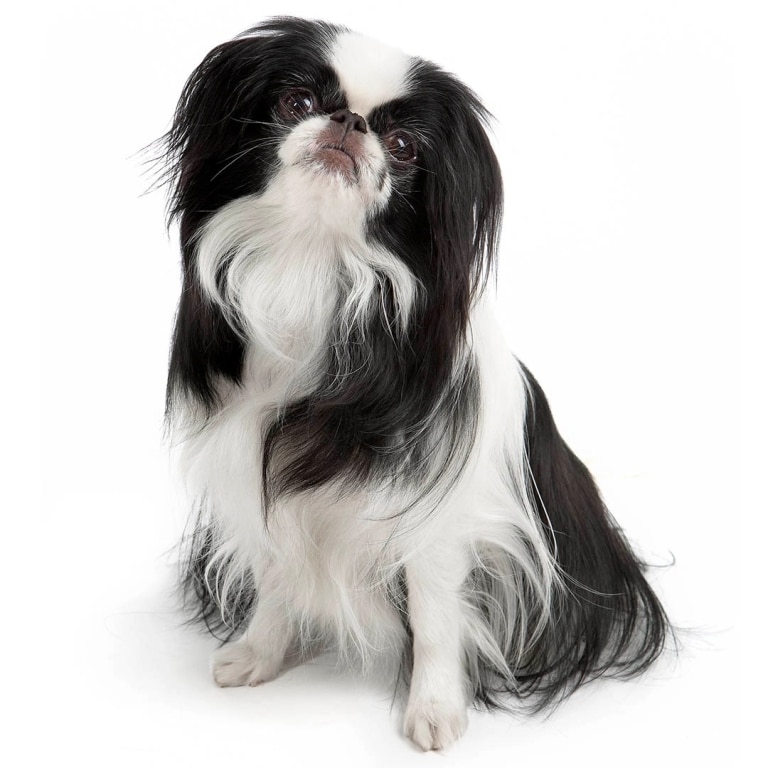
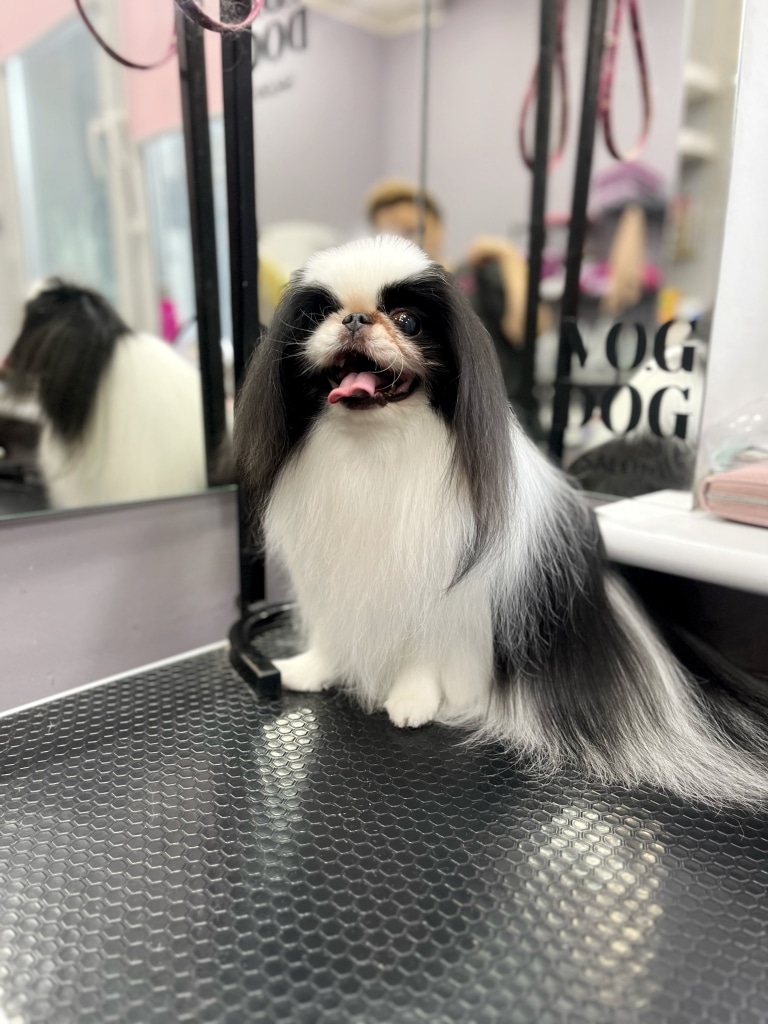
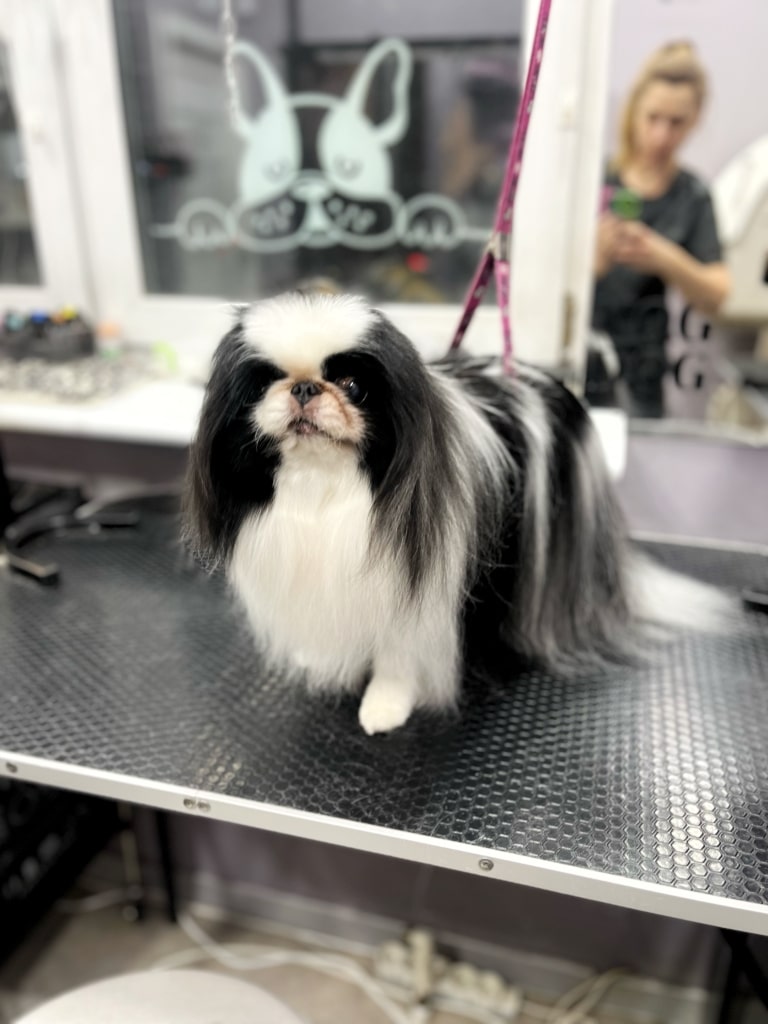
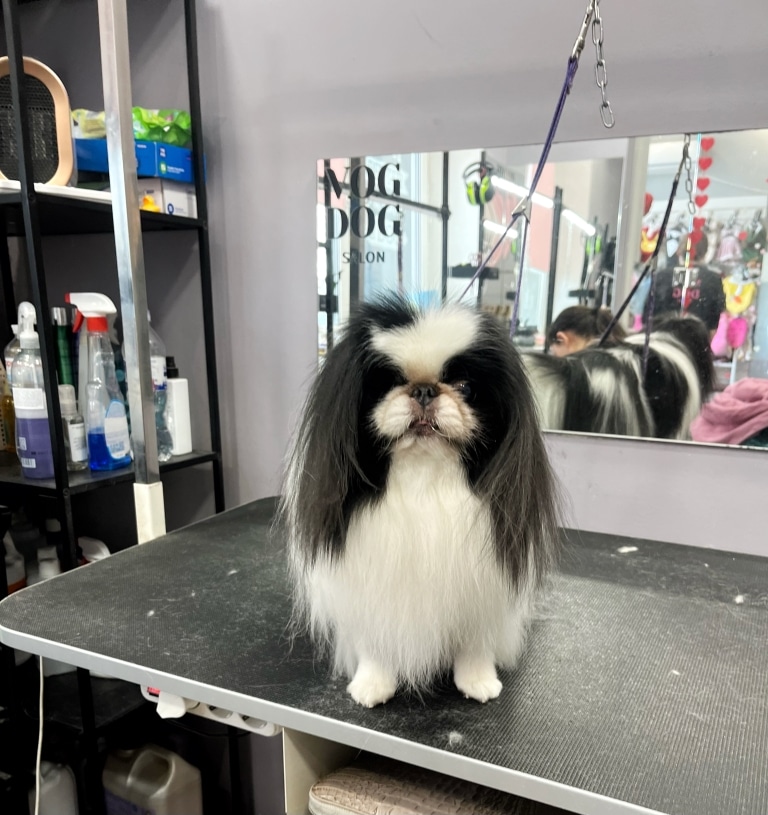
The most important feature of the breed is its coat. The Japanese Hin has a long, straight, silky coat with no undercoat. It is the lack of undercoat that makes grooming both easier and more demanding. On the one hand, the coat does not pile up as aggressively as in breeds with a thick undercoat, on the other hand, it easily dries out, loses its luster, can break or look unkempt without the right approach. The ears, “pants” on the hind legs, the area behind the ears, collar and tail require special attention.
The breed standard assumes the preservation of the natural length of the coat, its lightness and mobility. The main task of professional grooming is to delicately even out the silhouette, tidy the paws, sanitary areas, the area under the tail, neaten the ears and keep the coat clean and shiny. Complete shaving or short haircuts are not recommended for this breed, as they spoil the structure of the coat and violate the natural look of the Chin.
Special attention in the care is paid to bathing. For the Japanese hin it is important to use properly selected shampoos and conditioners that do not weigh down the coat, do not “eat” its lightness and at the same time moisturize the hair. Improper cosmetics or home care without knowledge of the breed quickly lead to dullness of the coat, tangling and unkempt appearance even in a healthy dog.
That is why the Japanese Hin needs regular professional grooming by specialists who understand the breed nuances, work with the structure of the coat, and not just “trim the dog”. In the salons of the V.O.G DOG SALON chain, groomers have practical experience in working with decorative breeds, including the Japanese Chin. They know how to preserve the breed’s natural beauty, emphasize its elegance and provide care that does not harm either the coat or the dog’s comfort. This is when grooming becomes an extension of the breed’s culture, rather than a compromise between convenience and appearance.
Examination of the coat, skin and anatomical areas:
The groomer begins with a full examination of the Japanese Hound. The condition of the coat along its entire length is assessed: are there any dry patches, brittleness, tangles, lost luster. Separately checked the skin - whether there are no irritations, redness, flaking, because this breed has a thin skin, which quickly reacts to improper care. Also examined are the ears, the area around the eyes, paws, claws and sanitary area. At this stage, the groomer determines what cosmetics to use, what intensity of procedures to choose and whether additional grooming steps are needed.
Preparatory combing and work with tangling:
Before bathing, the Japanese Chin's coat is combed thoroughly but very gently. The groomer works on zones, starting from the tips and gradually moving to the root, so as not to pull out the hair and not to create painful sensations. Particular attention is paid to the area behind the ears, the inside of the paws, the "pants" and the tail - this is where the hair is most likely to pile up. If there are tangles, they are removed by hand or with special tools, without aggressive cutting, in order to preserve the length and structure of the coat.
Bathing taking into account the structure of the Japanese hin s coat:
Bathing is done in stages. First, the coat is wet well so that it accepts the cleanser evenly. The shampoo is applied with gentle massage movements, without rubbing or "bunching" the coat. The groomer cleans not only the length, but also the skin, but very carefully so as not to dry it out. After a thorough rinse, a conditioner or mask is applied, which closes the hair cuticle, moisturizes it and makes the coat silky, light and manageable.
Controlled drying and shaping a natural look:
Drying the Japanese Chin is one of the most important steps. The groomer works with warm, not hot air, constantly monitoring the temperature. During drying, the coat is brushed in the direction of growth, forming the breed's natural silhouette without artificial volume. The hair is not pulled or "over-dried" so that the coat remains lively, mobile and not brittle after the treatment.
Corrective haircut of the Japanese hin with observance of breed standards:
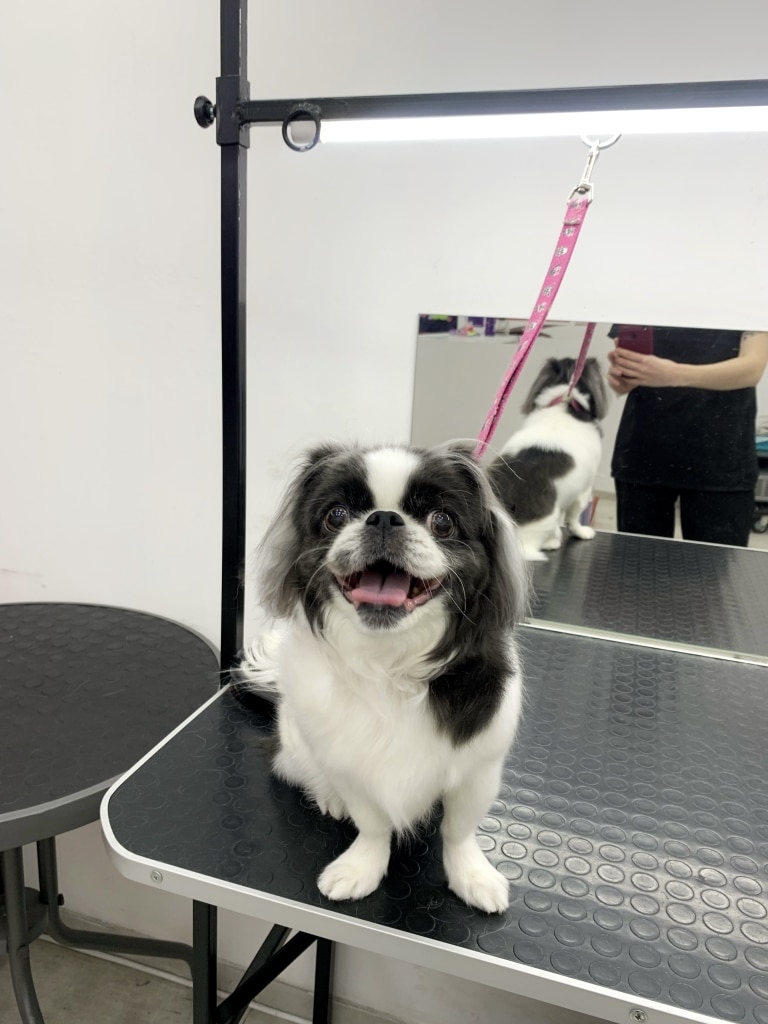
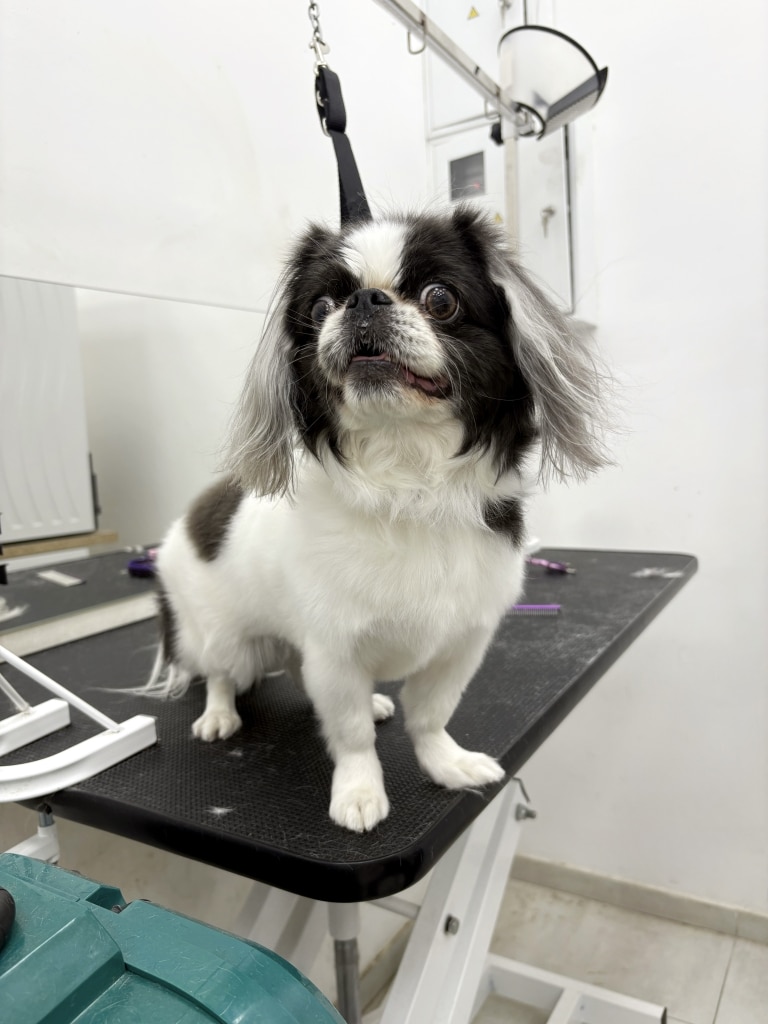
A Japanese Chin haircut does not involve a change of image. The groomer neatly arranges the paws, giving them a neat rounded shape, smooths the hair in the area under the tail, performs a sanitary haircut. If necessary, the hair around the ears is slightly corrected so that it looks clean and does not interfere with the dog. The length of the body coat is maintained - without radical shortening, which is detrimental to both appearance and coat quality.
Shaping the hair between the paw pads:
The groomer carefully trims the hair between the pads of the paws so that the dog does not slip on the floor and accumulate dirt and moisture. The work is carried out taking into account the anatomy of the paws and the sensitivity of this area, without unnecessary trauma.
Claw trimming and buffing:
The claws are trimmed to the correct length so that paw placement is not altered and discomfort does not occur during movement. The groomer works carefully, taking into account the length of the living part of the claw. If necessary, the edges of the claws are filed so that they do not snag or break.
Delicate cleaning of the ears:
The ears are cleaned with special products that do not irritate the skin. The groomer removes dirt and excess wax only from the accessible part of the ear, without intervening deeply so as not to disturb the natural protection of the ear canal.
Hygiene of the eye area:
The area around the eyes is cleaned of secretions and tear tracks. The groomer uses safe products that do not cause burning or irritate the mucosa, which is especially important for Japanese Chinas with their facial structure.
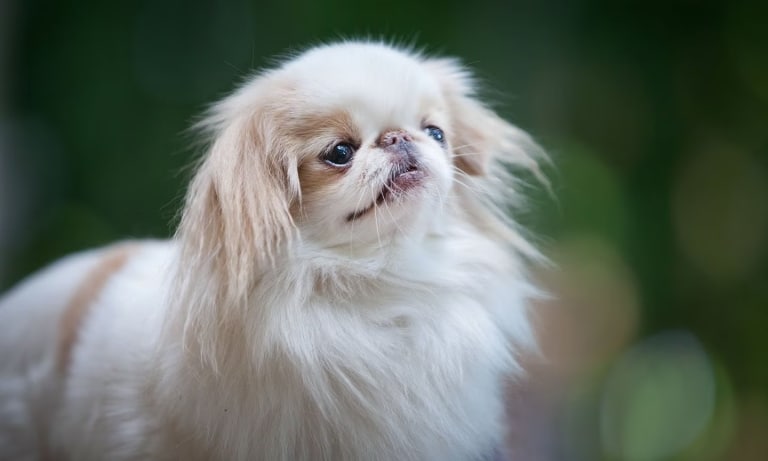
No, a short haircut is not recommended for the Japanese Chin. This breed has a long, straight coat with no undercoat, and shortening it disturbs the hair structure. After a short haircut, the hair may grow back unevenly, lose its luster and look stiffer. Only corrective clipping of the paws, sanitary areas and individual areas is allowed.
Optimally, every 4-6 weeks. This helps to maintain a tidy appearance, healthy coat and avoid tangles. Between visits, it is important to brush your dog regularly at home, especially in the area behind the ears and on the "pants".
The Japanese Shin does shed, but only moderately. Because the breed has no undercoat, shedding is not as intense as with Spitzes or other fluffy breeds. Regular professional grooming will greatly reduce the amount of hair at home.
Yes, you must. Without conditioning, the coat quickly dries out, becomes brittle and loses its silkiness. Properly selected care products moisturize the hair and make combing easier without weighing the coat down.
Home grooming is possible, but it is not a substitute for professional grooming. The owner can keep the coat clean and combed, but without proper bathing, drying and correction it is difficult to maintain the breed's appearance and coat quality.
Yes, but very carefully. Ears should be checked regularly and cleaned only when necessary. Excessive or improper cleaning can cause irritation, so it is better to entrust this procedure to professionals.
No. Human shampoos have a different pH level and will dry out your dog's skin and coat. This is especially dangerous for the Japanese Chin with its sensitive skin and fine coat.
It is most often the result of dry hair, improper cosmetics or lack of regular brushing. Tangles can also occur if the coat is not dried properly after bathing.
Because the Japanese Hin needs breed-specific grooming. The wrong haircut or cosmetics can ruin the coat for a long time. A professional salon takes into account breed specifics, anatomy and coat structure, preserving its natural beauty.
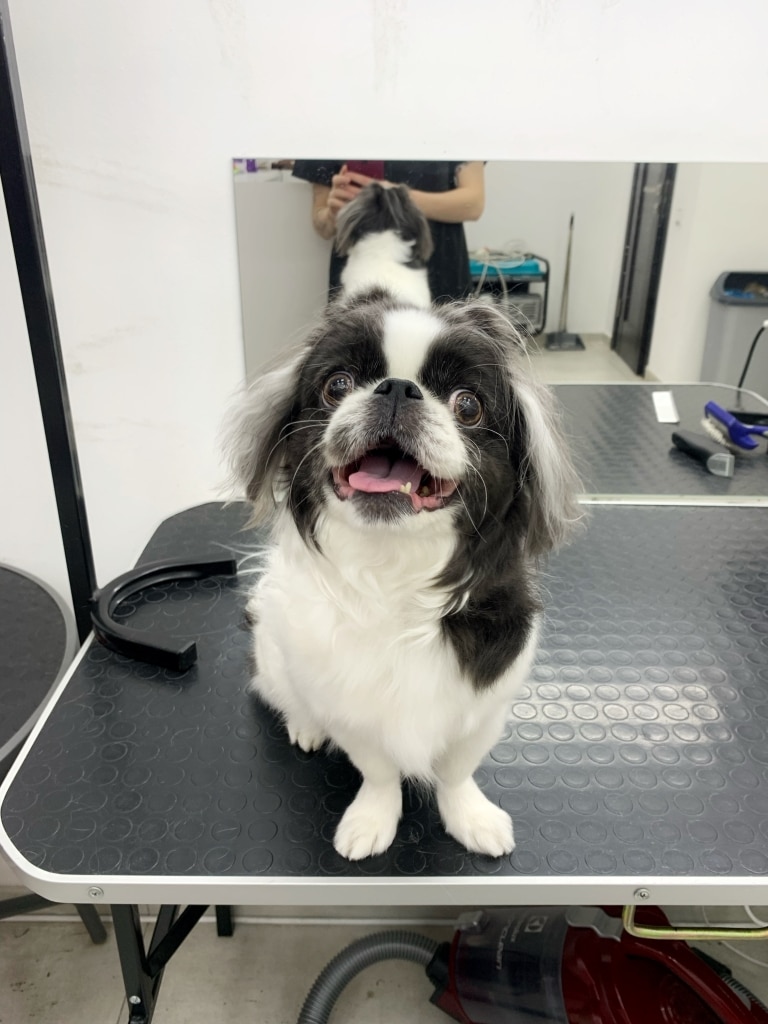
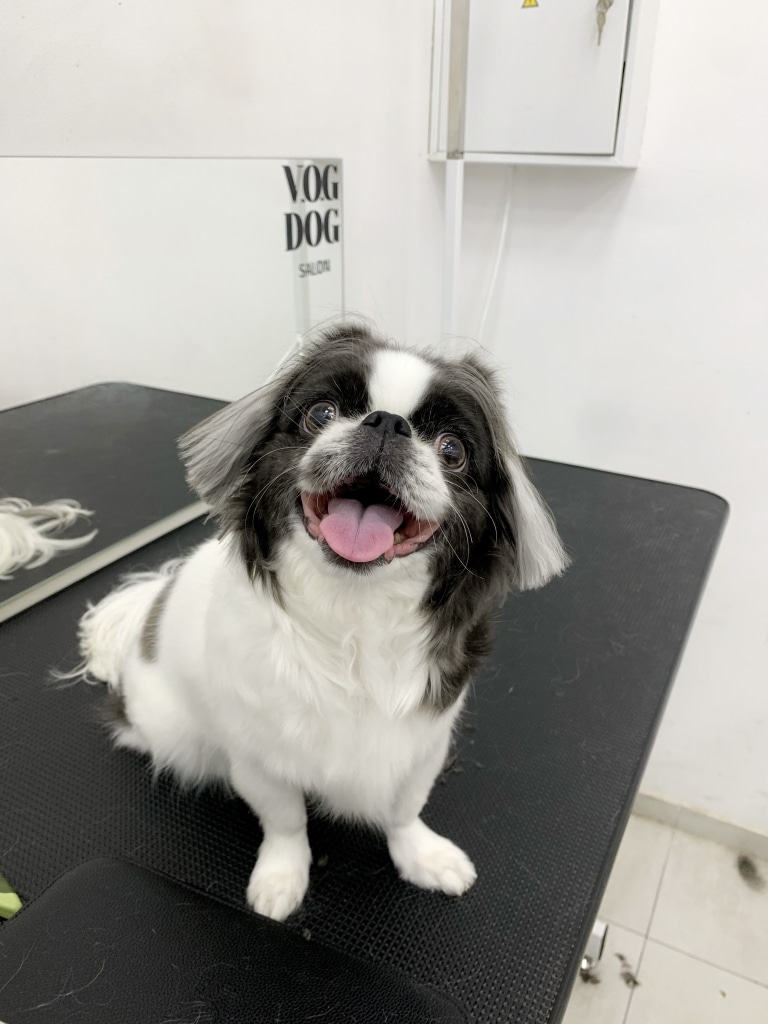

I am Amina, and I believe that a good groomer is not only someone who skillfully uses clippers and scissors, but also a great specialist who has a deep understanding of animal behavior. I am guided by this simple definition in my work and constantly strive to improve. With your Tail, I will always find understanding during the procedures and will definitely take into account all your wishes. I also ensure that every visit of your pet will be completely comfortable for him.
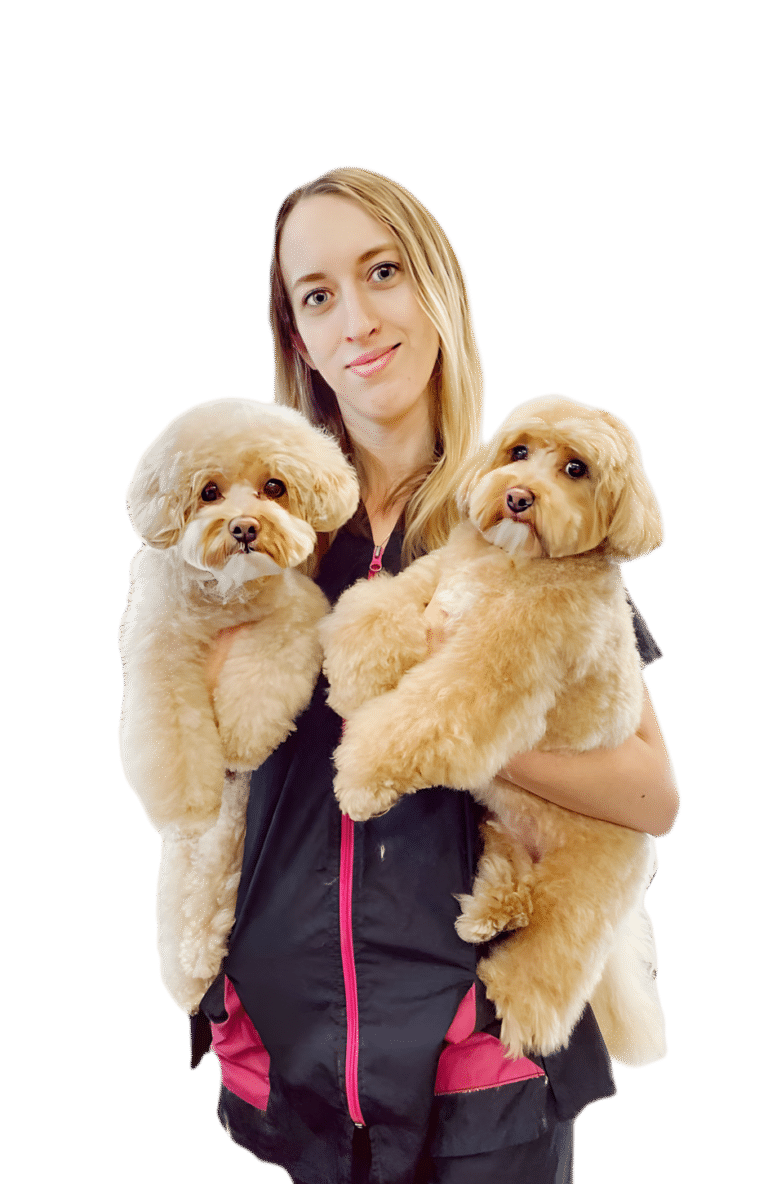
Meet Iryna – a TOP Groomer Stylist, a master with golden hands and an exceptional sense of style, who has been creating wonders in the grooming world for over 4 years!
Her favorite furry clients are the unique POMERANIANS, but she easily works with all charming breeds such as POODLES, MALTESE, MALTIPOO, COCKAPOO, CAVAPOO, YORKIES, and even the most demanding CATS.
Iryna’s professionalism is confirmed by her participation in prestigious master classes held by leading grooming experts:
- “Asian Style: Drop Coat” and “Asian Style: Volume Coat” (Anna Pozdnyakova);
- Poodle cut “Scandinavian Lion” (Oleksandra Popova);
- Jack Russell Terrier hand-stripping (Anna Ishchenko);
- Pomeranian grooming “Correct Grooming” (Yuliia Voitova);
- Bichon grooming “Asian Style” (Alina Papian).
In Iryna’s hands, your pet becomes a true work of art, where individuality, harmony, and natural beauty come first. Her secret lies in her deep understanding of every pet’s needs, endless love, and genuine care.
Iryna uses only a humane and gentle approach, ensuring your furry friend feels comfortable, calm, and surrounded by positive vibes during the whole process. That’s why every pet leaves the salon happy, beautiful, and completely satisfied!
By choosing Iryna, you’re choosing unmatched style, outstanding quality, and true artistry that brings your Loyal Companion’s unique look to life.
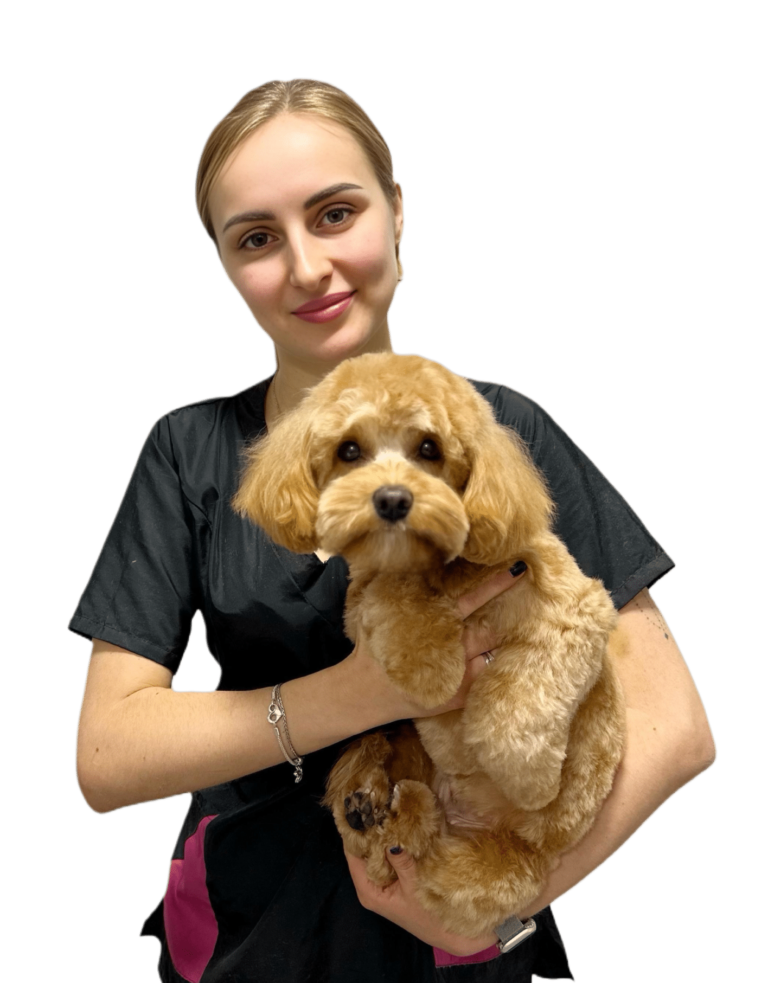
Svetlana is not just a groomer, she is a real craftswoman who turns every grooming session into a work of art. For her, caring for animals is more than just a profession; it is a passion and a calling that she has perfected over the years. Her skill and impeccable technique allow her to create individual images that emphasize the uniqueness of each Tail. Svetlana approaches each animal with great love and attention, understanding that for its owner, the Beloved is part of the family.
After Svetlana's visits, your Beloved will look well-groomed and beautiful and will shine with health and happiness. Her work is a harmony that fills the life of every client with joy. As a TOP Groomer stylist, Svitlana achieves perfection in every look. She strives not just to provide a service, but to create real masterpieces, making each visit unique and special for each client.
Her approach is based on a deep understanding of the needs and character of each animal, which allows her to create stylish and comfortable images for Tails. Svetlana takes into account all nuances: from the structure of the fur to the peculiarities of behavior, which makes the result not just beautiful, but ideal from all points of view. If you want to get the maximum possible comfort for your Pet and satisfaction from the grooming process - then you should come to Svetlana!
Kiev, Pechersk district, M. Mikhnovsky Boulevard (Friendship of Nations), 27
Kiev, Pechersk district, Lesya Ukrainka Boulevard, 14
Kiev, Solomyanka district, V. Lobanovsky Avenue, 6a
Kiev, Desniansky district, 4 Vikentiia Beretti Street
Kiev, Shevchenko district, Sholudenka Street, 14
Kiev, Darnytsky district, Knyazhy Zaton Street, 2/30
Kiev, Dnipro district, I. Kotlyarevsky (Work) Boulevard, 7
Kiev, Holosiivskyi district, 4 Seasons Residential Complex, Maksymovycha Street, 3d
Kyiv, Obolonskyi District, V. Ivasiuka Avenue, 6B (building 2)
Kiev, Shevchenkivskyi district, Shchusev Street, 4
European Street, 2a (Eurocity Residential Complex, near Vyshneve town)
Kiev, Darnytskyi district, st. Knyazhiy Zaton, 11