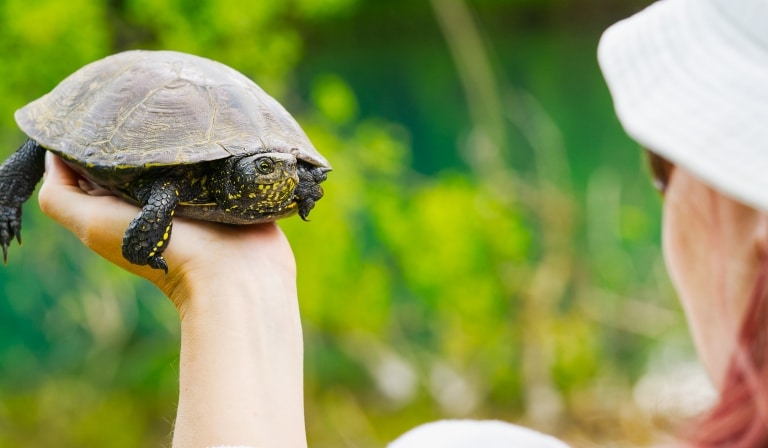
Turtles are real superheroes of nature, they have a strong shell, live a very long time and can swim even in the ocean. These marvelous creatures live on all continents except Antarctica. There are more than 350 species of turtles in the world, among which about 250 species live in freshwater bodies and swamps. The most popular are, for living at home, land and water turtles. Of course, land species are easier to care for, but aquatic – more beautiful look and more interesting to watch them. These include such varieties as: red-eared, European swamp, musk, Trionyx chinensis.
These pets delight with their activity and unpretentiousness. To turtle was healthy and lived a long life, it is important to properly organize its accommodation and nutrition. Errors in care can lead to disease and discomfort of the pet.
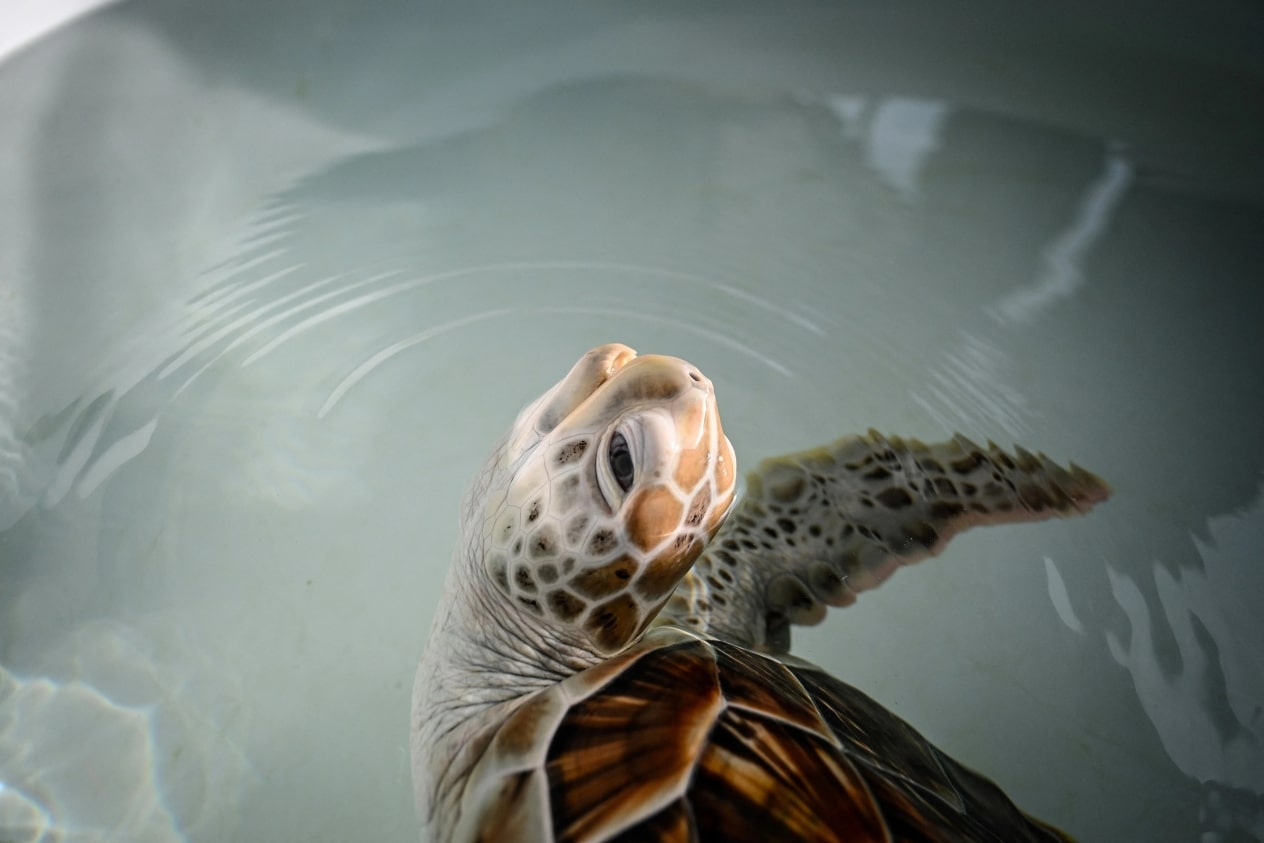
Aquaterrarium – turtle house
A properly selected aquaterrarium, temperature and cleanliness, and a balanced diet will help your pet to feel comfortable and grow and develop harmoniously. It should include two zones – aquatic and terrestrial.
Water level
The minimum volume of aquaterrarium for one adult turtle should be 100-150 liters. After all, turtles grow quickly, so it is better to immediately choose a spacious option. The water level should allow the turtle to swim freely.
Island – a piece of land
But it is important to make sure that the reptile can swim to the surface, so be sure to create an island with a gentle slope. You can use ready-made platforms or construct it from stones. The main thing is that the surface should be stable and not topple over. Such an island should occupy about one quarter of the aquaterrarium, so that the turtle can lie down and bask. This is why you should have a heating lamp.
Lighting
If possible, you can install in aquaterrarium ultraviolet lamp, because turtles for full growth and development need ultraviolet light, namely for the production of vitamin D3 and prevention of rickets. If there is no such opportunity, direct sunlight is fine, but carefully observe that the turtle does not overheat.
Water filtration
Aquatic turtles feed and defecate in the water, so it quickly deteriorates, becomes cloudy, begins to emit an unpleasant odor. Use an external filter to constantly circulate and purify the water. Change 30-50% of the water in your aquarium once a week. A complete change can cause stress to the turtle. Also clean the walls of the aquaterrarium and the ground platform from plaque and dirt on a regular basis. It is advisable to add special water purification products to neutralize chlorine and improve water quality.
Temperature regime
This species of turtle depends on the environment. If the temperature drops, the turtle becomes lethargic and can become ill. The optimal water temperature is +24…+26 ° C. To heat it, use a special aquarium device with a thermoregulator. On the land indicators should be about +30…+32 ° C. At night, the degrees can be slightly reduced, but not below +22 ° C. If the turtle is inactive, closes its eyes, check the water temperature – it is often the cause of problems.
Feeding habits of aquatic turtles
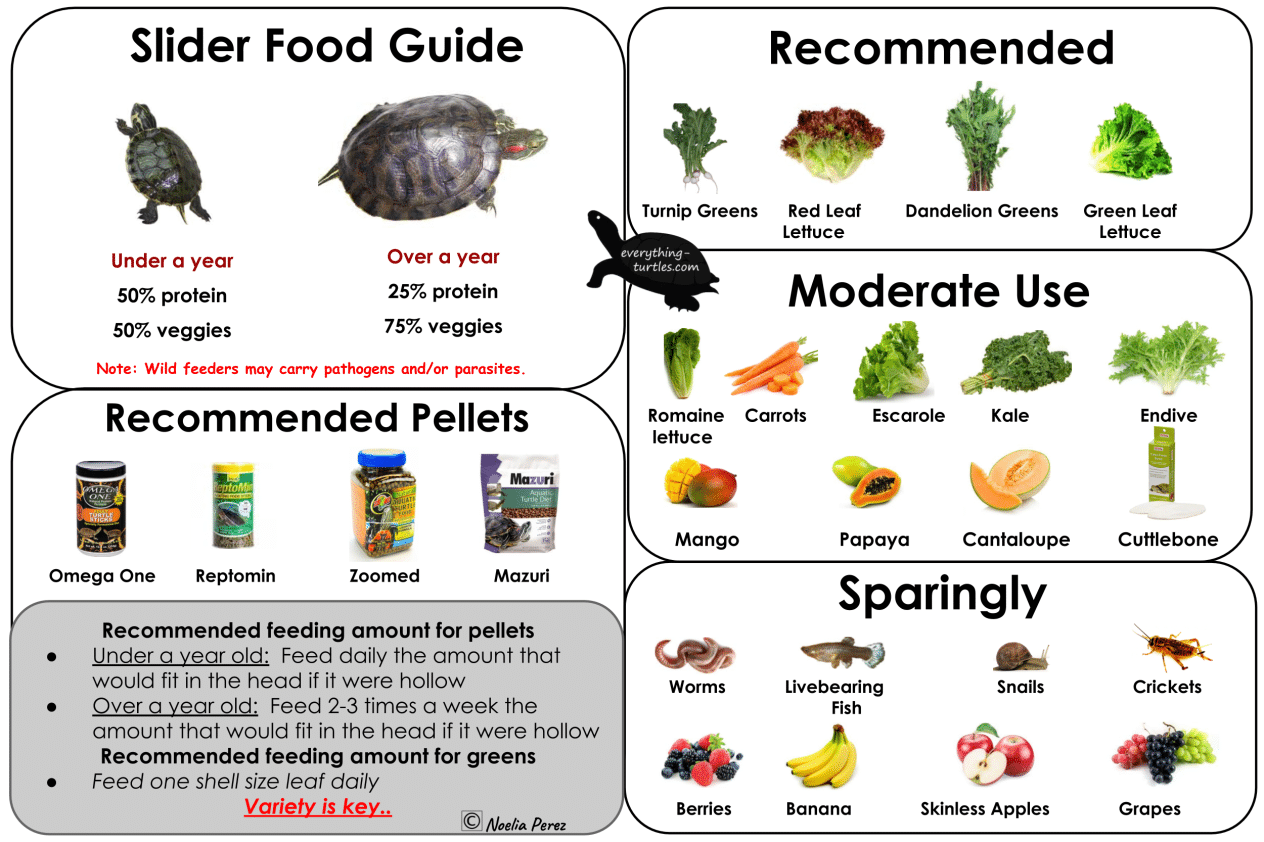
Proper nutrition is the basis of reptile health. The diet should be balanced and meet the needs of the turtle. Compared to land turtles, aquatic turtles are predators. Therefore, the diet is based on 70% protein products, namely lean fish, molluscs and crustaceans, insects and larvae, and less frequently meat and offal. Approximately 30% in the menu of an adult turtle are vegetables, fruits, berries and herbs. These can be lettuce leaves, seaweed, grated vegetables. It is also necessary to use specialized foods, such as dry food, as well as ready-made pellets for aquatic turtles, which contain the necessary vitamin and mineral complexes.
Fish
The basis of the reptile diet is lean river and sea raw fish, because the stomach of turtles is not adapted to food that has been subjected to heat treatment. Carp, perch, bream, hake, pollock, cod are favorite foods that are cut into small pieces of 1 cm3, along with scales, fins and bones to replenish the calcium balance in the turtle’s body. The shell is part of the skeleton, so it is important that it is strong, hard and smooth, not peeling or soft, because these are signs of rickets. Tortoises will happily eat aquarium fish.
Mollusks and crustaceans
Molluscs and crustaceans can also be present in the diet of aquatic turtles. They like to eat daphnia, gammarus, a special delicacy for them is – snails. It can be grape snails, small achatins, ampularia, physis, mariza, coils. Reptiles also like crayfish and shrimp, sometimes you can diversify the diet with octopus and mussels.
Insects
Well suited for feeding earthworms, mealworms, grasshoppers, crickets, crickets and many others. It is helpful to offer insects and larvae to turtles. These can be grown at home or purchased at a pet store, but it is dangerous to add insects caught on the street to the diet, as they can be carriers of parasites and various infections.
Meat and offal
This food is not inherent in turtles, but sometimes you can add chicken and turkey hearts and liver, chicken fillets to the diet. But fatty meat, pork and mutton should not be offered to turtles.
Vegetables, fruits, berries and herbs
The first two or three years of life is the process of active growth, so the diet is dominated by protein food, but then it slows down and turtles show interest in plant food. Treat your reptile to leaf lettuce, carrots, cucumber, zucchini, pumpkin, apple, pear, watermelon, melon, dandelion leaves, clover, barley, wheat and other grains.
It is also worth adding ready-made dry food to the diet and combining it with natural food. It is important not to forget to add mineral supplements to the diet every 7-10 days. Feed young reptiles daily in small portions, and adult turtles are enough two to three meals a week. To avoid water contamination, feed the turtle in a separate container of water.
Food taboos in the diet of aquatic turtles
Fatty meat, especially duck meat, sausages, sausages, pates, canned food, crab sticks, dry and wet dog and cat food should never be offered. Do not feed reptiles dairy products, bread and baked goods, cereal, potatoes, potatoes, cabbage, avocados, citrus fruits. Also, never subject food to heat treatment!
Interaction with your pet
It should be remembered that turtles do not like noise and unnecessary manipulation. They get used to their owner. To get your Pet’s attention, follow these guidelines:
- do not lift the turtle unnecessarily and hold it gently, supporting the shell from below;
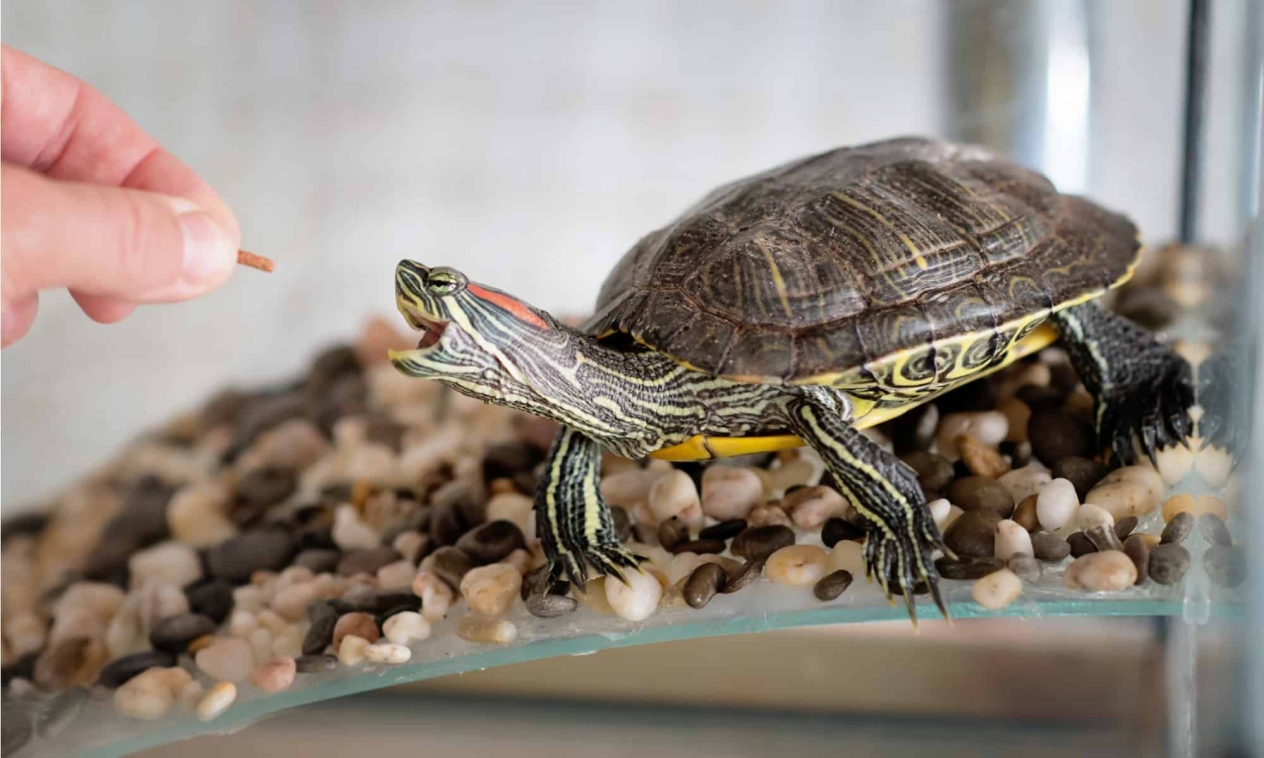
- feed the reptile from your hands to establish contact;
- observe the pet: activity and appetite are the main indicators of health.
A spacious aquaterrarium, clean water, optimal temperature regime and proper nutrition are the key conditions for a long and healthy life of the reptile. Careful attention will make your turtle an active and grateful friend for many years to come.