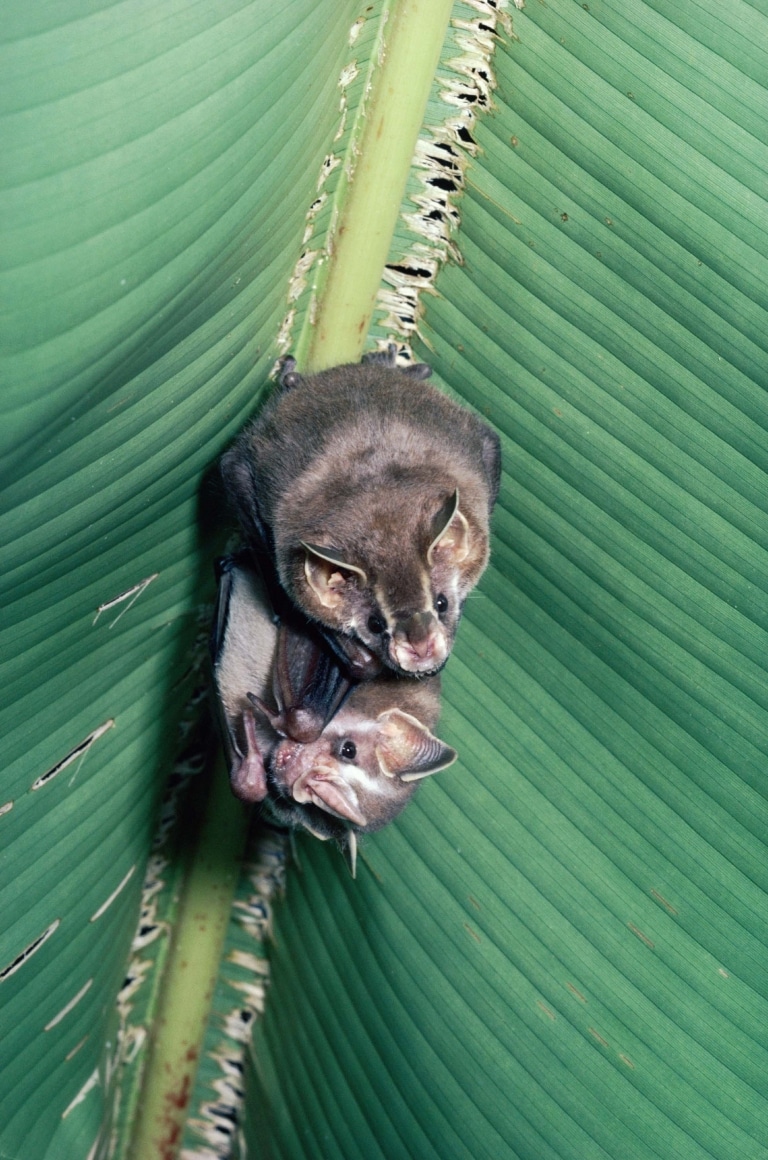
Who are bats and why are they so special?
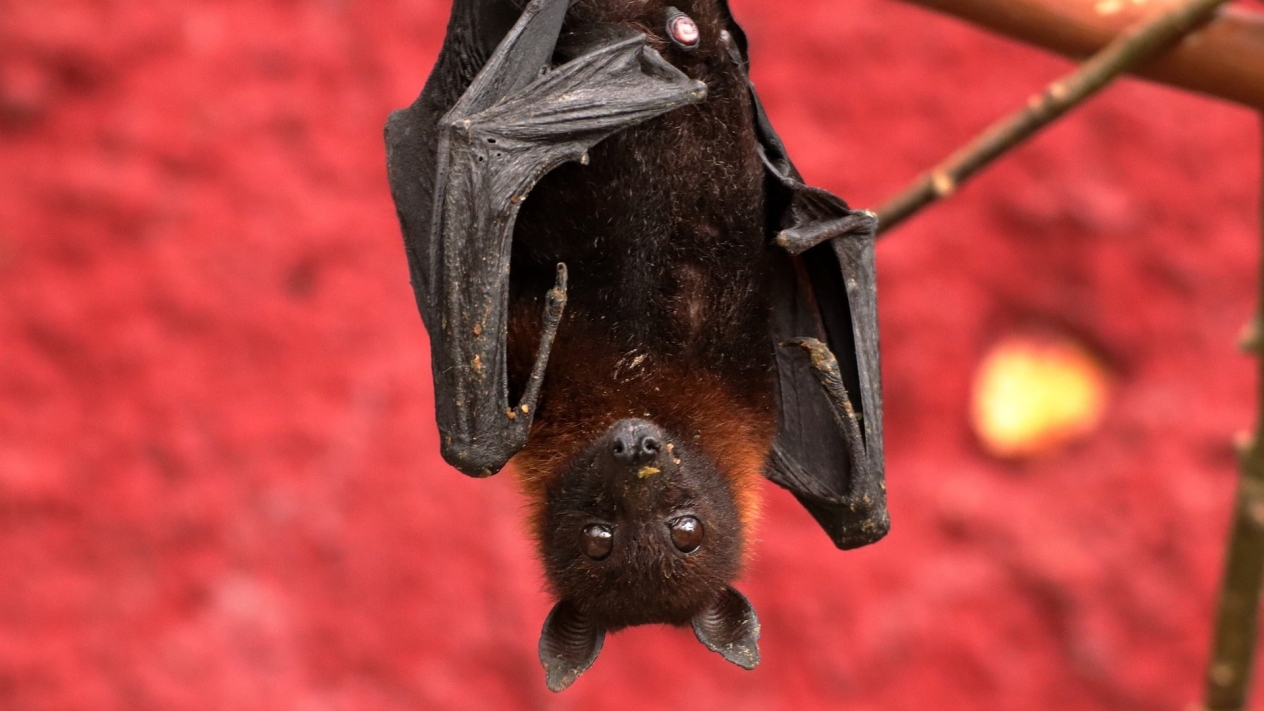
Bats are the only true mammals capable of active flight. They are often confused with rodents, but they belong to a separate order of bats. There are more than 1400 species of bats in the world, and they live on almost all continents except Antarctica. Some of them are as tiny as a bee, while others have wingspans of up to one and a half meters. Bats play an important role in nature: they destroy insect pests, pollinate plants, and spread seeds.
Despite the myths about “terrible vampires,” most bats are extremely useful and peaceful creatures. And if during the day they rest, at night their real life unfolds: silent, rapid, almost invisible to the human eye – life in the air. But in the absolute darkness without light… how do they navigate at all? This is where their superpower, echolocation, comes in.
Echolocation
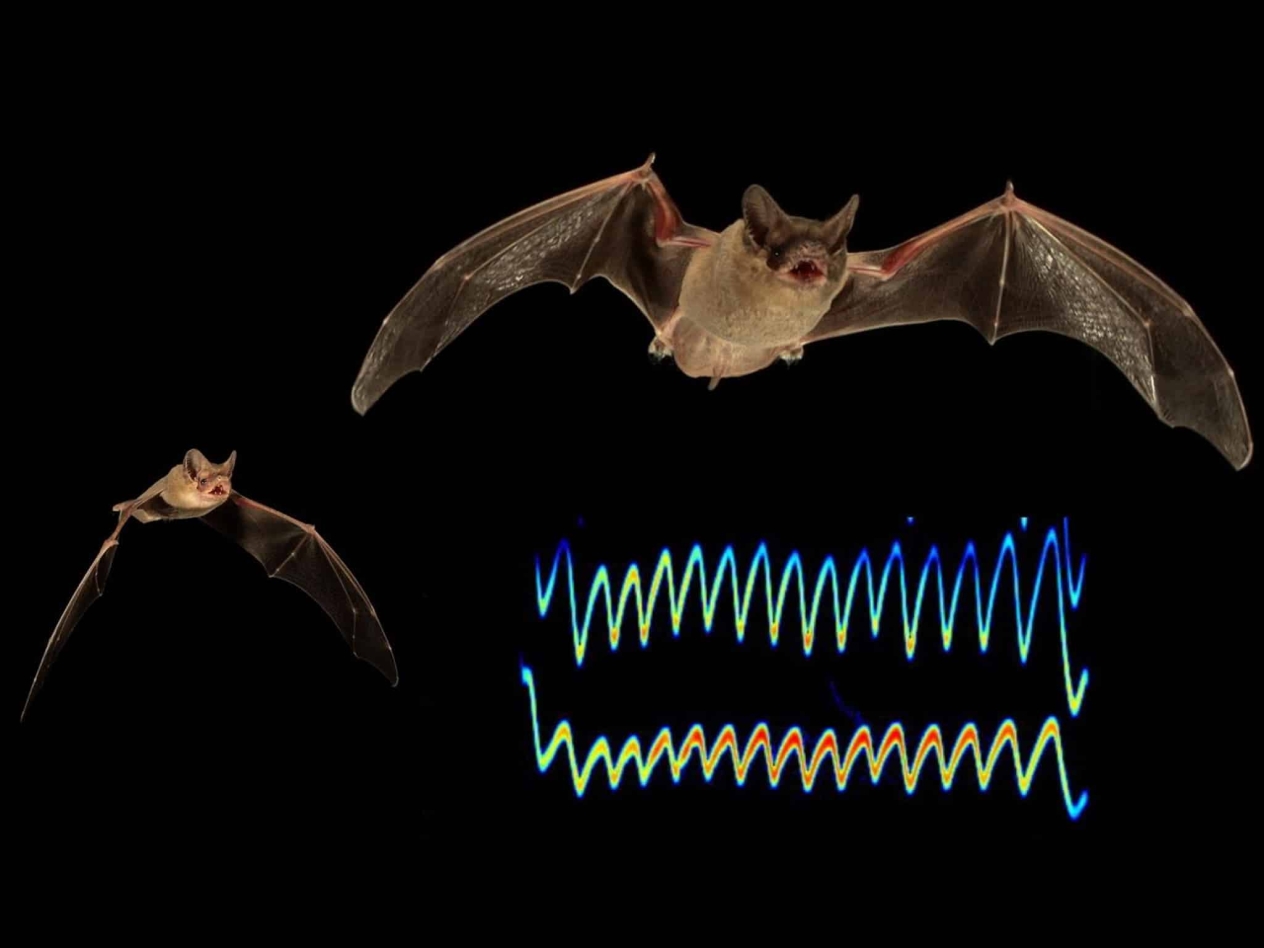
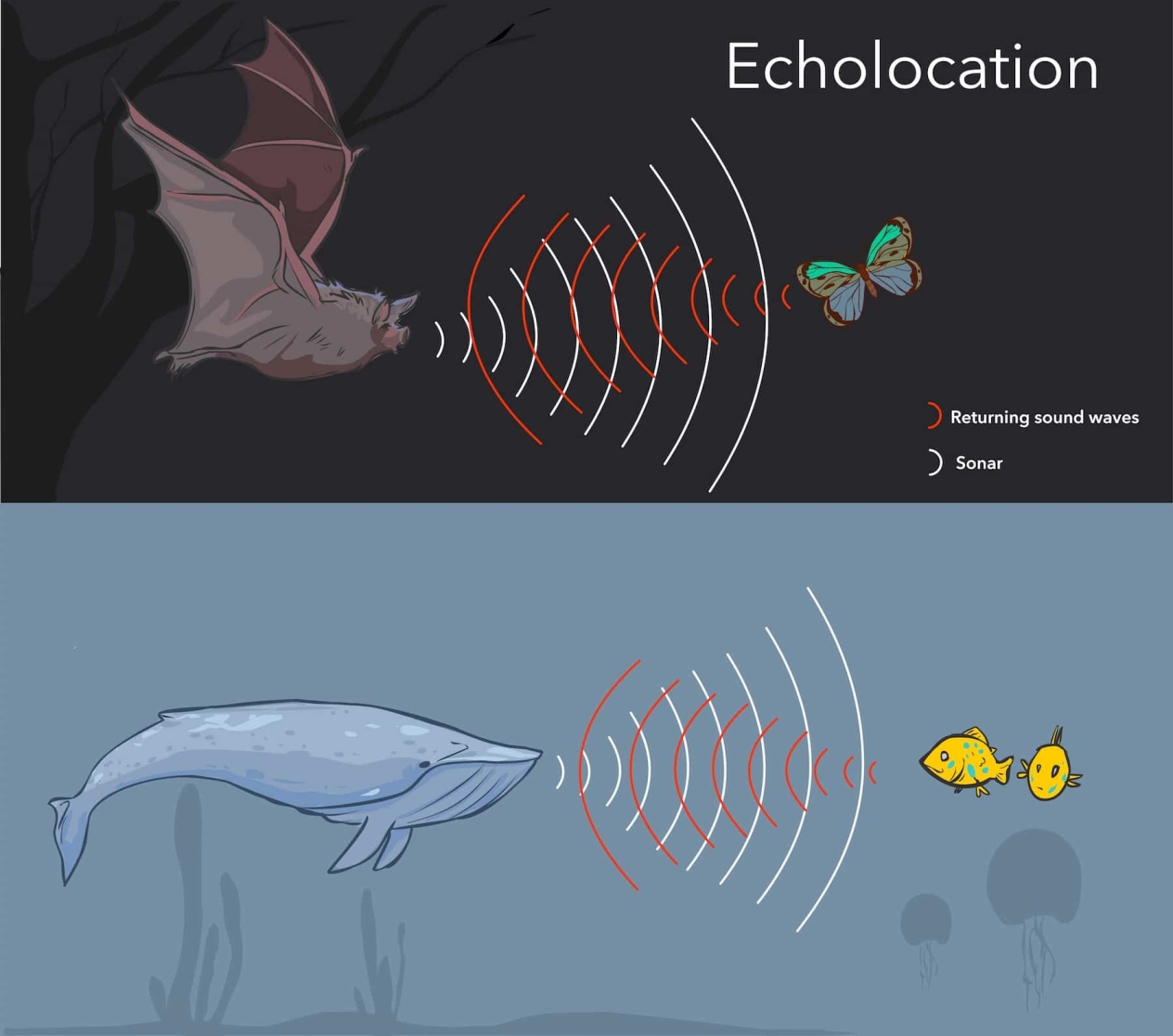
Bats “see” not with their eyes, but with their ears. They emit a series of high-frequency ultrasonic signals – so high that the human ear cannot pick them up. These signals are reflected from objects, and by catching the echoes, the bat literally “draws” a three-dimensional map of space. This process takes a thousandth of a second.
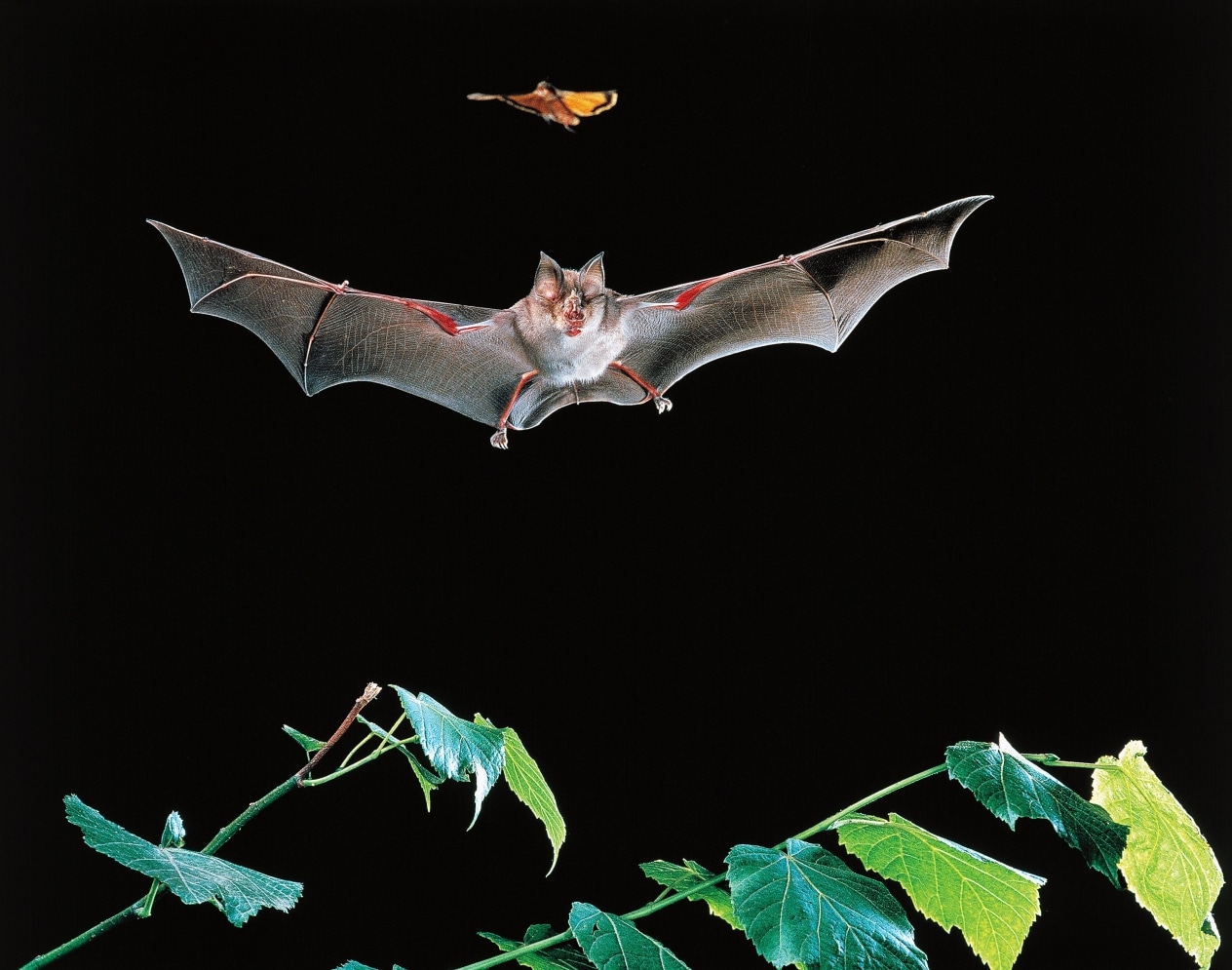
When a bat hunts an insect in the air, it releases a rapid series of pulses – up to 200 per second! Based on the nature of the echo, it determines the size of the prey, its direction, flight speed, and even its shape. Bats are so precise that they can “catch” a mosquito between branches or fly through a narrow gap without touching any surface. And this is all in absolute darkness, where no other predator would survive.
By the way, different species of bats have their own “specialization”: some are tuned to forest undergrowth, others to open spaces or hunting over water. Some are even able to “jam” the signals of other bats to avoid competition – like real spies of the night.
Who else has echolocation besides bats
Bats are not the only ones who can “see with their ears.” Dolphins are a classic example. They also use ultrasonic pulses to navigate in the water and hunt for fish. Whales, especially sperm whales, have a powerful echolocation system that can be compared to underwater radar. Even some species of birds, such as salanganes (relatives of swifts) that live in dark caves, are capable of a primitive form of echolocation – they click their tongues and pick up echoes.
The most interesting thing is that some humans are also able to use echolocation. This is not a comic book superpower, but a real, albeit rare, phenomenon. One of the most famous examples is Daniel Kish, blind since birth, who learned to make clicks with his tongue and use their echoes to navigate in space. His brain has adapted to analyzing sounds so much that the visual cortex (the part of the brain that usually processes images) has begun to perceive and interpret sound echoes. Daniel can ride a bicycle, walk in the woods, and even recognize the structure of buildings – all without seeing a single ray of light.
Similar skills have been documented in several other people who have lost their sight – they have learned to “see” through hearing, and this has been confirmed by scientific experiments with MRI. It turned out that the human brain has much more potential than we used to believe.