
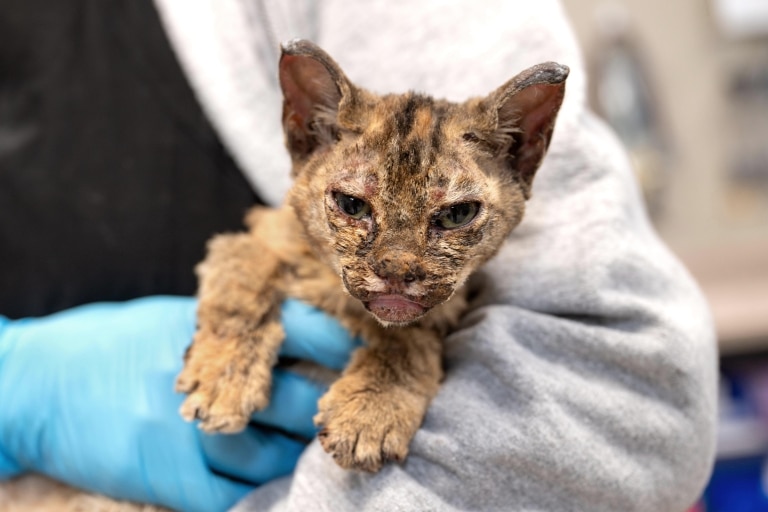
Pets, especially small pets, are usually very curious and mobile, which is why accidents often happen to them, including injuries such as burns. A dog or cat can be exposed to such dangers both at home and while walking, so the pet owner needs to have general information about such injuries. So, let’s discuss the causes, degrees, and symptoms of burns, as well as first aid for dogs and cats and the consequences of such injuries.
Causes of burns in pets
There can be several factors that influence the risk of burns in pets. Let’s consider the main causes of such injuries:
- high temperature (boiling water, water vapor, other hot substance, fire)
- chemicals (acids, alkalis, oxidizing agents, salts of alkali metals)
- electric current, lightning;
- radiation (sunburn);
- juice of poisonous plants.
Degree of damage to the animal’s skin in case of burns
When it comes to high temperatures, the degree of damage depends on the temperature itself, the duration of exposure, and the area of damage. For example, if boiling water is spilled on an animal, the time it takes to affect the skin is several seconds. Therefore, boiling water burns are usually of the I-II degree and do not threaten the animal’s life.
A dog or cat can suffer severe and even fatal boiling water burns if exposure to boiling water is prolonged and the affected body area is large, for example, if it falls into a container of boiling water.
In the case of an open flame, three factors are involved: hot particles that get on the animal’s fur and skin, thermal radiation, and scorching air. Burns from an open flame are the most severe, so they often cause painful shock and even death.
Speaking of burns from chemicals, it should be noted that acids rarely cause severe skin damage because the coagulation of the protein on its surface (the transition from liquid to solid) prevents the acid from penetrating deeper. Unlike alkalis, which cause much more severe burns due to their ability to cause irreversible and deep tissue damage.
Electric shock burns are most often caused by puppies and kittens who like to chew on everything, including electrical cords. In this case, the area of the burn is small, but the damage can be very deep because electricity passes through the body through the most electrically conductive places – biological fluids and muscles. This can cause damage to the skin, muscles, nerves, and blood vessels, as well as respiratory and heart problems.
Radiation exposure to animal skin can be caused by both ultraviolet and infrared radiation. In such circumstances, exposure to direct sunlight can cause a first- and sometimes second-degree burn. A pet can get a burn from infrared radiation from a working fireplace or hot radiator.
The astringent juice of poisonous plants, such as aconite, hogweed, and caustic stonecrop, can cause severe burns to the mucous membranes of the eyes or mouth of dogs and cats. Hot pepper, called cayenne, is also worth mentioning here. It contains a chemical compound called capsaicin, which causes a burning sensation on contact with the skin and mucous membranes.
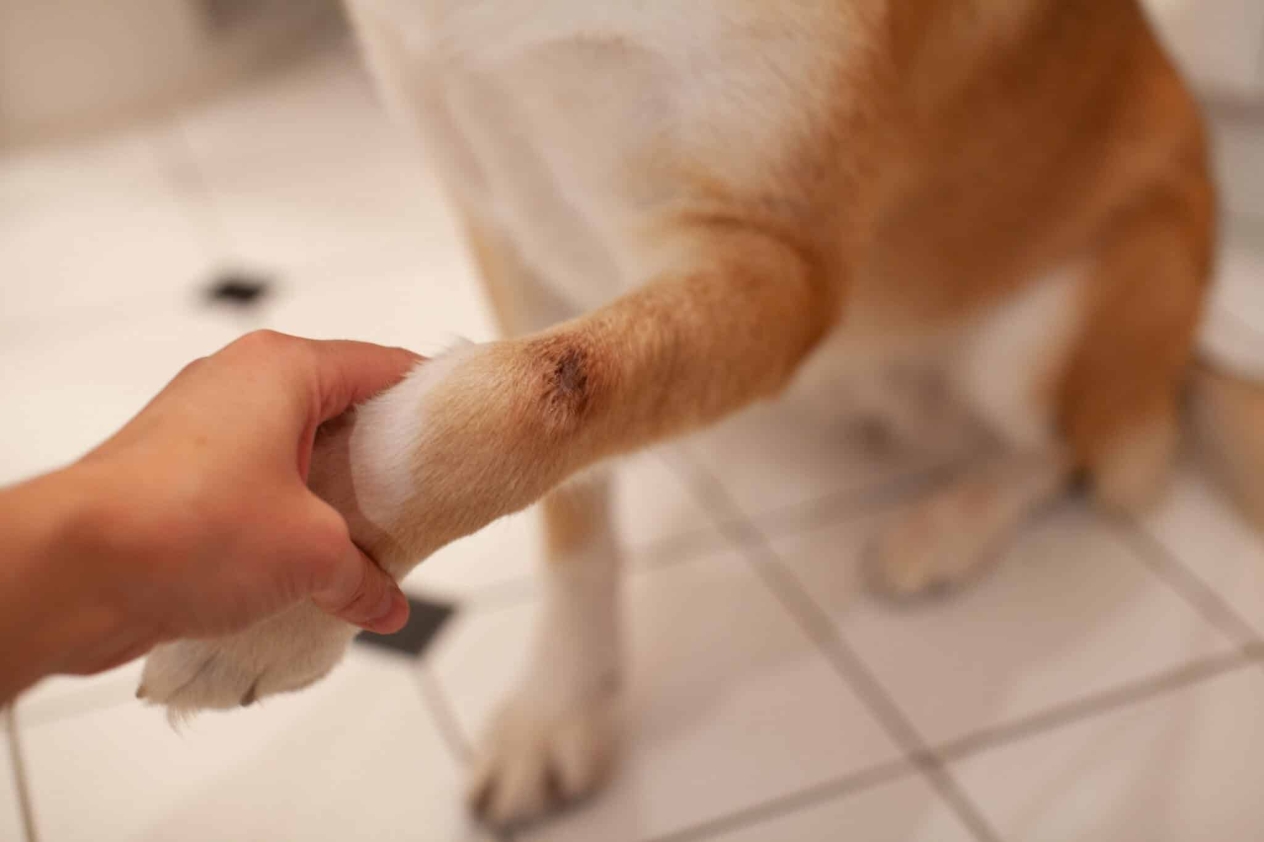
Symptoms of burns in a pet
Animal burns are classified according to two main parameters:
1- by location:
burns of the skin surface, visual organs, oral cavity and respiratory tract.
2 – by the degree of severity:
- light damage to the upper layer of the epidermis, causing burning, redness and slight swelling. In this case, healing occurs within 2-3 days and does not leave scarring.
- lesions of the upper layer of the skin, characterized by the formation of vesicles (blisters) filled with clear liquid, as well as redness and swelling. With proper treatment, such blisters usually disappear on their own, but may leave minimal scars and scars.
- damage to both the surface of the skin and its deeper layers, when bullae (blisters filled with both clear and cloudy liquid, depending on the degree and duration of the lesion) or a scab (a crust that appears on the wound during healing) form on the surface .
- severe burning of not only the entire thickness of the skin, but also muscles and bones.
Symptoms characteristic of burns depend on the area and degree of skin damage. Common manifestations include skin hyperemia (redness), swelling, burning, pain, and hyperthermia (local or generalized fever).
In case of very severe burns, namely, significant and deep skin lesions, the animal may experience symptoms of fever, tachycardia, increased heart rate, constant thirst, and limb tremors.
In such a situation, the dog or cat may become agitated, alternating with apathy, and urine output may decrease, and its color and odor may change. In order not to face such threatening symptoms as organ failure, respiratory failure, and death of the animal, you need to waste no time and quickly take your pet to the veterinary clinic.

First aid for animal burns
The first thing to do in this case is to immediately eliminate the factor that caused the burn, namely, knock the fire off the dog or cat, extinguish the fire if you can, or turn off the electric current.
If the flames cannot be extinguished, you should protect the most vulnerable parts of the animal’s body, such as eyes, nose, ears, paws, and prevent it from approaching the fire source and stepping on a hot surface.
If a dog or cat does suffer a thermal burn, rinse it with cool water for several minutes and apply an ice compress – a napkin soaked in ice water – for half an hour. Next, you need to attach a sterile bandage, having previously cut off the hair near the wound. Do not use cotton wool or other loose material for the bandage, as its fibers stick to the wound and increase the risk of infection. Also, do not lubricate the burn with anything, as this will make it difficult for the wound to heal.
If the animal has suffered a chemical burn, it is important to know whether acid or alkali caused the damage. Acid should first be washed off the wound with plenty of water, and then neutralized with a 2% baking soda solution. In case of an alkali burn, first rinse it with water, and then eliminate the alkali effect with a 2% solution of acetic or citric acid. Alkali metal salts and quicklime should not be washed off with water; they should be removed from the skin with a napkin soaked in sunflower oil.
After first aid, take the injured animal to a veterinary clinic as soon as possible. If this is not possible, call the veterinarian and try to get a consultation in a remote format.

We hope that you and your pet will always stay safe and that you will not need the above tips. However, now you know how to behave in such an extreme situation and help your pet in case of burns if you cannot seek professional help. However, remember that each situation can be unique, so the best solution in this case is to provide qualified assistance to the animal, especially in case of serious burns.