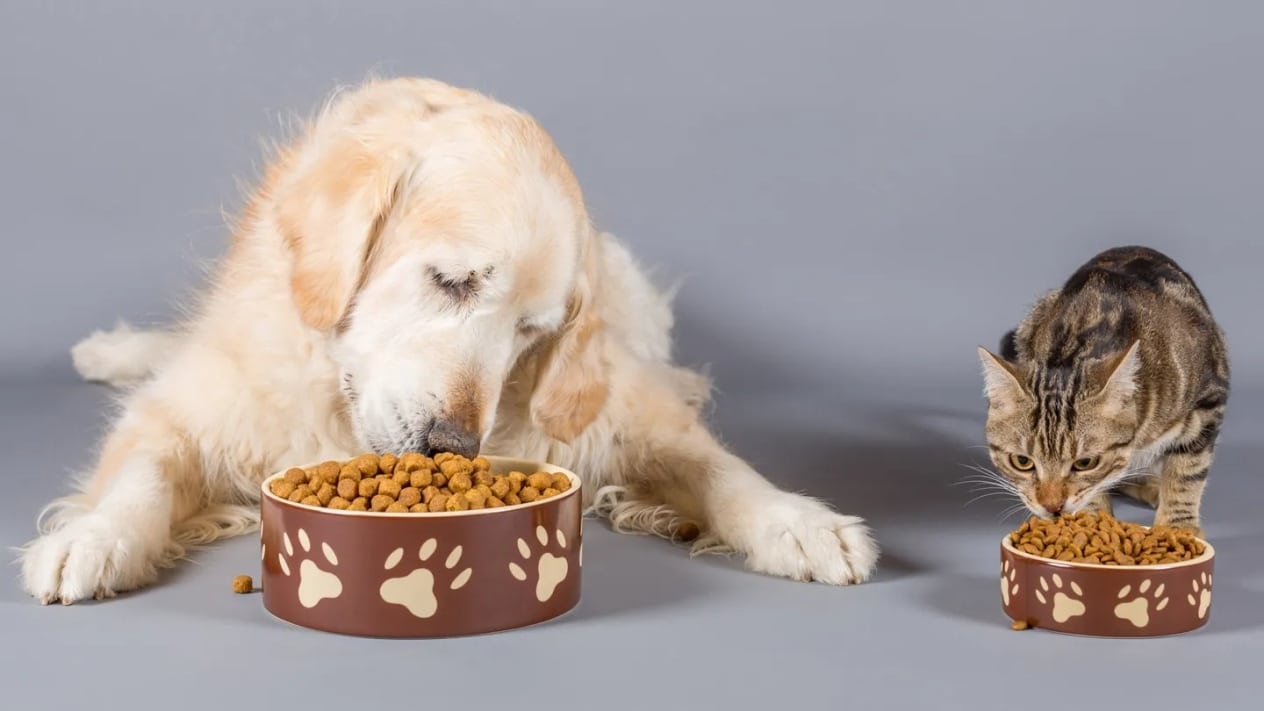
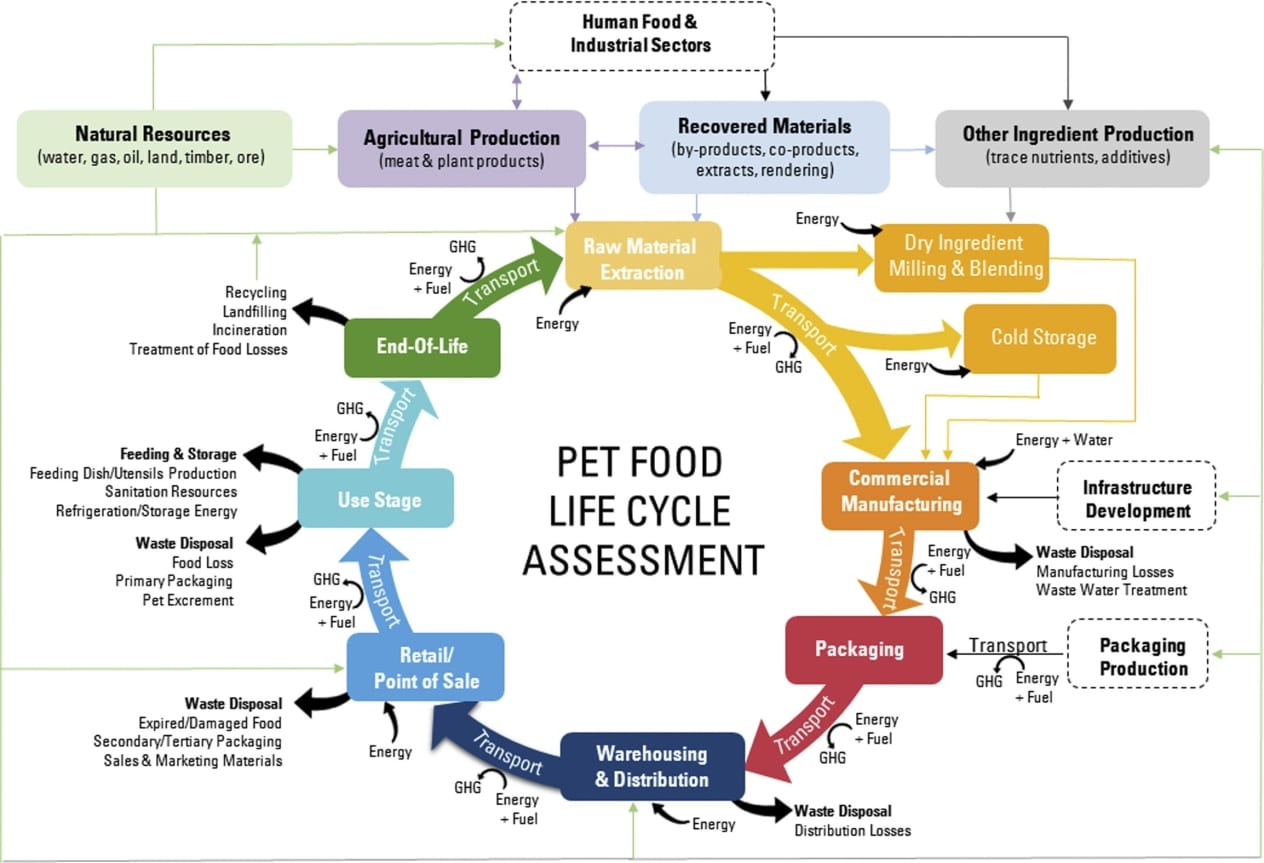
Most people don’t even think about how small pellets of dry food appear. You just put them in a bowl and that’s it. But behind those crunchy bits is a huge production facility, sophisticated machines, high temperatures, and processes that are more like the food factory of the future than conventional cooking.
It all starts with huge bags and containers of raw materials. Meat components, fish flour, fats, vegetable mixtures, cereals, dried eggs, fiber, and dozens of other ingredients are brought to the factories. Some of them are already dry, some are in the form of paste or frozen blocks.
First, all components are tested. The raw materials are tested for moisture, bacteria, quality, and even odor. After that, the ingredients are crushed in huge industrial crushers almost to a powder. That’s why it’s almost impossible to see individual pieces of food in the feed – everything is turned into a homogeneous mass.
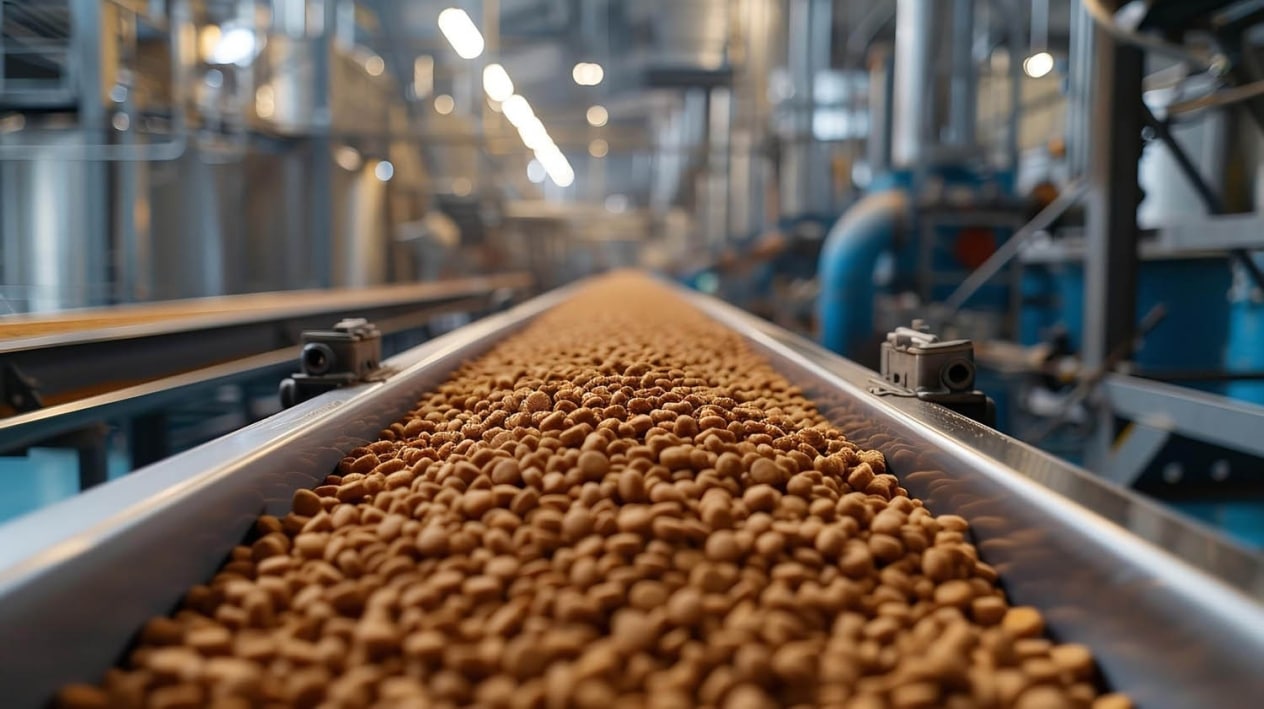
The most interesting stage is the extruder
After the dry ingredients are mixed, water, fats and liquid components are added. Then this mass is fed into one of the main machines in feed production – an extruder.
The extruder operates under very high pressure and temperature. Inside it, the mixture is compressed by a giant metal screw, heated, and literally cooked in seconds. The temperature can exceed 100-150 degrees.
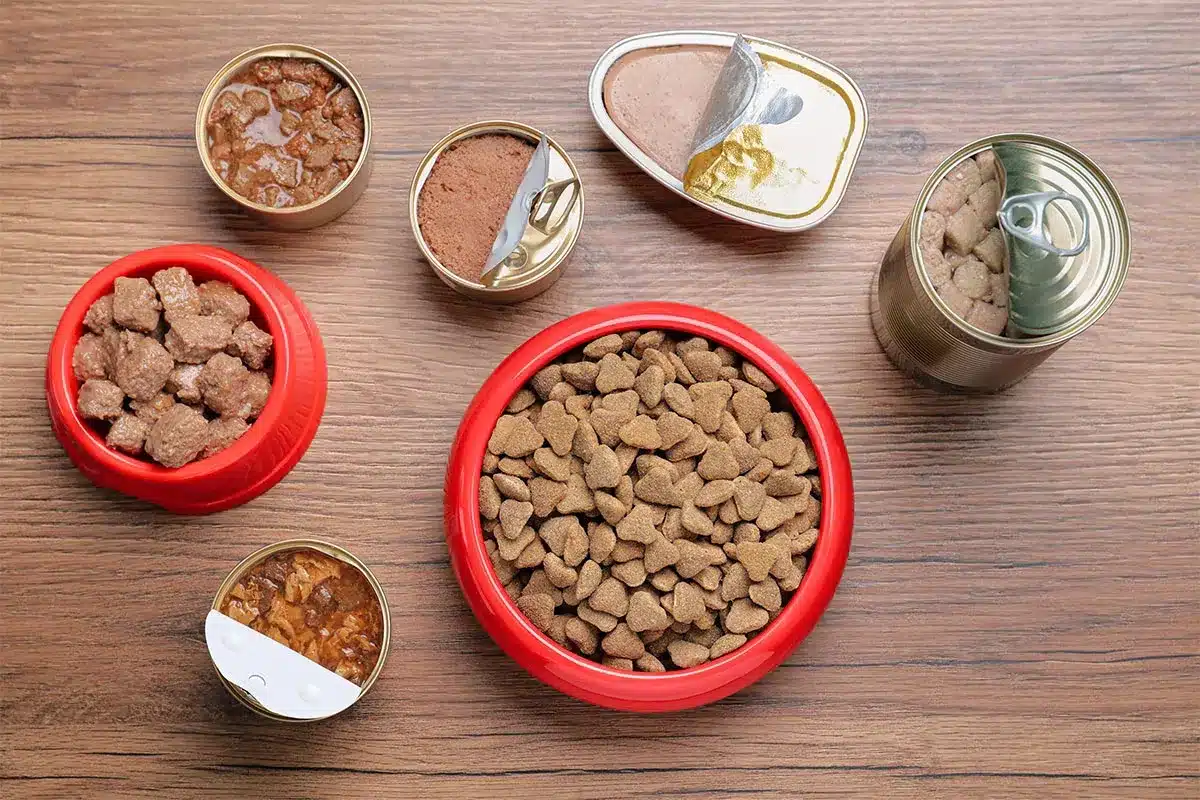
Then there is a moment when the food looks like familiar pellets. The hot mass is abruptly “pushed” through special holes of various shapes. Due to the pressure drop, the mixture instantly expands like popcorn and becomes porous inside.
Immediately afterwards, knives cut the granules to the desired size. This is how small circles, stars, cushions, or bone-shaped figures are created. In large factories, this happens at breakneck speed – tons of feed per hour.
Why does the food smell so strong?
After the extruder, the pellets are still almost “tasteless”. That’s why a separate stage begins next – the application of fats and flavoring components.
The pellets are fed into large drums that are constantly spinning. Inside, animal fats and special flavor mixtures are sprayed onto the food. They create the strong odor that dogs and cats can smell so well.
It is interesting that humans often experience the smell of food as pungent or strange, but for animals it can be very attractive. Dogs and cats have a tenfold stronger sense of smell, so manufacturers literally “customize” the scent to suit their perception.
After that, the food is cooled so that it does not collect moisture inside the package and packaged in bags. In large-scale production facilities, all this is done by automatic lines – from forming the pellet to sealing the package.
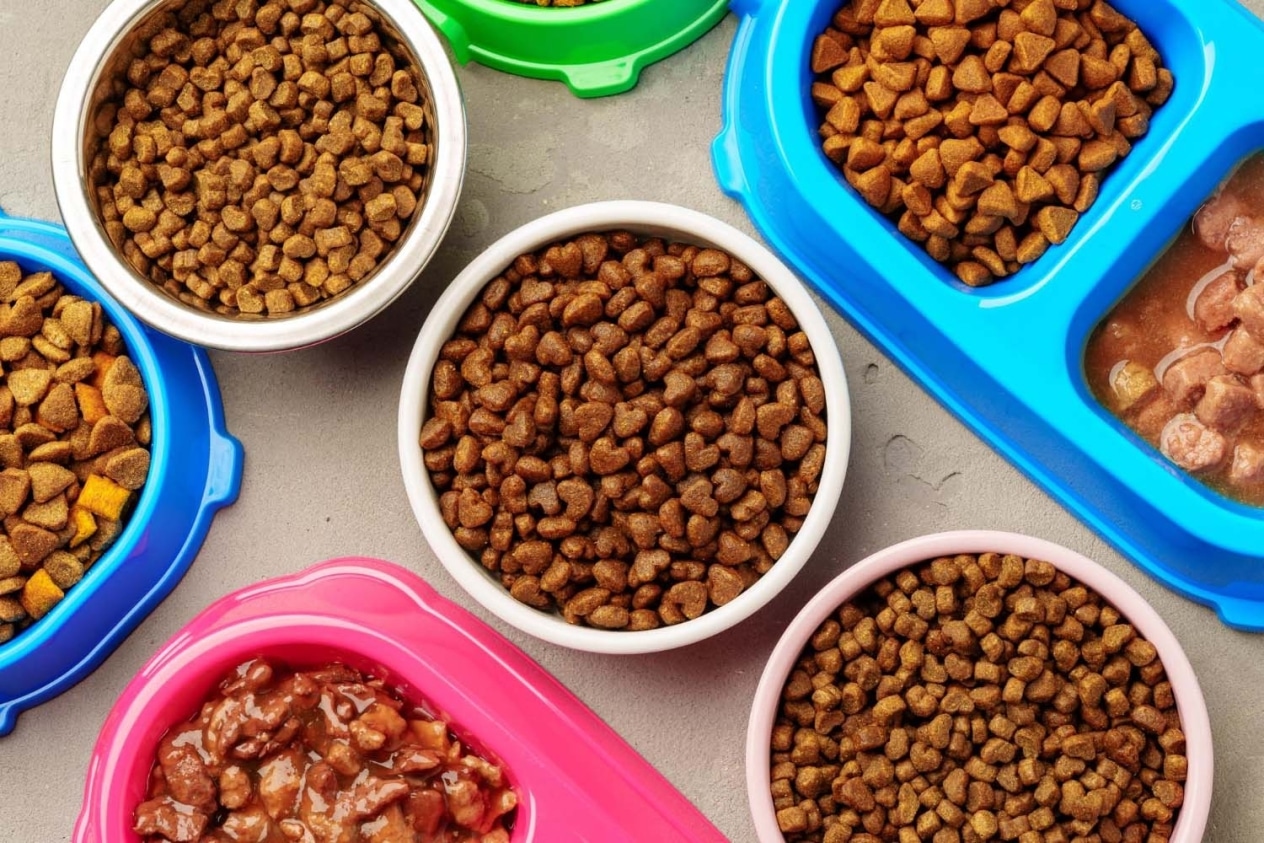
Why do granules come in different colors and shapes?
The shape of the food often depends not only on the design. Smaller pellets are made for small breeds, larger and harder ones for large dogs. For cats, the shape is also chosen so that they can easily grab the food with their jaws.
The color often depends on the composition and processing temperature. Although some cheap foods may use coloring agents, in most cases the color appears naturally when the ingredients are heated.
And what’s interesting is that in modern factories, feed production is so automated that people often have little or no direct contact with the product. Most processes are controlled by computers, temperature, humidity, and pressure sensors. This is no longer a “kitchen for animals” but a real high-tech food industry.