At its core, grooming is a technique. But at a certain level, it ceases to be a craft and moves into the realm of art. And here is the key difference: craft repeats the form, art creates it. It is at this point that the groomer stops “serving” and begins to think like an author.
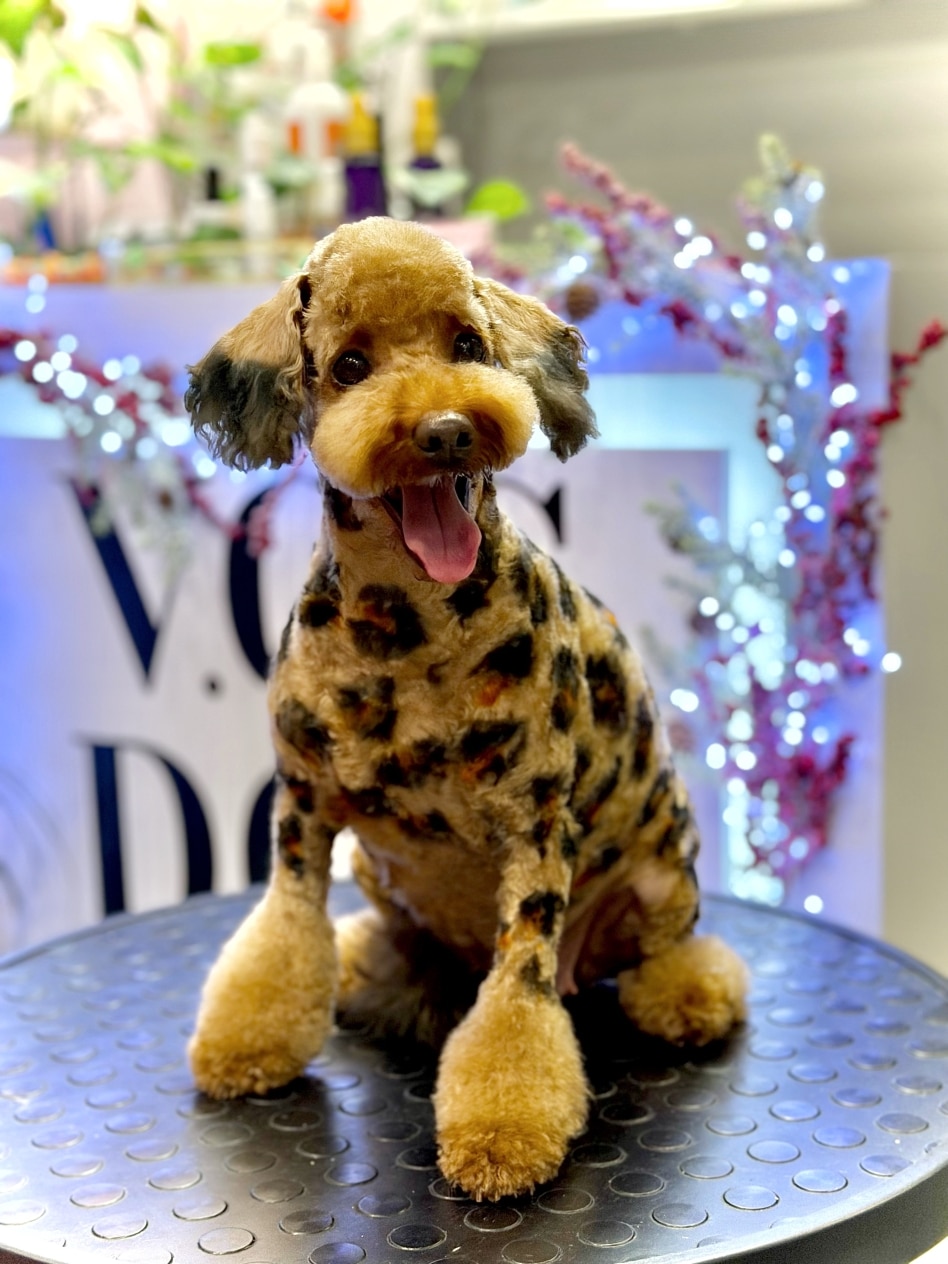
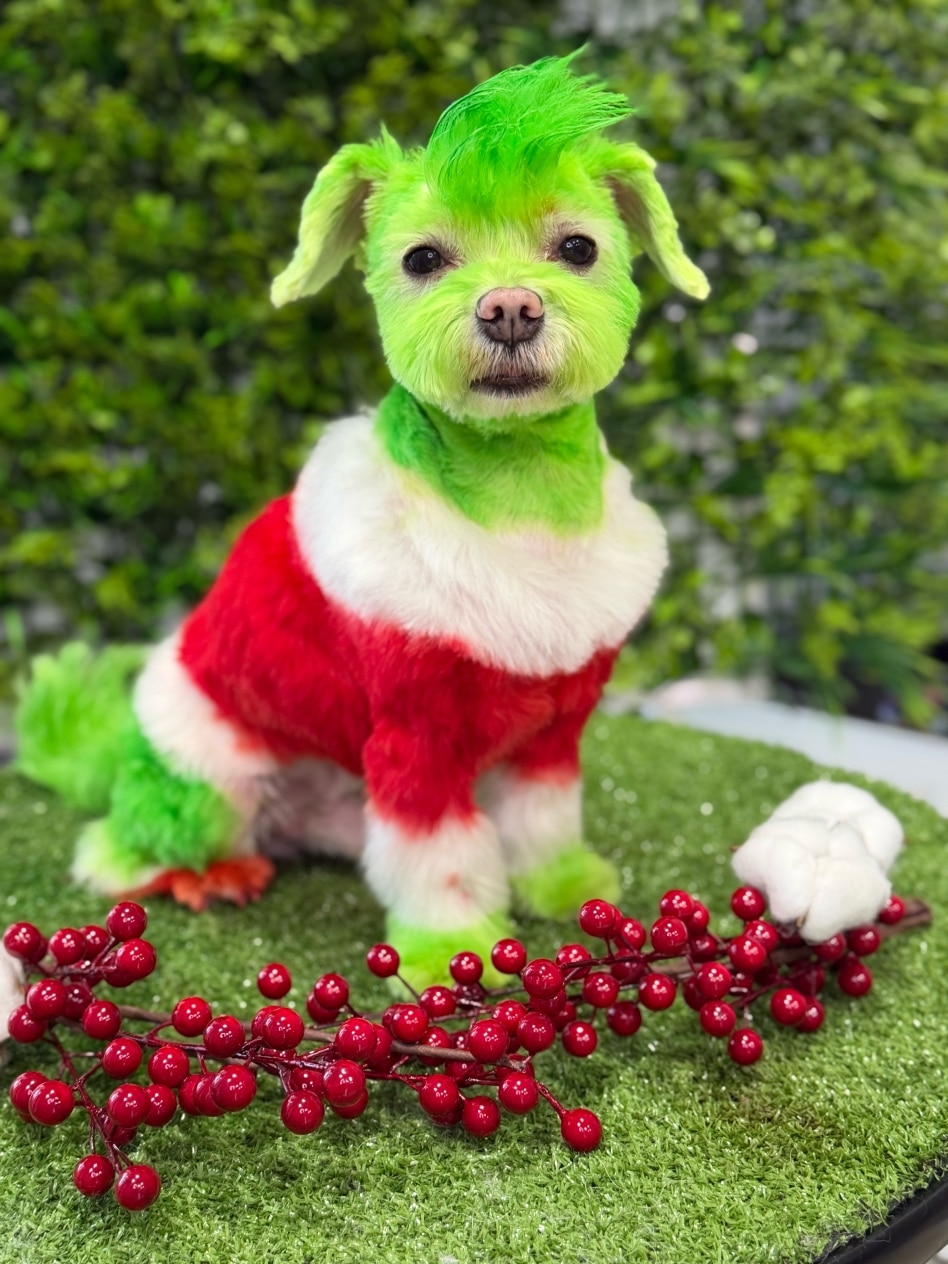
Creative grooming as a form of self-expression
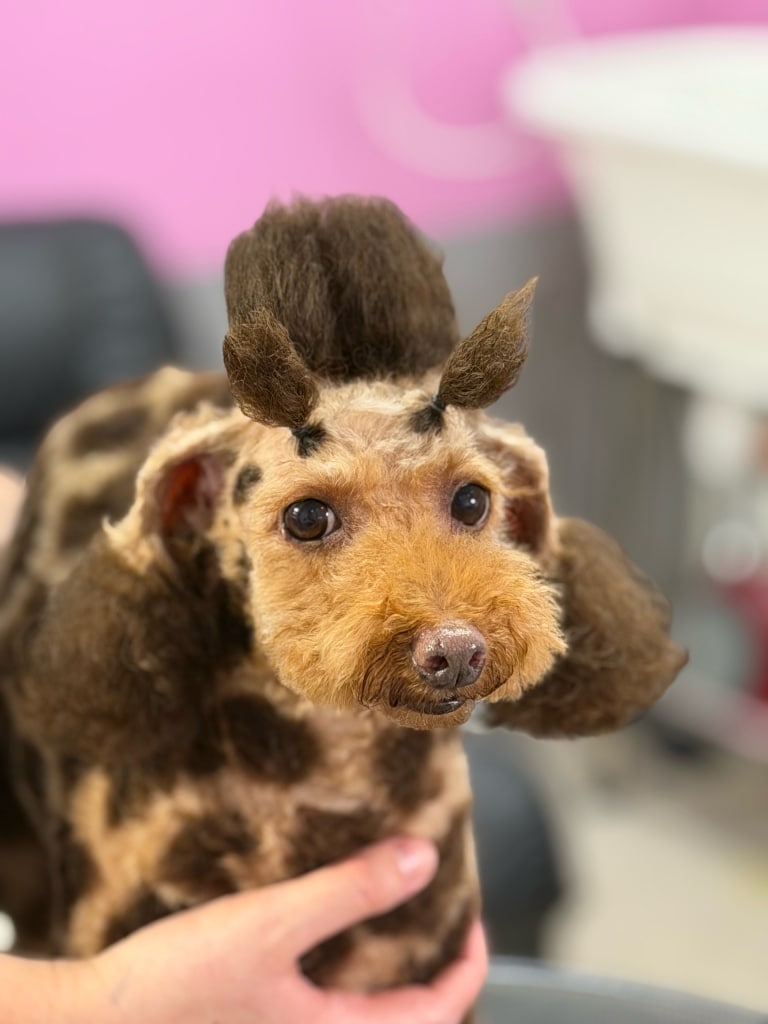
Creative grooming is not just about coloring or an unusual haircut. It’s a way to convey an idea through a living object that moves, reacts, and has its limitations. And it is these limitations that make the task more difficult than in classical art.
There are different approaches. Someone works in the style of minimalism – clean lines, clear form, no superfluous things. Someone else creates complex images with colors, transitions, and decorative elements. But in both cases, the basis is the same – the concept. Without it, it’s not art, it’s just a set of techniques.
An interesting point: there are competitions around the world where they evaluate not just the technique, but the idea, the complexity of implementation, and the integrity of the image. And there you can clearly see the difference between “knows how to cut” and “knows how to think”.
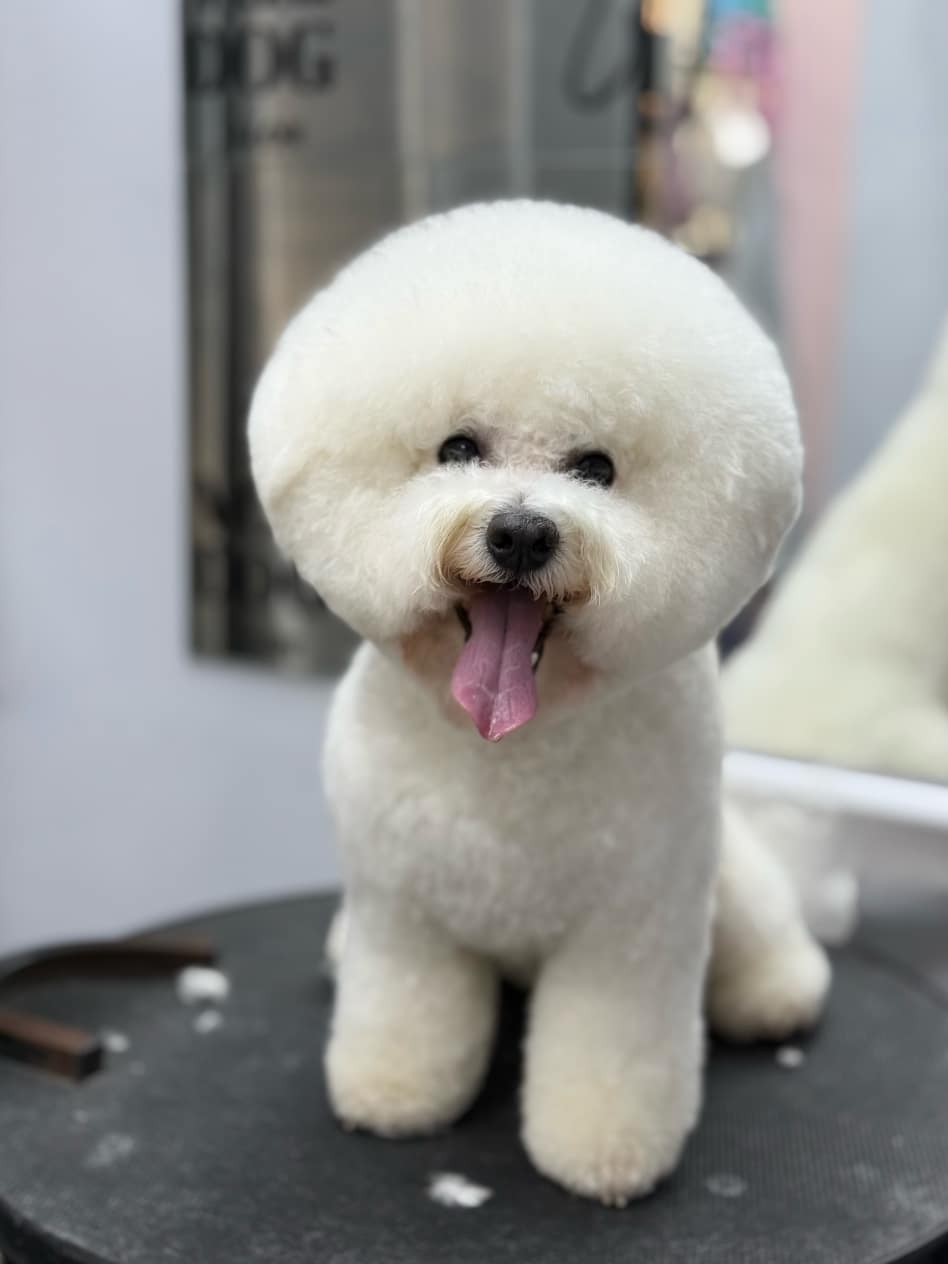
Geometry in haircuts: how to create shapes
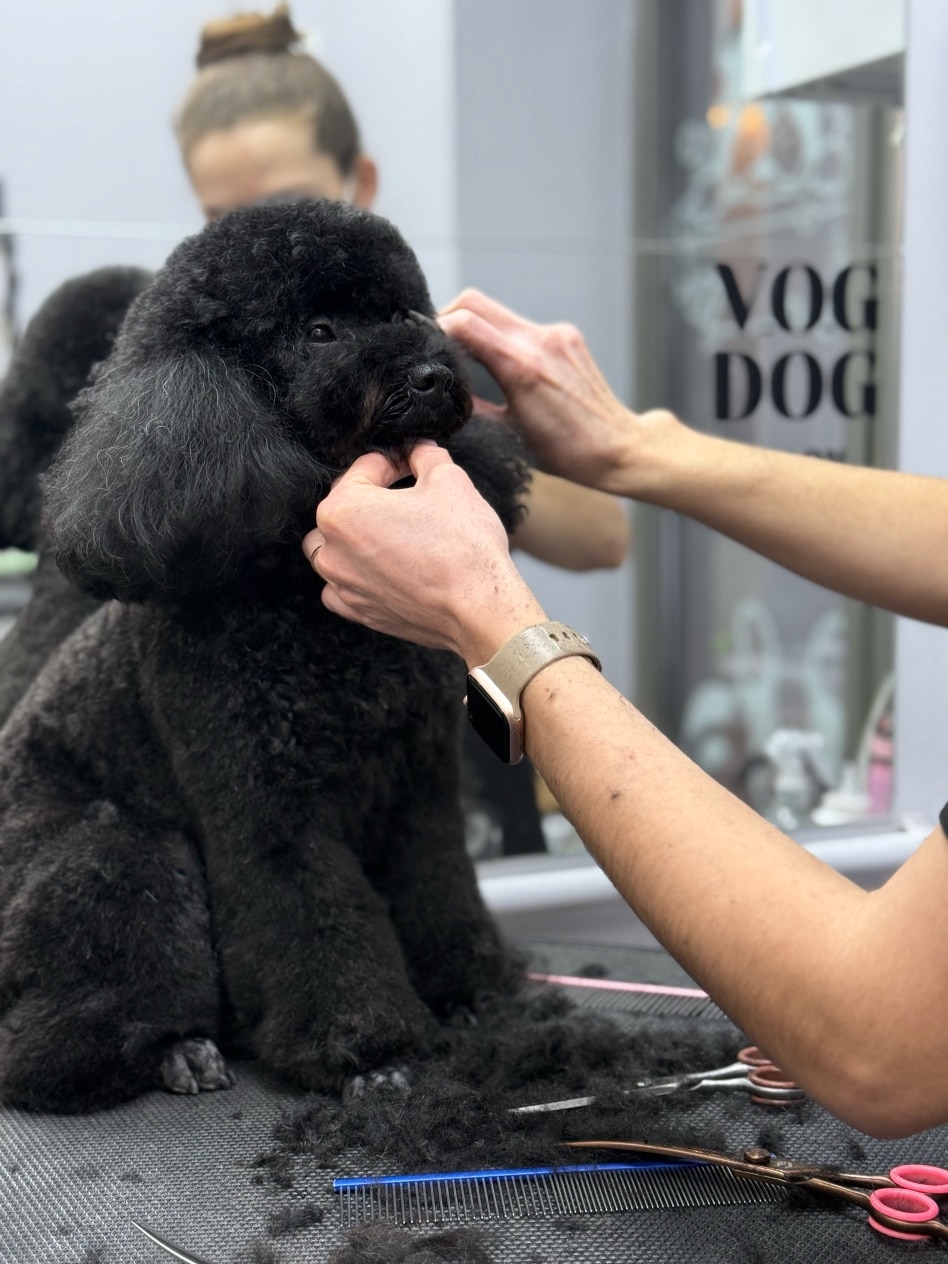
Any high-quality haircut is geometry. A ball, an oval, a cylinder, a plane – these are the basic shapes that form the silhouette of a dog. And the more accurately the master understands these shapes, the cleaner the result looks.
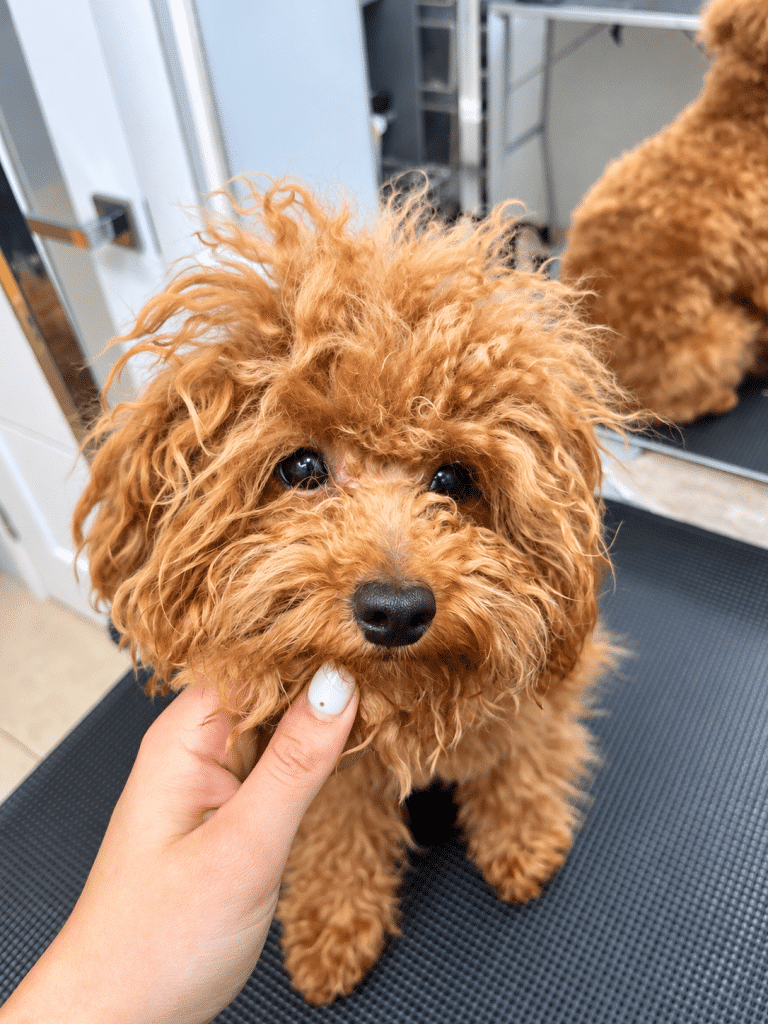
For example, the classic “rounded face” of a poodle or maltipoo is not a chaotic haircut, but a clear sphere. If the center or axis is disturbed, the shape “falls off” and even an unprepared client can see it immediately.
It’s the same with the back and body. The correct line is not just a “straight cut” but also an optical balance. Sometimes a groomer will specifically change the length of the coat to adjust the proportions of the dog – to make it visually more compact or elongated.
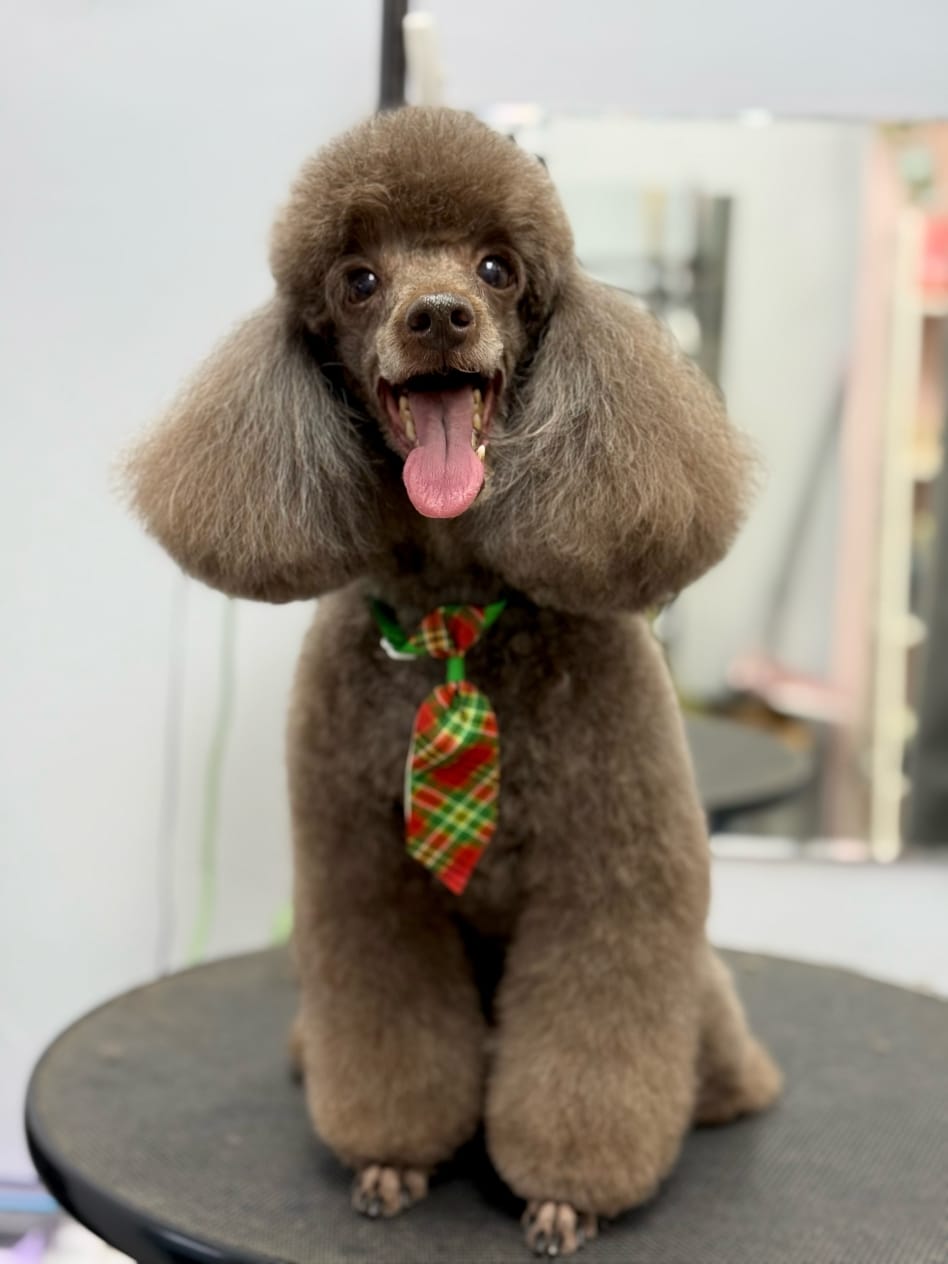
Symmetry, balance, texture
In grooming, there is no right to “almost the same”. The human eye is very sensitive to symmetry, and even a slight difference between the right and left sides creates a feeling of discomfort.
That is why symmetry is a basic quality criterion. But it doesn’t end there. Next comes the balance – how the volume is distributed throughout the body. If the head is too large and the body is “flat”, the image does not work.
And the third level is texture. This is what the surface of the wool looks like: smooth, airy, structured. This is where the tools and techniques work – scissors, a machine, filing. It is the texture that gives the feeling of an “expensive” result, even if the client cannot explain why he or she likes it.
Painting as painting
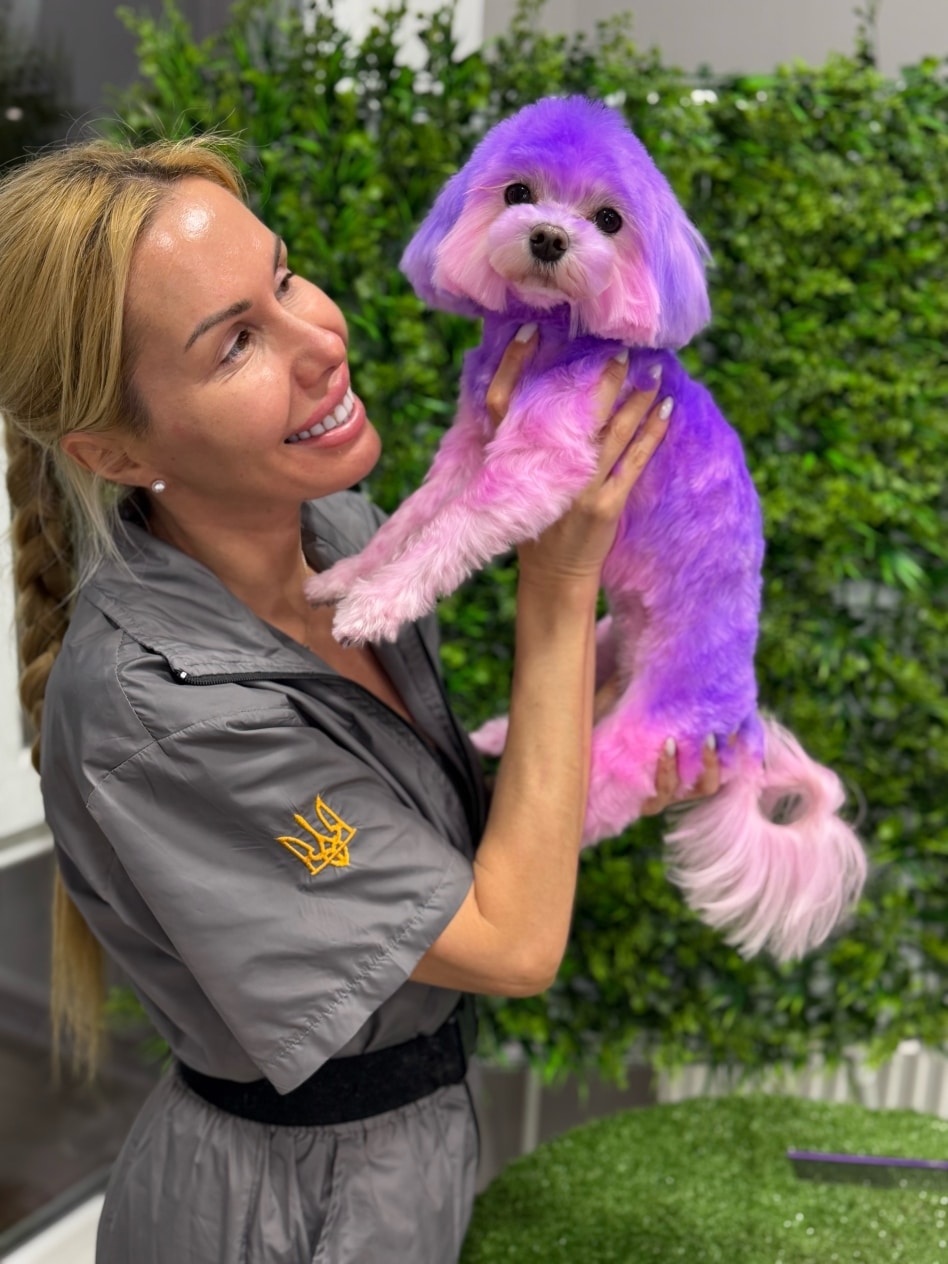
Coloring in grooming is a full-fledged work with color. And the same rules apply here as in painting.
First, the palette. You can’t just take a bright color and apply it – it has to work in the system. Warm and cold shades, saturation, combinations – all of this affects perception.
Secondly, contrast. It creates accents. Without contrast, even a complex work looks “flat”. With the right contrast, even a minimal element becomes expressive.
Thirdly, the style. There are works that look like pop art, some are more restrained, some are as natural as possible with light accents. And here it is important not to copy, but to understand what you are doing and for whom.
An important fact: only safe animal paints are used in the professional environment. And this is important because art cannot come at the expense of health.
The groomer as an artist
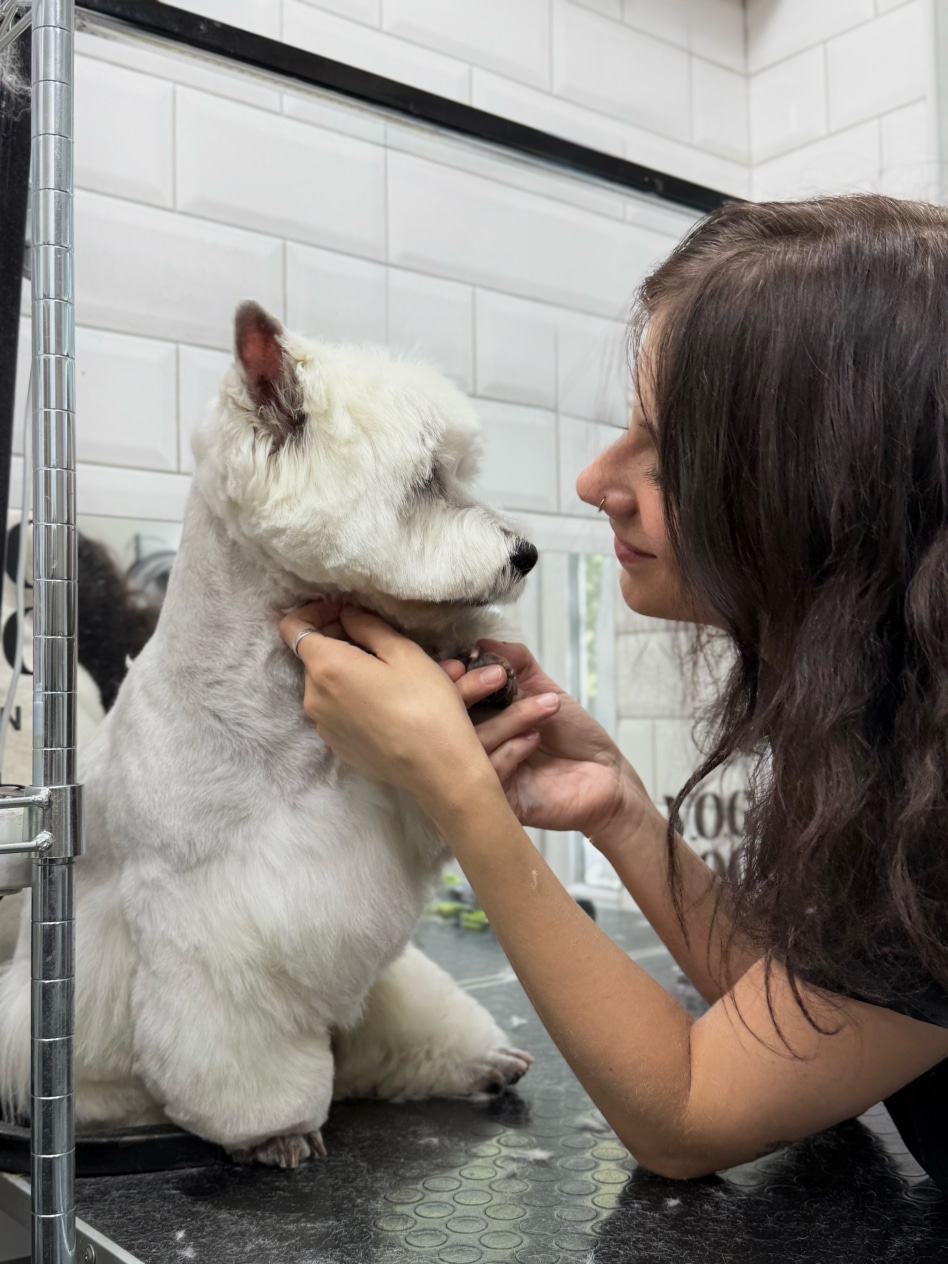
The difference between a good groomer and a strong groomer is in their thinking. The former reproduces the client’s request. The latter offers a solution that the client would not have formulated himself.
Inspiration comes from different areas: fashion, architecture, sculpture, even automotive design. All of these areas involve working with shape, line and proportions – and this is directly transferred to grooming.
But the main thing is authorship. When a master has her own style, her work can be recognized without a signature. This is the level of art. And it is these specialists who shape trends rather than follow them.
Conclusion.
Grooming becomes an art at the moment when you gain conscious control over shape, color, and perception. When every cut has a reason, every volume has a logic, and every element has a place in the overall idea.
And then the dog ceases to be just a “haircut”. It becomes a carrier of an image. And the master becomes the author who created this image.