
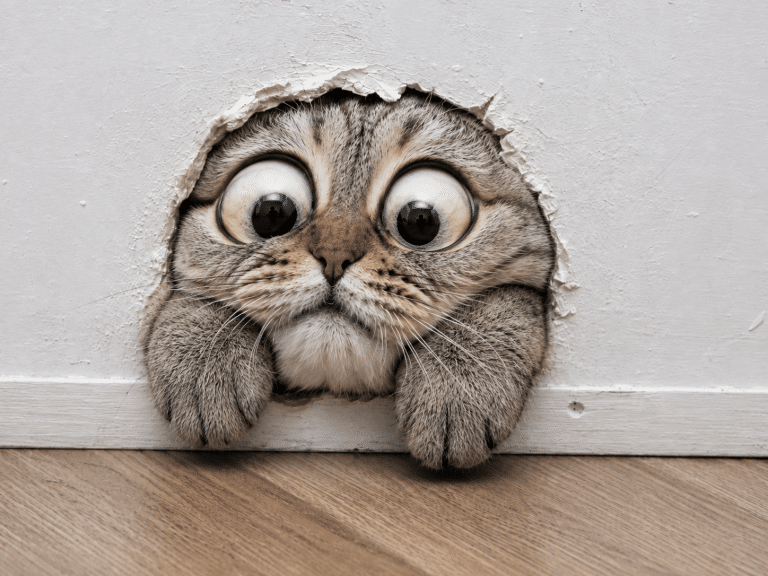
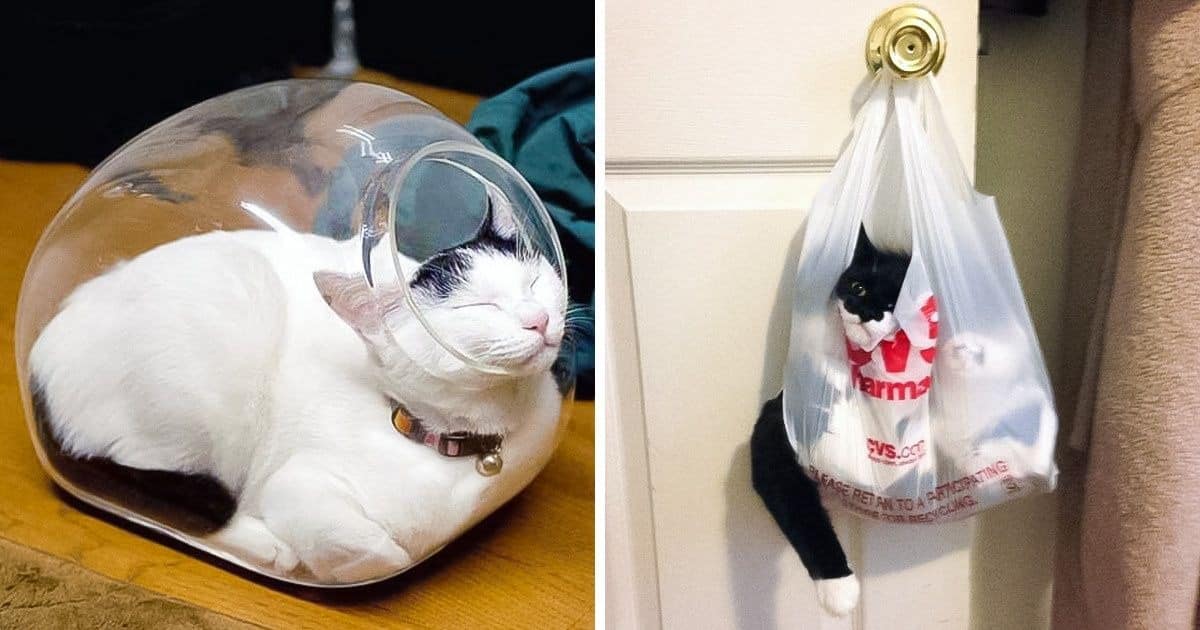
Just leave a small box on the floor—and within a few minutes, a cat will already be sitting inside it. A narrow gap between pieces of furniture, a small shelf, or an opening that seems too tight often doesn’t stop a cat either. Sometimes it seems as though cats are capable of changing the shape of their bodies.
Of course, they don’t turn into liquid. But their body structure, flexibility, and ability to assess space truly make cats incredible masters at squeezing into the tightest spots.
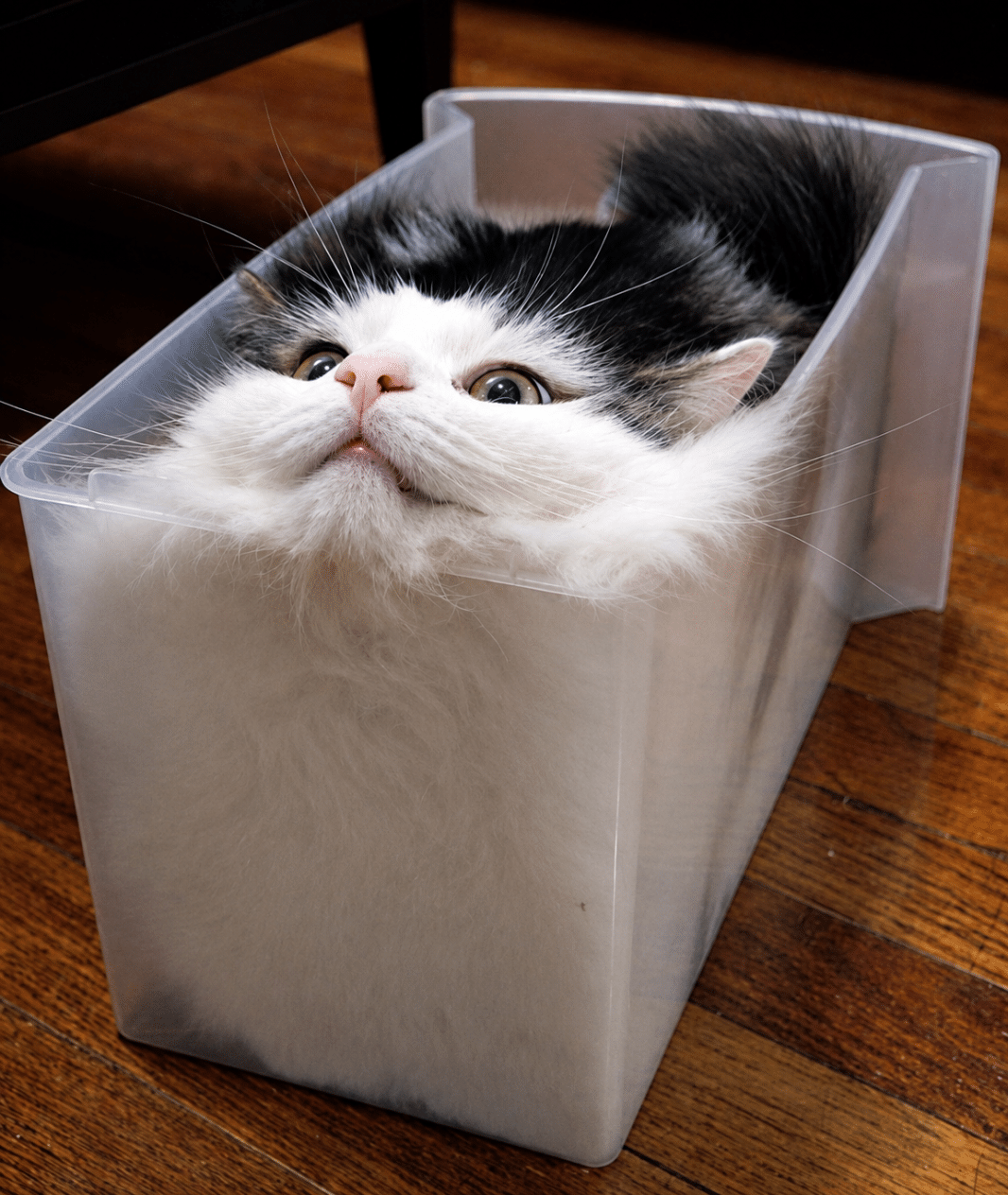
The secret lies in their body structure
A cat’s body is designed for highly flexible movements. Its flexible spine allows it to arch, twist, and stretch its body significantly, while the unique structure of its shoulder girdle gives its front limbs considerable freedom of movement. Thanks to this, a cat can change its body position much more easily than a human.
That’s why an opening that seems too narrow to us may be perfectly passable for a cat. It can extend its front paws forward, rotate its shoulders, and gradually squeeze its body through the space. Of course, their capabilities aren’t limitless: a cat’s chest size, physical condition, and body weight also play a role.
It is precisely this flexibility that gave rise to the famous joke that “cats are liquid.” But, as it turns out, scientists actually decided to test just how well cats understand the dimensions of their own bodies.
Does a cat know where it can squeeze through?
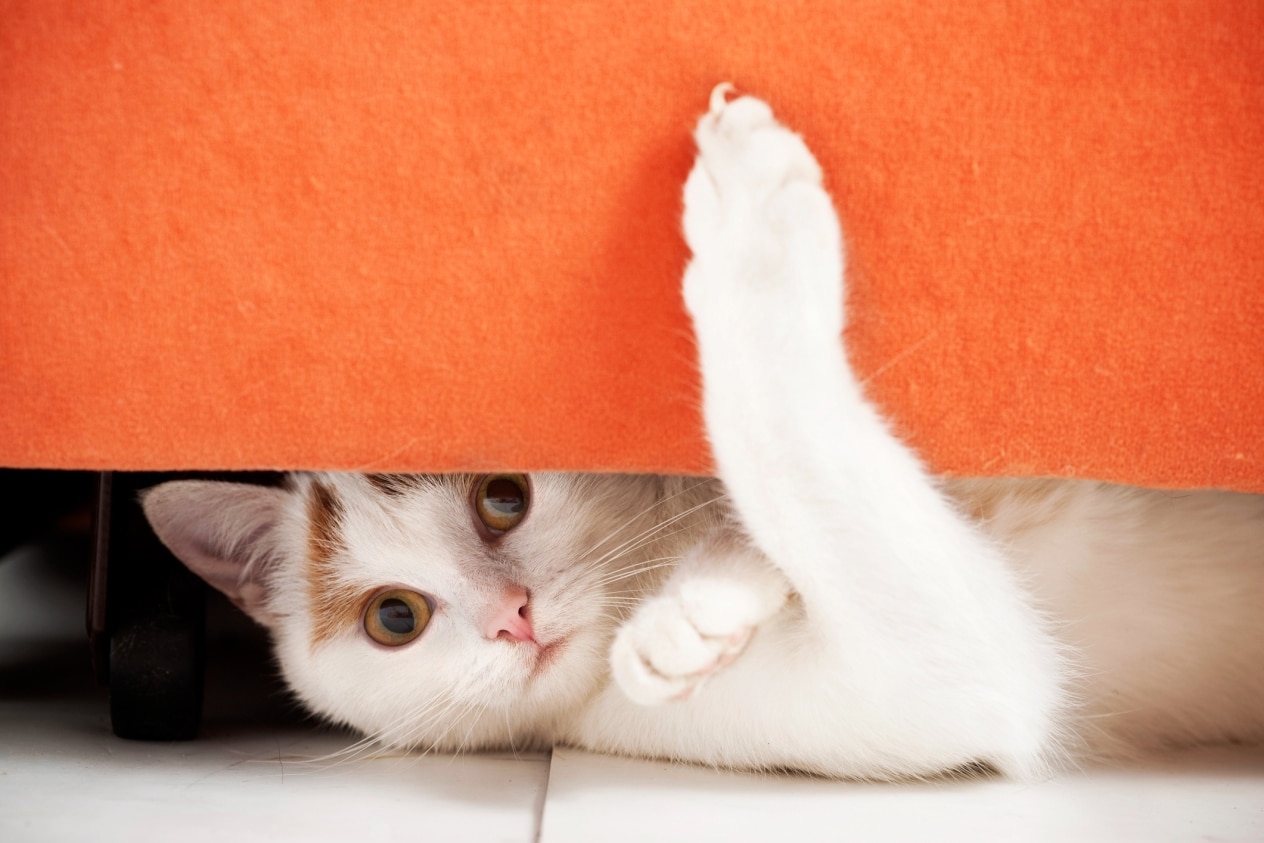
In a 2024 study, cats were asked to pass through openings whose sizes gradually changed. The result was unexpected: when faced with tall but very narrow openings, cats often didn’t hesitate for long and tried to squeeze through by trial and error. However, when faced with low openings, they were more likely to hesitate even before they started moving.
This suggests that cats may take their own body size into account, but they do not do so consistently in all situations. The researchers suggested that for a narrow passage, the “I’ll just try it” approach may be a perfectly normal strategy, whereas a low obstacle forces a cat to assess its capabilities more cautiously.
Therefore, the moment when a cat stares at a tiny gap for a few seconds and then squeezes through it after all may be more complex than it seems. It isn’t necessarily acting at random—a cat is capable of using information about its surroundings and its own body.
Why do cats love tight spaces so much?
The ability to squeeze into a box is only half the story. The other question is: why does a cat so often choose a small space on its own, even when there’s an entire room nearby?
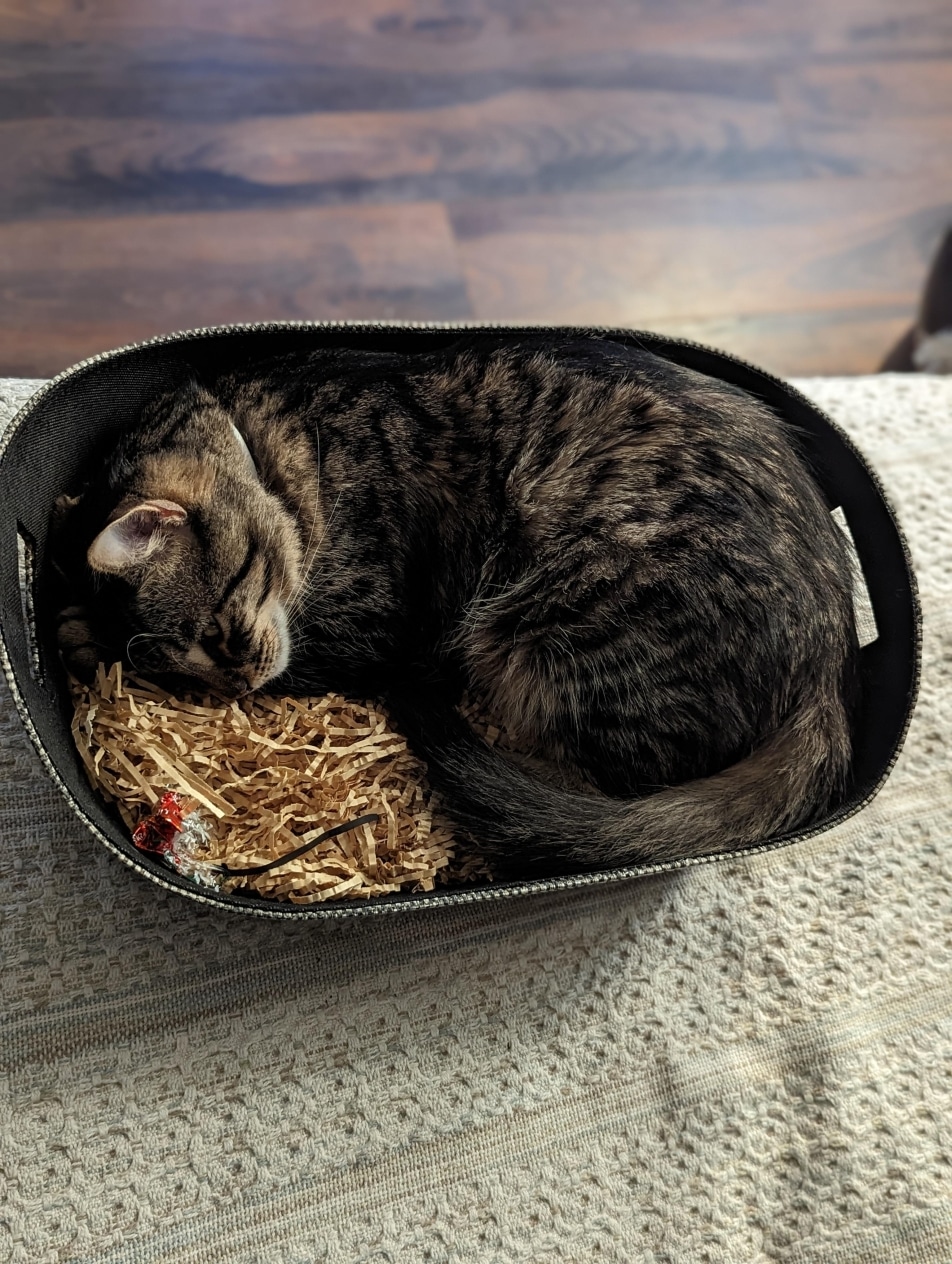
For a cat, an enclosed space can provide a place to hide, observe its surroundings, and limit the number of directions from which it can be approached. That’s exactly why boxes, carriers, shelves, and other hiding spots are often so appealing to cats.
And a cat’s love for small spaces constantly leads to funny situations: a cat might ignore an expensive lounger but instantly claim the box next to it. Perhaps it’s not a matter of strange feline logic. It’s just that to us, it’s an ordinary cardboard box, but to a cat, it’s a cozy hideout, an observation post, and a personal fortress all at once.
So the answer to the question “Why do cats fit into every nook and cranny?” consists of several parts: an extremely flexible body, a unique strategy for overcoming obstacles, and a natural love for tight spaces. And although cats are definitely not liquid, they sometimes do everything they can to make us continue to doubt it.