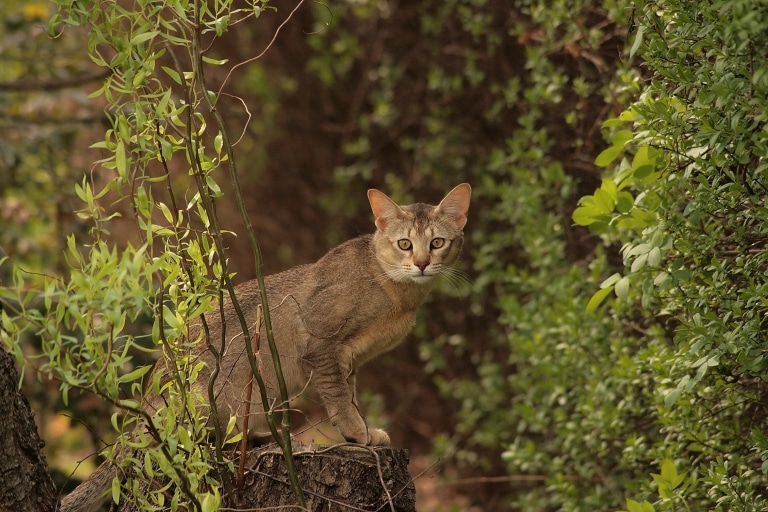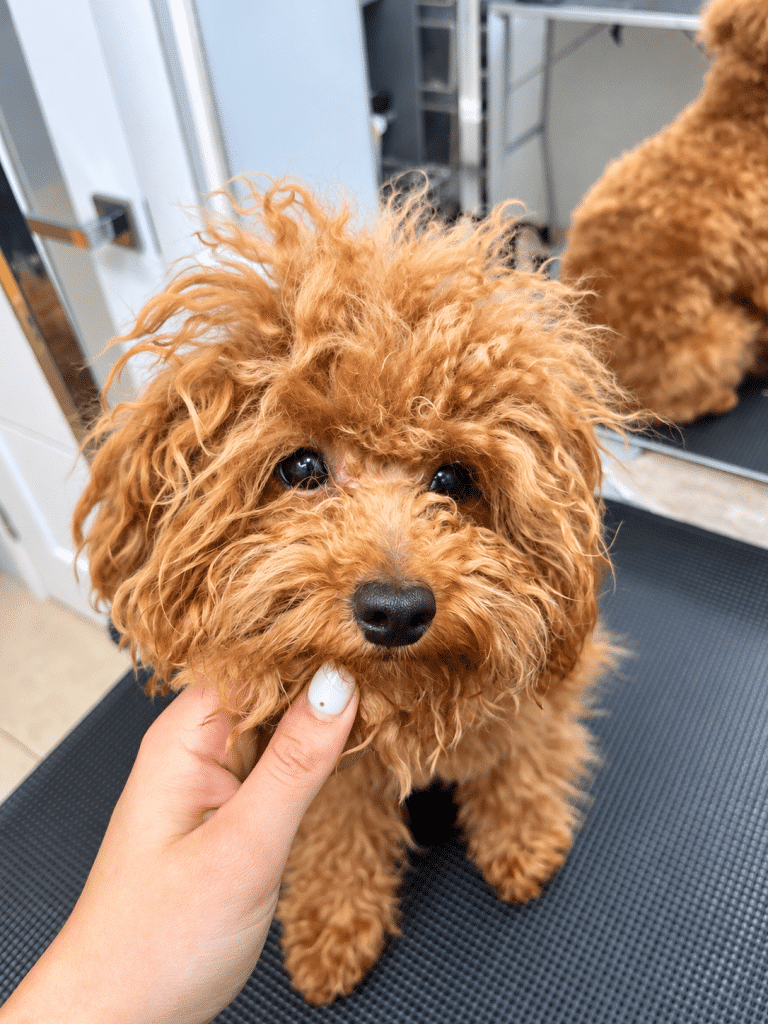
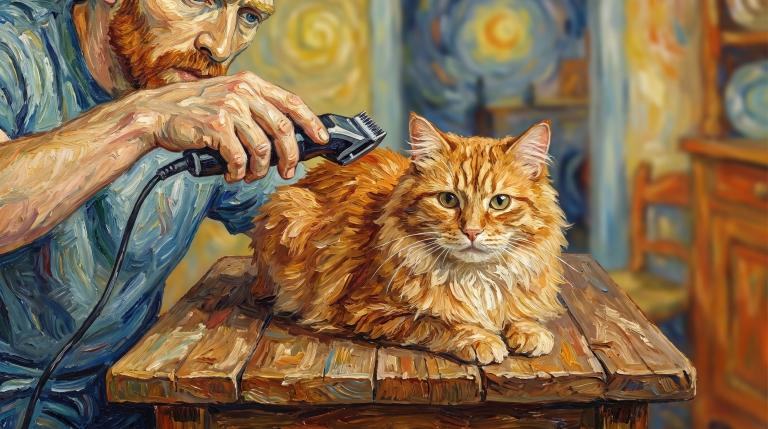
Cat fur and skin have their own unique characteristics, so methods that work well for grooming dogs aren’t always suitable for cats.
At V.O.G DOG SALON, we do not perform decorative clipper cuts on cats, as this procedure often does not produce an even result, can cause discomfort, and significantly extends the time the animal spends at the grooming salon. For us, it’s more important not to create a specific shape at any cost, but to choose the safest and most comfortable grooming option.
Soft cat fur is difficult to trim with a clipper attachment
Cat fur is usually very soft, fine, and light. In many cats, it consists of a dense, fluffy undercoat and longer guard hairs, which have different structures and grow in different directions.
Because of this, the clipper attachment cannot always grip all the fur evenly. Some hairs get flattened, some slip through the teeth, and the soft undercoat can accumulate in front of the attachment. As a result, after the clipper passes over the fur, streaks, transitions, steps, and patches of varying lengths remain.
It’s especially difficult to work with the attachment if the fur already has small tangles or mats. The attachment doesn’t glide through them freely: the fur starts to get pulled, bunched up, and caught between its teeth. This can be unpleasant or even painful for the cat, as the skin is pulled along with the fur.
To achieve at least a relatively even result, the groomer has to run the clippers over the same areas many times, change the direction of the cut, and constantly fluff out the fur. However, even after doing this, the attachment does not guarantee a neat and uniform length across the entire body.
The attachment is not capable of safely removing mats
For clipping with a clipper attachment, the coat must be clean, dry, and thoroughly combed from the skin to the tips. Even if the coat looks neat on the surface, a dense undercoat, small tangles, or hidden mats may remain closer to the skin.
The attachment glides over the fur and cannot get under a dense mat. It hits the mat, snags the hairs, and starts pulling the fur along with the skin. Trying to run the clipper over such an area repeatedly with the attachment causes the cat unnecessary discomfort. If the mats can no longer be gently untangled or combed out, it’s safer to evenly trim the fur to a short length with a professional clipper than to try to leave it longer using the attachment. The blade must pass under the mat, which a comb attachment cannot do.
Trimming with a comb attachment prolongs the procedure and increases stress
Most cats aren’t willing to stand still on the grooming table for a long time. They may react to the sound and vibration of the clippers, as well as to being touched on their belly, paws, armpits, tail, and other sensitive areas. When using a clipper attachment, the groomer has to work longer: going over each area multiple times, combing the fur between passes, correcting unevenness, and trying to smooth out the transitions. The longer the procedure takes, the harder it is for the cat to stay calm.
If the animal begins to get nervous, struggle, or suddenly change its body position, continuing the grooming session becomes an unjustified risk. Additional passes with the clippers can also heat up the blade and irritate sensitive skin, so it’s important to monitor the tool’s temperature while working and avoid going over the same area unnecessarily multiple times.
In such a situation, the length of the fur or the perfect shape should not take precedence over the cat’s well-being. Proper cat grooming should be as calm and gentle as possible, and as brief as possible.

How do we care for cats at V.O.G DOG SALON?
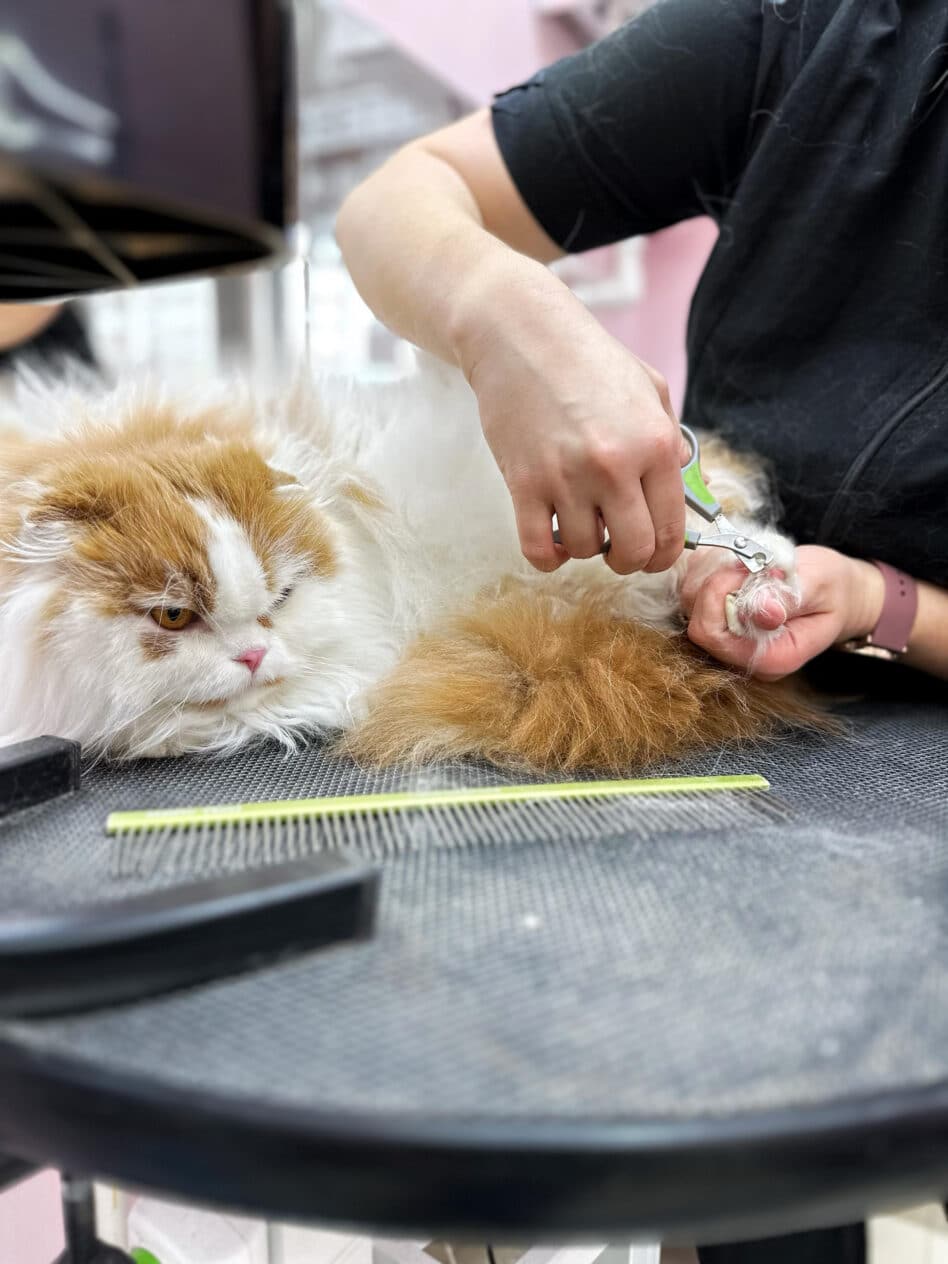
We do not clip cats with a clipper attachment or create decorative styles. Before the procedure, the groomer assesses the condition of the coat, the amount of undercoat, the presence of mats, skin sensitivity, and the cat’s behavior.
If the coat can be preserved, we perform a gentle comb-out: we remove excess undercoat, untangle minor mats, and bring the coat back to a neat condition. Regular brushing helps keep the coat clean, reduce shedding, and prevent new mats from forming.
Grooming can be performed:
- with a bath —if the owner prefers it, the coat needs cleaning, and the cat is comfortable enough around water;
- without bathing —if the owner chooses to brush the cat only or if the cat becomes very anxious when in contact with water.
We do not bathe a cat at any cost. The decision is made based on the condition of the coat, the owner’s preferences, and the animal’s reaction. Most healthy cats do not require frequent bathing, but when necessary, it can be done safely using special grooming products and gentle handling.
If the coat is severely matted, covered in dense tangles, or if the owner decides to have the cat clipped after consultation, we perform a complete, even trim using a professional clipper to a short length. But only when necessary or upon a veterinarian’s recommendation. In other words, we do not attempt to leave a standard 6, 9, or 12 millimeters using a clipper attachment; instead, we carefully remove the fur along with the problem areas.
We do not use sedation, rough restraint, or forceful restraint. If a cat shows signs of excessive stress and it is unsafe to continue the procedure, the groomer prioritizes the animal’s well-being above all else.
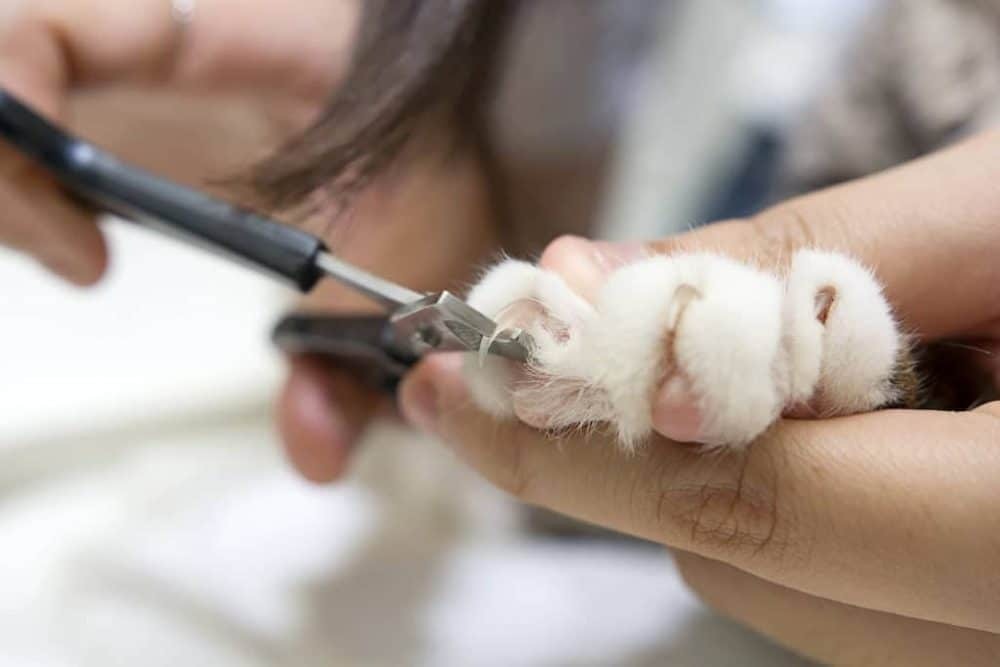
We are committed to proper grooming: no decorative trimming of cats with a clipper attachment, no unnecessary coercion, and no procedures that do not benefit the animal. Our goal is to provide your cat with safe, gentle, and truly necessary care.