
“We brush them every day—so where do the mats come from?”—groomers hear this question quite often. And owners may indeed be taking good care of their pets. The problem sometimes lies in the tools, technique, or the habit of just running the brush over the surface of the coat.
Do you need to brush your dog every day? For some dogs, yes, but there’s no one-size-fits-all rule. The frequency depends on the coat’s texture and length, its condition, shedding patterns, and the animal’s lifestyle.
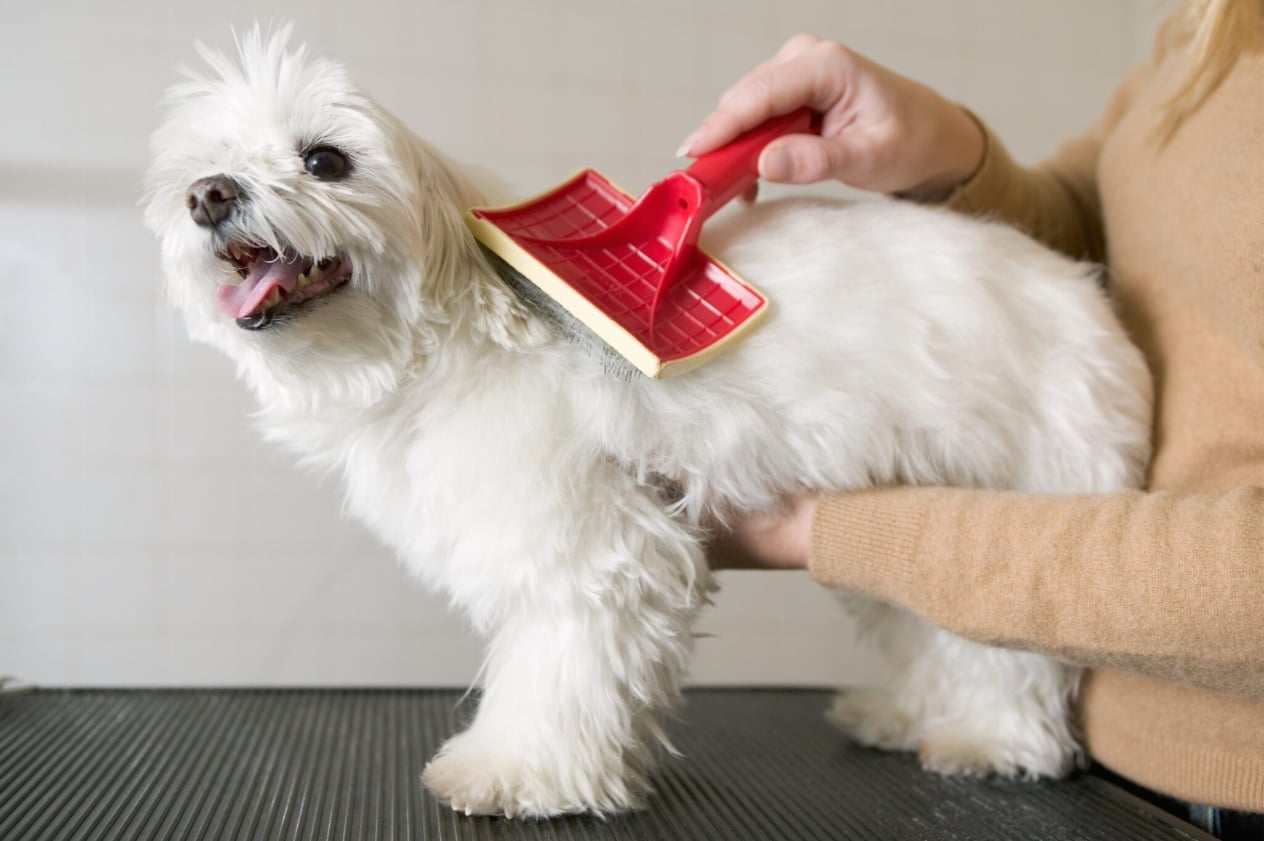
Who Needs Daily Brushing
Long, fine, and curly coats usually require more attention. If an owner keeps their pet’s coat long, they should be prepared for regular grooming at home—sometimes even daily. A shorter haircut can make grooming easier, but it doesn’t eliminate the need to check the coat for tangles.
Dogs with a thick undercoat may need more frequent brushing during heavy shedding. During other periods, a less frequent schedule tailored to the specific coat type is sufficient. Short, smooth coats usually do not require daily brushing; weekly grooming with an appropriate soft brush is often enough.
For owners and beginner groomers, the main guideline is the dog’s condition between grooming sessions. If the coat regularly becomes matted before the next brushing, the schedule or technique needs to be adjusted.
Why does the brush glide through easily, yet mats remain?
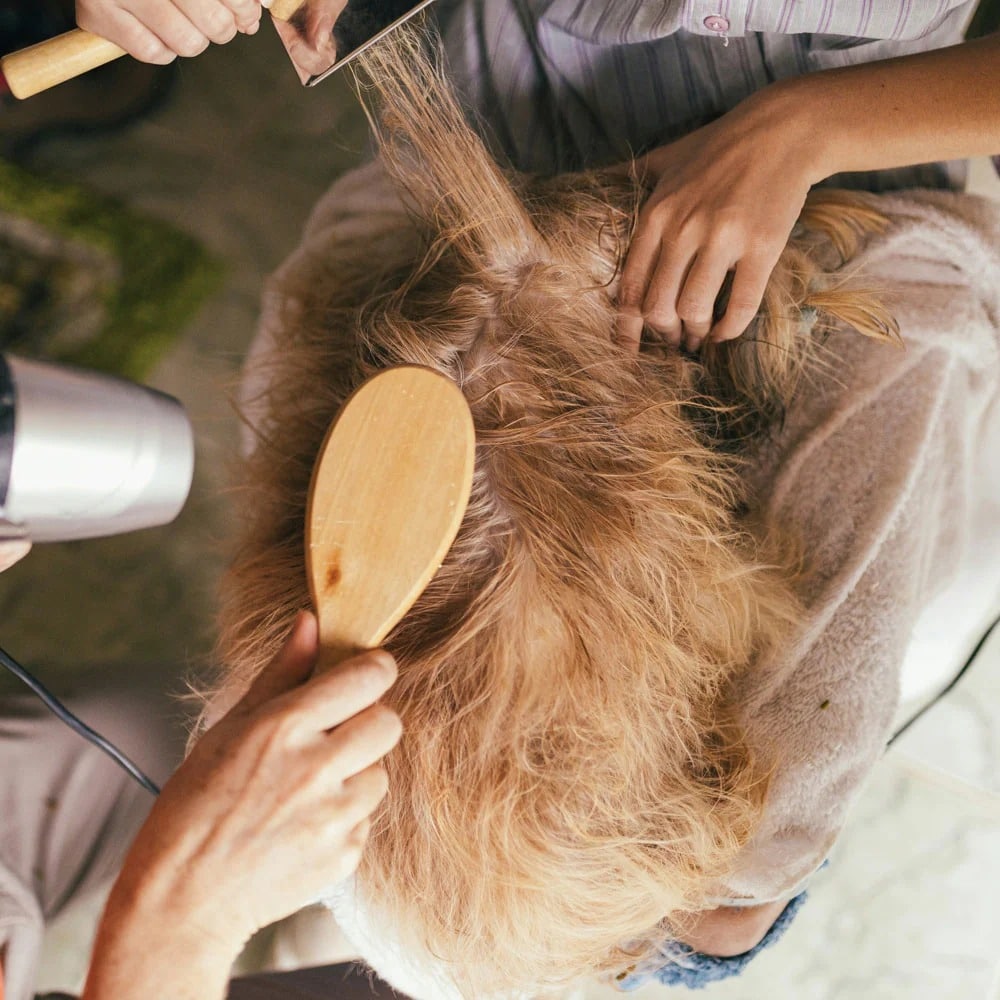
A nice, fluffy surface doesn’t necessarily mean the coat is combed out along its entire length. The brush may glide over the surface, leaving mats closer to the skin. It’s especially easy to miss areas behind the ears, under the armpits, on the inner surfaces of the paws, and where the coat rubs against harnesses.
Therefore, it’s best to work on long, thick fur in small sections: lift a strand, carefully brush the lower section, and gradually move on. After brushing, check the results with a metal comb with appropriately spaced teeth. It helps find any tangles that went unnoticed. The comb should glide through smoothly; there’s no need to force it through a knot.
How to Brush for a Comfortable Grooming Experience
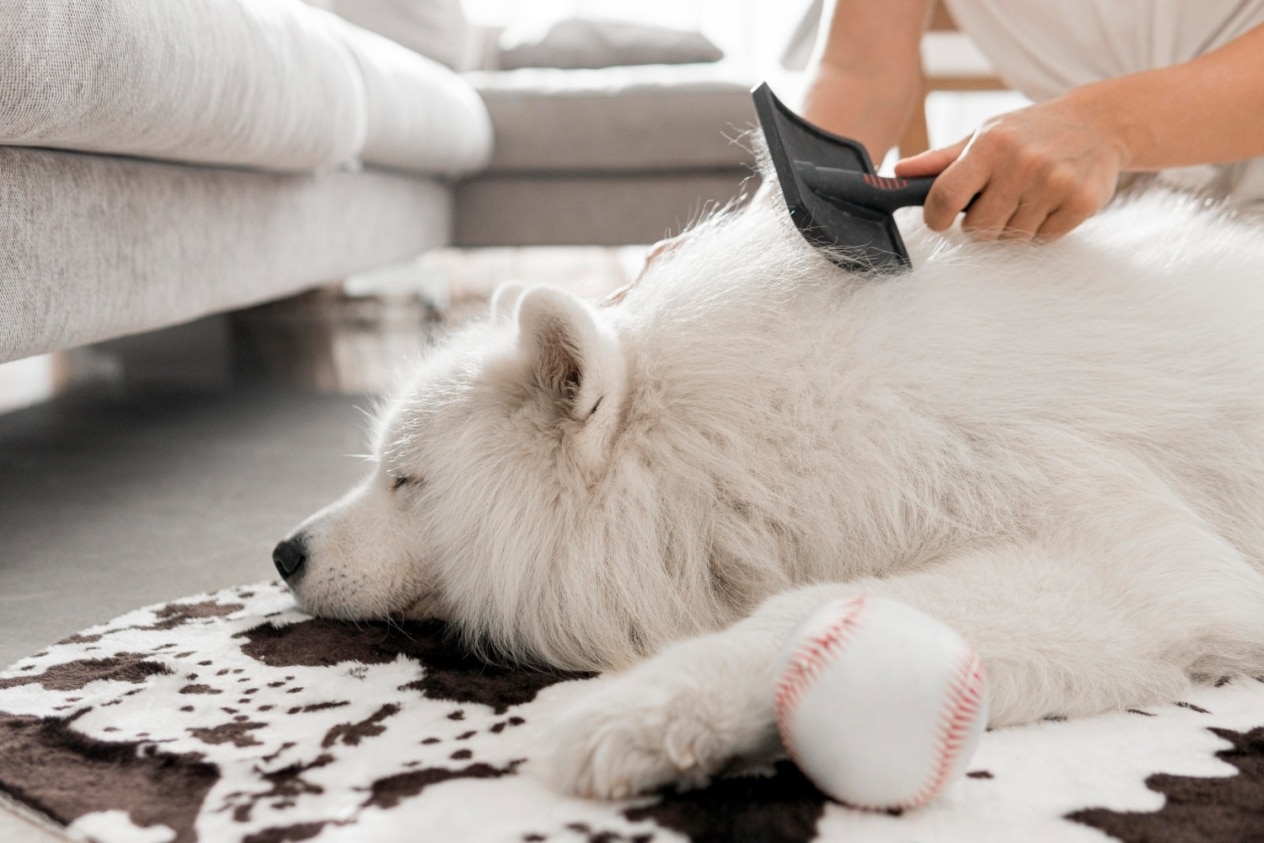
Start by assessing the coat and choosing the right tool. A soft rubber brush for a smooth-coated dog and a slicker brush for a thick coat serve different purposes. Even a high-quality tool may not work well if it isn’t suitable for a particular dog.
Work calmly, using short strokes without applying too much pressure. Don’t try to go over the same area multiple times in a single session in pursuit of perfect fluffiness. It’s better to take a break and continue when the dog is ready for contact again.

Is it okay to brush too much?
Yes—especially if you apply excessive pressure, yank at the fur, or spend too long on one spot. The goal of the procedure is to remove dead hair and prevent matting while ensuring the animal’s comfort. The amount of fur on the brush does not in itself indicate the quality of the grooming.
A dense mat close to the skin is a reason to consult an experienced groomer. Not every mat needs to be untangled through prolonged brushing: sometimes, professional mat removal is a better solution. Cutting it out yourself with scissors close to the skin is dangerous.

Conclusion
Not every dog needs daily brushing. Instead, it’s helpful to check your pet’s coat condition every day. Properly selected tools, a gentle technique, and timely care are more important than the number of minutes you spend with a brush in your hands.