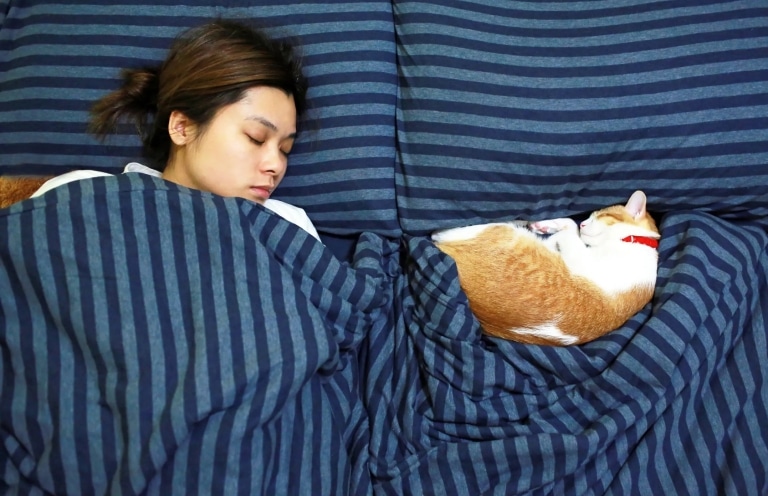
In the evening, the cat sleeps peacefully on your sweater, but in the morning, as soon as you reach for the carrier, he’s already vanished. You haven’t even put your shoes on yet, and he’s already managed to hide under the couch. Ten minutes later, you’re rushing to get ready, the cat is resisting, and you still have a long trip ahead and a visit to the grooming salon.
At home, the cat chooses for itself where to sit, when to approach you, and when to leave. On grooming day, many familiar things change all at once. The carrier door closes, the floor beneath its paws starts to move, and unfamiliar voices and smells appear all around. Even a cat who loves having its back scratched may arrive at the appointment already on edge.
You can start preparing on a regular evening at home. Place the carrier near your cat’s favorite chair, let him explore it, and while brushing him, put the brush down a little before he wants to leave. That way, by the day of the appointment, they’ll already have a few familiar sensations to rely on.
Here’s what we recommend doing to make things easier for your pet and help them be a little more cooperative during grooming:
1. Get the carrier out ahead of time
Place the carrier where your cat often spends time, and leave the door open. Place a bed inside that your cat has already slept on. If your cat cautiously sniffs the entrance, you can start by leaving a treat nearby and gradually move it a little further inside. Let your cat go in and out on its own. Although cats will usually hop into the carrier on their own if given the chance to sit in a closed box.
Once the cat starts going in voluntarily, try closing the door for a few seconds and then opening it again. The next day, you can briefly lift the carrier and put it back down. If the cat gets stressed just by the movement of the door, give him more time with the carrier open. The pace here is determined by his reaction.
2. Do a few short sessions with a brush
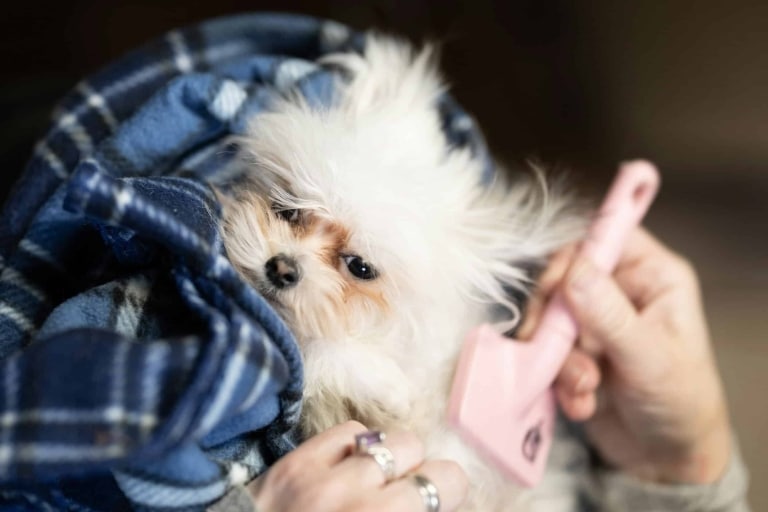
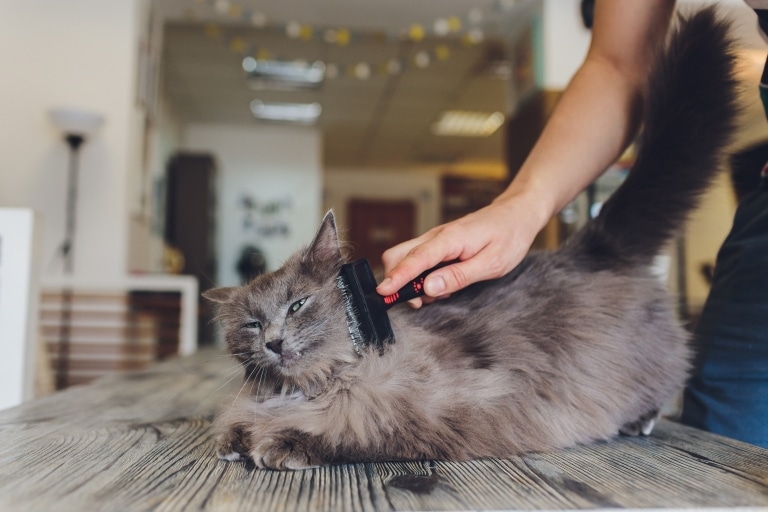
Wait until the cat settles down next to you on its own. Make one or two gentle strokes with the brush where the cat usually enjoys being touched—such as on its back—and then set the brush aside. If the cat suddenly turns its head toward the brush, twitches its tail, or stands up, you can stop there. If it only occasionally lets you touch its belly and hind legs, leave those areas alone. A few short brushing sessions before your visit are enough, after which the cat will happily stay close.
3. Check the fur close to the skin
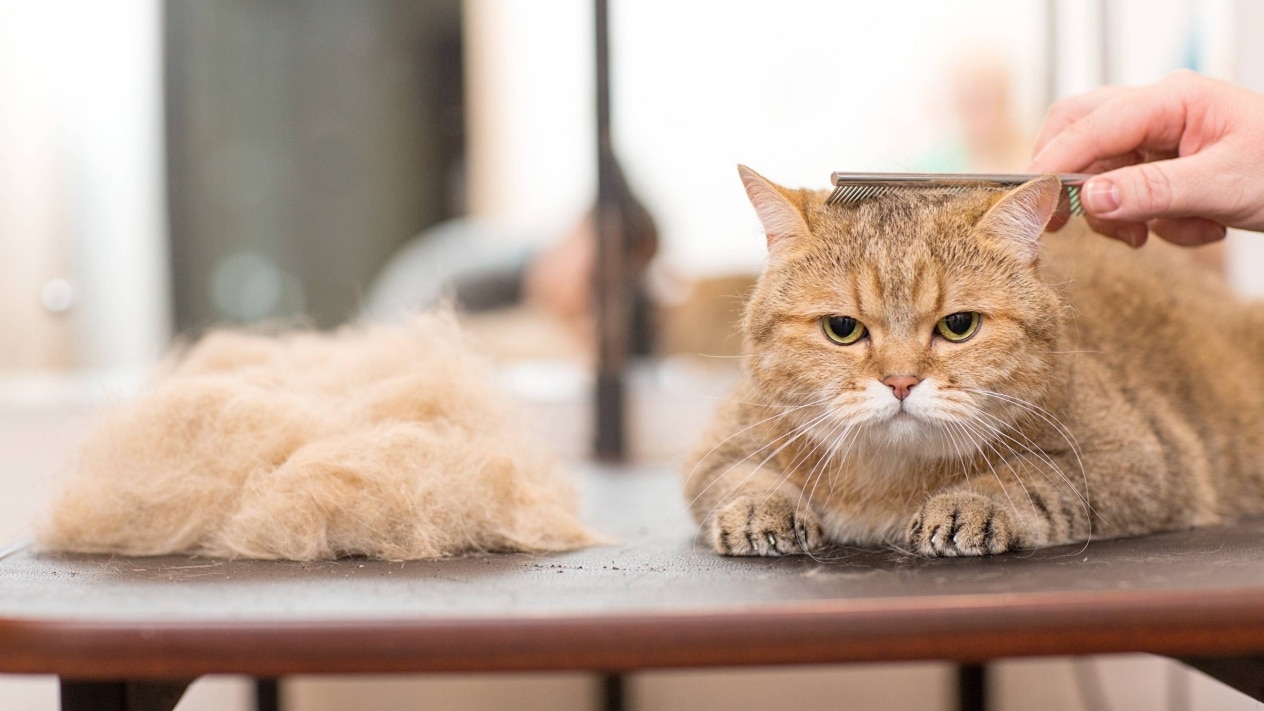
While petting your cat as usual, run your fingers behind its ears, under its front paws, and along its sides. The fur on top may look smooth, even though there’s already a tight mat close to the skin. If the brush gets stuck in such an area or the cat pulls away from your touch, leave it until a professional grooming session. A tight mat can easily be snagged by scissors along with the skin, especially if it’s pressed tightly against the skin. Therefore, it’s best to skip trying to trim the fur at home. There’s also no need to bathe the cat specifically before the grooming appointment. Just stick to your usual grooming routine for the areas the cat allows you to brush.
4. On the day of the visit, get everything ready before putting your cat in the carrier
Place a familiar bedding inside, check the door and latches, and have your keys and belongings ready. That way, once the cat is in the carrier, you can leave right away. In the car, place the carrier upright on the floor behind the front seat. If your cat feels calmer when it can’t see as much of its surroundings, partially cover the carrier with a light towel, leaving the ventilation holes open.
Even if the cat meows, keep the carrier closed while driving and near the car door. Open it only once you’re inside a closed room, where the cat can get out without the risk of darting outside.