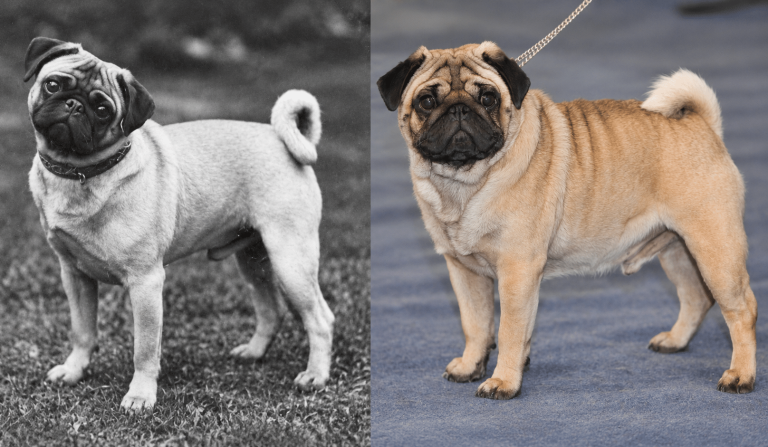
If the dogs from the 1915 dog show were to enter the ring today, we would recognize some breeds immediately, while others would require a closer look. Over the past hundred-plus years, breeders and groomers have significantly changed the appearance of many purebred dogs. Targeted breeding has solidified head shape, body proportions, and coat type. Grooming has also evolved alongside show trends and the needs of owners. So, when you compare an old photo with a modern one, it’s fascinating to figure out where generations of selective breeding have made a difference and where the scissors have completely transformed the silhouette.
What Breeding Changes and What Grooming Changes
Selection begins with the choice of parents. If breeders consistently select dogs with certain inherited traits, these traits may appear more frequently in subsequent generations. Selection can emphasize an already familiar breed characteristic: making the body more compact, the head more massive, or reinforcing the desired coat type. The choice is influenced by the breed’s purpose, the requirements of the breed standard, and what is valued at dog shows.
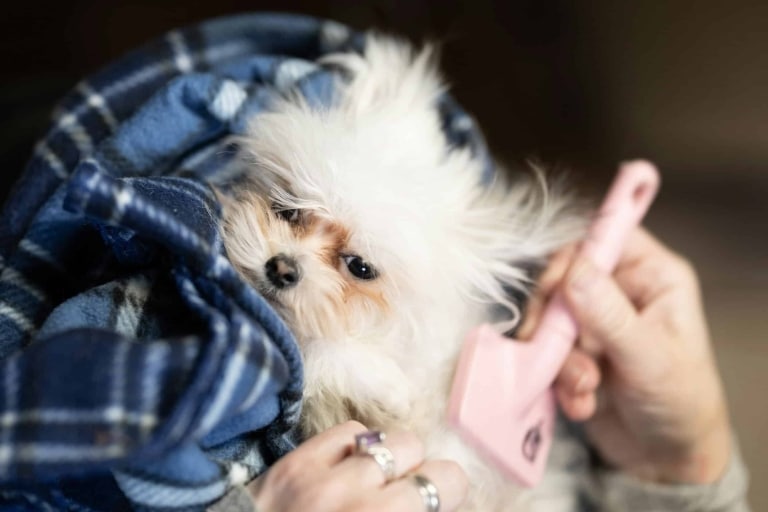
Grooming is done within a single visit to the salon. A groomer can expose the neck, leave more volume on the chest, or trim the coat around the muzzle so that it appears rounder. That’s exactly why the same Yorkie looks completely different after a short haircut than it does with long fur. In short-haired breeds, the body structure is easier to see, while in a Poodle or Yorkie, the hairstyle itself helps define part of the silhouette.
Bull Terrier
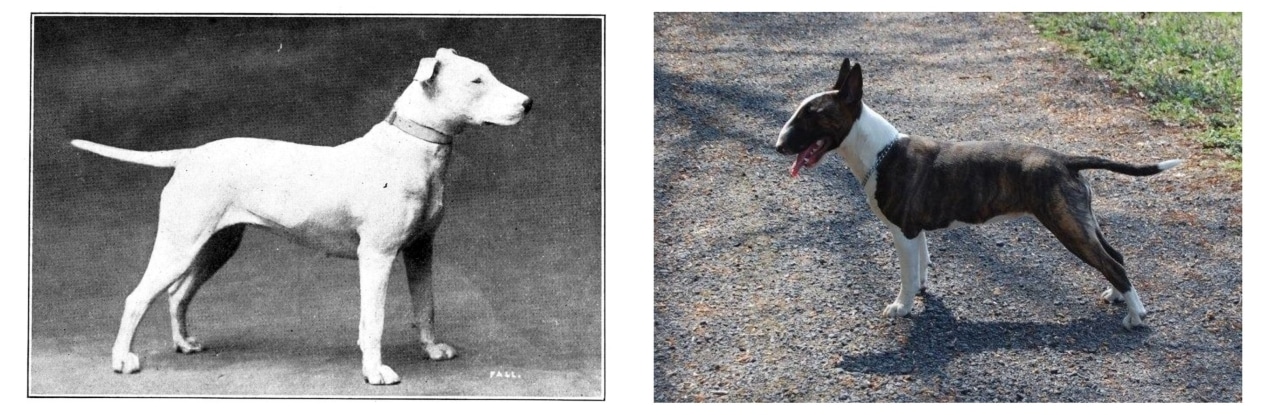
Bull Terrier · 1915 and 2013
In the 1915 photo, the Bull Terrier shows a noticeable transition from the forehead to the muzzle. In the dog in the color photo, the top line of the head forms an almost continuous arc from the crown to the nose. It is precisely this curve that the modern standard identifies as a characteristic feature of the breed. Museum skulls of Bull Terriers from 1931, 1950, and 1976 show how the front part of the head gradually curved downward more sharply. What appears in the photos to be simply a different expression of the muzzle has a very specific anatomical cause.
Saint Bernard
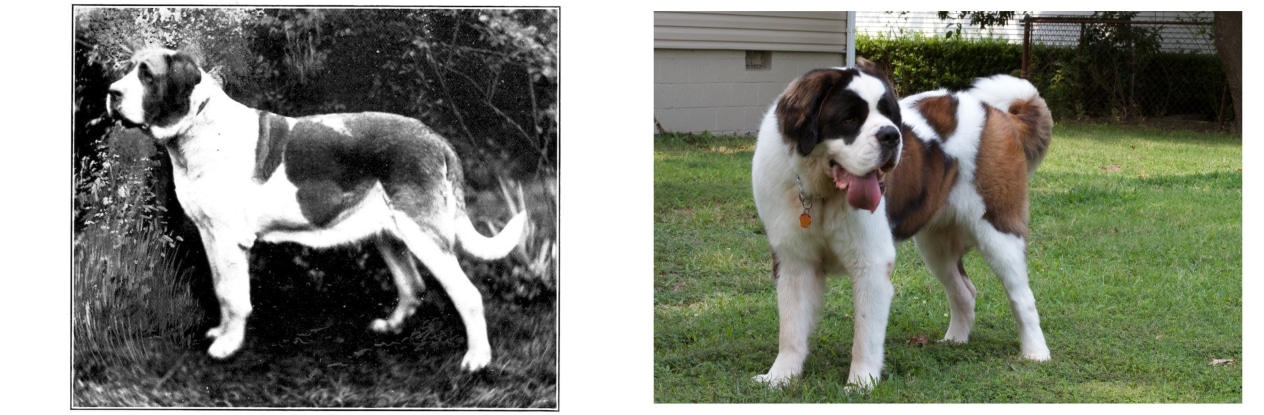
Saint Bernard · 1915 and 2012
The 1915 Saint Bernard clearly has an elongated muzzle. In the 2012 photo, the head appears wider, and the transition from the forehead to the muzzle is more abrupt. The angle of the photo also affects the impression, so measurements are particularly valuable here. In 2008, Abby Drake and Christian Klingenberg published an analysis of 47 museum-held St. Bernard skulls dating from 1885 to 2001. During this period, the front of the head became wider, and the transition from the forehead to the muzzle became more pronounced. The researchers linked the direction of these changes to the traits valued by breeders.
English Bulldog
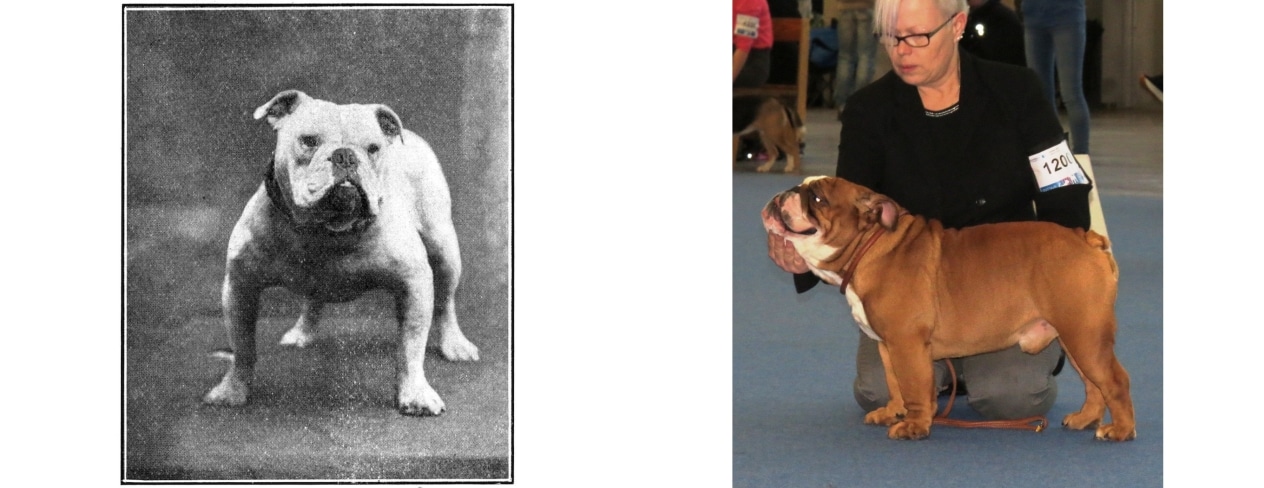
English Bulldog · 1915 and 2015
The bulldog already had a short muzzle and a broad head at the beginning of the 20th century. The change that can be traced concerns the lower jaw. The 19th-century standard described a significant protrusion of the lower jaw forward, while in later editions only a slight protrusion remained. This is an example of how requirements for the same trait change over time. The angles in these photos vary, so it is more accurate to compare the jaw protrusion itself based on the breed standard descriptions.
The Bulldog’s distinctive features also have health implications. In a 2022 British study by VetCompass, bulldogs were approximately twice as likely to receive at least one diagnosis within a year compared to other dogs in the sample. Among the more common diagnoses was skin fold dermatitis.
Poodle
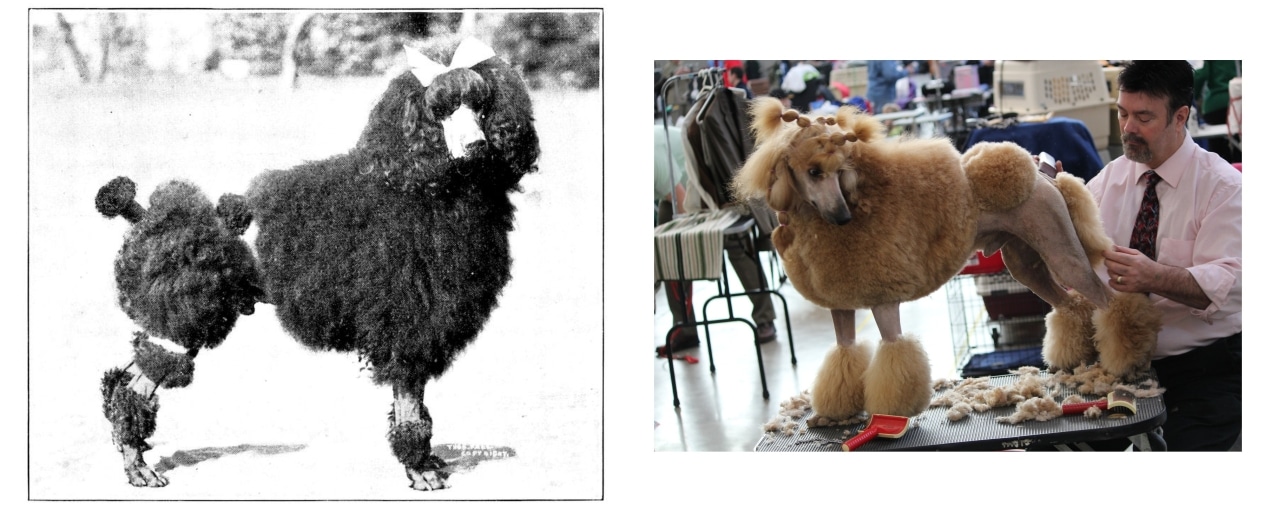
Standard Poodle · 1915 and 2010
Poodles were already being groomed in intricate styles as early as 1915. In this archival photo, part of the coat was clipped short, while volume was left on the front of the body. In the 2010 photo, a groomer is preparing a Poodle for a Continental cut. The short-cropped rear emphasizes the dog’s full chest and rounded cuffs on the legs. The way the coat is styled changes how we perceive the dog’s proportions, and both photos show that this technique has been in use for over a century.
Yorkshire Terrier
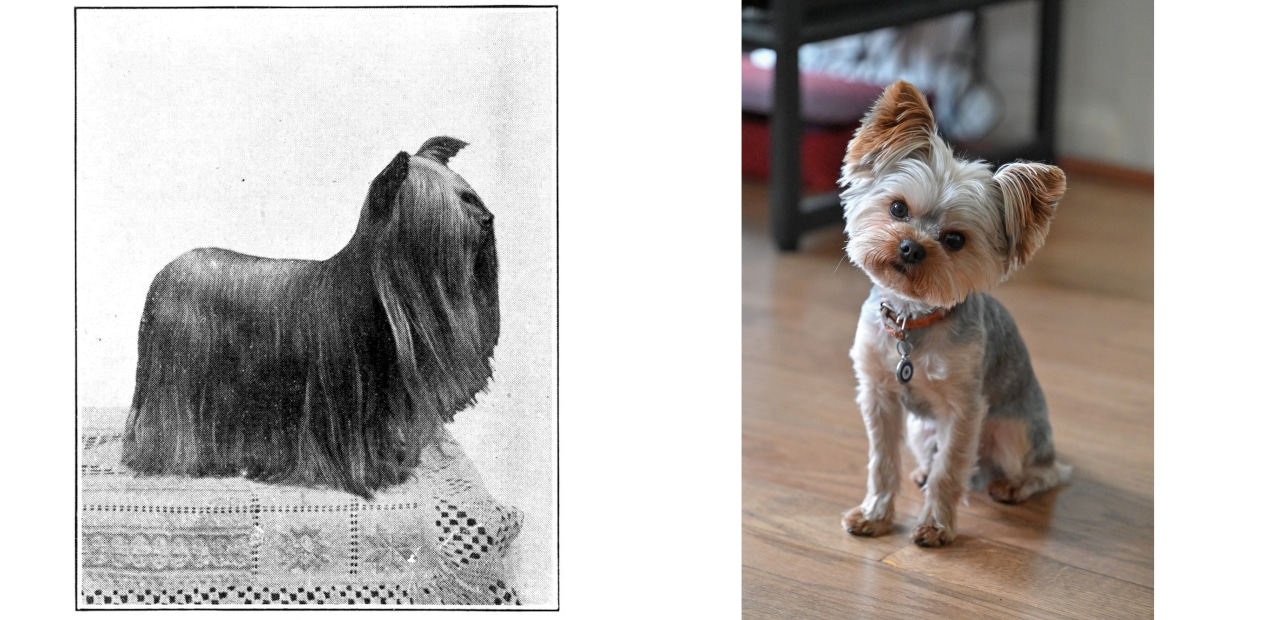
Yorkshire Terrier · 1915 and 2025
In the 1915 photo, the Yorkie’s coat falls almost to the ground and hides its legs. The short cut in the 2025 photo reveals the body and makes the muzzle’s outline rounder. At the same time, the current FCI show standard still describes a long, straight coat with a parting. So both looks can be seen today. The long coat creates the show silhouette, while the short cut gives a different appearance to the same breed.
How to Interpret These Changes
Over the course of a century, the Bull Terrier has developed a more pronounced curve in its profile, while the Saint Bernard has developed a broader front of the head. These changes have been cemented over generations and have even left their mark on museum skulls. At the same time, the long-haired Yorkie from a 1915 photo and the short-haired Yorkie from 2025 show just how drastically a silhouette can change with a single visit to the groomer. That is precisely why it is interesting to compare old photos with new ones: the shape of the head reveals the history of selective breeding, while the coat’s style reflects how people groomed and presented their dogs.
Conclusion
We hope you found it interesting to look at familiar breeds through the eyes of people who saw them over a hundred years ago. Over time, both the traits that breeders sought to preserve and the haircuts chosen by groomers and owners have changed. But every breed has something that allows us to recognize it even in an old photograph. Some dog traits are passed down from generation to generation, while others are preserved through grooming traditions and occasionally come back into fashion. That’s why you can still recognize the work of a groomer from a 1915 photograph in the silhouette of a modern poodle.