
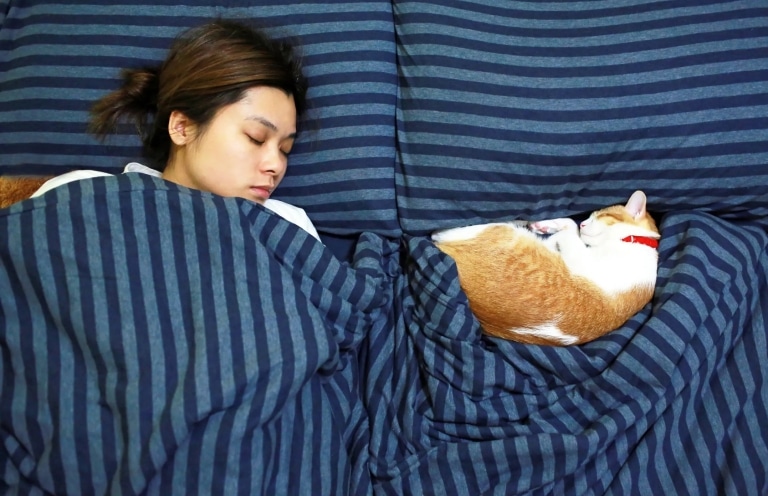
You bought your cat a soft bed, placed it in a cozy spot, but every night he confidently makes his way to your bed. He settles down at your feet, snuggles up against your side, or claims your pillow—depending on his own idea of comfort. Should you allow this arrangement? The answer depends on how you feel, the quality of your sleep, and your pet’s habits.

Pros: warmth, coziness, and a sense of closeness
For many owners, having a cat nearby is part of a pleasant evening ritual. Its warmth, familiar purring, and calm presence can help you unwind after a busy day. Such companionship is especially valuable for someone who lives alone: falling asleep next to a pet is simply cozier.
At the same time, a sense of calm doesn’t mean that sleeping together necessarily improves your rest. Some people find a pet’s presence pleasant, while for others, even the quiet rustling of the blanket can wake them up. The best indicator is how refreshed you feel in the morning.
It’s also important to give your cat a choice. If it wants to go sleep somewhere else, don’t keep it close just for the cuddles.

Cons: interrupted sleep, allergies, and hygiene issues
A nighttime trip to the food bowl, a jump off the bed, and a return right onto your stomach can turn a good night’s rest into a series of short naps. If your cat regularly wakes you up and you then have trouble falling back asleep, a separate bed will be a more practical solution. Experts at the Mayo Clinic recommend keeping pets out of the bedroom if their movements or noise interfere with sleep.
Another important consideration is allergies. The reaction is caused not by the fur itself, but by proteins found, in particular, in the animal’s saliva and skin flakes. Therefore, even a clean and well-groomed cat can trigger symptoms. If you’re allergic to cats, it’s recommended to keep the bedroom a pet-free zone.
Don’t forget about hygiene, either. Cats can carry parasites and infectious agents, even when they appear healthy on the outside. Regular veterinary care, parasite control, and a clean home help reduce these risks. People with significantly weakened immune systems should discuss close contact with animals separately with their doctor.


How to Make Sleeping Together Comfortable
If you allow your cat to sleep next to you, the arrangements should suit everyone who uses the bed. Wash the bedding regularly, keep the litter box clean, and follow your veterinarian’s recommendations for caring for your cat.
Brushing your cat according to its coat type will help reduce the amount of hair on the blanket. It’s usually not necessary to bathe your cat just so it can sleep in your bed: good hygiene is maintained through a well-planned daily grooming routine, and the need for a bath is determined by the animal’s condition.
Provide your cat with an alternative place to rest. A comfortable bed next to your bed allows your cat to stay close while maintaining more personal space. If you decide to change this habit, do so calmly and consistently, without punishment.

Sleeping with your cat is fine as long as it’s enjoyable for both of you and doesn’t interfere with your rest. And having separate sleeping areas doesn’t diminish your love in any way: daily attention, care, and time spent together are enough to foster closeness.