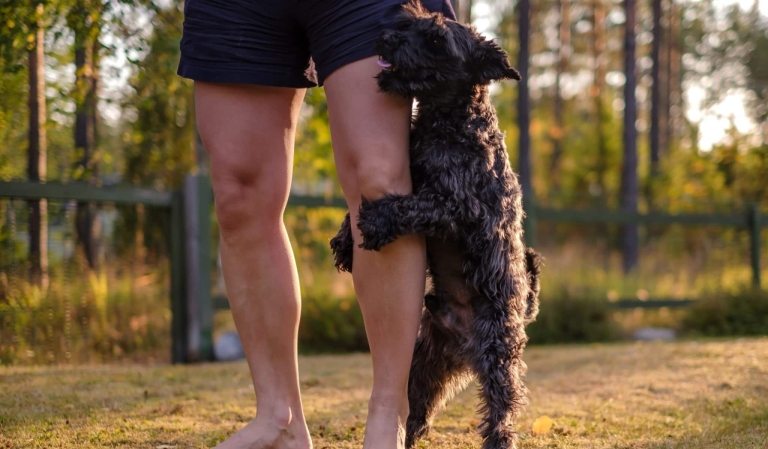
You’re walking your dog when you suddenly run into your boss—the very same one you’re supposed to have a serious conversation with on Monday about a raise. You straighten your back, say hello, and even manage to say, “Oh, it’s great to see you.” And then your dog wraps its front paws around your leg and starts making movements that suddenly make your boss’s question, “So, how’s it going?” very awkward.
At that moment, you just want to explain that at home, he only acts like that with a teddy bear. Though that’s unlikely to save the conversation. But this detail is actually quite interesting for understanding dogs. The same behavior can have different causes depending on when it occurs.
What Do These Movements Actually Mean?
In dog behavior, this is called mounting. It can be part of sexual behavior, but it also occurs during play, intense excitement, or stress. Both males and females mount, particularly after being neutered or spayed. If the behavior has become a habit or occurs in response to a specific situation, it may persist.
That’s why it’s worth paying close attention to what happened a few seconds before the mounting. For example, after a rough play session, a dog runs around the room and suddenly grabs a pillow. A likely explanation here is that the dog is still too excited to calm down. If the same thing happens only when guests arrive, pay attention to the entire encounter. A doorbell ringing, several voices at once, and unfamiliar people in a cramped hallway can create tension even for a dog that generally loves guests.
It’s hard to pinpoint the cause based on a single incident. However, if it happens every time after playtime, during loud greetings, or when the owner stops to talk on the street, this pattern provides more information than the actions themselves.
Why does the dog choose your leg or its favorite toy?
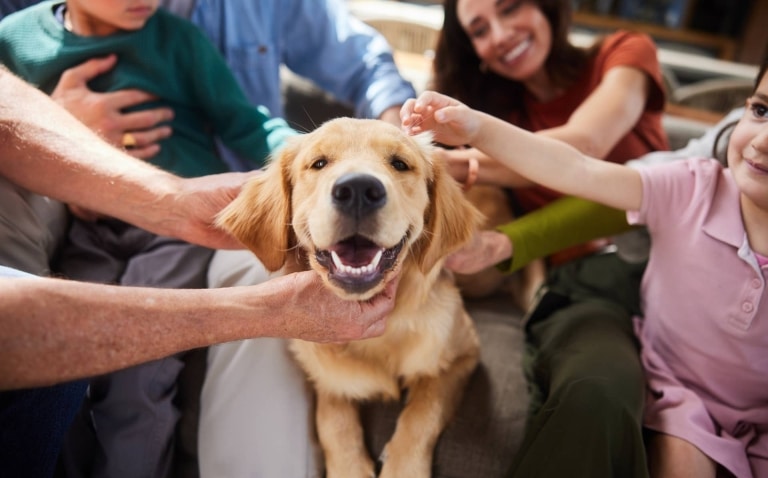
A person’s leg happens to be nearby precisely when the dog is excited and you’re standing there talking. Moreover, a reaction to “playing” with the leg is almost guaranteed. Someone laughs, someone calls the dog by name, someone starts talking to it. If the dog is seeking attention, such a reaction can reinforce the behavior. The dog makes a move—and suddenly the whole group’s attention shifts to it.
With a toy, the story might be different. The dog finds it after a lively play session or when something at home excites it. If this happens repeatedly, that very object can become part of a habit. That’s why a teddy bear that lies in a basket all day suddenly becomes indispensable at exactly 7:00 p.m., when the whole family returns home.
If the dog occasionally chews on a toy but easily switches back to behaving normally, this behavior rarely requires intervention on its own. It’s important to notice if it appeared suddenly, has become significantly more frequent, or if the dog has a hard time stopping.
What to Do Right Then
If your dog has already made an “unforgettable” introduction to the boss, calmly step aside, call the dog to follow you, and give it some space. Once the dog’s attention shifts to you, you can ask it to perform a familiar command—such as coming or sitting—and reward it for doing so. If the dog immediately returns to your leg, it’s best to step further away and let it calm down. Yelling or sudden jerks of the leash will only increase the tension.
It’s easier to address repetitive behavior before it starts. If your dog greets guests too excitedly every time, call him to you as soon as the door opens and reward him for staying by your side. If nipping occurs at the end of a lively game, try taking short breaks earlier, while the dog is still able to transition calmly.
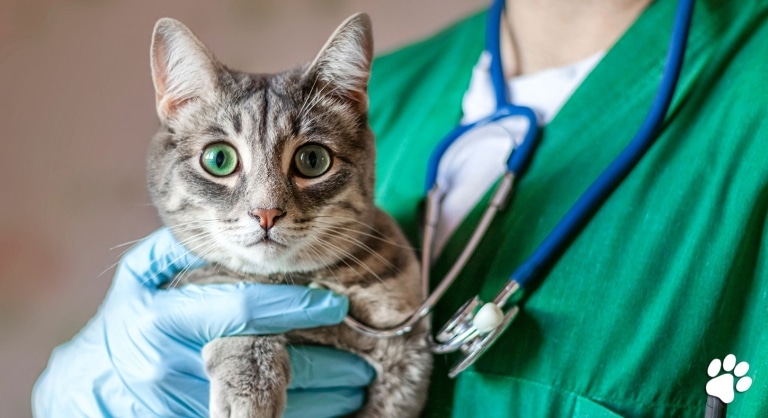
If the behavior has suddenly become frequent, and the dog is also constantly licking itself, shows signs of irritation, or has difficulty urinating, consult a veterinarian. In such a situation, it’s best to first check for any physical discomfort.
Summary
The best clue lies in what happened right before the accident. Did the dog just get overexcited? Was he overwhelmed by the guests? Has he gotten used to everyone paying attention to him at that moment? Once you notice a pattern, it becomes clearer how to help him. And you can always continue your conversation with your boss after the dog has finished its part of the presentation.