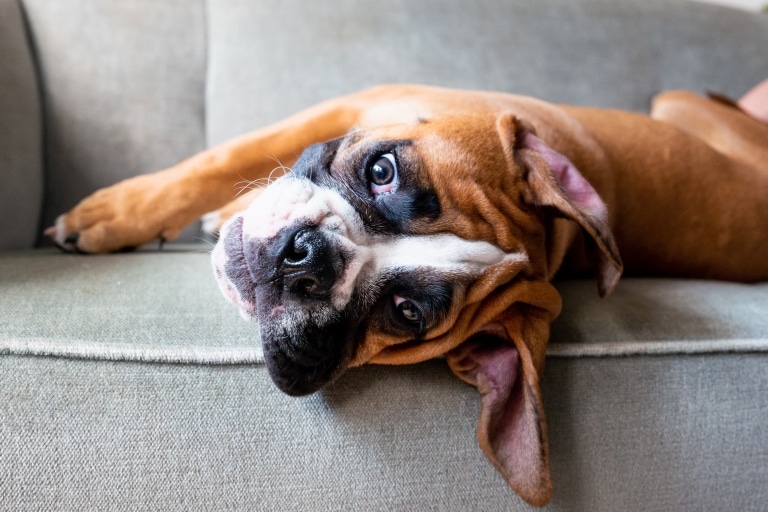
The Boxer has a serious appearance, a powerful build, a broad chest, and a distinctive muzzle. At the same time, behind this strong exterior lies an emotional, playful, and very loyal dog. He loves to be with his family at all times, take part in everything they do, and genuinely enjoys his owner’s attention.
This breed requires training, plenty of exercise, and close interaction with people. In the right hands, the Boxer becomes a reliable protector, a cheerful companion, and a true member of the family.
Origin and Appearance of the Boxer
The Boxer is an officially recognized German breed, the development of which began in the late 19th century. Its ancestors were strong hunting and working dogs, from whom it inherited endurance, courage, and a powerful build.
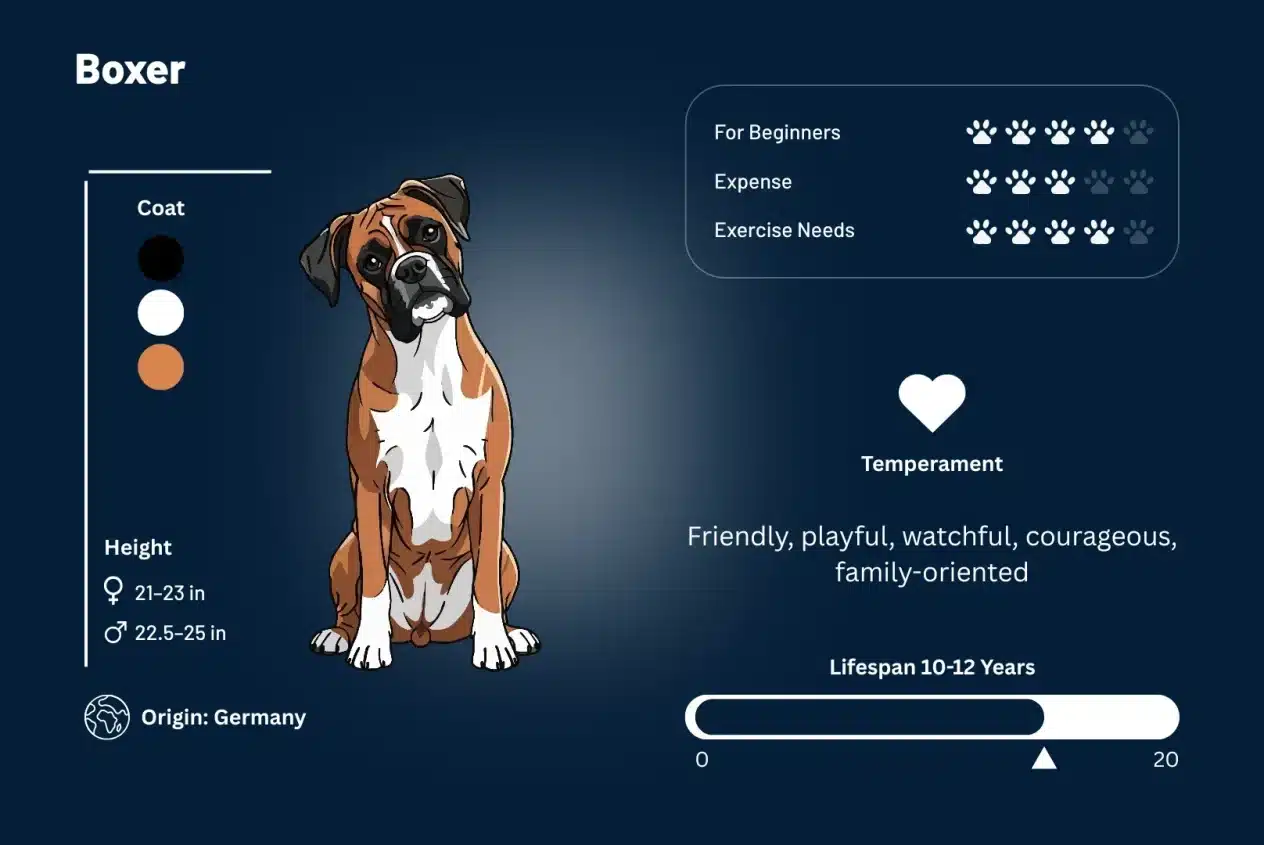
The Boxer has a compact, muscular, and well-proportioned body. Adult dogs typically stand about 53–63 cm tall and weigh between 25 and 32 kg, depending on gender and build.
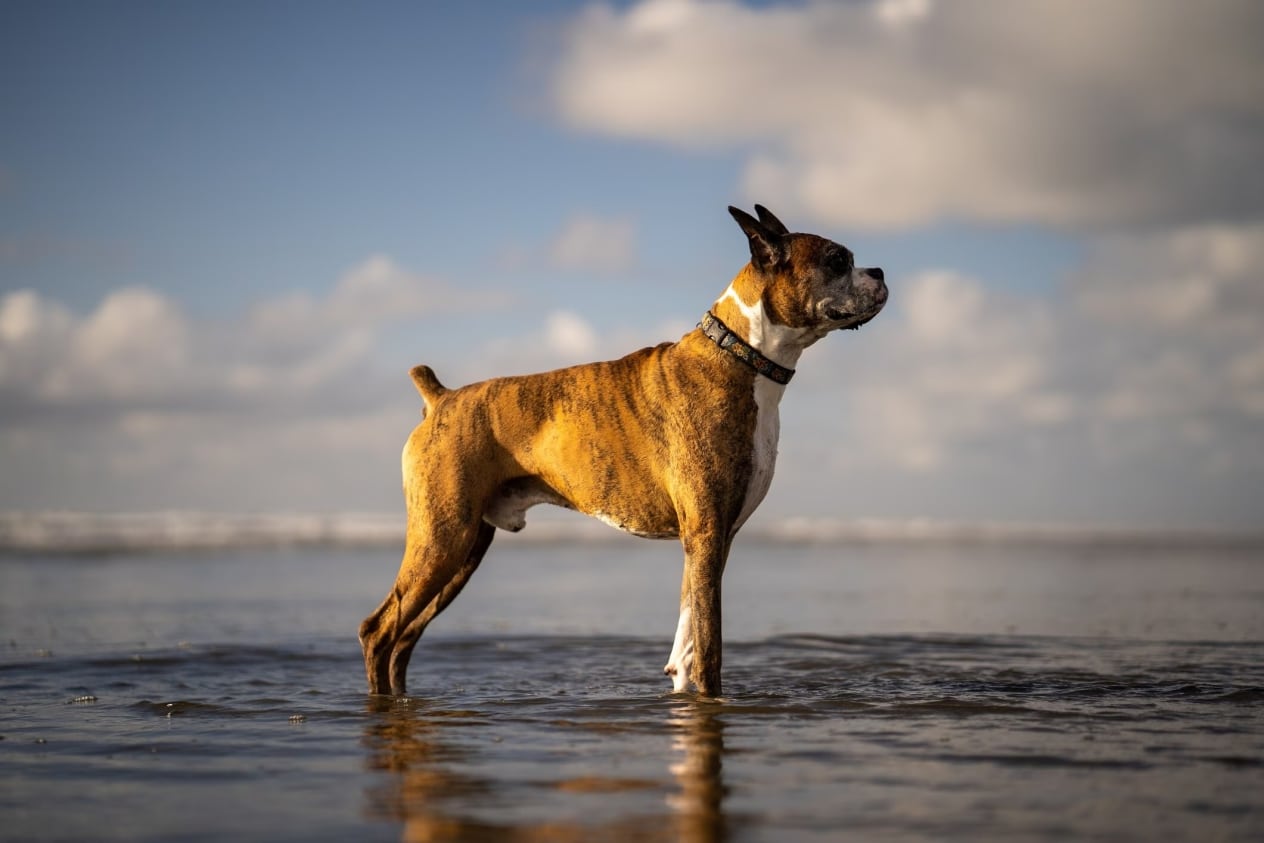
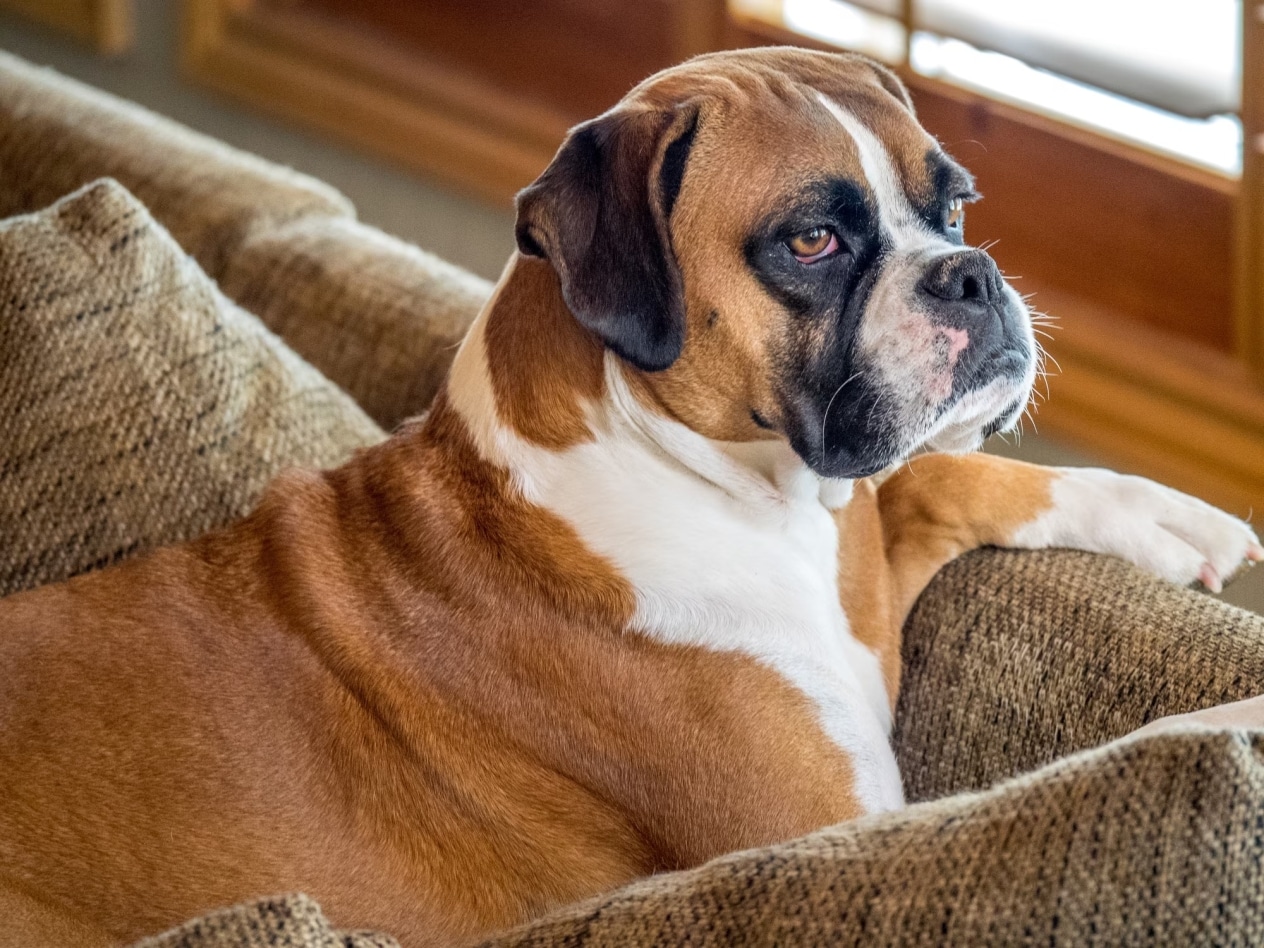
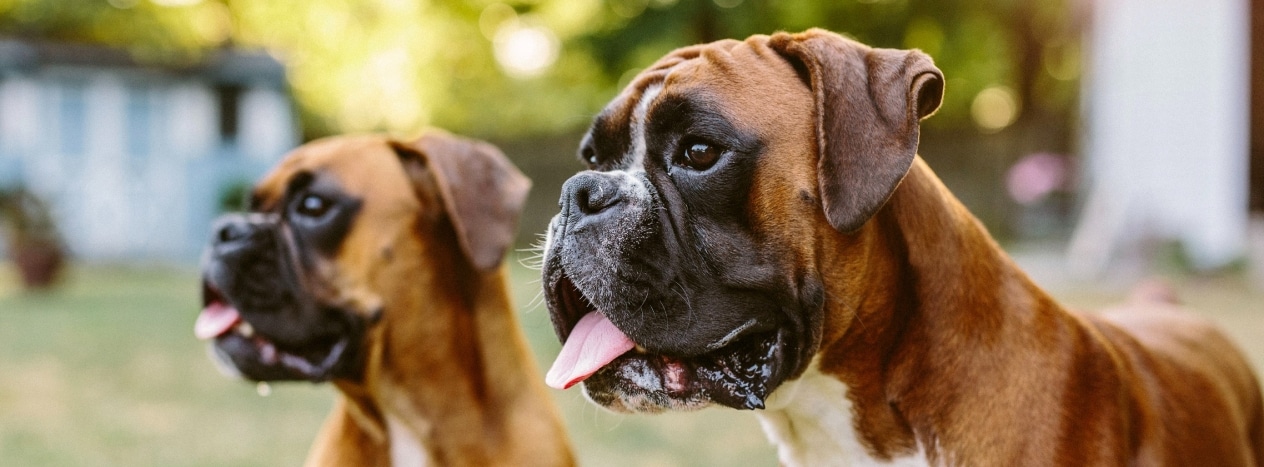
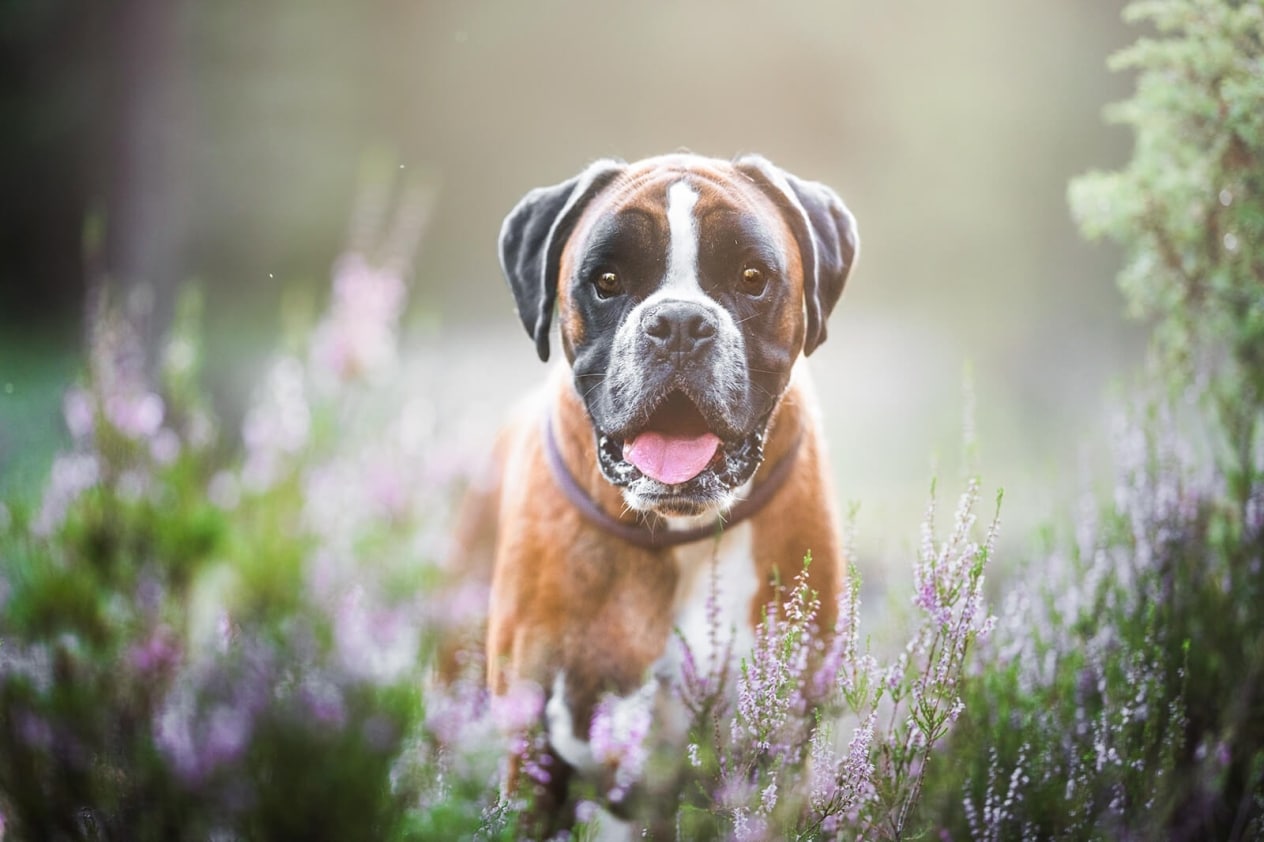
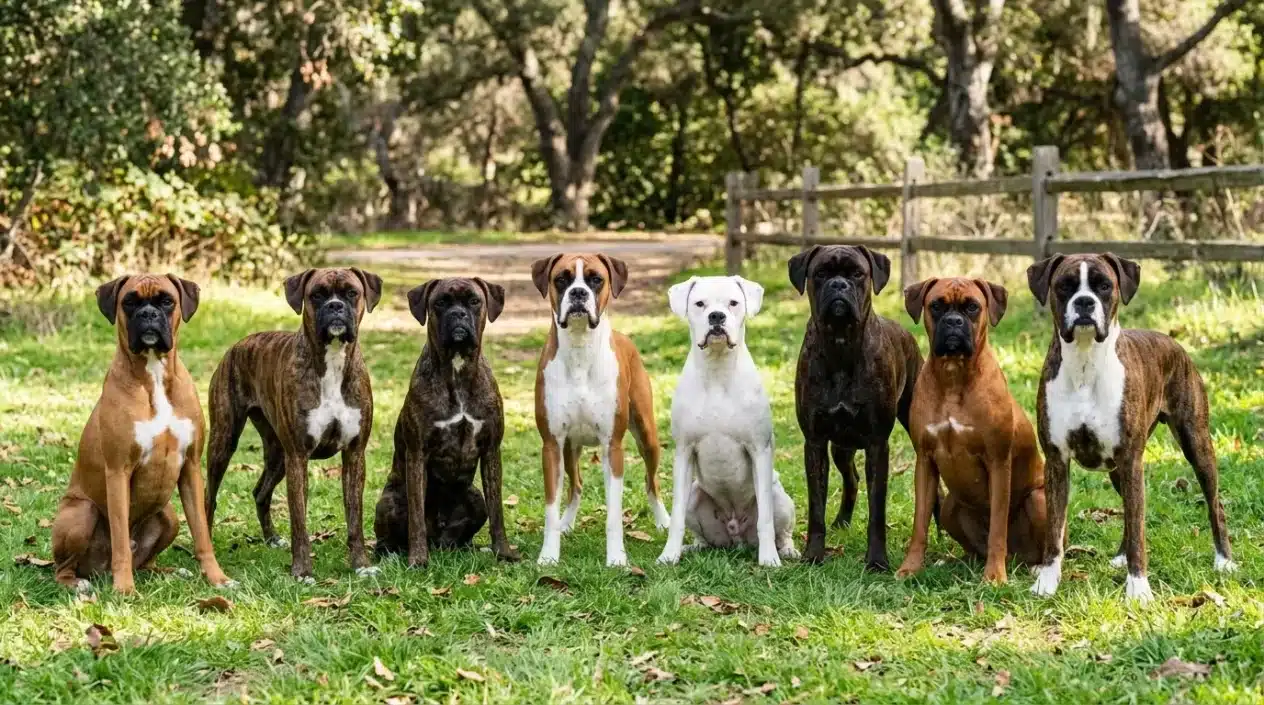
The breed’s most recognizable feature is its broad muzzle with a pronounced underbite, a dark mask, and an alert expression. The coat is short, smooth, dense, and glossy. The most common colors are red and brindle, often with white markings on the chest, legs, or muzzle.
The breed’s name is often associated with its playing style: Boxers actively use their front legs, just like true athletes in the ring.
Temperament and Behavior
Boxers form strong bonds with their families and do not handle prolonged periods of solitude well. They thrive on being close to people, receiving attention, and participating in daily life. The breed combines courage, confidence, playfulness, and a strong protective instinct. A properly trained Boxer should not display unprovoked aggression, but will always remain alert around strangers and ready to protect its family.
Boxers are often friendly and patient with children. However, due to their strength and energy, they may accidentally bump into a child while playing, so interaction should take place under adult supervision.
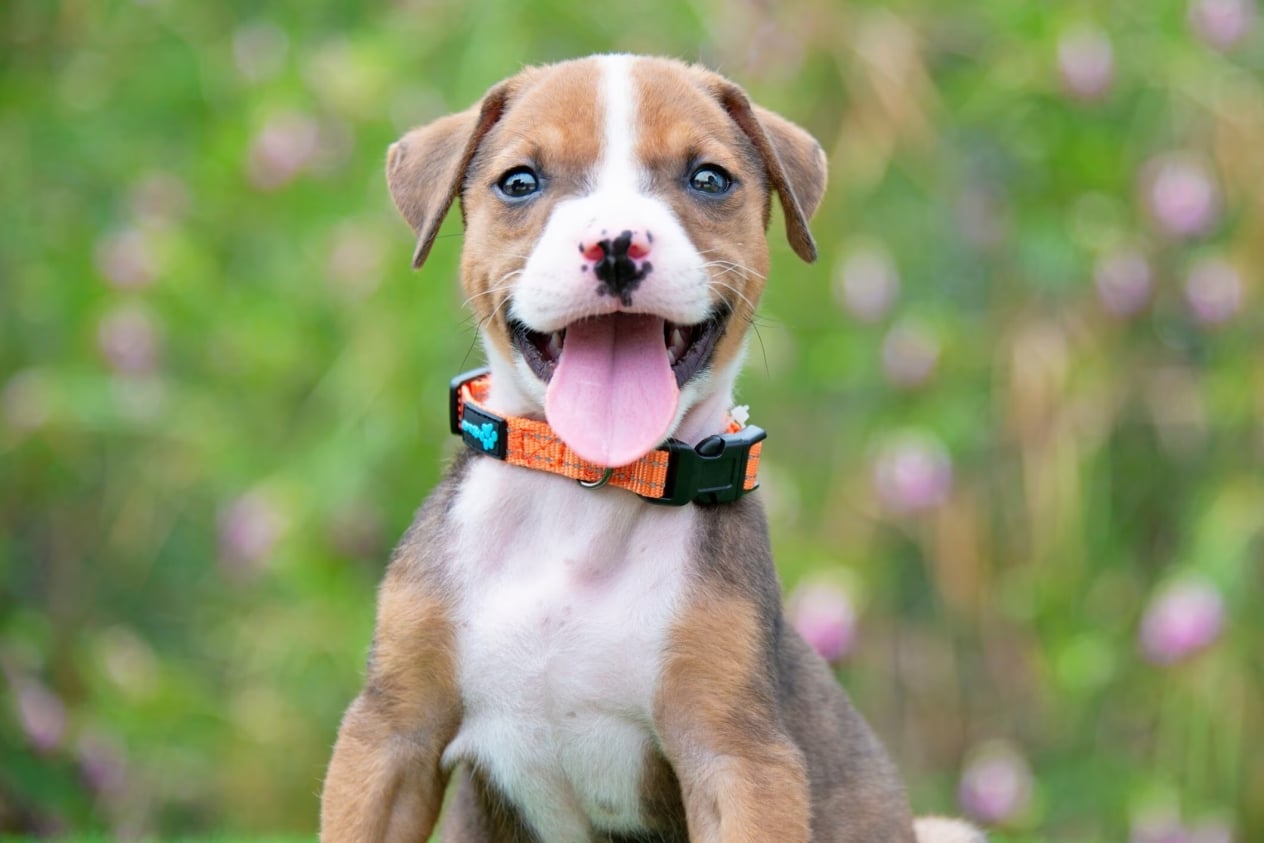
Boxer puppies are very active, curious, and prone to testing boundaries. Training should begin in the first months of life. It’s important to teach the dog to walk calmly on a leash, respond to its name, not jump on people, and obey basic commands.
Boxers respond well to praise, treats, and play. Excessive harshness can lead to stubbornness or a loss of trust, while a complete lack of rules will result in an unmanageable adult dog.
Care, Activity, and Health
Boxers are best suited for active people who are willing to devote time daily to walks, play, and training. Short walks around the house are not enough for them. These dogs need exercise, new experiences, and mental stimulation. Long walks, search-and-find games, learning commands, and supervised activity will all be beneficial. Young dogs should not be overworked with jumping or long runs while their bodies are still developing.
Because of its short coat, the Boxer is sensitive to extreme cold, and because of its short muzzle, it may have a harder time tolerating heat. In the summer, it’s best to schedule active walks for the morning or evening, ensure access to water, and avoid overheating. Their diet should be appropriate for the dog’s age, weight, and activity level. Boxers can have a hearty appetite, so it’s important to control portion sizes and prevent weight gain.
Owners should monitor their dog’s heart, joints, breathing, skin, and overall stamina. Regular preventive checkups help detect changes in health early on.
Grooming a Boxer
A Boxer’s short coat may give the impression that it doesn’t need professional grooming. In reality, the short, coarse hairs shed regularly, end up on furniture and clothing, and can cause discomfort for the dog during periods of heavy shedding.
There’s no need to trim or shave a Boxer. Its coat is naturally short and lies close to the body. Basic grooming consists of proper bathing, removing dead hair, cleaning the ears, trimming the nails, and caring for the paws. At home, you can comb the coat with a rubber glove or a soft brush designed for short-haired dogs. When bathing a Boxer, use gentle shampoos that do not dry out the skin.
The muzzle requires special attention. After eating and drinking, moisture may remain around the lips and in the natural folds, so it’s important to gently clean and dry these areas.
At V.O.G DOG SALON, groomers tailor the care routine to the specific condition of each Boxer’s coat and skin. The service package includes bathing with professional grooming products, conditioning, brushing, gentle drying, ear cleaning, nail trimming, and paw pad care.
During the procedures, the breed’s specific breathing characteristics are always taken into account. Boxers are not overheated, are not left under hot air for long periods, and breaks are taken as needed.
Regular grooming at V.O.G DOG SALON helps keep the coat smooth and shiny, reduces shedding, and allows for monitoring the condition of the skin, ears, nails, and paws.
Conclusion
The Boxer is a strong, intelligent, emotional, and loyal dog. It needs exercise, training, attention, and constant interaction with the family. With proper care, the Boxer becomes a reliable protector, a cheerful companion, and a true friend.