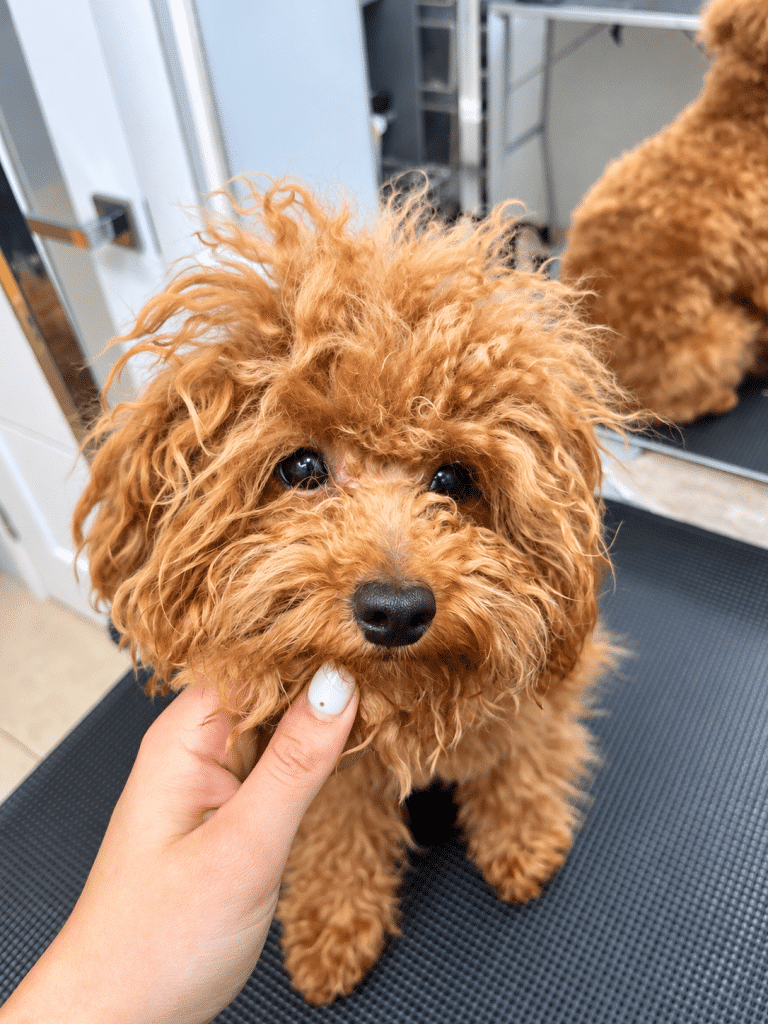
Dear readers, today we’re going to talk about “grooming” and your pet’s physical care. What is dog grooming and pet hygiene? Where did the term “grooming” come from? We’ll also debunk all the myths surrounding this term. Most grooming enthusiasts insist that the term “grooming” originated in England, since the profession of “groomer” first appeared there. There is also a scientific explanation for this term: in science, grooming refers to the behavior of mammals that reflects the emotional balance of an animal’s inner world and manifests itself in the neat appearance of its coat.
Comprehensive pet care is a set of specific methods and actions aimed at caring for the animal’s body, health, and mental well-being. Caring for a dog encompasses a wide variety of aspects: from proper nutrition and daily hygiene to regular visits to the veterinarian and grooming salons. For dogs and cats in particular, grooming is a significant factor in their care and hygiene. Regular grooming will always improve your pet’s appearance and also plays an important role in the animal’s health and comfort.
Do dogs need grooming and professional care?
Professional haircuts or grooming are necessary for dogs of all breeds, including mixed-breed dogs. Various breeds, such as sheepdogs, bulldogs, retrievers, dachshunds, poodles, Pekingese, and boxers, as well as fluffy Chihuahuas, pugs, and Great Danes, all have beautiful coats and different types of fur. Fur, just like human hair, can be long or short, coarse or soft, thick or thin, so grooming it is a hygienic necessity. Unlike cats, dogs cannot groom themselves, so owners must help them with this.
It’s best to have a dog’s coat trimmed by a qualified professional, since a professional trim will always look neater. Grooming a dog’s coat is a completely unnatural process, so you need to get your dog used to these kinds of procedures from a young age; the animal cannot handle this on its own, since, unlike cats, it does not possess this practical skill by nature. It’s generally believed that a dog needs to be groomed about twice a year. This is quite an individual matter, and you need to carefully consider the structure of your dog’s coat.
Groomers classify dogs by coat type, specifically into soft-coated and hard-coated breeds. Soft-coated breeds require the most grooming. The coat of these dogs grows evenly across the entire body throughout the dog’s life, and unfortunately, if left unattended, the dog will not be able to manage this growth, and in some cases, it can even lead to serious health problems. If the fur around the dog’s eyes, ears, nose, and mouth becomes overgrown, the dog will not be able to hear or see properly—which is essential for the animal’s healthy functioning and a fulfilling life.
Debunking Grooming Myths
Myth 1: Pets only need grooming when they look dirty and unkempt.
This is not true, because animals, just like humans, are naturally clean and well-groomed, and their bodies begin to get sick if circumstances change and harmful substances enter their internal systems, just as their external environment can be contaminated by bacteria, microbes, and all kinds of dirt. Unfortunately, in such cases, animals can become seriously ill or even die. Hygiene and grooming are preventive measures and the key to your pet’s health.
Myth 2: In hot weather, it’s better to shave off all the fur so the animal will be more comfortable.
A pet’s coat acts as insulation and regulates the animal’s body temperature in hot, humid, and cold weather, regardless of the season. It’s better to replace shaving with regular brushing, which removes loose fur and ensures better air circulation. Shaving your pet is absolutely the wrong thing to do.
Myth 3: Cats groom themselves, so they don’t need professional grooming.
Cat owners know that these animals are quite particular about cleanliness. Owners of these fluffy friends actually see every evening how their cat licks its fur, its paws, the area around its neck, and its tail, and washes its face.
However, regular brushing helps with the mats and clumps that still form, and long-haired cats especially need this help. These mats can contain dirt, sticky food residue, sticky plant matter in the summer, and burrs, which is why cats need help too.
Myth: 4 Human shampoo is completely safe for animals.
Pet owners often believe that it makes no difference what kind of soap they use to bathe their pet—whether it’s regular soap or human shampoo. In reality, this is a misconception, as human shampoo can disrupt the pH balance of your pet’s skin, leading to serious irritation. Pet shampoos are specially formulated to meet the needs of a pet’s skin and coat. It’s best to use professional shampoos for your furry friends.
Myth 5: You should only trim your pet’s nails when they get in the way.
Trimming your pet’s nails is, first and foremost, a hygiene procedure. Long claws interfere with a cat’s normal gait and negatively affect its joints and balance while walking. This isn’t about a neat appearance, but, first and foremost, about the animal’s health.
Myth 6: All dogs love grooming; it’s always pleasant and easy.
In reality, not all dogs love grooming. Some breeds with a calmer temperament—or those accustomed to social settings, new people, and exciting events—will take to a new place, grooming equipment, and the person trimming their fur more calmly. For others, grooming, the groomer, and the salon will be a shock and an unpleasant experience. Some animals will react aggressively, while others will be restless and tremble with fear. It’s important to gradually get your pet used to these trips, procedures, and new people. Treat your furry friend to some tasty treats during the procedure to distract them—this works like a charm.
Myth 7: Short-haired dogs don’t need grooming because they have so little fur anyway.
Whether short-haired or long-haired—all dogs need grooming. Bathing and trimming will help your dog look neat and well-groomed. Trimming helps remove dead hair and mats and stimulates blood circulation. If there is an excessive amount of dead hair or sticky mats, the animal will have a bad odor, look unkempt, and this can lead to skin damage and trigger the development of bacterial diseases. If you want your pet to be healthy, try to devote time and attention to it and help with its hygiene.
Myth 8: You can trim your pet’s fur at home with regular scissors
Regular scissors are quite sharp and are not designed for trimming an animal’s fur, as they can damage the animal’s skin and fur. Professional grooming clippers, metal-toothed combs, and scissors with rounded tips are available for dogs and cats. It is precisely these rounded tips that significantly reduce the risk of injuring the pet’s skin with a sharp edge.
Tip: For the animal’s safety, it’s best to trim your pet’s fur using only professional equipment.
Myth 9: You can easily deal with mats on your own by combing them out occasionally
If you notice clumps of fur, dead hair hanging from your pet, or sticky mats on your dog—don’t put it off and start combing them out yourself. Of course, regular brushing is necessary for the animal’s comfort, but when the coat is already in terrible condition, it’s best to consult a professional. Brushing it out yourself will only cause discomfort and pain to the animal; fur that’s forcibly brushed out—which you might pull out—can cause a wound that will bleed. Additionally, in areas with dirt, thistles, or food residue, rashes and wounds may form on the skin, leading to the development of diseases.
Myth 10: Professional grooming is a luxury, not a necessity.
Professional grooming is a necessity—first and foremost for the animal’s health, and secondly for its comfort. Regular checkups at veterinary clinics, preventive diets to support healthy gastrointestinal function, parasite prevention, two meals a day, a proper drinking regimen, and a clean, dry sleeping area for your pet, as well as nail trimming, brushing, and grooming—are the key to your pet’s comfort and a healthy life.
If you’d like to get professional services for your furry friends—such as a stylish haircut for your cat or dog, high-quality grooming, or one of our hygiene procedures—including teeth cleaning, nail trimming, ear cleaning, grooming, bathing, and many other services—we warmly invite you to visit our salons in Kyiv.