The results of grooming depend on more than just the groomer’s work. To keep your pet’s coat looking neat, its skin healthy, and to make the next visit more comfortable, it’s important for the owner to properly care for the animal at home.
Let your pet rest after the procedure
After returning from the salon, your dog or cat may be tired, less active, or looking for a quiet place. Grooming involves new smells, sounds, drying, brushing, and spending a long time away from home, so your pet should be given the opportunity to rest without active play or unnecessary procedures.
On the first day, do not bathe your pet again, brush their coat intensively, or apply cosmetic products to their skin without the groomer’s or veterinarian’s recommendation. After a short haircut or the removal of dense mats, the skin may be more sensitive, so you should avoid vigorous rubbing, prolonged exposure to direct sunlight, and getting too cold.
If the animal is a little tired but is gradually returning to its usual behavior, observation is sufficient. However, severe redness, swelling, pain, sores, constant scratching, or excessive licking of a single area should not be ignored. In such a situation, you should notify the grooming salon and, if necessary, consult a veterinarian. Skin irritation under tight mats also requires a veterinary evaluation.
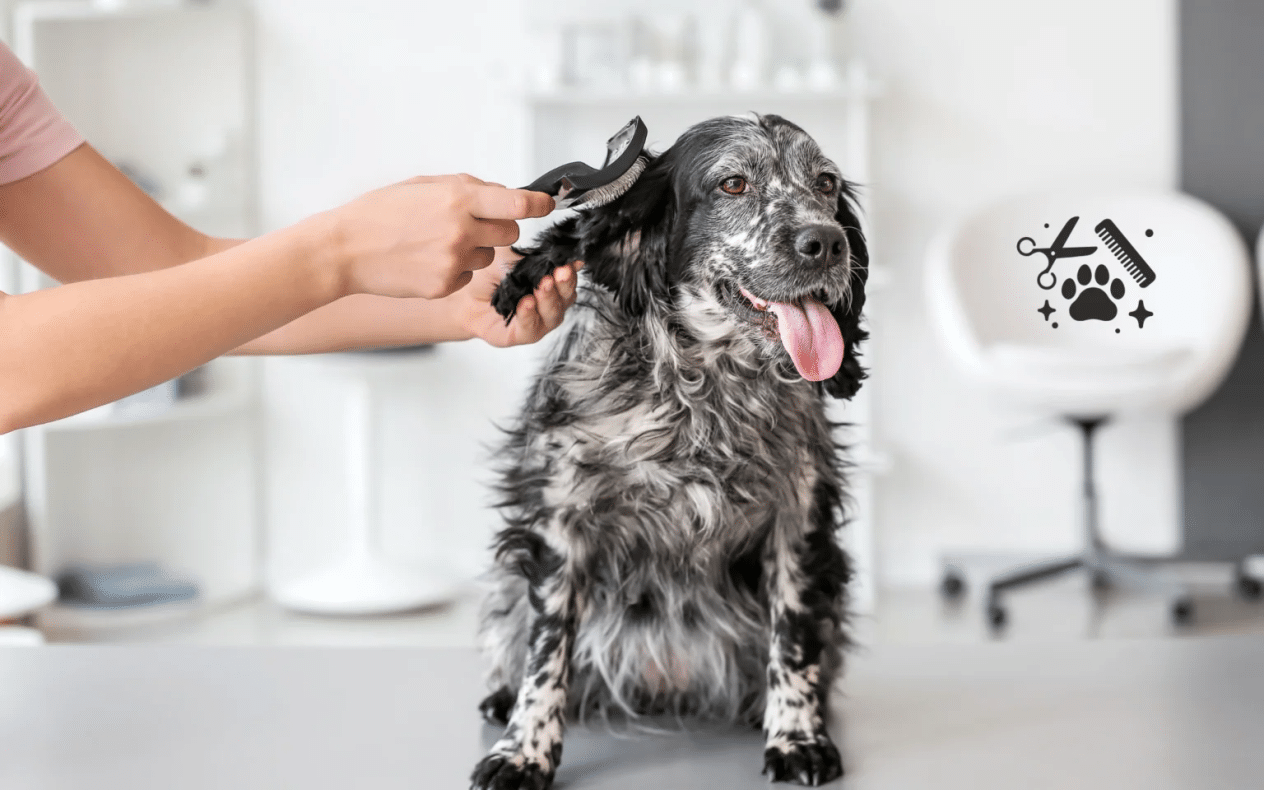
Brush the coat regularly with the proper tools
Brushing at home helps remove dead hairs, control shedding, and prevent mats from forming again. However, one brush does not fit all pets: the tool should be selected based on the length, density, and texture of the coat. Different types of brushes, combs, and de-shedding tools are used for long, curly, short, and double coats.
You need to comb areas where the fur is constantly rubbing or quickly becomes matted with particular care:
- behind the ears;
- in the armpits;
- on the chest and belly;
- under the collar, harness, or clothing;
- on the paws and tail.
It’s important to comb through the fur not only on the surface but also to check with a metal comb for any mats closer to the skin. Mats often form behind the ears and under the paws, and regular grooming helps you spot them early.
The frequency of brushing should be recommended by a groomer based on the type of coat. For some animals, a few sessions a week are sufficient, while long, silky, or curly coats may require daily grooming.
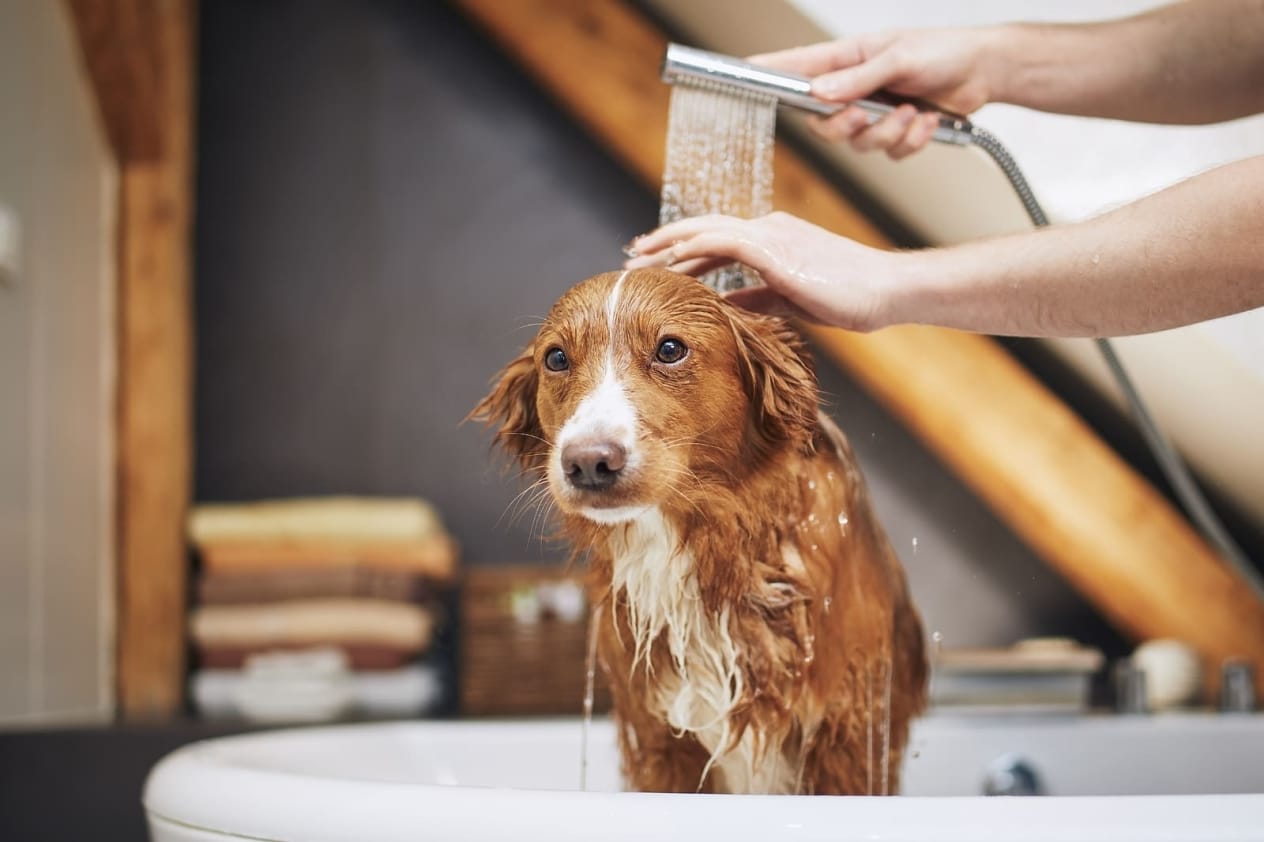
Bathe your pet properly and schedule the next visit
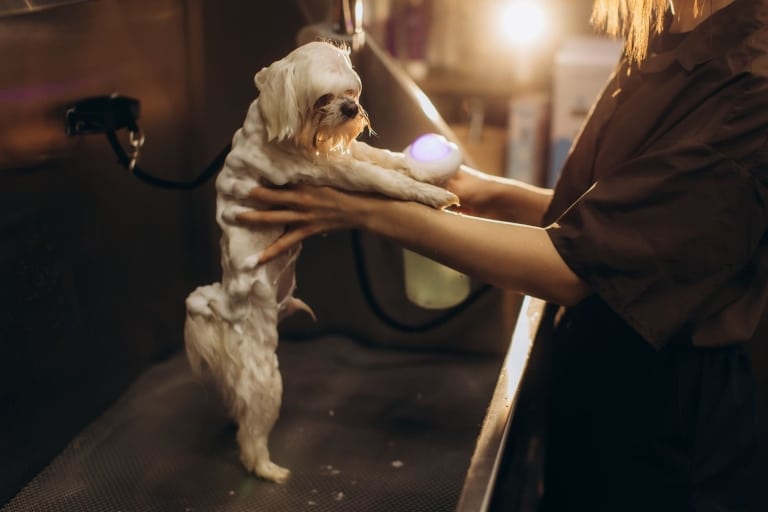
You can bathe your dog or cat between professional grooming sessions if it’s truly necessary and doesn’t conflict with the groomer’s or veterinarian’s recommendations. Before bathing, be sure to comb the coat thoroughly: water can make existing mats even denser and harder to remove.
Use only products designed for your pet’s specific species. Human shampoos have a different composition and pH level, so they can disrupt the skin’s natural protective barrier, causing dryness and irritation.
The frequency of professional grooming depends on the breed, coat type, length of the cut, tendency to develop mats, and the quality of at-home brushing. Don’t wait until the coat has grown out significantly or become completely matted. It’s best to discuss an estimated date for the next visit with the groomer immediately after the procedure.

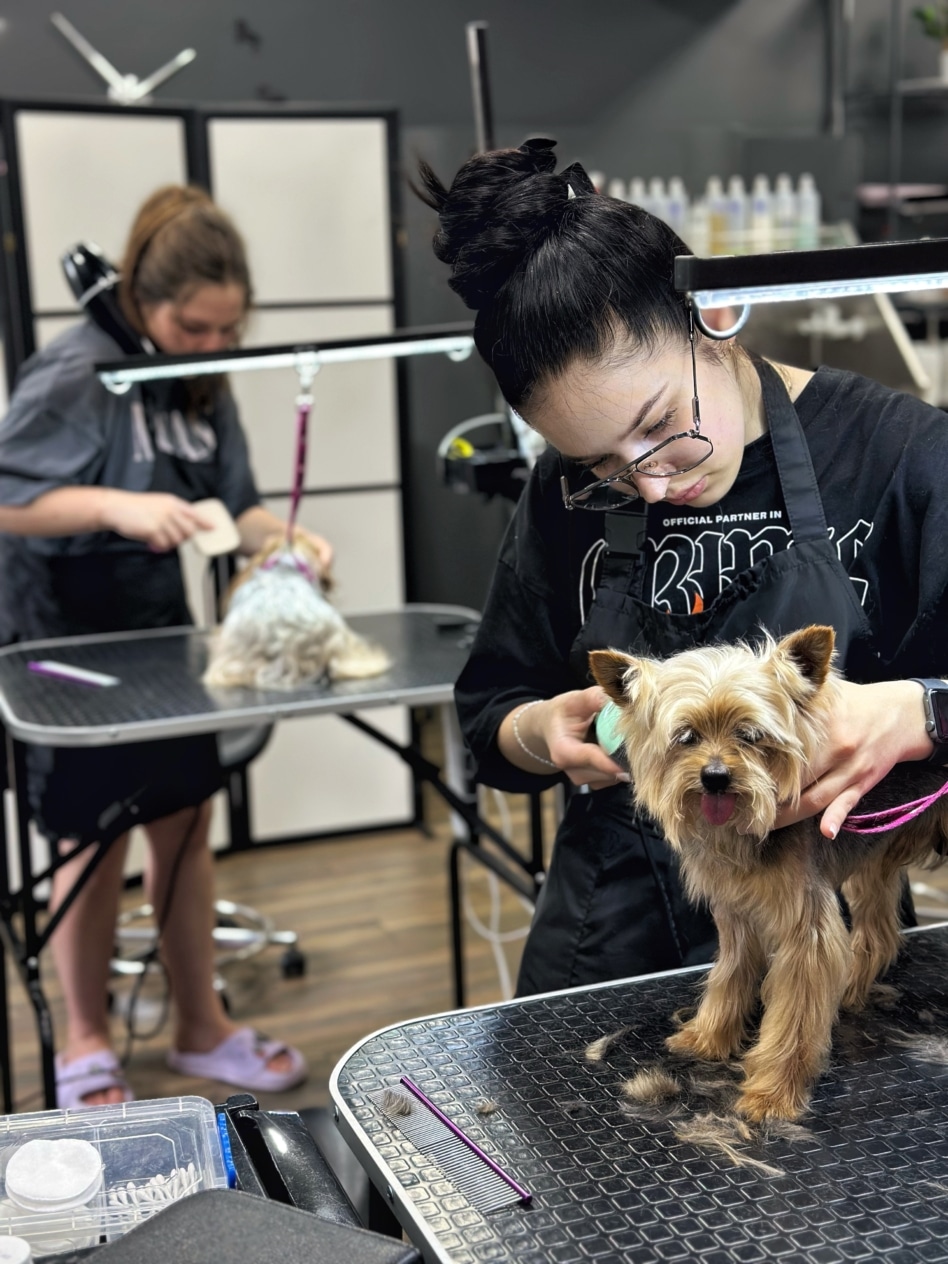
At V.O.G DOG ACADEMY, we teach our groomers to provide owners with specific and clear recommendations. After all, professional grooming and proper at-home care must work together.