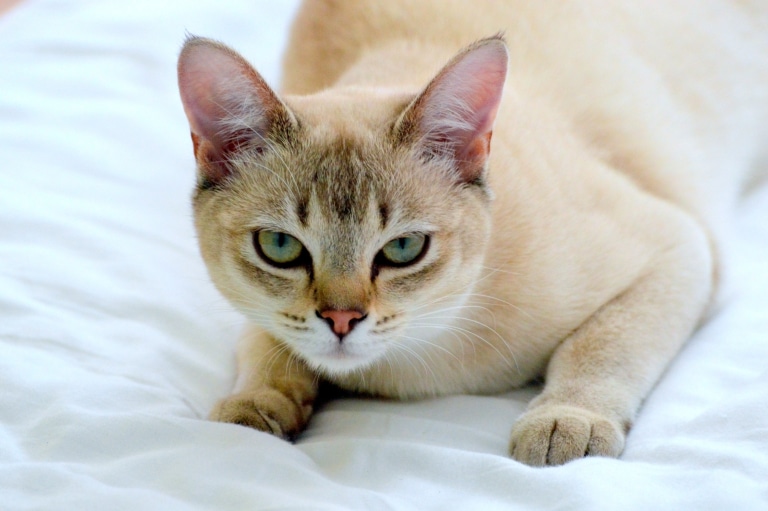
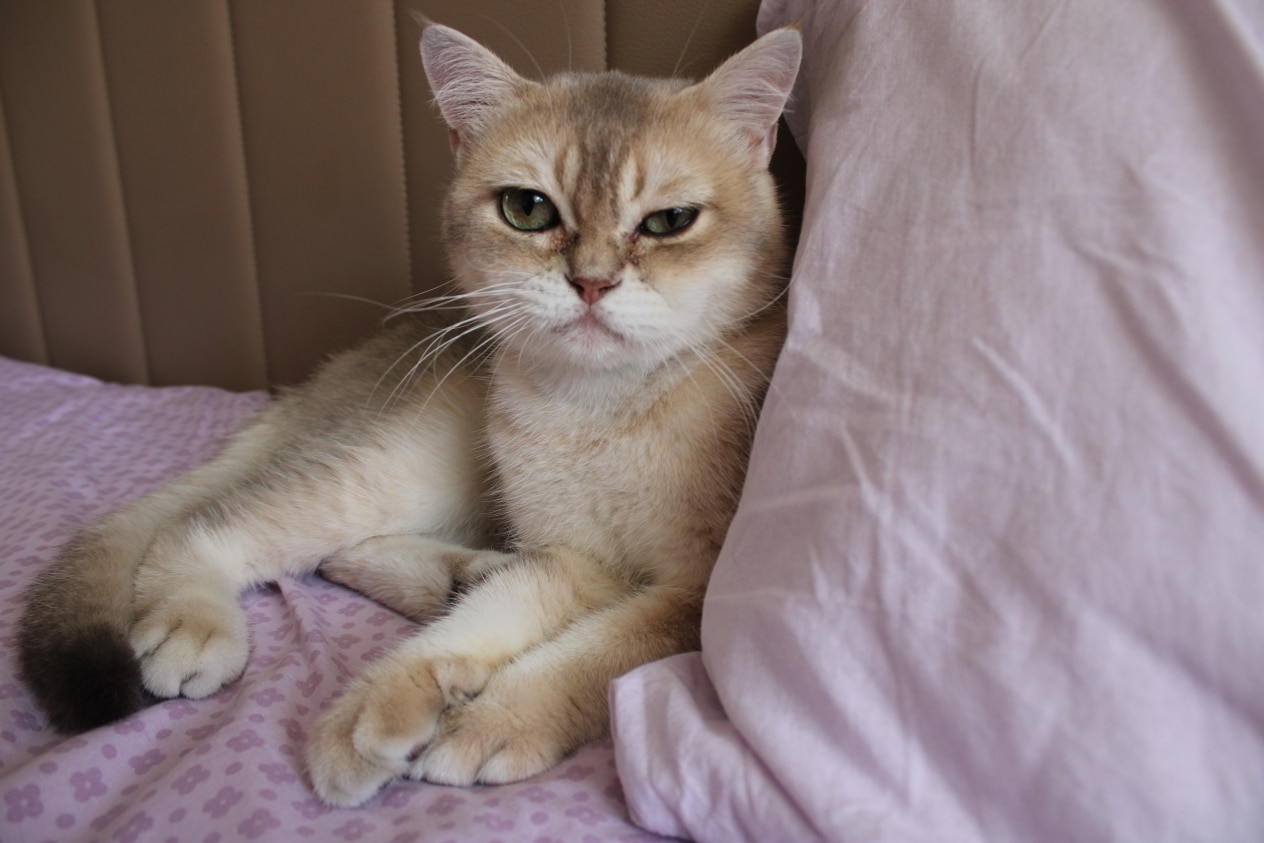
The name can be misleading: the Asian cat does not originate from Asia. It is a breed group developed in Great Britain, whose members have inherited the Burmese’s graceful, muscular build but feature a much wider range of colors and patterns.
The group includes solid-colored Asian cats, smoke-colored cats, tabby cats, shaded Burmills, and semi-longhaired Tiffanys. Essentially, it’s one large feline family, where you can find everything from a glossy black “mini-panther” to a silvery cat with dark rims around its eyes.
A breed that began with a secret romance
The history of the Asian cat began in Great Britain in 1981, almost by accident. A chinchilla-colored Persian cat named Jemari Sankvist and a lilac Burmese cat named Fabergé were supposed to be bred with cats of their own breeds. However, the cats had other ideas.
As a result, four silver-colored, short-haired kittens were born. Fabergé’s owner, Baroness Miranda von Kirchberg, was so captivated by their appearance that she launched a breeding program. This is how the Burmilla first came into being, its name a combination of the words “Burma” and “chinchilla.” Over time, breeders expanded the color palette and created the entire Asian group.
The British organization GCCF gradually recognized its varieties, and by 2003, all five had achieved champion status.
Hundreds of Possible Looks
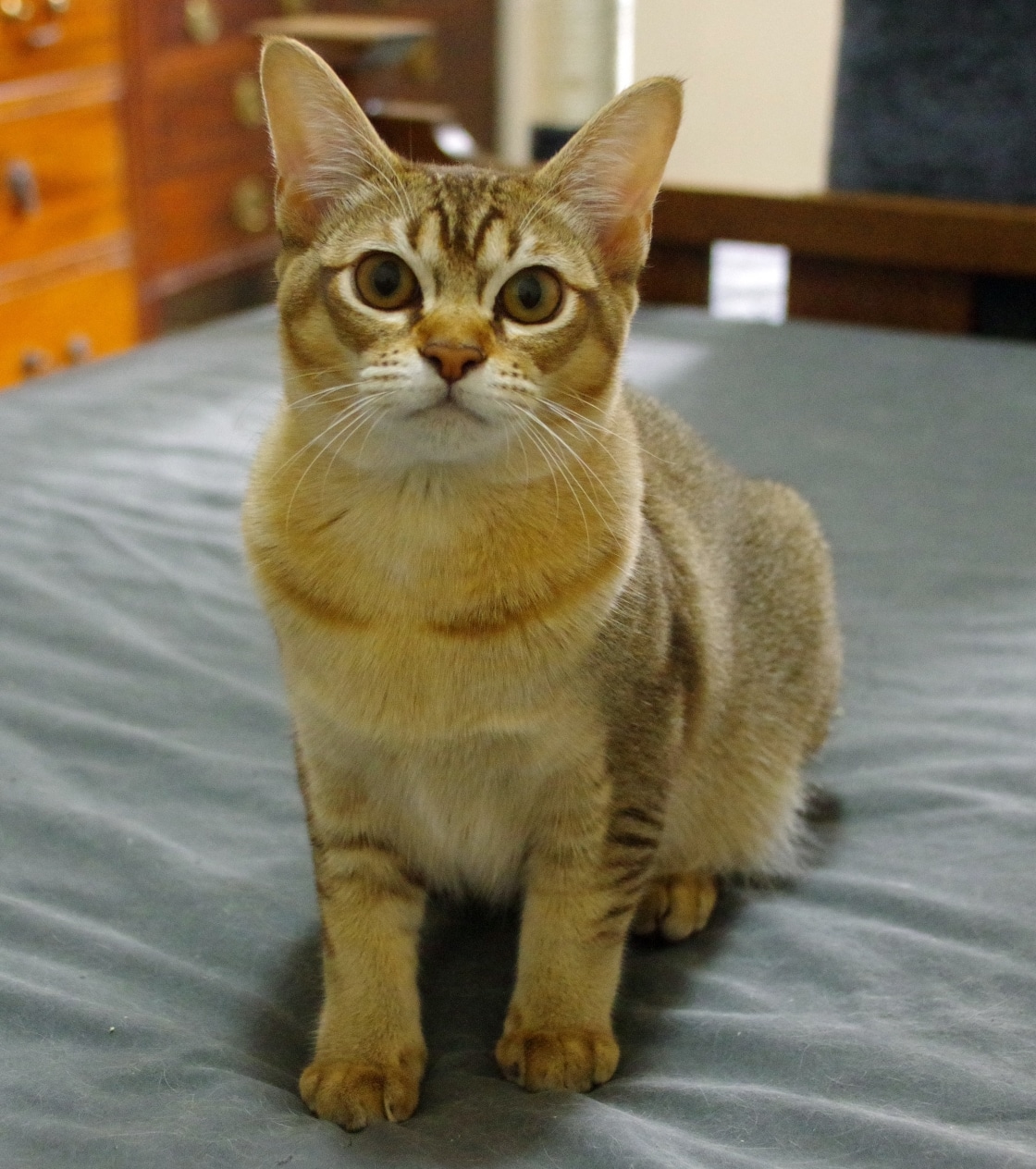
The Asian cat has a Burmese-type body: it looks slender and elegant, but feels surprisingly heavy when held. Beneath its glossy coat lie well-developed muscles, a broad, rounded chest, and sturdy paws. Its large, expressive eyes can range in color from green to golden amber.
The main feature of this group is the extraordinary variety of coat colors. The GCCF divides Asian cats into five varieties:
- Asian Self and Tortie —solid-colored and tortoiseshell cats; the black variety is called Bombay;
- Asian Smoke —a dark coat conceals a light silvery undercoat that becomes visible when the cat moves;
- Burmilla — a shaded variety with a characteristic silvery sheen;
- Asian Tabby — cats with spotted, marbled, striped, or ticked patterns;
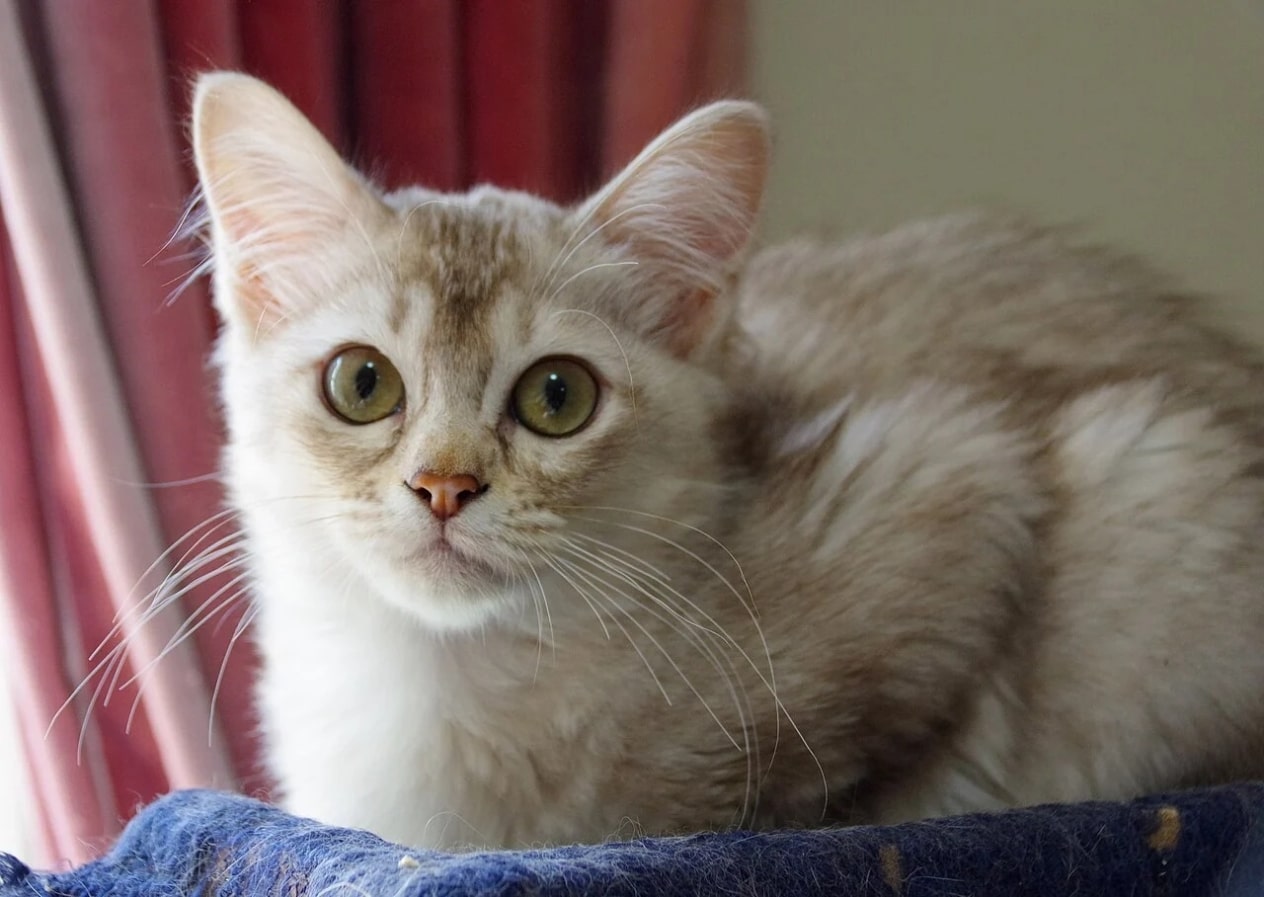
- Tiffanie — a semi-longhaired variety with a silky coat and a bushy tail.
In total, the breed standard allows for over 400 combinations of colors and patterns. As a result, two Asian cats can look so different that someone without experience would hardly guess they are related.
A cat that needs to be in the know
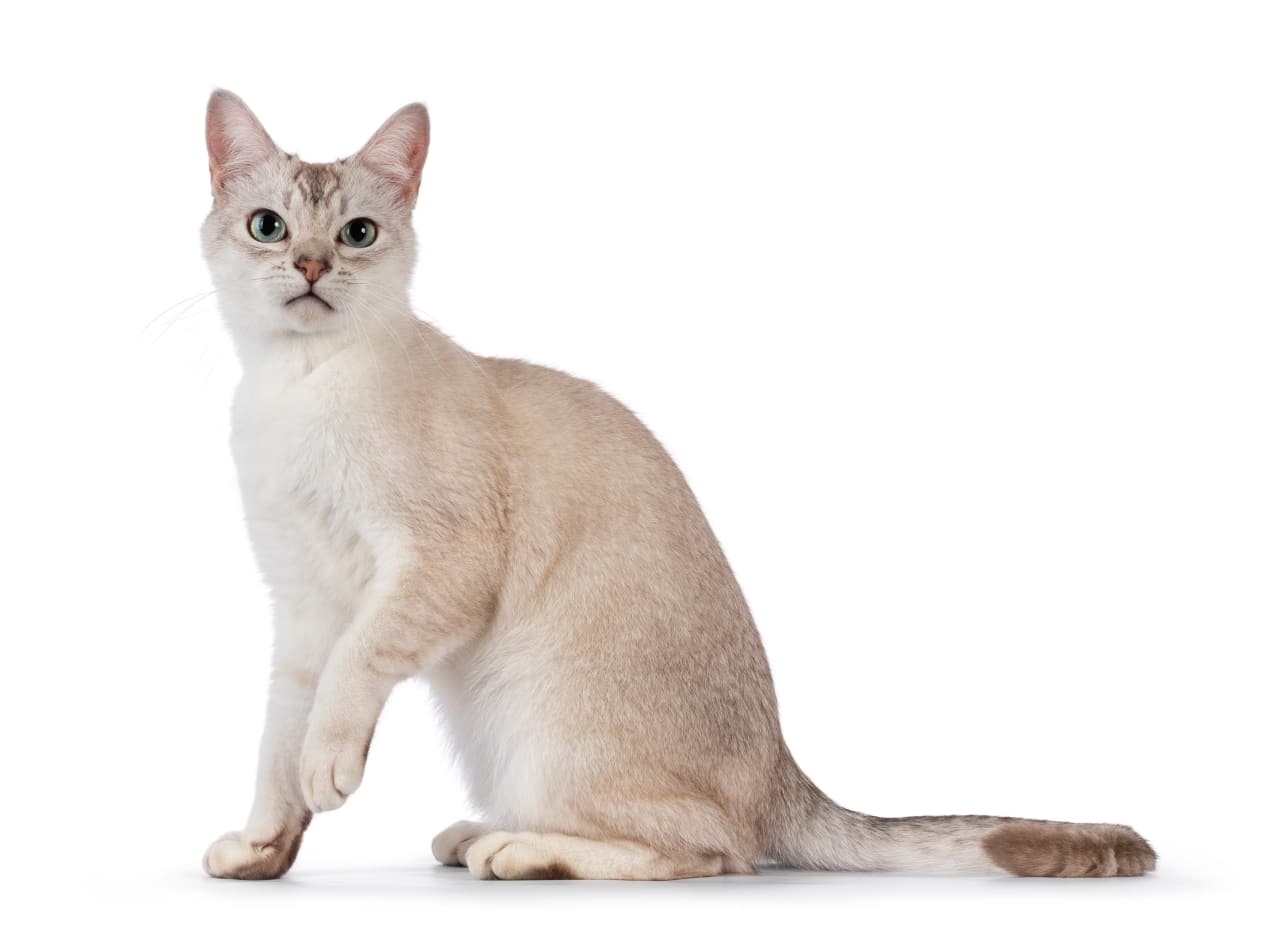
The Asian cat has inherited from the Burmese not only its body structure but also a desire to constantly interact with people. It won’t just watch over household life from a distant shelf—it needs to inspect the groceries, supervise dinner preparations, and personally figure out why the owner closed the door.
Cats of this breed are active, intelligent, and resourceful. They love interactive toys, tall play structures, and challenges that involve retrieving a hidden treat. If there are no interesting activities, the cat may come up with its own tasks: for example, rummaging through a closet or checking whether a potted plant is really standing securely on the windowsill.
Asian cats are generally sociable and can get along well with children, other cats, and friendly dogs after a proper introduction. At the same time, they have a strong personality and sometimes strive to take the lead among the household pets. Their meows aren’t usually as shrill as those of Siamese cats, but you certainly can’t call them quiet: Asian cats readily respond to people and keep the “conversation” going.
Short-haired Tiffanys only need to be brushed periodically with a soft brush. Semi-long-haired Tiffanys require weekly brushing, especially of the tail, chest, and areas behind the ears.
Conclusion
The Asian cat is a good fit for people who want an active participant in family life rather than a detached observer. Its main distinguishing feature isn’t even the hundreds of possible coat colors. It’s that behind each of these “coats” lies the inquisitive nature of a cat who will undoubtedly know everything that’s going on in the house—and will have her own opinion about it.