
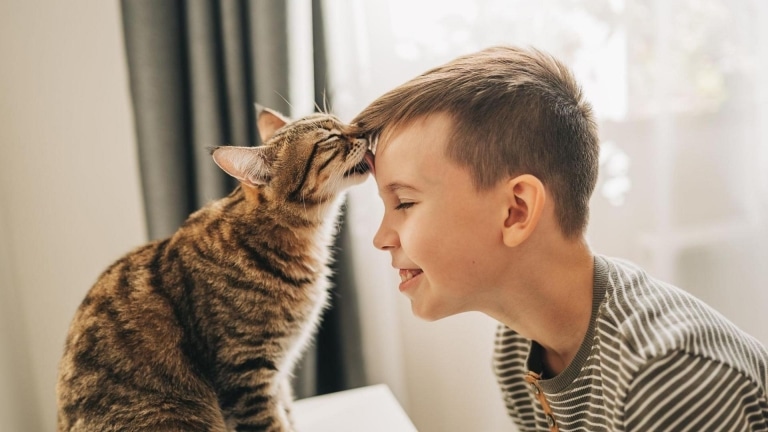
Today, a cat might take up half the bed, demand breakfast at five in the morning, and carefully inspect every box brought home. It’s hard to imagine that its ancestors once kept their distance from people, and that human homes were foreign territory to them.
How did a cautious wild hunter become a beloved pet? This story began long before soft beds and bags of cat food. And the main roles in it were most likely played by grain, mice, and mutual benefit.
At first, cats were drawn to our neighbors
When people began settling in one place, growing grain, and storing their harvest, plenty of food for rodents appeared near their settlements. For mice, the grain storehouse was a veritable treasure trove. And for wild cats, a place where mice gathered became a convenient hunting ground.
According to a widely accepted scientific hypothesis, this is exactly how the bond began. Cats came to hunt, and humans gained helpers that reduced the number of pests. The least skittish animals found it easier to stay near settlements and enjoy their benefits. Gradually, the coexistence grew closer and closer.
Of course, no ancient cat entered into a formal agreement with humans. But it’s easy to imagine the gist of it: “I catch mice, and you let me stay here.”

When It Happened: A Find Dating Back About 9,500 Years
Archaeologists found one of the most famous pieces of evidence of the early bond between humans and cats in Cyprus. At the Shillurokambos settlement, they discovered a human burial site next to which a cat had been buried separately and with care. The find dates back to approximately several millennia B.C.
It is particularly interesting that cats were not native to the island: they must have been brought there by humans. So, even back then, these animals were important enough to someone that they were transported by sea.
However, there is a significant difference: a domesticated wildcat and a house cat are not quite the same thing. An individual animal can become accustomed to humans, whereas domestication involves changes in a population over many generations. Therefore, the Cypriot discovery indicates an ancient connection but does not establish the exact date of the modern domestic cat’s origin.
But what about Ancient Egypt?
The Egyptians did indeed play a huge role in this story. Cats became part of their daily life, art, and religion. They were depicted alongside humans, and the image of the cat was closely associated with the goddess Bastet.
However, the popular notion that every Egyptian cat lived in boundless luxury is overly simplified. Attitudes toward these animals combined domestic affection, symbolic significance, and religious practices, including the creation of cat mummies as offerings.
It is Egypt that has left behind much vivid evidence of the close relationship between cats and humans. But scientists are still working to determine exactly where and when the population from which our modern-day pets are descended first emerged.
How Cats Set Out to Conquer the World
An animal that catches rodents is useful both in the pantry and on a ship carrying food supplies. Thus, human trade opened the way for cats to new ports, settlements, and countries.
At the same time, science continues to reexamine the familiar history of their travels. A genetic study published in 2025 in the journal *Science* showed that domestic cats, related to modern ones, spread across Europe from North Africa approximately 2,000 years ago, during the Roman era. This contradicts the earlier assumption that they arrived here alongside the first farmers several millennia earlier.
Important: These 2,000 years refer to the spread of domestic cats in Europe, not the beginning of all their interactions with humans. The history of their relationship goes back much further.

So who domesticated whom?
People often joke that cats domesticated themselves. There’s a grain of truth to this: the relationship likely began largely with their voluntary coexistence with humans. However, humans also influenced this process—they allowed the cats to stay nearby, cared for them, transported them, and eventually bred them.
It all began, perhaps, with a tolerant attitude toward a nimble hunter near grain stores. And it ended with us buying him his own little couch—and still making room for him on ours.

Conclusion
Humans and cats share a long history, although the exact time and place of domestication remain a subject of research. Practical benefits helped bring them closer together, and over time, this relationship evolved to include care and affection.
Once upon a time, cats were drawn to mice near human dwellings. Today, we’re delighted when, of all the places in the house, a cat chooses to sleep right next to us.