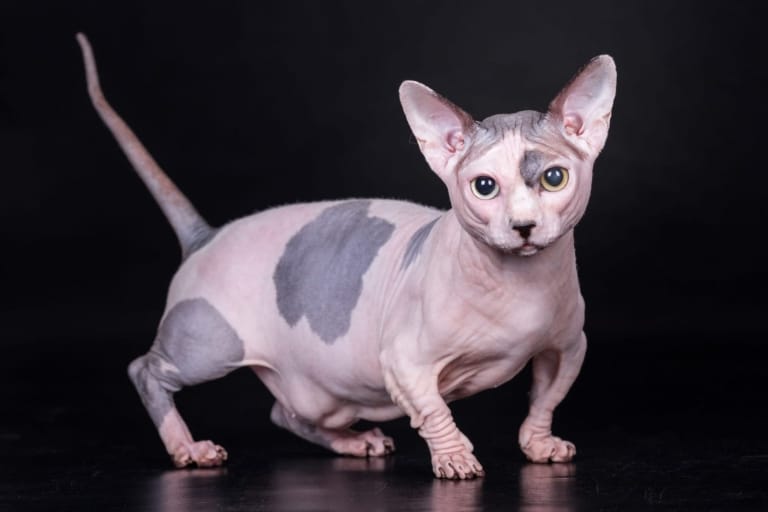
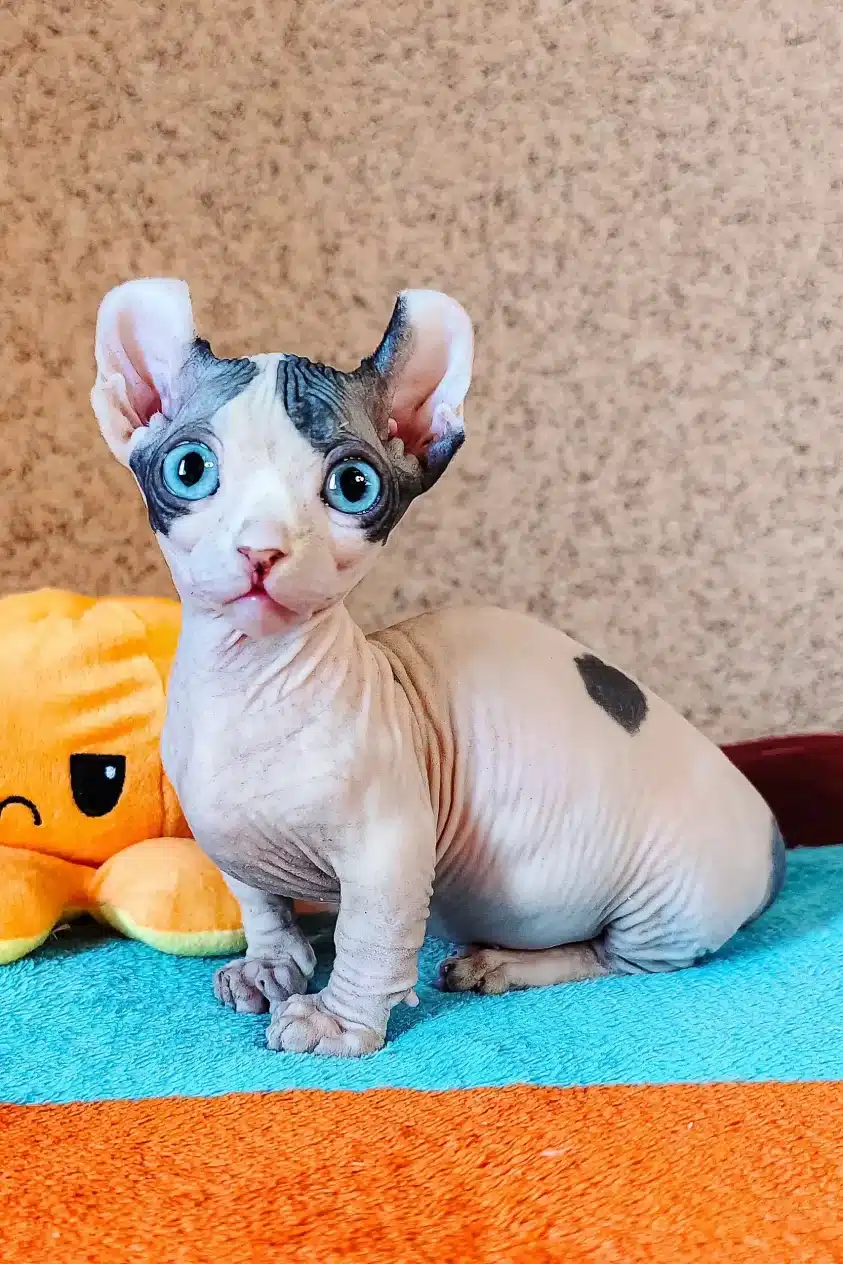
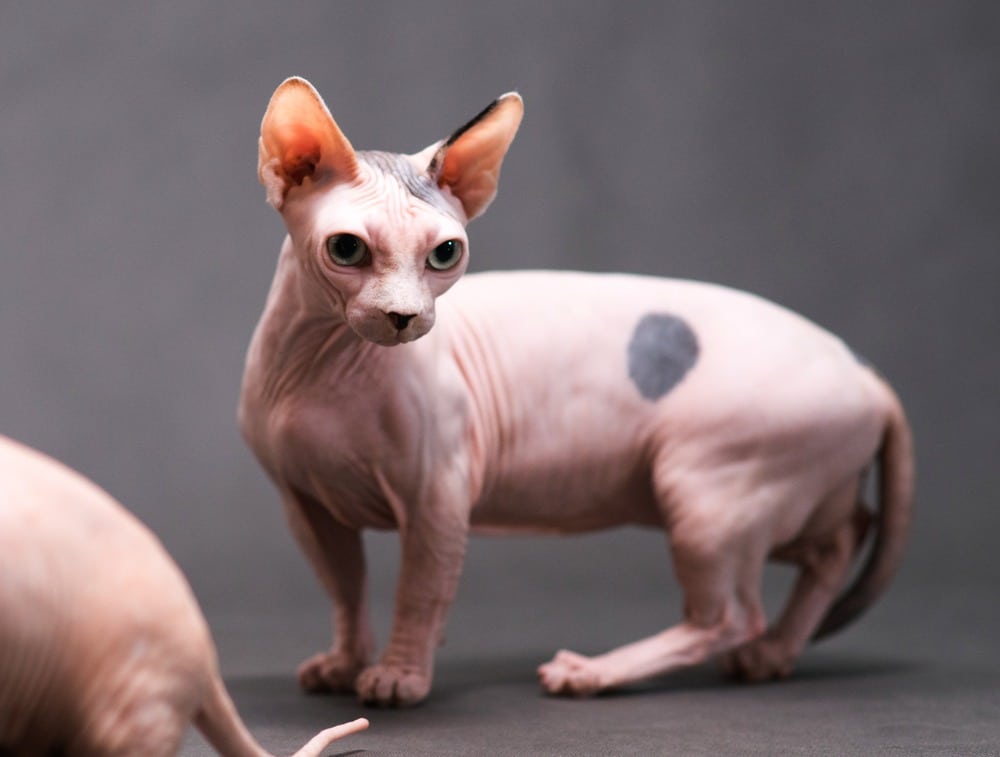
The Minsk is a young and rare cat breed that is easily recognizable by its short legs, large ears, and distinctive coat. The fur on its body may be almost imperceptible, while on its face, ears, paws, and tail, it is thicker and softer. Thanks to this combination, the Minskin resembles a small fairy-tale character, although behind its unusual appearance lies an active, sociable, and very affectionate cat.
The Minskin is not a variety of the Munchkin. It is a distinct breed, developed with contributions from the Munchkin, Sphynx, Devon Rex, and Burmese. From these breeds, it inherited short legs, a distinctive coat type, a compact build, and a people-oriented personality.
Origin and Appearance of the Minskin
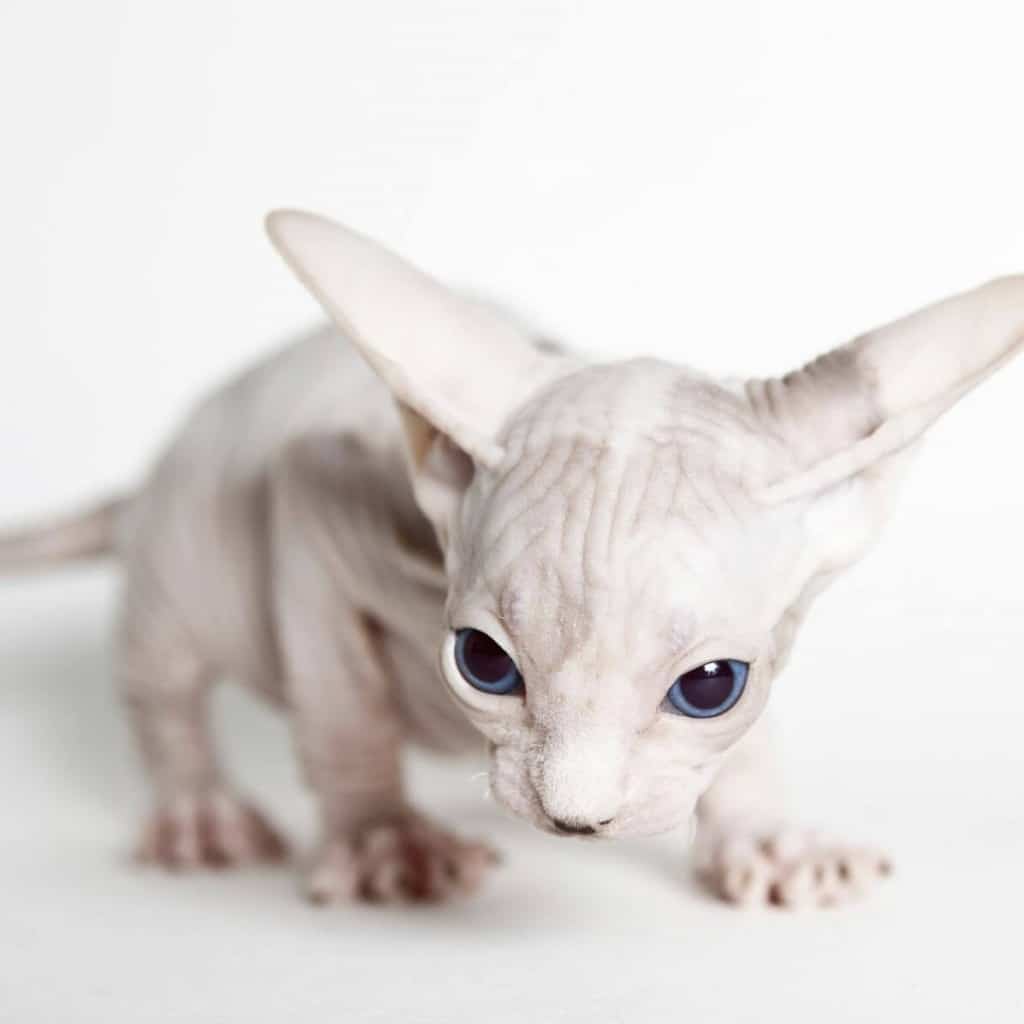
Breeding efforts began in the United States in the late 1990s. The goal was to create a small, short-legged cat with patches of soft fur on certain parts of its body. The first kittens that met the breed’s criteria appeared in the early 2000s. The Minsk has a small, sturdy, and compact body. Its legs are short, and the hind legs may appear slightly longer than the front ones. The head is rounded, the eyes are large and widely set, and the ears are prominent and open. The tail is long, flexible, and proportional to the body.
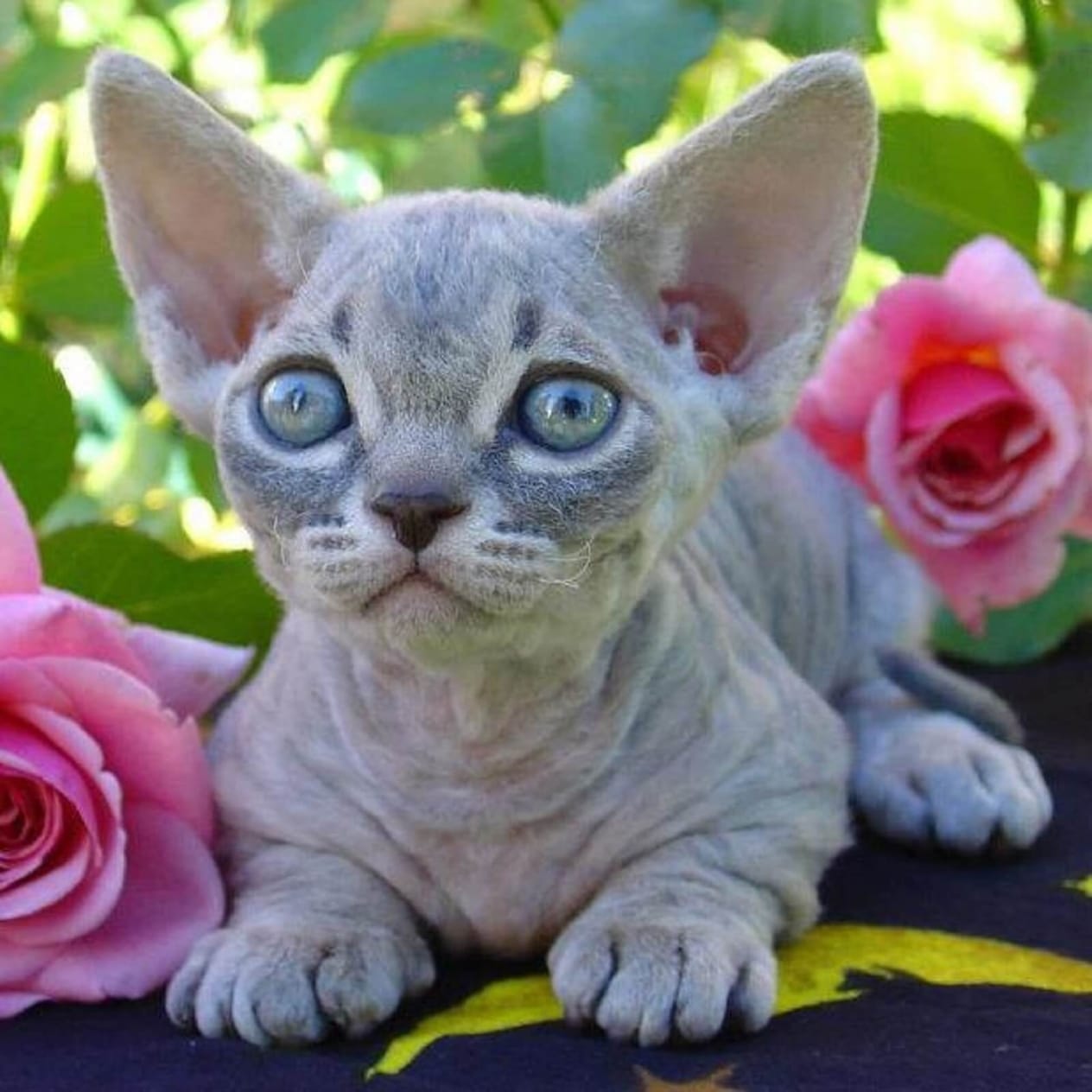
Minskins are not always completely hairless. The body may be covered with very short, soft down that resembles suede. Thicker fur usually grows on the muzzle, ears, paws, and tail. Coat colors vary, so each cat has its own unique appearance.
Because of its short legs, the Minskin moves a little differently than long-legged cats, but this doesn’t make it slow. A healthy Minskin remains curious, active, and capable of running quickly, playing, and exploring its surroundings.
Temperament and Behavior in the Family
Minskins are known for their sociable and gentle nature. They form close bonds with people, love to be around them, and often follow their owner from room to room. A Minsk cat may sit on your lap, sleep nearby, or watch household activities from the nearest comfortable surface.
Cats of this breed remain playful even as adults. They enjoy balls, tunnels, interactive toys, and puzzles where they have to search for treats. The Minskin needs daily attention, so prolonged periods of being left alone can lead to boredom and anxiety.
It’s a good idea to set up low scratching posts, resting spots, steps, and safe play structures in the apartment. Minskins may try to climb high, but due to the structure of their paws, constant high jumps and hard landings are not recommended.
Health and Care Considerations
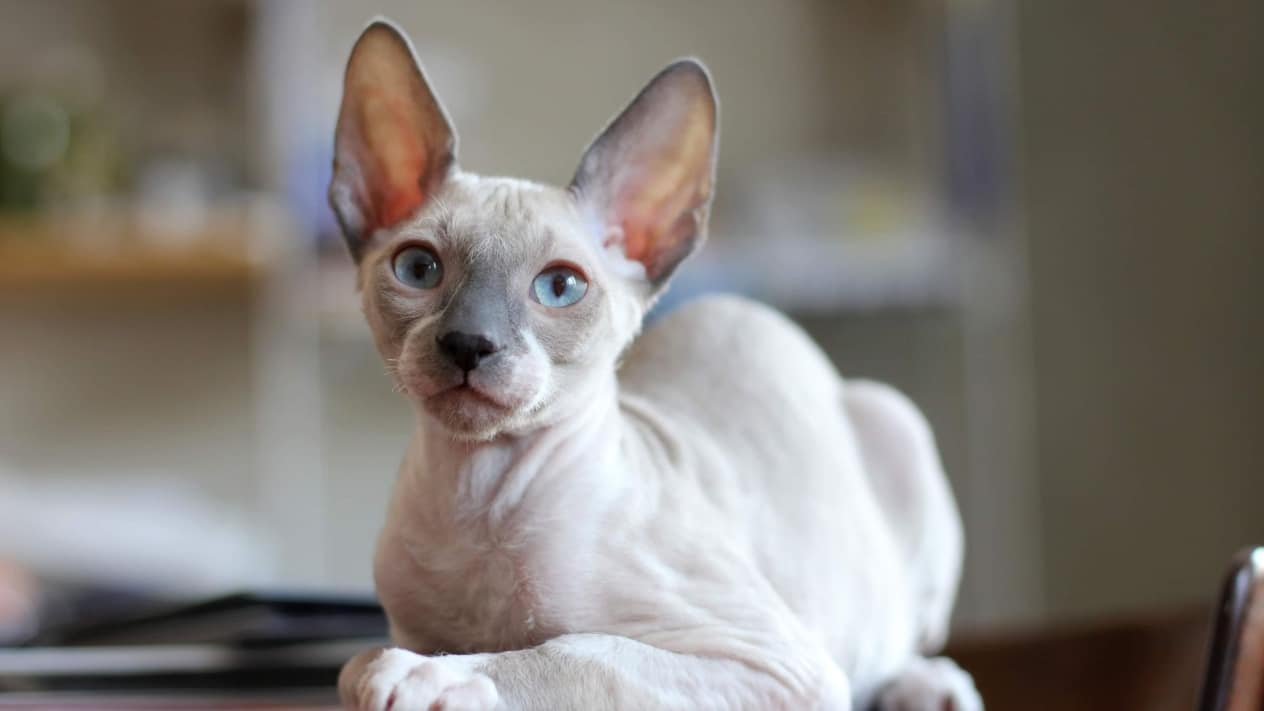
Since the Minskin is a young and relatively rare breed, there is currently less information available about its long-term health than there is for long-established breeds. When choosing a kitten, it’s important to work with a responsible breeder who monitors the cats’ heart health, joints, spine, and overall development.
Owners should monitor their cat’s mobility. Reluctance to jump, limping, pain when touched, stiffness, or changes in gait require a consultation with a veterinarian. It is equally important to monitor their weight, as extra weight puts additional strain on their short legs and joints.
Minsk cats are sensitive to cold and drafts. The home should have warm sleeping areas and cozy spots for resting. At the same time, the cat should not be left in direct sunlight for long periods, as areas with sparse fur are less protected from sunburn.
Their diet should be appropriate for the cat’s age, activity level, and health. The diet should not be too high in calories, even if the cat persistently begs for an extra serving.
Minskina Care and Grooming at V.O.G DOG SALON
The near-total absence of fur does not mean that Minskins do not need grooming. Skin oils, which in ordinary cats are distributed throughout the fur, can accumulate on the surface of the body, leaving a dark or sticky residue. Pay special attention to the armpits, belly, paws, neck, and natural skin folds.
Bathe your Minskina gently and only with professional cat-specific grooming products. Bathing too often or using harsh shampoo can dry out the skin and increase irritation. After bathing, pat the cat dry quickly with a soft towel, dry it completely, and make sure it doesn’t get too cold.
Large, open ears can accumulate dirt more quickly, so they should be inspected regularly and cleaned with a special solution. You should also trim their claws, clean the areas around the claw beds, and check the condition of the skin between their toes.
Professional grooming helps keep the skin clean, detect irritation early, and ensure that your Minsk dog looks well-groomed.
Conclusion
The Minsk is a small, active, and very sociable cat that needs warmth, attention, and thorough care. It’s a good fit for people who are willing to spend a lot of time interacting with their pet, monitor its weight, protect its skin from the cold and sun, and perform regular grooming. With responsible care, the Minsk cat becomes a loving companion that fills the home with energy, curiosity, and genuine affection.