Properly handling the animal is the first and very important step in grooming. It is during this initial meeting that the groomer gathers the necessary information, assesses the pet’s condition, and discusses the desired outcome with the owner. A rushed intake can lead to misunderstandings, unnecessary stress, or dangerous situations during the procedure.
Ask the owner the right questions
Before starting work, the groomer should clarify not only the owner’s preferences regarding the haircut but also important information about the pet’s health and behavior.
It’s worth asking:
- when the pet was last groomed;
- how the animal reacts to bathing, drying, the clippers, and nail trimming;
- whether there have been previous attempts to bite or suddenly break free;
- are there any sensitive areas, pain, or fear of being touched;
- whether the animal has any allergies, chronic conditions, or has recently undergone surgery;
- whether it is taking any medications;
- Has the animal previously experienced irritation after grooming or a short haircut?
Special attention should be given to senior pets and those with heart, joint, respiratory, or skin issues. A groomer does not make medical diagnoses, but should be aware of any potential limitations in order to properly plan the grooming session.
It’s equally important to clearly agree on the desired result. It’s best to ask the owner to show an example of the desired cut and explain right away whether it can be achieved given the condition of the coat. If there are dense mats, it’s not always possible to maintain the desired length without causing discomfort to the pet.
Take your time getting to know the animal and assess its behavior
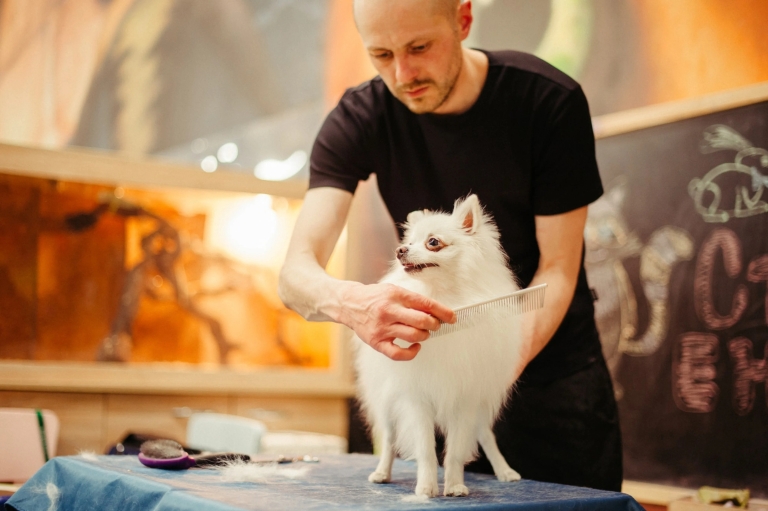
Don’t immediately pick up the animal, lean over it abruptly, or drag it to the grooming table. First, give it a few minutes to get used to the room, the smells, and the groomer.
The groomer should pay attention to the animal’s body posture, tail and ear position, breathing, trembling, vocalizations, and any attempts to hide or move away. Frequent nose-licking, yawning, body tension, freezing, and attempts to escape may indicate fear or stress.
The animal should be handled calmly, without sudden movements or excessive coercion. Insecurity or fear should not be interpreted as disobedience. If your pet shows signs of severe stress during the appointment, you should discuss with the owner the possibility of a shortened treatment plan, an acclimatization visit, or rescheduling the procedure.
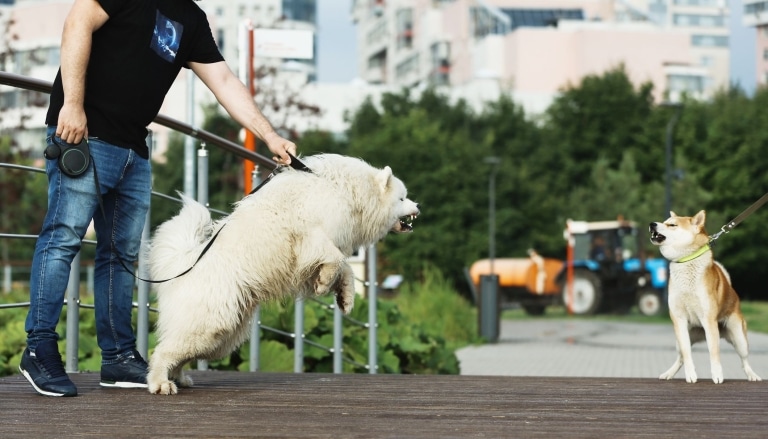
In the waiting area, it’s best to prevent close contact between unfamiliar animals. Cats should be kept in their carriers until the technician is ready to see them, and dogs should be kept on a leash. Separating cats and dogs and maintaining a sufficient distance between animals helps reduce stress in an unfamiliar environment.
Inspect the coat and agree on a treatment plan
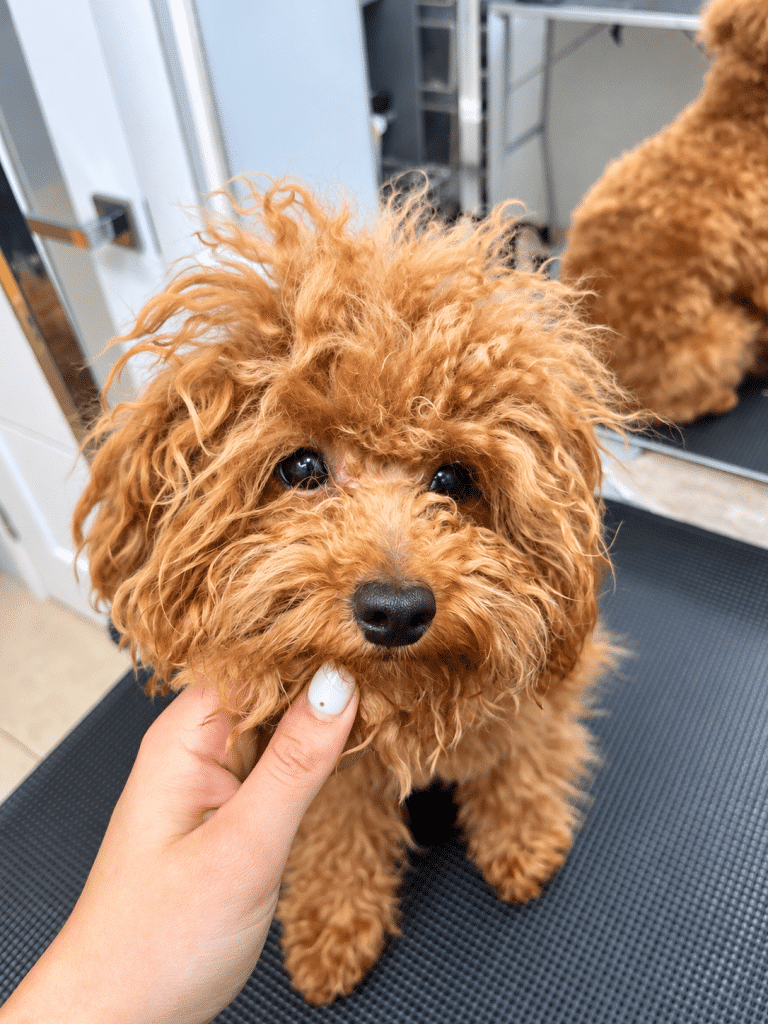
Before the owner leaves, the groomer should conduct a brief external examination of the animal. It is necessary to assess the condition of the coat and skin, checking for mats, dirt, parasites, redness, wounds, or other noticeable changes.
Additionally, check the following:
- the fur behind the ears, in the armpits, on the belly, and under the tail;
- the condition of the eyes and the outer part of the ears;
- the length and condition of the claws;
- the paw pads;
- presence of lumps or tender areas;
- the animal’s reaction to gentle touch.
If the groomer notices redness, skin damage, unusual discharge, severe pain, or growths, they should point these out to the owner before beginning the procedure. The groomer describes what they’ve observed but does not diagnose a possible illness or prescribe treatment.
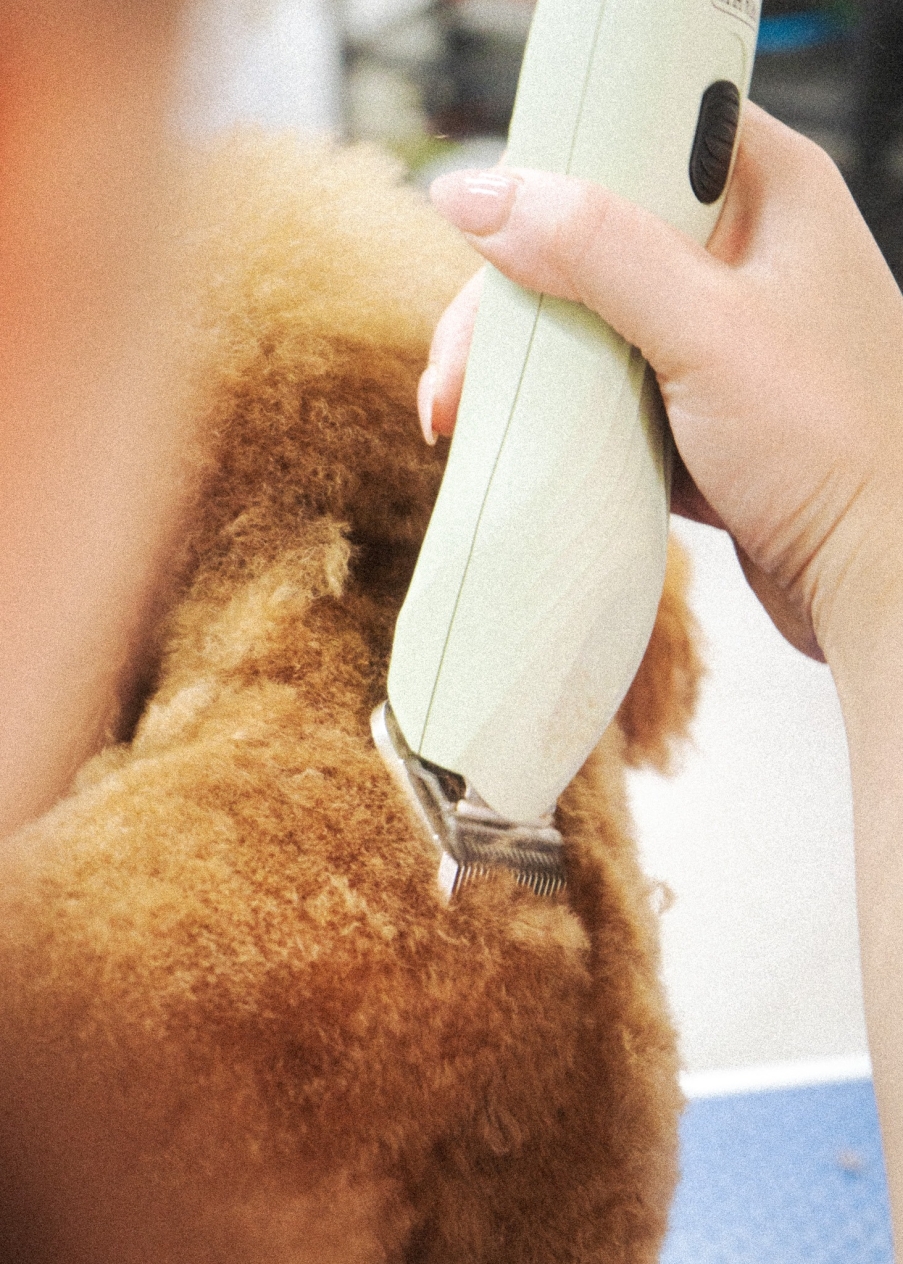
After the examination, the scope of work must be finalized: the length and style of the haircut, the need to remove mats, bathing, brushing, nail care, and other procedures. The owner should understand that the condition of the coat or the animal’s behavior may affect the planned result.
It is advisable to record all important details in the client’s file: reaction to the blow dryer and clippers, sensitive areas, products used, coat condition, and recommendations for the next appointment. This will help the groomer prepare for future visits and gradually make the grooming experience more comfortable.
A professional approach builds trust
A proper consultation is the foundation of safe grooming. The groomer should listen carefully to the owner, calmly get to know the pet, assess its condition, and agree on a realistic outcome in advance.