

Cats have lived alongside humans for thousands of years, but they remain mysterious animals to this day. They can stare at a single spot for hours, move silently around the apartment, suddenly start running in the middle of the night, and choose the most unexpected places to sleep. Behind many of these strange feline habits lie the unique characteristics of their vision, hearing, thinking, and natural behavior.
Cats cannot taste sweetness
Unlike humans and many other animals, cats can barely distinguish the taste of sweetness. Their bodies are adapted to a diet of animal-based food, so sweets hold no natural value for them.
If a cat shows interest in ice cream, cream, or baked goods, it may be attracted by the smell of fat, milk, or other ingredients, rather than sugar. You should not give your cat these foods: they may contain too much fat, sugar, lactose, or harmful additives.
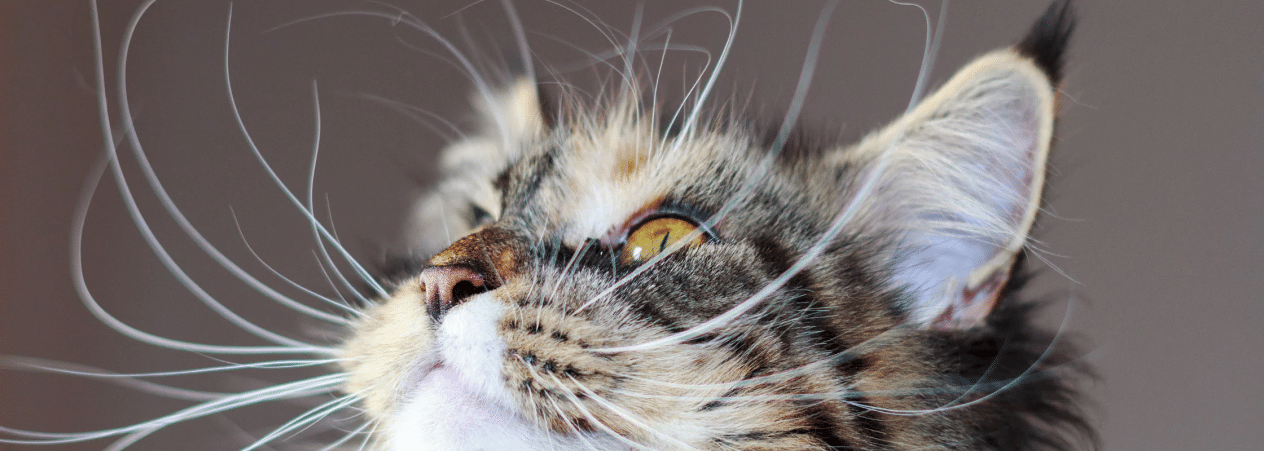
Whiskers help cats navigate their surroundings
A cat’s whiskers are called vibrissae. They are very sensitive and help the animal detect air movement, estimate the distance to objects, and navigate better in the dark. Vibrissae are not only located near the nose. These sensitive hairs are also found above the eyes, on the chin, and near the front paws. Thanks to them, a cat can more accurately determine the location of prey or obstacles.
You should never trim a cat’s whiskers. While this does not cause direct pain, it can temporarily impair the cat’s sense of orientation and make it feel insecure.
Cats can see in dim light, but not in complete darkness
A cat’s eyes are much better adapted to low light than human eyes. That’s why a cat moves confidently around a room in the evening or at night, when it’s already difficult for a person to make out objects.
However, cats cannot see in absolute darkness. Their eyes require at least a minimal amount of light to function. In complete darkness, the animal relies on its hearing, sense of smell, memory, and sensitive whiskers. Cats’ eyes are also very good at detecting movement. Even the slightest movement of a toy or an insect can instantly catch a cat’s attention.
Purring doesn’t always mean pleasure
Most often, a cat purrs when it feels calm, is lying next to its owner, or is being petted. However, purring can also occur during times of stress, fear, pain, or while recovering from an unpleasant situation. Therefore, you shouldn’t judge a cat’s condition based solely on the sound of its purring. You should pay attention to the position of its ears, tail, and body, as well as its appetite and overall behavior. If the cat is purring but hiding, refusing food, or acting unusually, this may be a sign of discomfort.
Cats sleep a lot, but they remain alert
A cat may sleep for a significant portion of the day. Kittens, older cats, and cats that don’t get enough exercise rest particularly often.
However, not all of this time is spent in deep sleep. Cats often doze off while remaining responsive to sounds. That’s why their ears can twitch even when their eyes are closed.
Sudden nighttime dashes are also linked to their natural activity patterns. Many cats become more energetic in the evening and early morning. Active play before bedtime helps channel some of that energy in a productive direction. There’s a separate article on this topic on our blog.

Cats can recognize their owner’s voice
Cats are able to distinguish familiar voices and respond to their own names. However, their reaction doesn’t always look the way a person might expect. A cat might simply turn its ear, twitch its tail, or glance briefly in the owner’s direction.
A lack of noticeable reaction does not necessarily mean that the cat did not hear or recognize the person. Cats often decide for themselves whether it is worth reacting at that particular moment.
Falling from a height is still dangerous
Cats can somersault in midair and try to land on their feet. But this does not guarantee a safe landing. The animal can suffer fractures, internal injuries, or jaw damage even after falling from a low height.
Windows and unglazed balconies should be protected with special, sturdy screens. A regular mosquito net is not designed to support a cat’s weight and could fall out along with the cat.

Every cat’s nose has a unique pattern
The surface of a cat’s nose is covered with fine lines and indentations that form a unique pattern. In this sense, a cat’s nose can be compared to a human’s fingerprints.
The sense of smell plays an important role in an animal’s life. Cats use their sense of smell to recognize their territory, familiar people, other animals, and even changes in their usual surroundings. That is why new furniture, unfamiliar objects, or strong odors can make them wary.

Cats hide their pain
In the wild, showing weakness could make an animal vulnerable, so cats often try to hide when they’re not feeling well. They may continue to walk, eat, or interact with others even when in pain.
The first signs of a problem are sometimes subtle changes: the cat jumps less, sleeps longer, avoids being touched, hides, stops grooming itself, or starts licking one specific area of its body.
It’s best not to attribute any sudden change in behavior solely to the cat’s personality. If your pet is acting unusually, you should consult a veterinarian.
Conclusion
Cats have highly developed senses, a complex communication system, and many behavioral traits. Their nighttime wanderings, love of boxes, slow blinking, purring, and choice of unusual sleeping spots all have natural explanations.
The more closely a person observes their cat, the easier it is to understand the pet’s needs, mood, and state of health. It is precisely this respect for natural behavior that helps build a trusting and peaceful relationship with the animal.