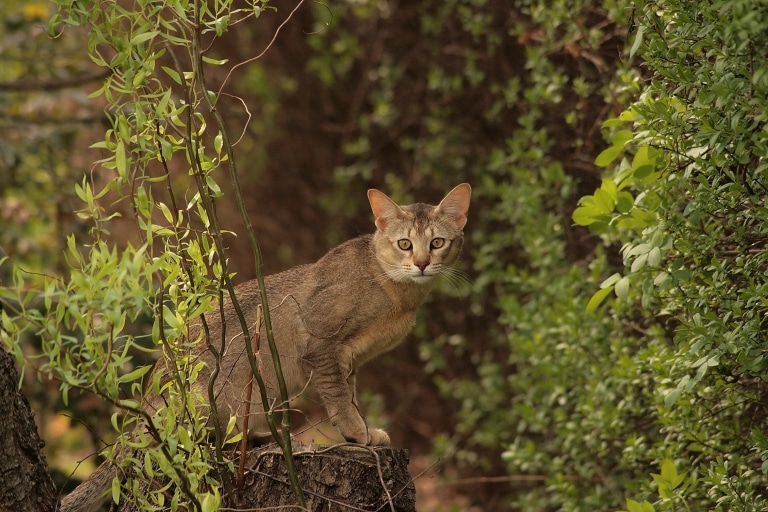
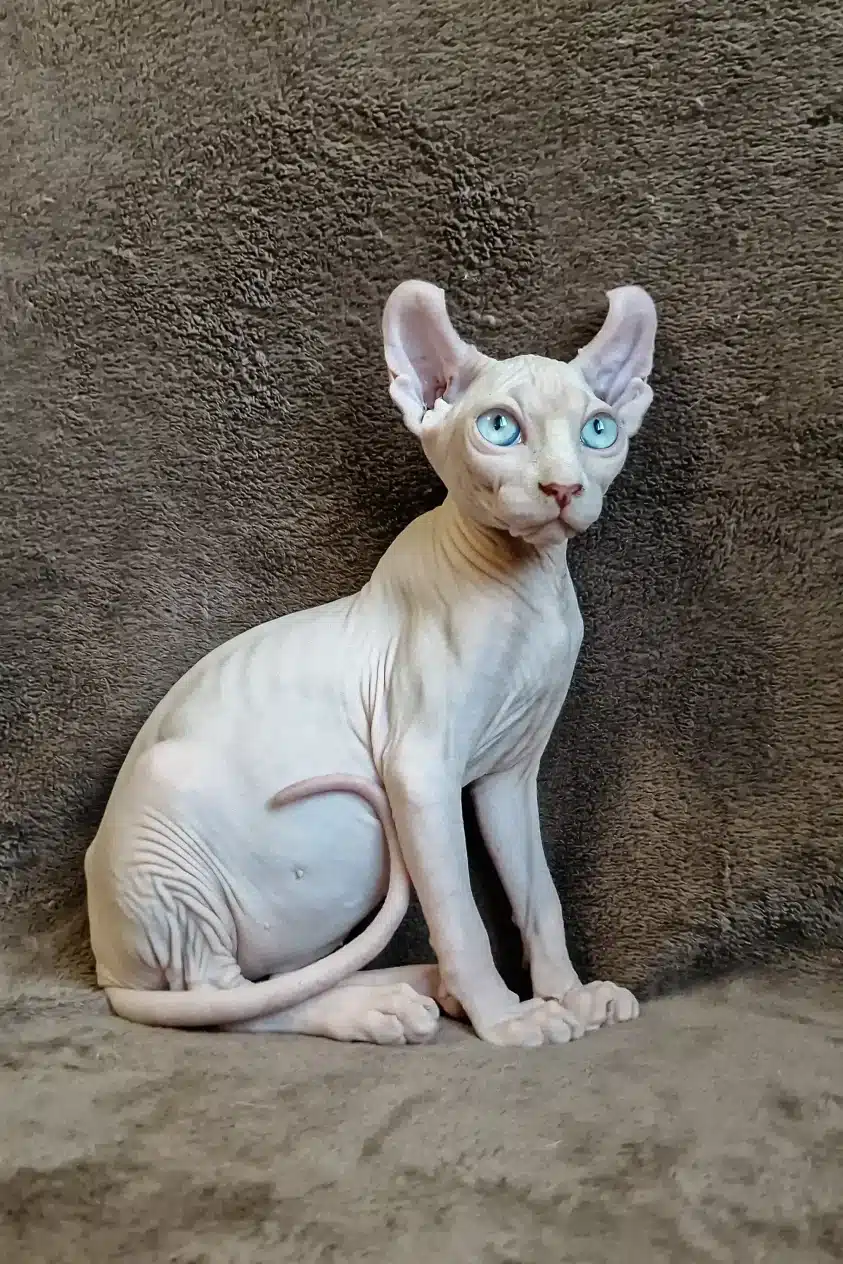
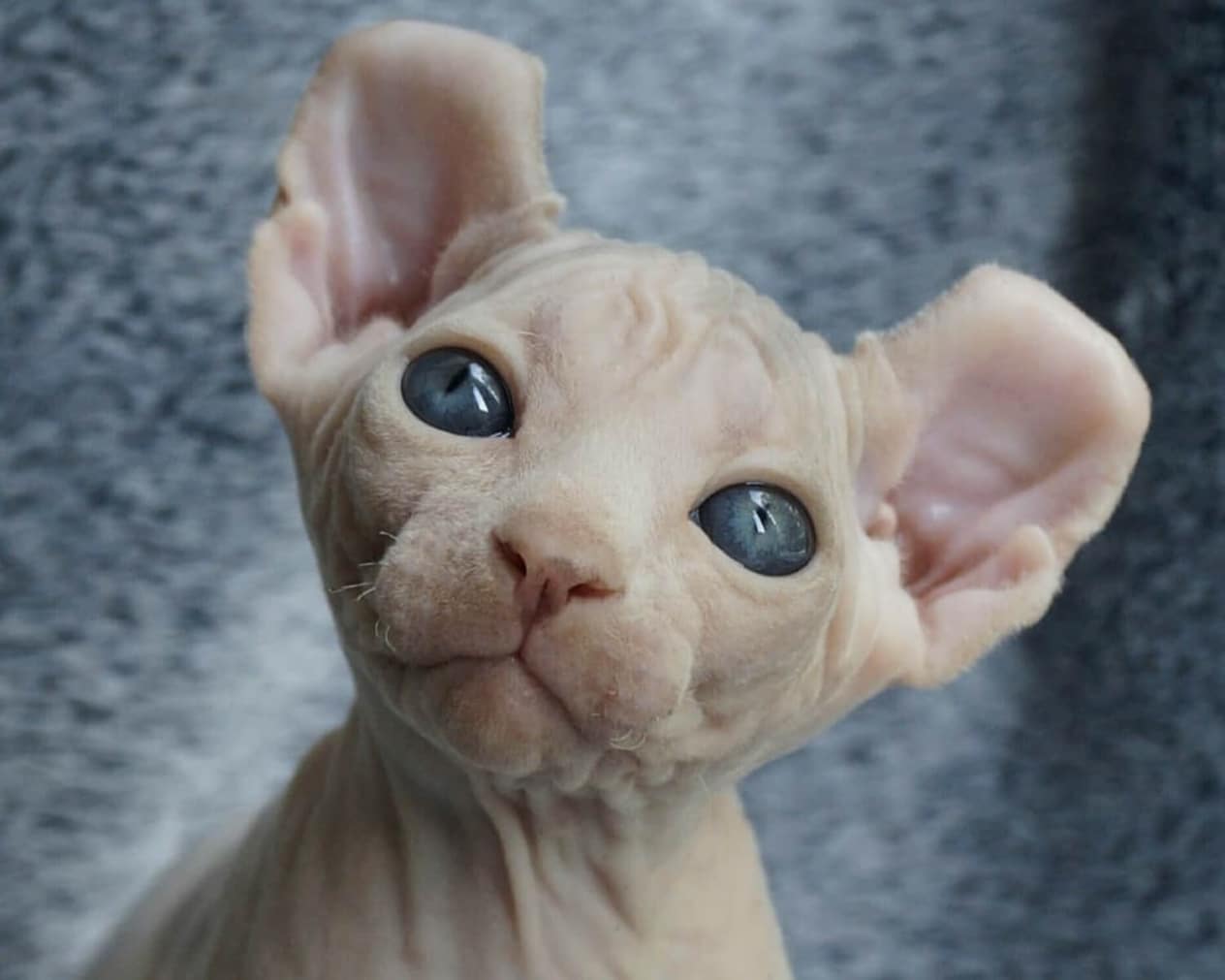
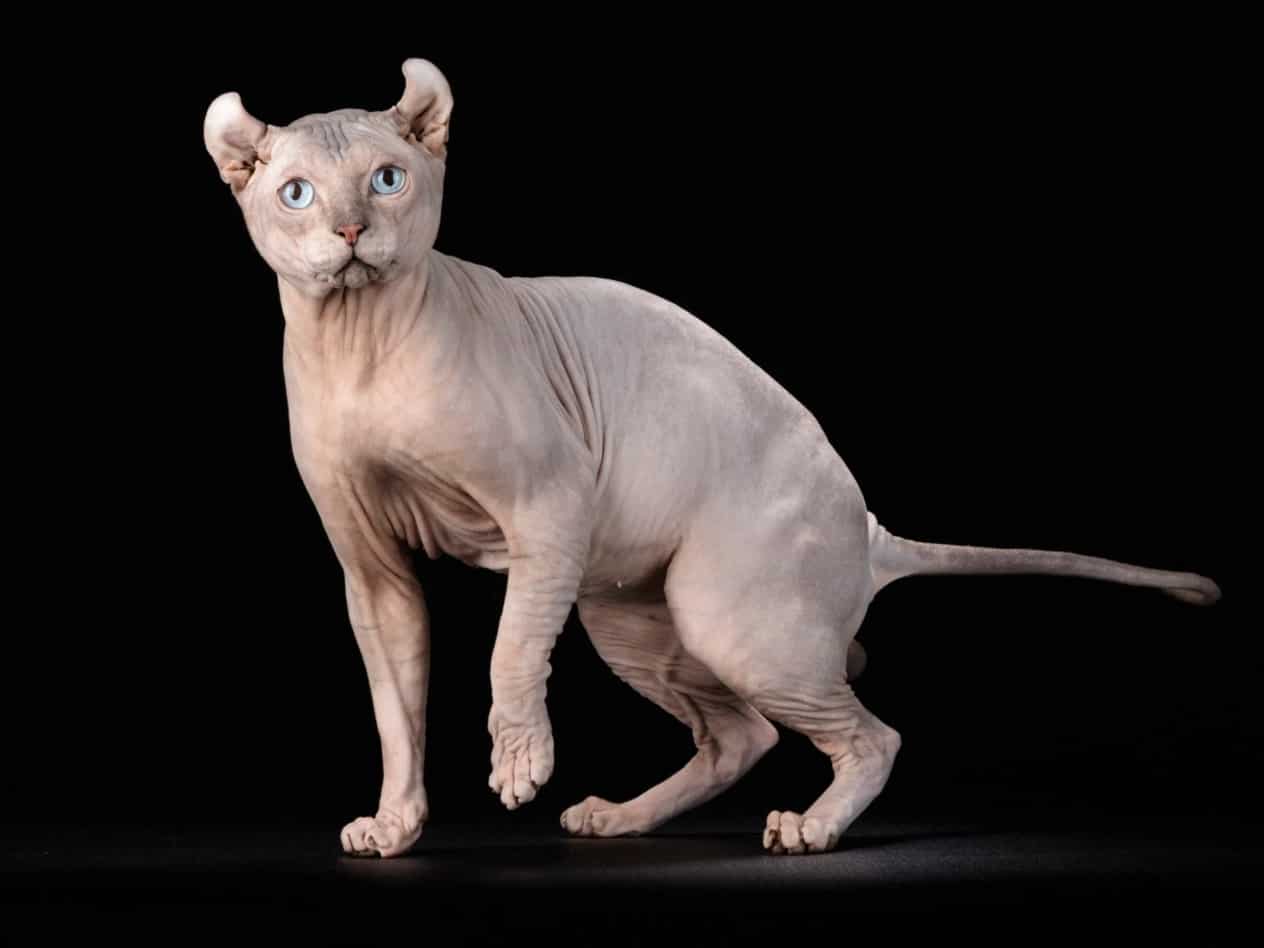
At first glance, an elf cat could easily be mistaken for a character from a fantasy movie. Its almost complete lack of fur, large, expressive eyes, and unusual backward-curving ears make its appearance truly unique. It is precisely because of the shape of its ears that the breed got its name—they resemble the ears of fairy-tale elves.
Despite their exotic appearance, Elves are known as very gentle, sociable, and devoted pets that quickly become full-fledged members of the family.
How did the breed originate?
The Elf cat is a relatively young breed. It was developed in the United States in the early 21st century by crossing two unusual breeds—the Canadian Sphynx and the American Curl. From the Sphynx, Elves inherited a near-total lack of fur, and from the Curl, they inherited their characteristic ears, which curve backward.
The breeders’ goal was to create a cat with a unique appearance, yet one with a calm temperament and good health. Today, the breed remains quite rare, and finding a true Elf is not possible in every country.
An appearance you’ll never forget
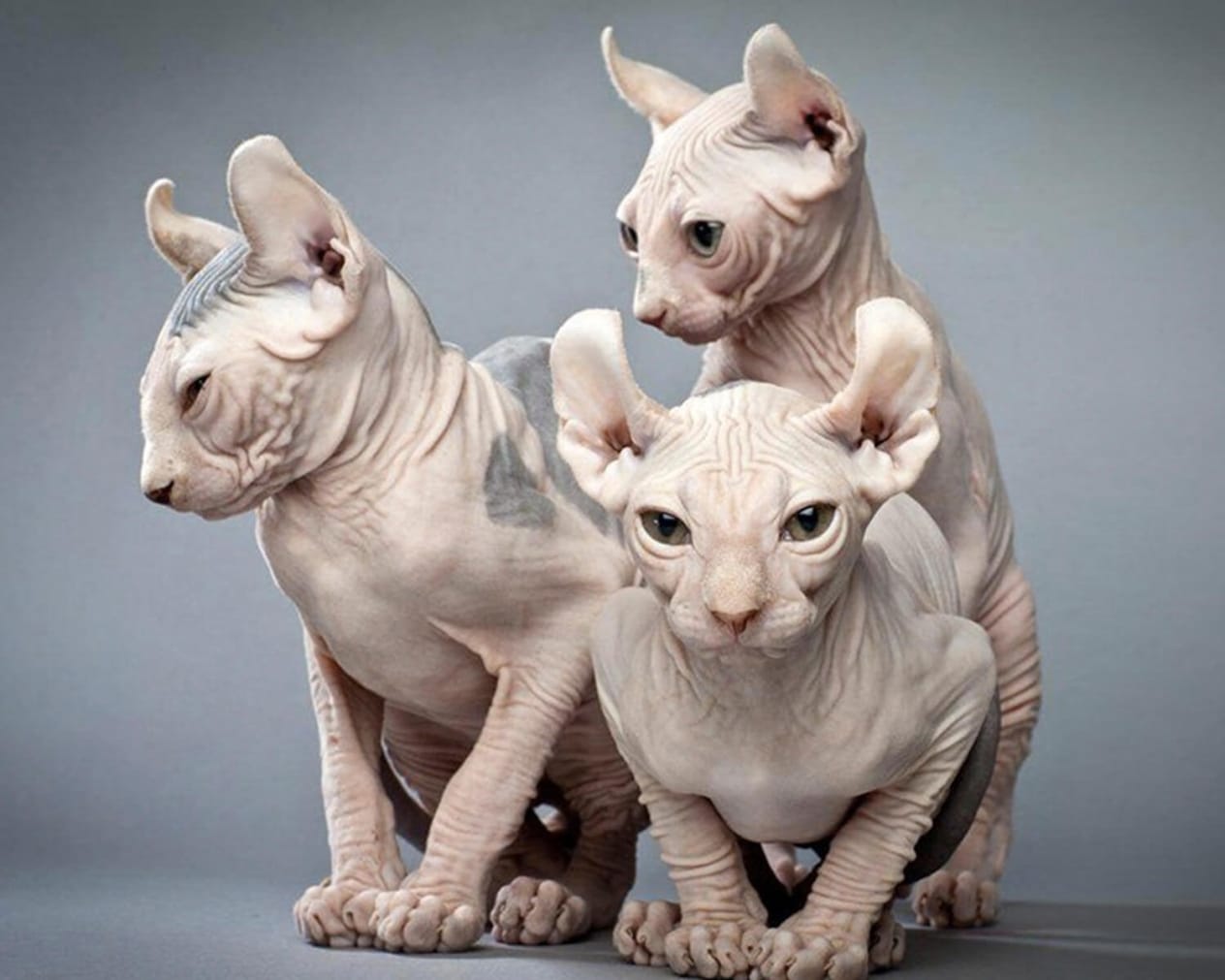
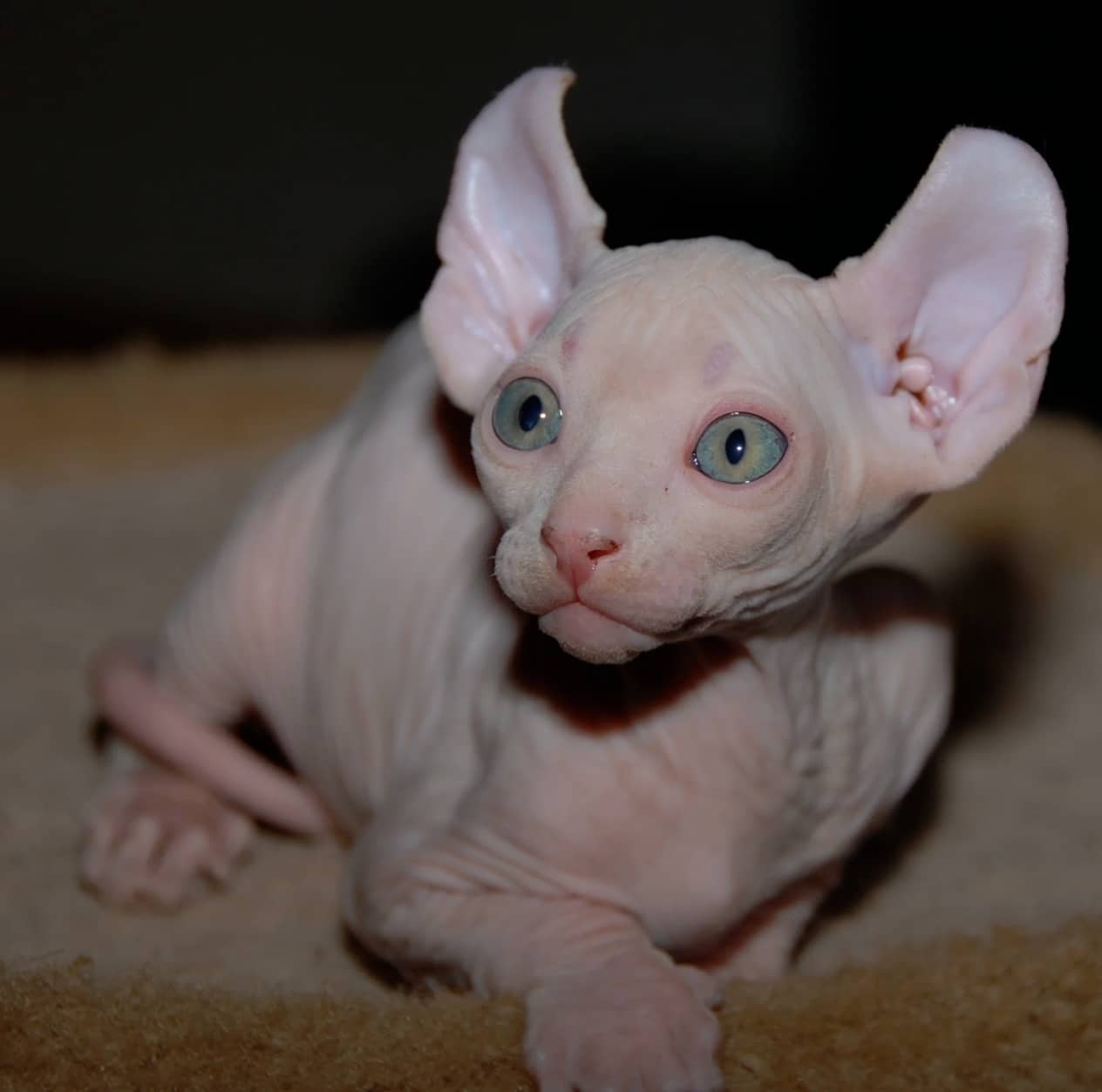
The Elf’s most recognizable feature is its large, curved ears. Together with its broad cheekbones and large eyes, they create a very unusual appearance. Although these cats are often called hairless, their skin is actually covered with a very fine, almost imperceptible down. It feels like warm velvet or suede to the touch.
Elves have a sturdy build, well-developed musculature, and long, graceful legs. Due to the lack of fur, all the curves of their bodies are clearly visible, which only emphasizes their unusual appearance.
What is the personality of an Elf cat?
In terms of behavior, Elves are very social cats that crave constant interaction with people.
They love to be close to their owner, follow them around the apartment, and often try to curl up next to them under a blanket or on their lap. Because of their strong attachment to people, Elves do not handle long periods of solitude well. Thanks to their curiosity and high intelligence, Elves quickly learn new rules and easily adapt to family life.
Care Guidelines
The lack of a thick coat does not mean that Elves do not require grooming. On the contrary, their skin secretes a natural oil that, in ordinary cats, is partially absorbed by their fur. Therefore, to keep them clean, owners are advised to regularly clean their skin and monitor its condition.
Ear care is just as important. Because of their open shape, dust and natural secretions tend to accumulate in their ears more quickly, so periodic, gentle cleaning helps maintain your pet’s health. That is why professional grooming for Elf cats is especially beneficial—it involves hygienic care that may include ear cleaning, nail trimming, skin care, and gentle cleaning of hard-to-reach areas.
Fun fact
An elf cat’s body temperature is practically the same as that of other cats, but because of its lack of fur, it feels much warmer to humans. That’s why many owners call their pets “living heating pads.”
Conclusion
The Elf cat is one of the most unique modern breeds, combining the unusual appearance of the Canadian Sphynx with the delicate ears of the American Curl. It is distinguished by a gentle temperament, high intelligence, and a strong attachment to humans.
Despite their fantastical appearance, Elves require the usual human care, attention, and regular grooming. And that is precisely what makes them true members of the family.