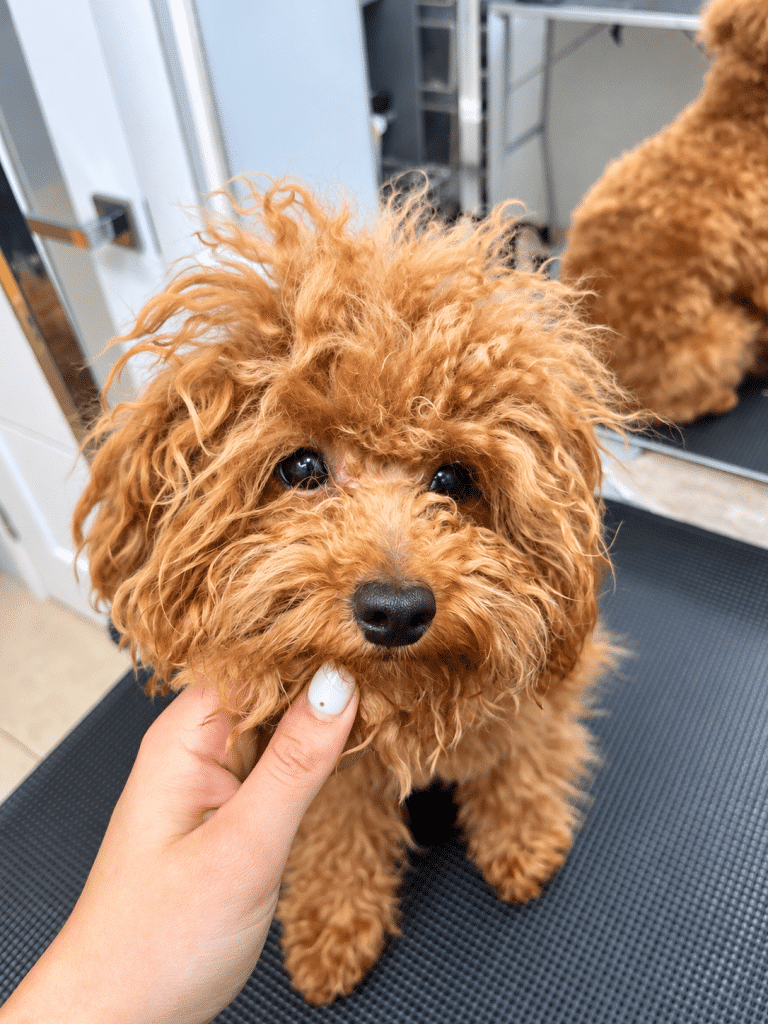
The dog calmly lets you wipe its paws, but runs away as soon as it sees a brush. Or it tolerates being brushed, but panics at the sound of a hair dryer. These are different situations, and they’re handled differently. The first step is to figure out when the dog becomes scared or feels pain.
Find the specific cause
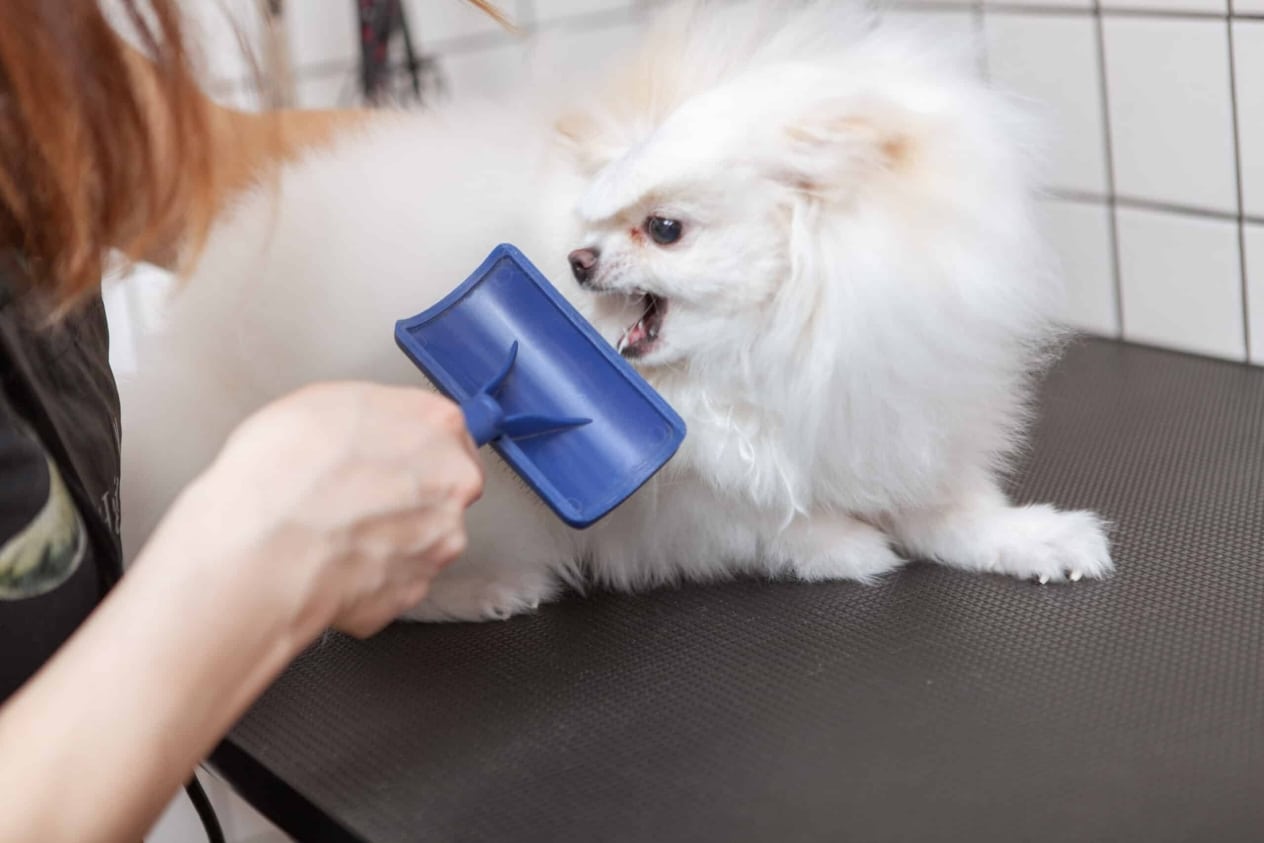
Pay close attention to when exactly the behavior changes. Does the dog back away when its paws are touched? Does it tense up when the clippers are brought near? Does it stand calmly until the hair dryer is turned on? This helps distinguish fear of sound from discomfort caused by touch.
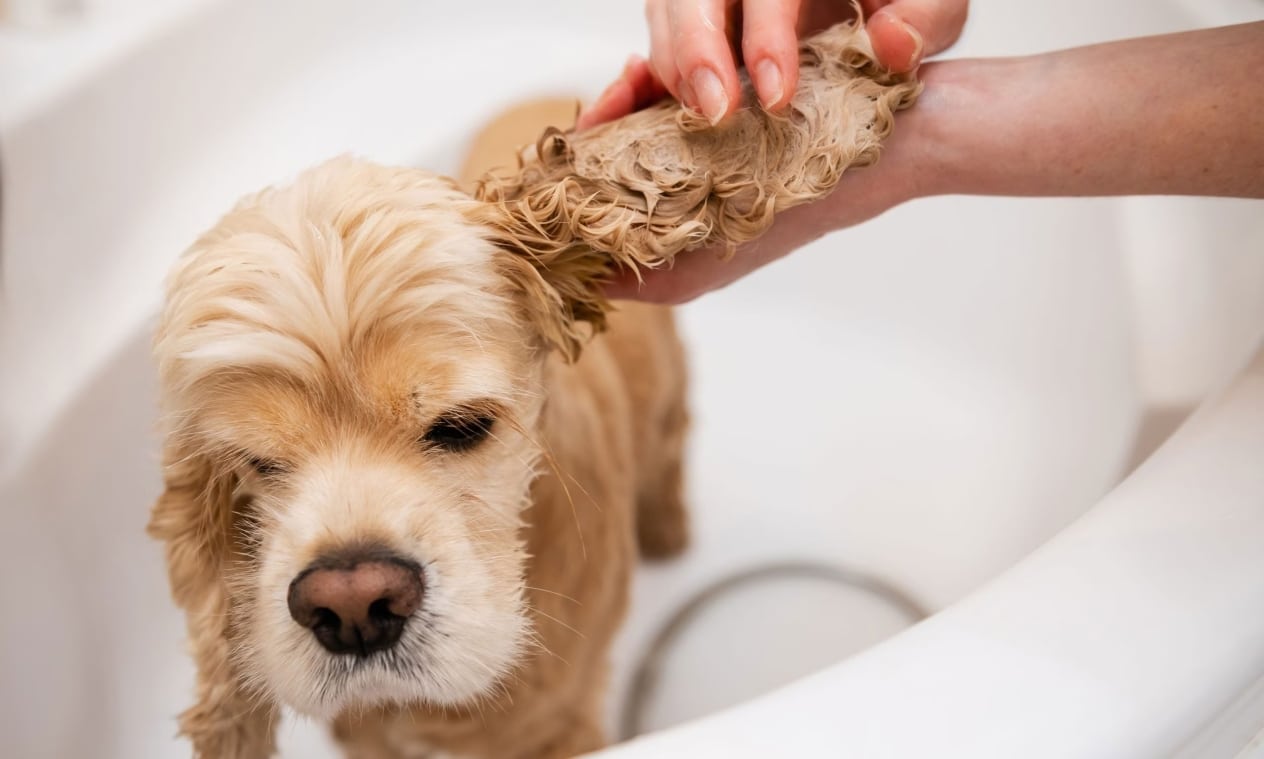
Pain could also be the cause. A brush pulls at mats, water irritates inflamed skin, and touching the ear hurts. If your dog used to tolerate the grooming process but now suddenly breaks free or growls, start with a veterinary exam. Getting your dog used to the hair dryer won’t help if the real cause is physical discomfort.
Signs that a break is needed often appear before the growling: the dog freezes, turns its head away, licks its lips, yawns without being sleepy, or tries to walk away. If you continue and hold them more firmly, next time they may become frightened even before the grooming session begins.
Get them used to small steps
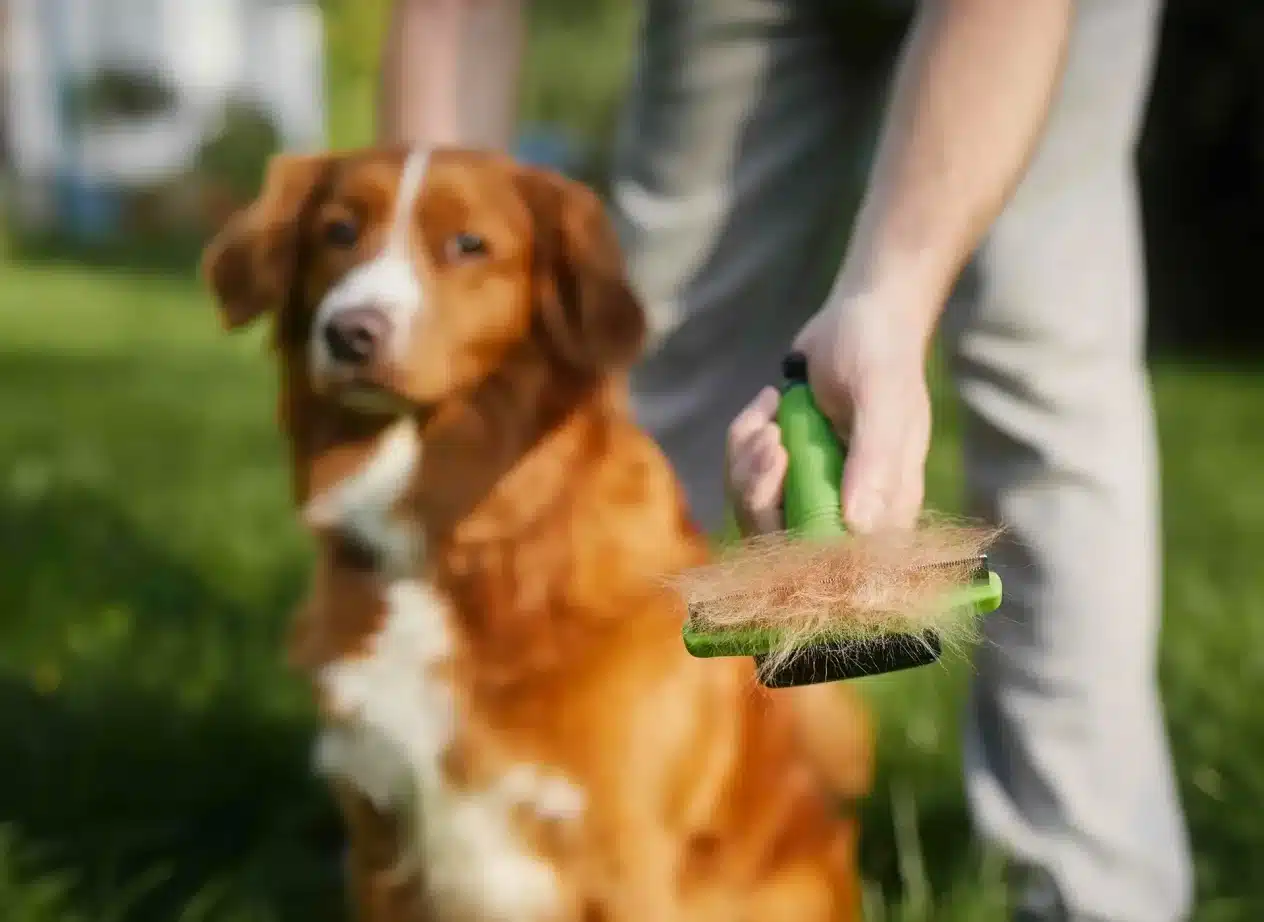
Show the brush—give a treat—put the brush away. When the dog is calmly looking at it, make one light stroke through the fur and reward them again. That’s enough for today. Tomorrow, you can do two strokes. The goal is to finish the exercise before the dog starts to pull away.
You can work with the paws in the same way: briefly touch the paw, let go, and reward; later, hold it for a second. For the hair dryer, start with just the device itself without any sound, then briefly turn it on from a distance. If the dog gets scared, go back to a simpler step. A few calm minutes every day are more helpful than one long struggle once a month.
Treats aren’t necessary to make the dog endure pain. They help create a positive association with actions the dog is already capable of. Don’t force the brush through a tight mat, and don’t try to distract the dog from its fear with food while someone else is holding it down.
What to Tell the Groomer Before the Visit
Don’t just say, “He’s nervous,” but be specific: “He’s afraid of the sound of the hair dryer,” “He won’t let you touch his right front paw,” “He started struggling after his last nail trim.” This will help them determine the best order of procedures and understand where a break might be needed.
If possible, keep the first visit shorter: let the dog get acquainted with the space and undergo a few manageable procedures instead of trying to do everything at once. Discuss priorities before the grooming session. Sometimes, calmly washing and brushing the dog is more important than achieving a perfect haircut at the cost of severe stress.
If the dog panics or tries to bite, stop what you’re doing and come up with a different plan. Restraining them by force won’t teach them to trust grooming.
If grooming can no longer be postponed
Tangled mats can pull on the skin, and excessively long nails can interfere with normal walking. In this case, don’t wait months for the dog to get used to all the tools. Consult an experienced groomer, and if there is pain, skin irritation, or the procedure is dangerous due to severe fear, see a veterinarian. Professionals will determine how to perform the necessary grooming more safely.
Do not cut tight mats with scissors at home: the skin can be pulled inward, and it’s easy to accidentally cut it. Once the urgent problem is resolved, return to short grooming sessions—these will help make future grooming sessions go more smoothly.
Conclusion
A dog won’t learn to love the hair dryer or nail trimming in a single day. Find out exactly what bothers them, eliminate any pain, and get them used to the procedure in small steps. And tell the groomer about any specific difficulties before they start—that way, they can tailor the grooming session to your dog’s needs.