Yorkies keep a close eye on their owners, are sensitive to changes, and often have a hard time being alone. However, anxiety should not be considered a normal trait of the breed: if fear prevents a dog from sleeping, eating, going for walks, or staying calmly at home, it needs help.
How Anxiety Manifests in a Yorkie
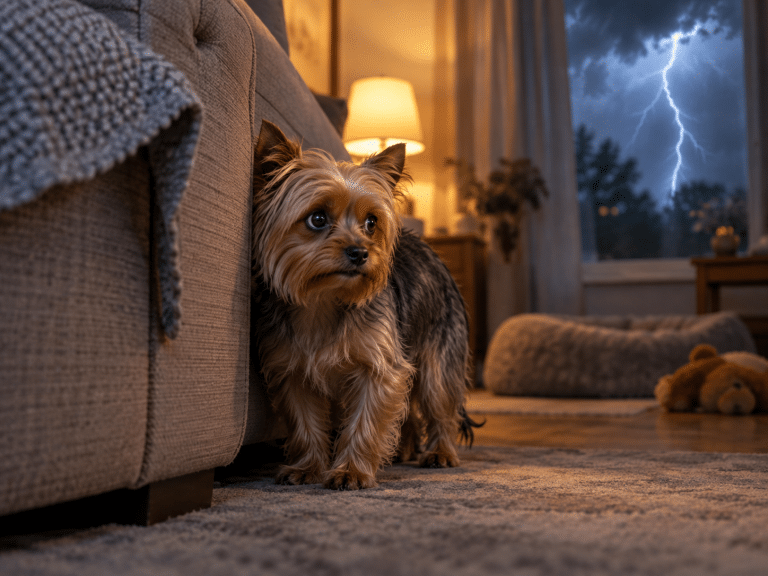
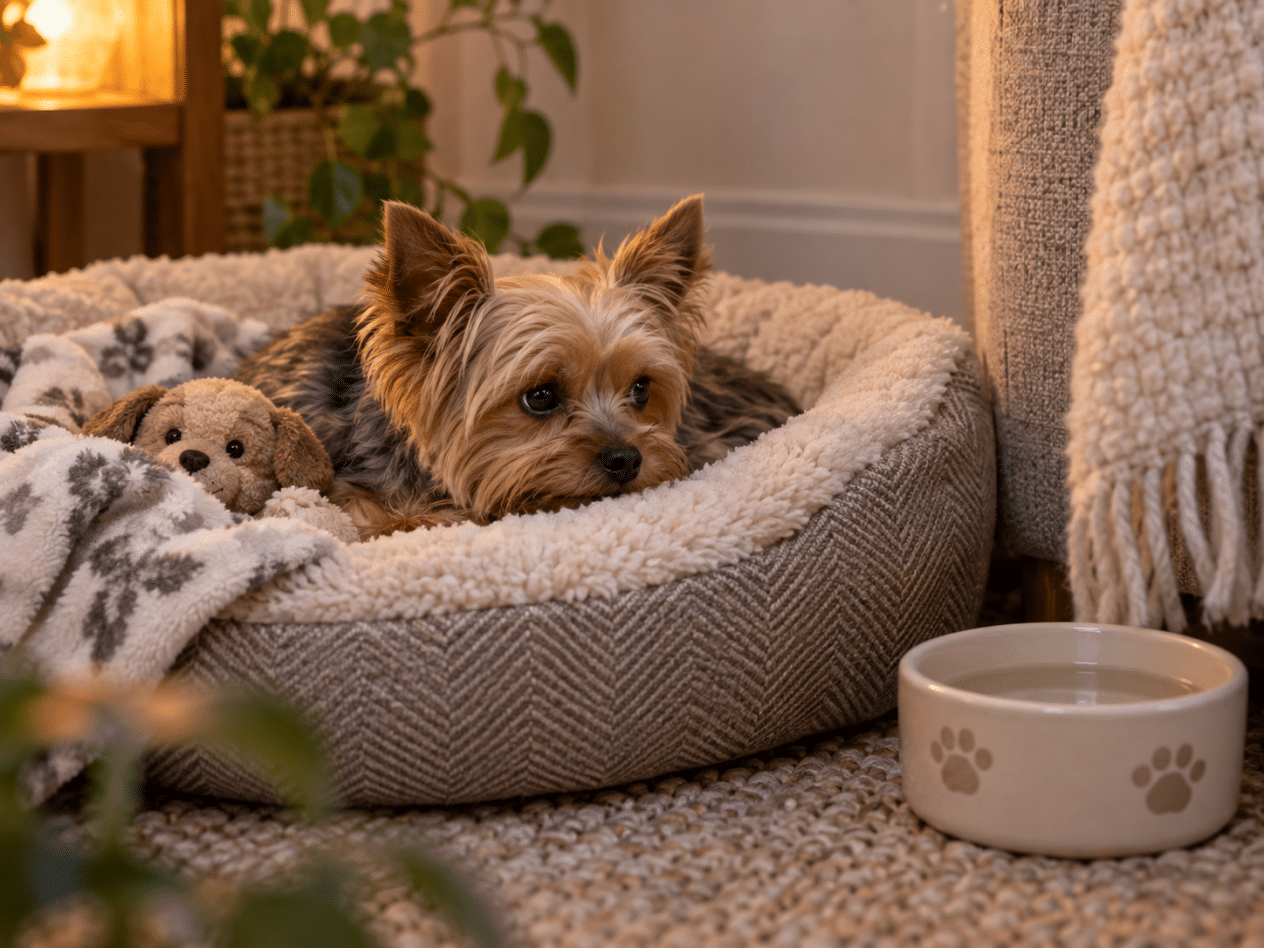
An anxious Yorkie may tremble, hide, follow its owner from room to room, lick its nose frequently, yawn, breathe heavily, or constantly listen for sounds. Some dogs become excessively barky, can’t calm down, refuse to eat, or try to run away.
When left alone, they may howl, bark, destroy belongings, leave puddles around the house, or try to scratch at doors. Signs of separation anxiety often appear even before the owner leaves—when they’re getting dressed, grabbing their keys, or putting on their shoes. To observe your dog’s true behavior when left alone, you can leave a home security camera recording.
Not every instance of trembling indicates fear. A Yorkie may tremble due to cold, pain, feeling unwell, or other physical causes. If the behavior has changed suddenly, you should consult a veterinarian first.
Why Does a Yorkie Become Anxious?
The cause may be insufficient socialization at an early age, a negative experience, a sudden change in their usual routine, moving to a new home, or the arrival of a new person or animal in the house. Yorkies may also be afraid of thunderstorms, fireworks, home renovations, car rides, strangers, and veterinary procedures.
Another issue is excessive dependence on the owner. If a dog is almost never left alone, even a brief separation can cause severe stress. At the same time, anxiety is sometimes exacerbated by a lack of walks, mental stimulation, and a predictable daily routine.
Undesirable behavior can also be linked to pain. Diseases of the teeth, joints, digestive system, or urinary tract can make a dog restless and irritable. Therefore, it is important to rule out medical causes before attempting behavior correction.
How to Help an Anxious Yorkie
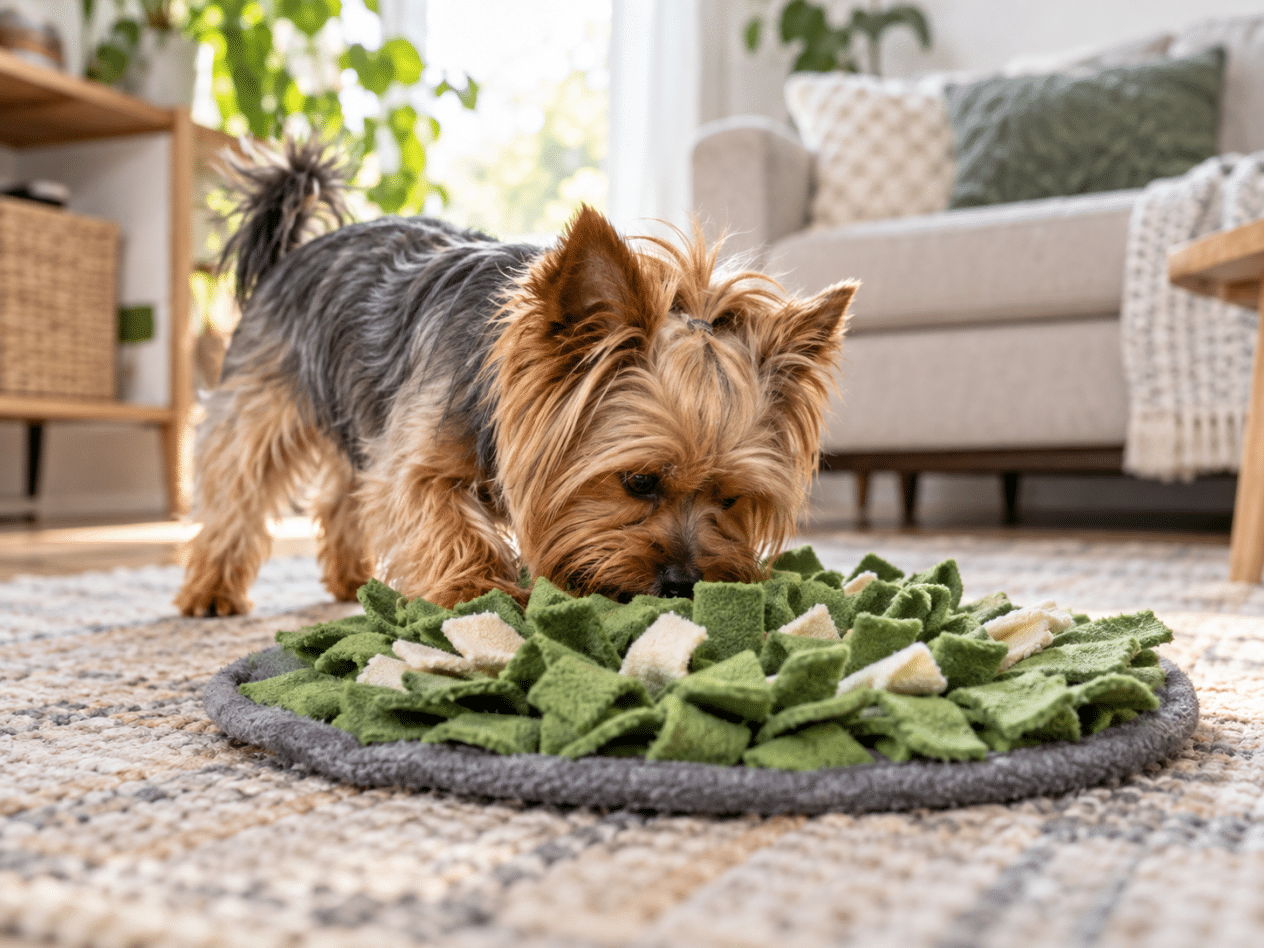
Start with a consistent routine. Walks, meals, playtime, and rest at roughly the same times each day make a dog’s life more predictable. At home, provide your Yorkie with a quiet, safe place where no one will disturb him. Search-and-find games, treat-dispensing toys, and simple tasks that help channel their energy will be helpful.
Get the dog used to being alone gradually. At first, the owner leaves for a few seconds and returns before the Yorkie starts to get anxious. The duration of the owner’s absence is increased slowly, depending on the dog’s state. You shouldn’t immediately leave a frightened dog alone for a long time in the hope that it will “get used to it.”
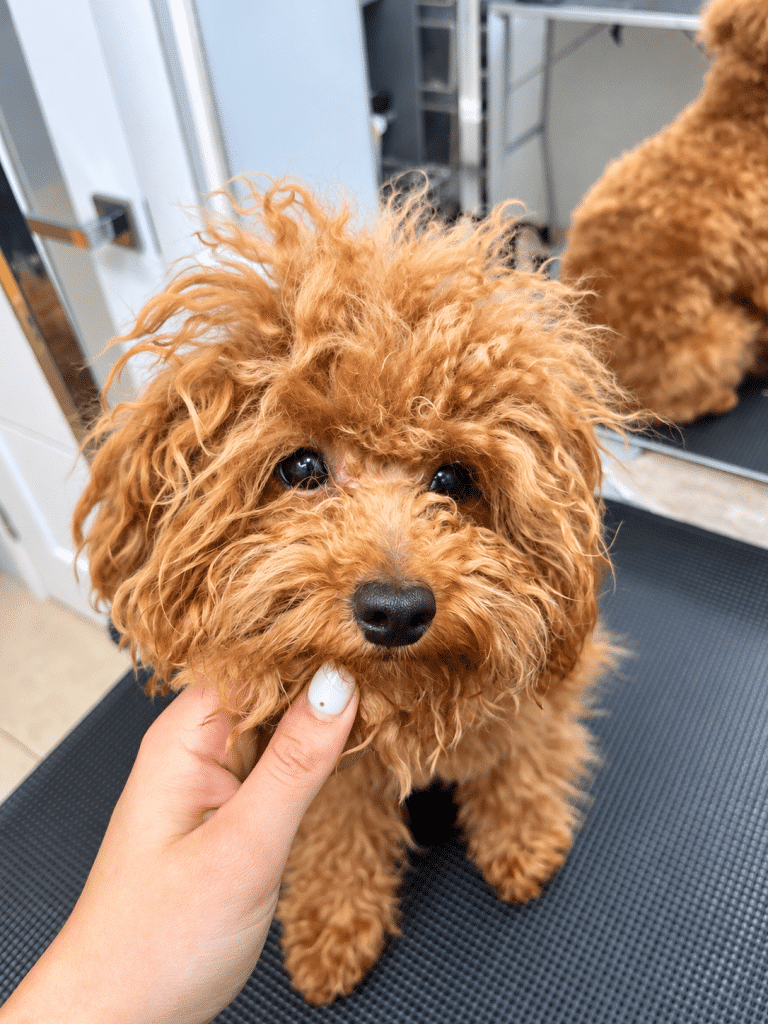
In the same way, the Yorkie is gradually introduced to brushing, bathing, drying, and the sounds of grooming tools. Calm behavior is encouraged with treats and praise, and the procedures should be kept very short at first. This approach helps foster a positive attitude toward regular grooming.
You must not punish a dog for barking, making a mess, or damaging items. Punishment intensifies fear and does not teach the animal how to behave properly. The American Veterinary Society of Animal Behavior recommends using reward-based training methods that are free from pain and intimidation.
If a Yorkie panics, injures itself, displays aggression, or cannot be left alone even for a few minutes, you should consult a veterinarian or a behaviorist. In complex cases, the veterinarian may combine behavioral therapy with medication. It is dangerous to give your dog sedatives on your own, especially those intended for humans.
Anxiety doesn’t disappear overnight, but consistency, patience, and the right approach can help your Yorkie feel more confident. The key is not to scold the dog for being afraid, but to teach it to react calmly to challenging situations.