Some dogs listen to the world with their ears pricked up, while others literally sweep the ground with them. Long dog ears may seem like a decorative whim of nature, but in many breeds they served a very practical purpose: they helped with hunting by directing scents from the ground straight to the nose.
Today, these dogs are more likely to track down a bag of treats than game, but their ears haven’t gone anywhere. Along with them have remained unique habits, expressive facial expressions, and the need for more attentive care.
Our selection features eight breeds whose ears are impossible to miss.
1. Bloodhound
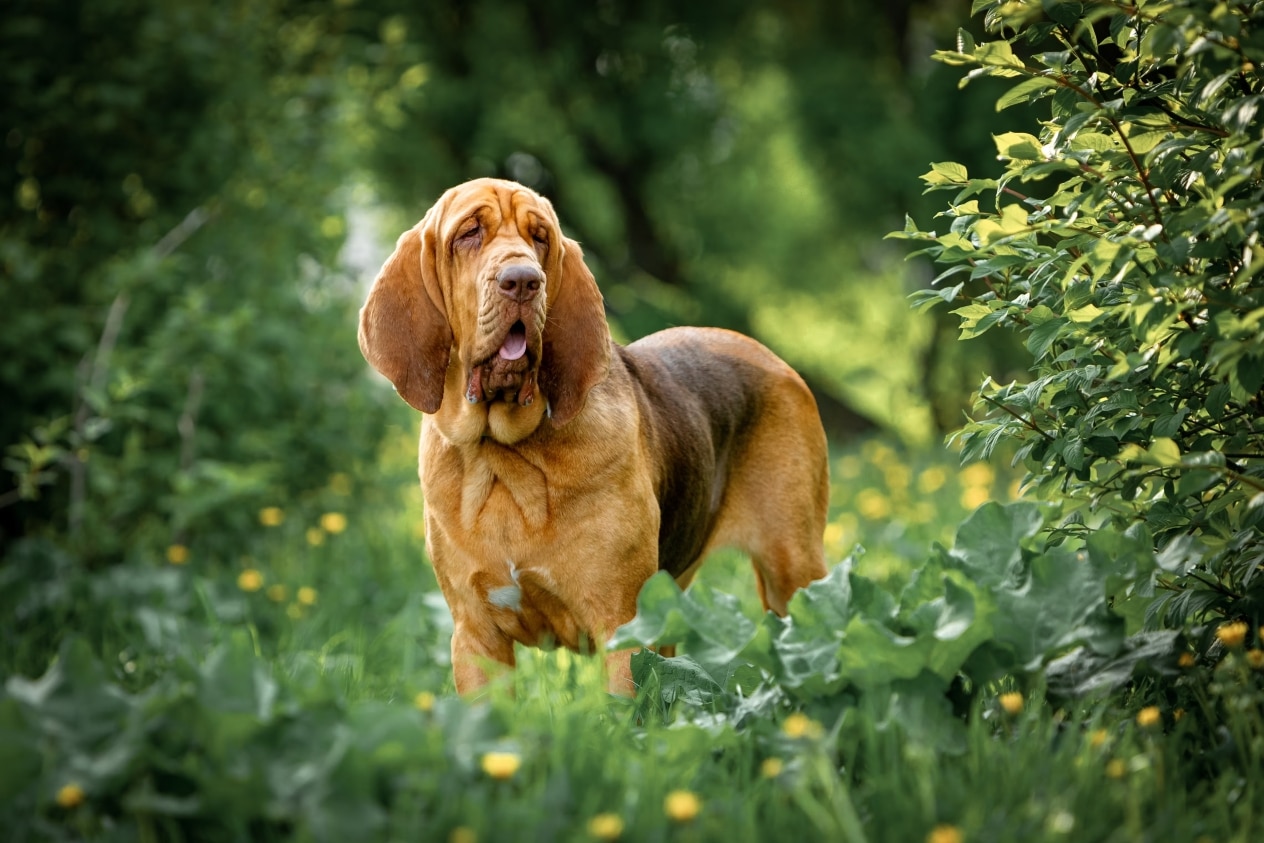
The Bloodhound’s gaze suggests that it knows something important about you but isn’t ready to share it just yet. The wrinkles on its muzzle, pensive eyes, and incredibly long, slender ears create the image of a melancholy philosopher. In reality, this is one of the most talented trackers in the dog world.
As it moves, the Bloodhound’s ears brush the ground, picking up scent particles. The skin folds help trap the scent near its nose, allowing the dog to follow an old trail for hours, almost completely oblivious to the world around it.
At home, the Bloodhound is gentle and patient, but its nose often makes decisions before its owner does. If the dog catches a tantalizing scent, the usual “come here” might suddenly lose its persuasive power.
Plus, its ears have a knack for ending up everywhere: in its water bowl, food bowl, mud, and even in its own mouth. That’s why owners often use special narrow bowls or soft snouts that support the ears while the dog is eating.
2. Basset Hound
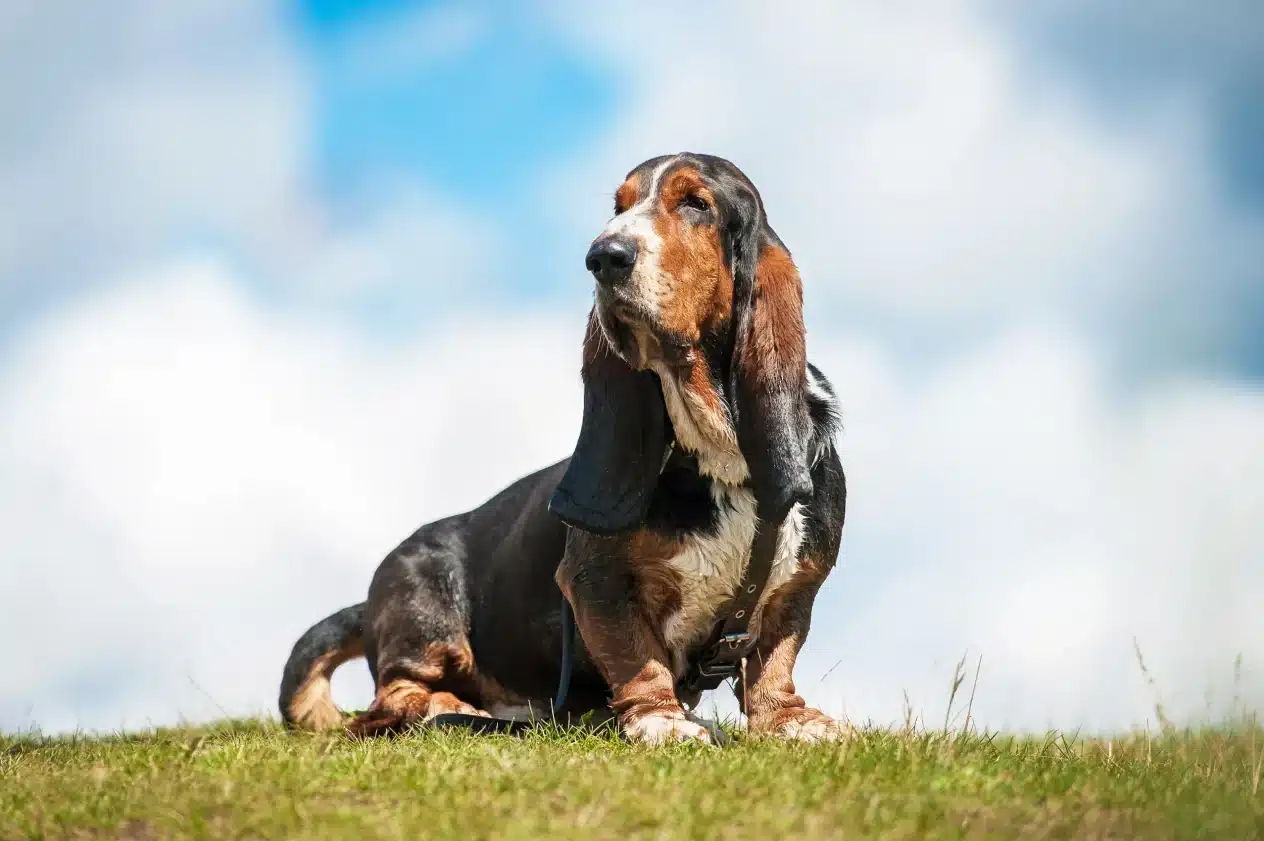
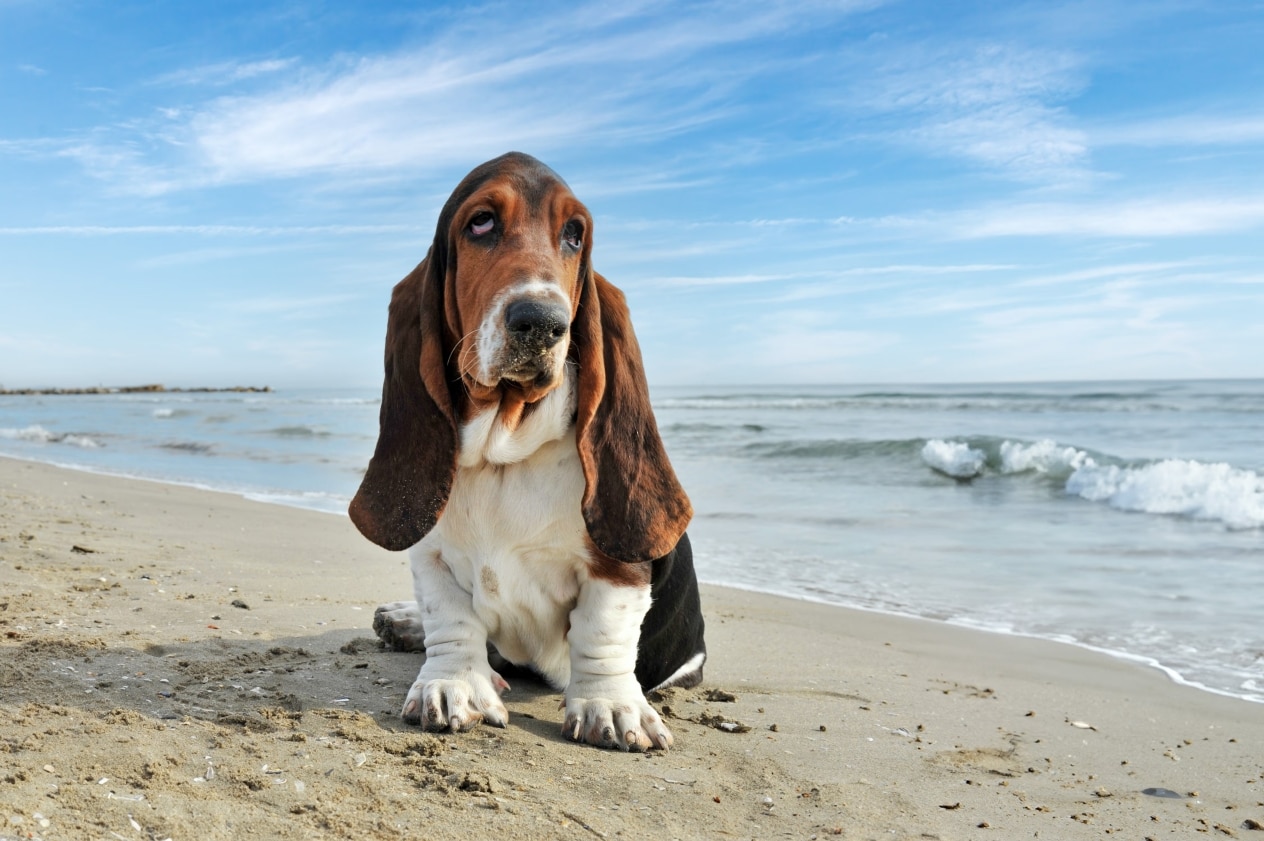
The Basset Hound looks as if it just woke up on a Monday and is already tired of the whole week. But behind its slow gait and melancholic expression lies a tenacious hound with a superb sense of smell.
Its ears are so long that they can drag along the grass during a walk. This is exactly what once helped the Basset Hound pick up a scent from a trail. Its short legs were also an advantage: it was easier for hunters to follow the dog on foot.
At home, the Basset Hound often acts like the boss. It hears a command perfectly, understands it, ponders it—and only then decides whether it’s worth the effort. At the same time, these dogs are usually very attached to their family, sociable, and don’t like being left alone for long.
The main thing to keep in mind regarding their care is keeping their ears clean. After a walk, they may bring home a small collection of leaves, dust, and dirt.
3. American Cocker Spaniel
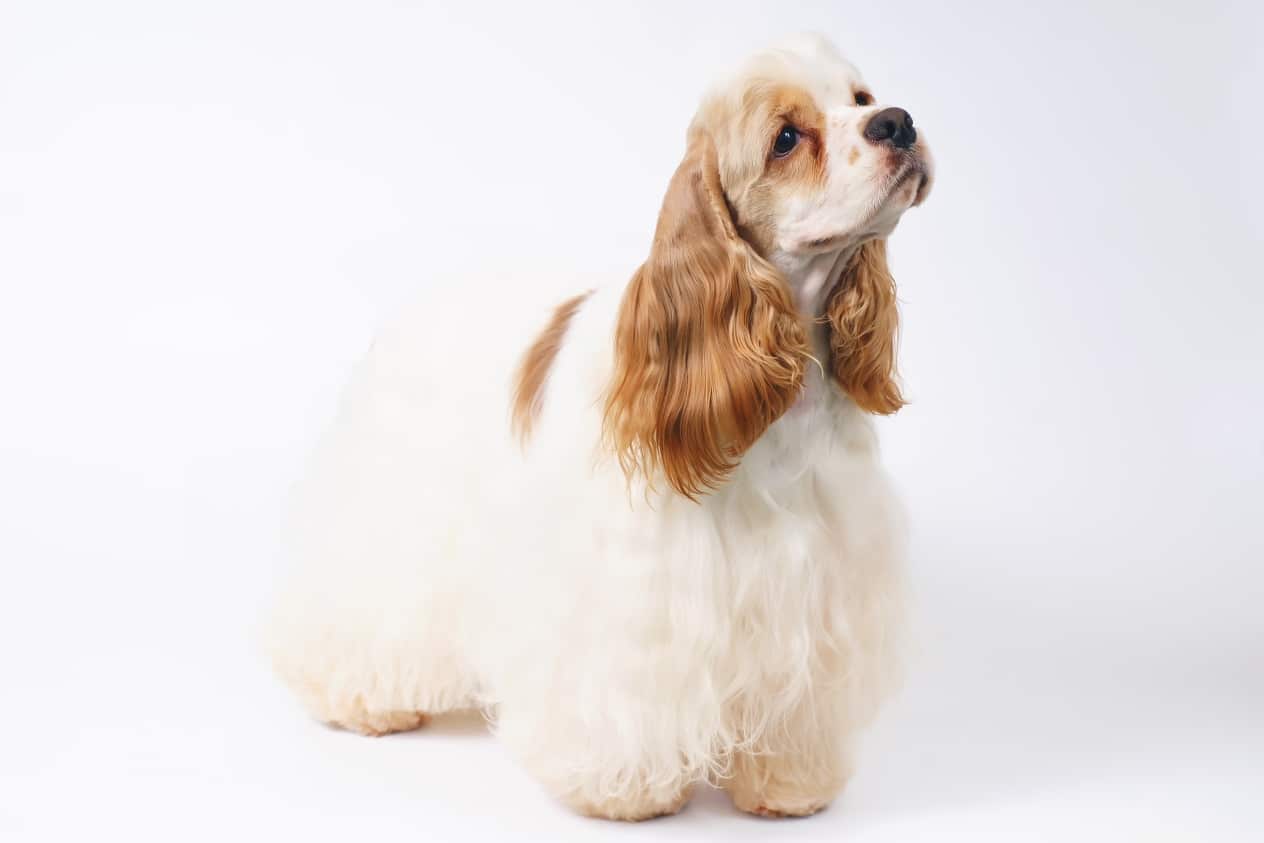
With a Cocker Spaniel, it’s hard to tell right away where the ear ends and the luxurious coat begins. The long ear flaps are covered in thick hair and resemble a festive hairstyle that’s always ready for a photo shoot.
However, such beauty requires regular grooming. The fur behind the ears easily mats due to friction, moisture, and constant movement. If you only brush the outer layer, a dense “felt-like” layer can gradually form underneath.
Cocker Spaniels are emotional, sociable, and very good at sensing a person’s mood. They’re not just couch potatoes, but active spaniels who need walks, playtime, and new experiences. Without enough activity, they’ll easily find their own ways to entertain themselves—which aren’t always approved by their owners.
When eating and drinking, the long hair on their ears gets into the bowl, so a snout guard for a Cocker Spaniel isn’t a fashion accessory—it’s a genuinely useful item.
4. Afghan Hound
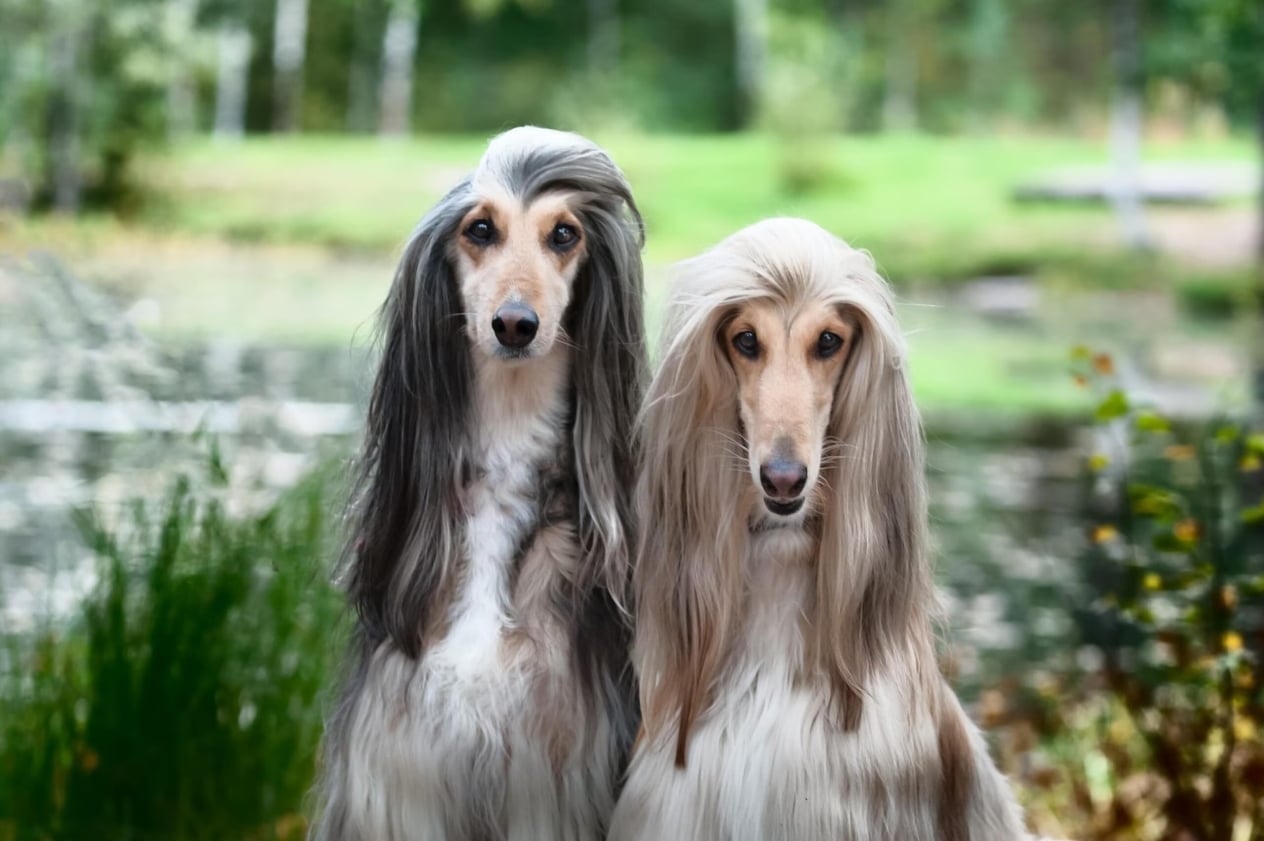
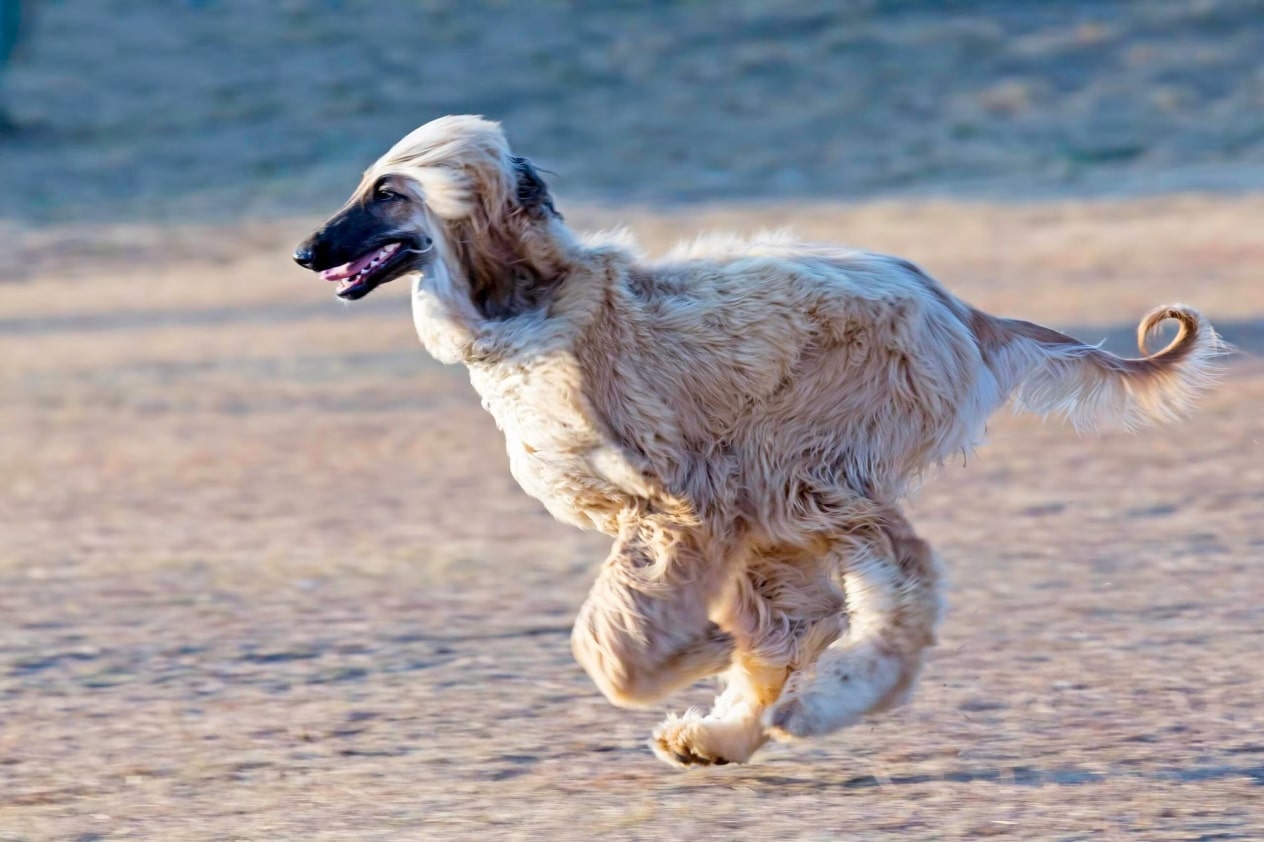
The Afghan Hound gives the impression of a creature that accidentally stepped out of the pages of an ancient legend and found itself in a modern apartment. Its long fur sways as it walks, and its fur-covered ears almost blend into its overall silhouette.
It’s important to understand: part of its striking length comes from the fur itself. The ear flaps don’t rival those of a Bloodhound, but thanks to the thick hair, they have an exceptionally expressive look.
Behind its regal appearance lies an independent hunting spirit. An Afghan Hound may love its family, but it won’t feel the need to prove its loyalty every minute. It can be funny, playful, and even a little eccentric—just not in front of everyone.
Ear care is part of the extensive grooming ritual. The ears should be carefully combed without pulling the hair, and protected from food and excess moisture.
5. Coonhound
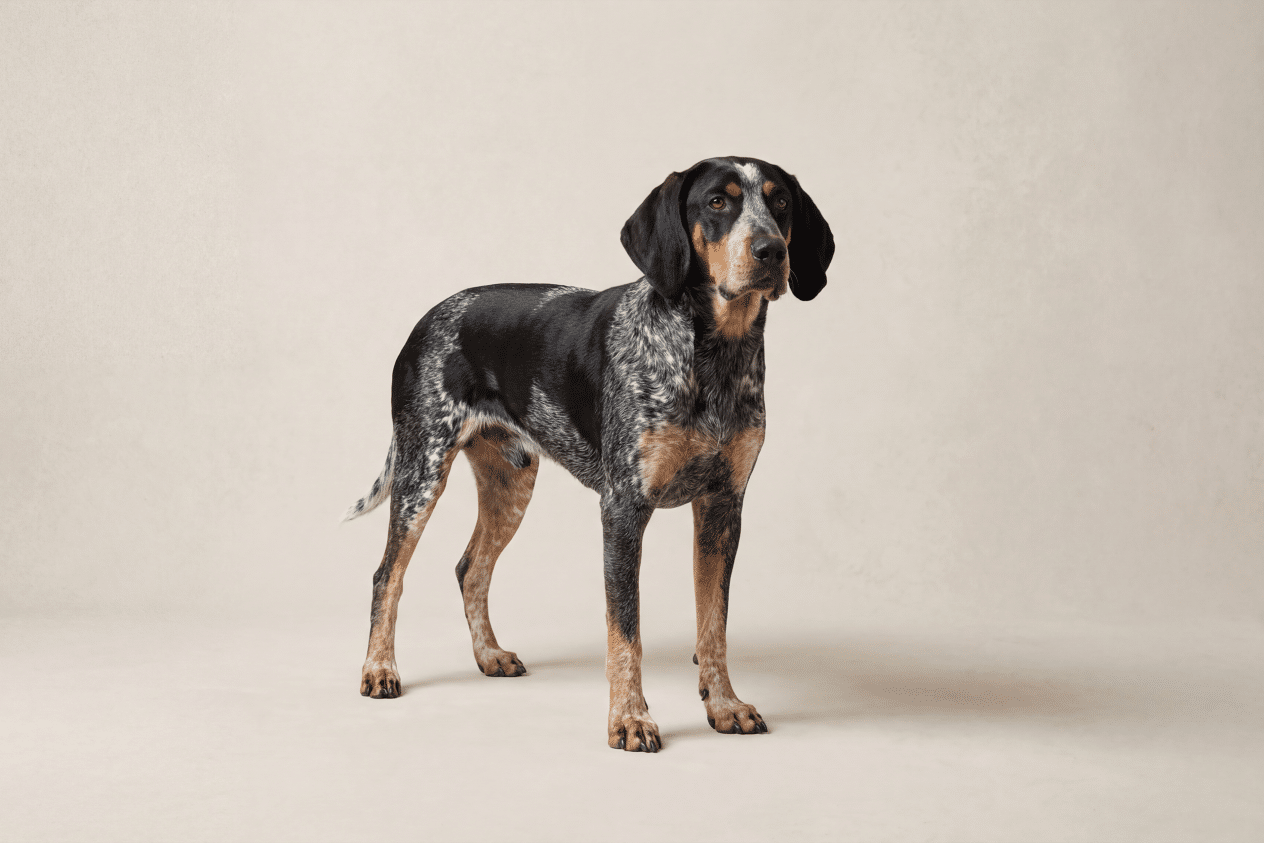
Kunghounds are a group of American hunting dogs bred for long-distance pursuit of prey by scent. The black-and-tan Coonhound looks particularly impressive: tall, strong, with distinct tan markings and long ears that flutter near its muzzle while running.
This is a vocal dog. Its characteristic, drawn-out sound is hard to mistake for an ordinary bark. Hunters used to rely on its voice to pinpoint the dog’s location. In a city apartment, such a “warning system” might give you a chance to get to know all your neighbors.
The Kunghound is hardy and needs more than just short trips outside; it requires plenty of exercise and mental stimulation. Search games, new routes, and scent-detection tasks are better at tiring it out than aimlessly running in circles around the yard.
The Kungound’s ears are thin and have almost no ventilation, so after a bath or a walk in the rain, they should be dried thoroughly.
6. English Springer Spaniel
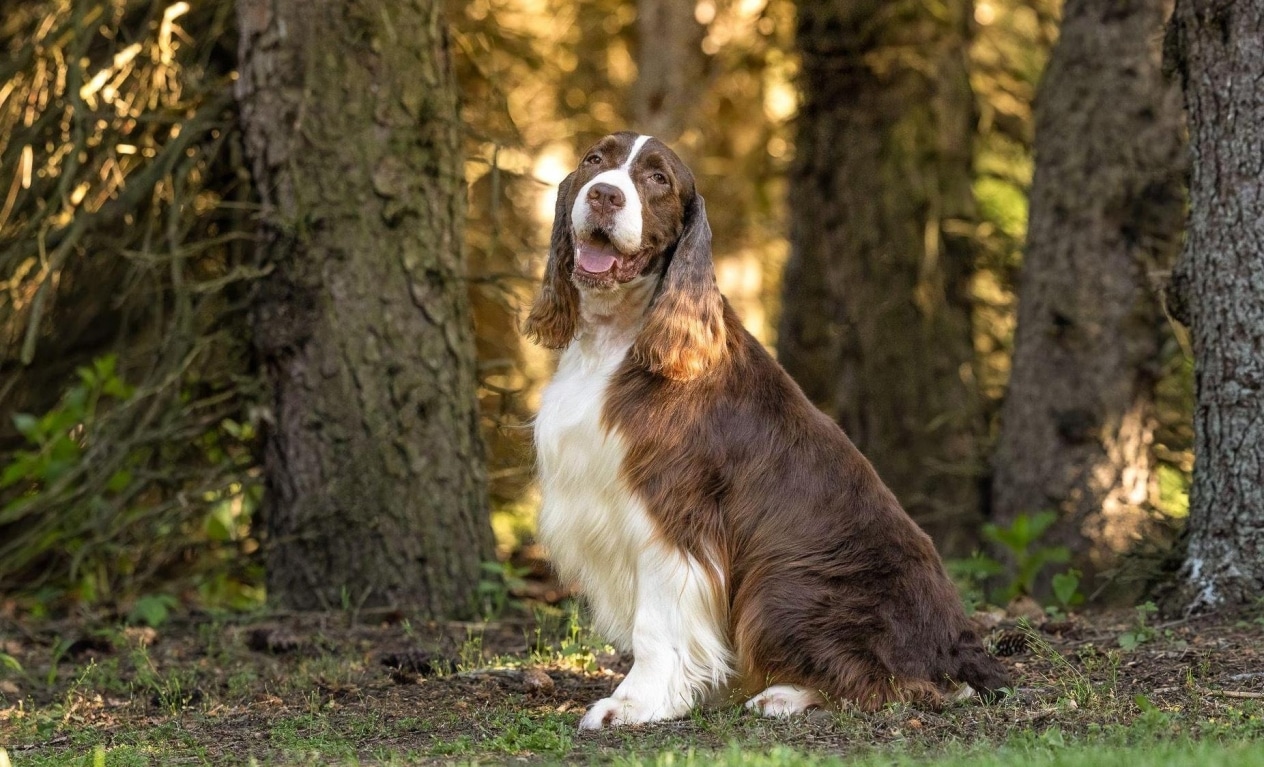
Its ears don’t drag on the ground as dramatically as a Basset Hound’s, but they are long, wide, and adorned with wavy fur. When a Springer runs, it seems as though its ears lead a separate, extremely active life.
The breed’s name is linked to its historical hunting work: the dogs would flush birds from their hiding places, forcing them to take flight. Hence their alertness, enthusiasm, love of movement, and desire to constantly explore.
A Springer Spaniel rarely settles for being just a pretty backdrop in the home. It needs activities, interaction, and the opportunity to use its intelligence. In return, the owner gets a cheerful, sensitive, and people-oriented companion.
The fur under the ears requires special attention: mats form there quickly, especially after active walks in the grass.
7. Beagle
A Beagle may seem like a small and easygoing dog—until it catches an interesting scent. At that moment, the outside world, the owner, and all agreements temporarily take a back seat.
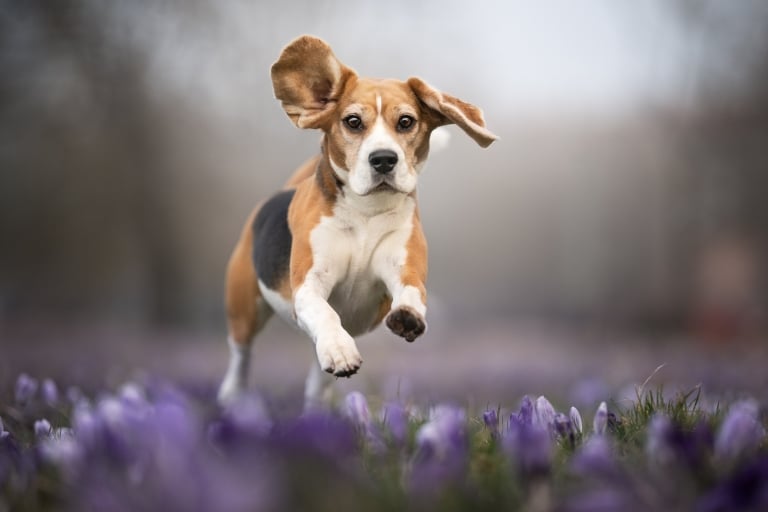
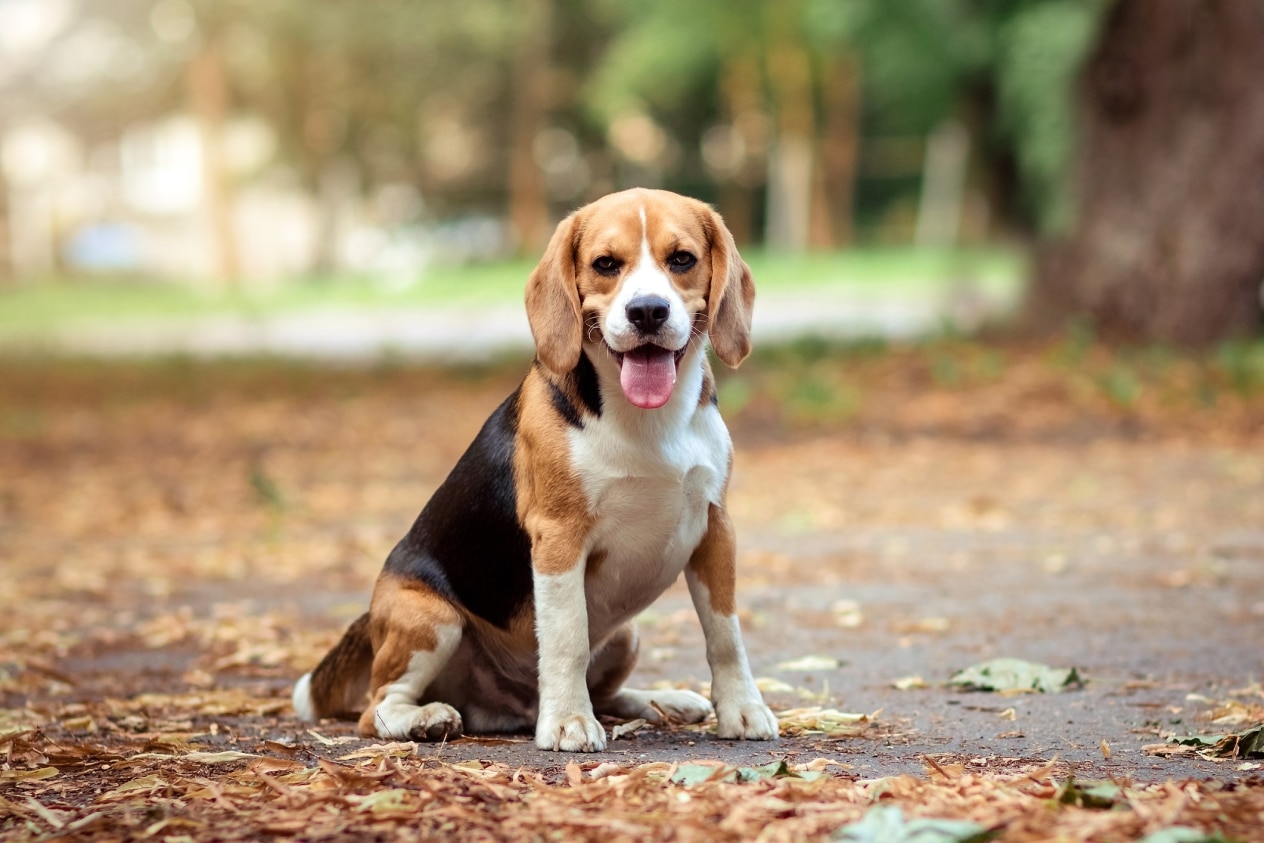
Its wide, rounded ears help direct scents toward its nose. There’s a simple way to estimate their length: if you gently pull an ear forward, it usually reaches about to the tip of the nose. Of course, you should perform this test without pulling or causing discomfort to the dog.
Beagles are sociable, spirited, and often very resourceful when it comes to food. They’re capable of opening a bag, finding a package left out unnoticed, or convincingly explaining with a look that no one has fed them at all today.
Despite their short coat, a Beagle’s ears require regular attention. After walks, they may accumulate dust, grass seeds, and small plant particles.
8. Cavalier King Charles Spaniel
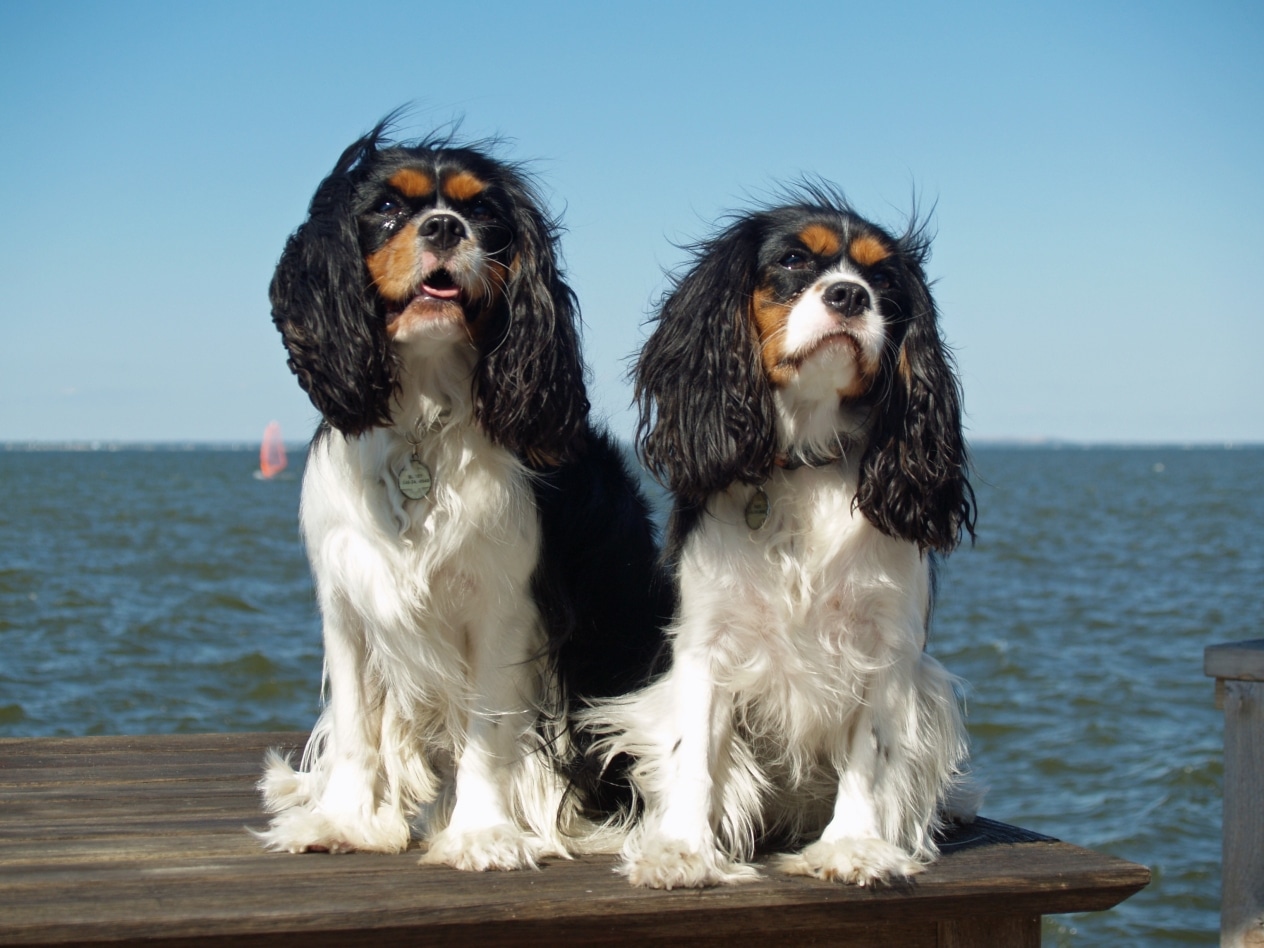
The Cavalier rounds out this list not because of the record-breaking anatomical length of its ears, but thanks to their luxurious appearance. Their long, silky coat creates a lush frame around their muzzle and gives the dog that slightly childlike expression that’s hard to resist.
These spaniels are usually very gentle, sociable, and attached to people. They easily transition from an active walk to relaxing by their owner’s side, but they do not do well as dogs that are left alone for long periods of time.
The fur on their ears requires regular grooming. It tangles particularly quickly behind the ears—an area that’s easy to miss during a quick brushing.
Why do long-eared dogs have ear problems more often?
When the outer ear tightly covers the ear canal, air circulation inside is reduced. After bathing, swimming, or walking in the rain, moisture can linger there longer. A warm, moist environment creates ideal conditions for yeast and bacteria to multiply excessively.
This doesn’t mean you need to clean your dog’s ears every day “as a preventive measure.” Cleaning them too often or too aggressively can also irritate the skin. The best practice is to regularly inspect your ears and pay attention to any changes.
You should be concerned if you notice:
- a strong or unusual odor;
- skin redness;
- dark, yellow, or moist discharge;
- constant ear scratching;
- frequent head shaking;
- painful reaction to touch;
- tilting the head to one side.
In such cases, do not use ear drops at random or try to deeply clean the ear canal with cotton swabs. The cause may be inflammation, parasites, an allergy, a foreign object, or another issue that must be diagnosed by a veterinarian.
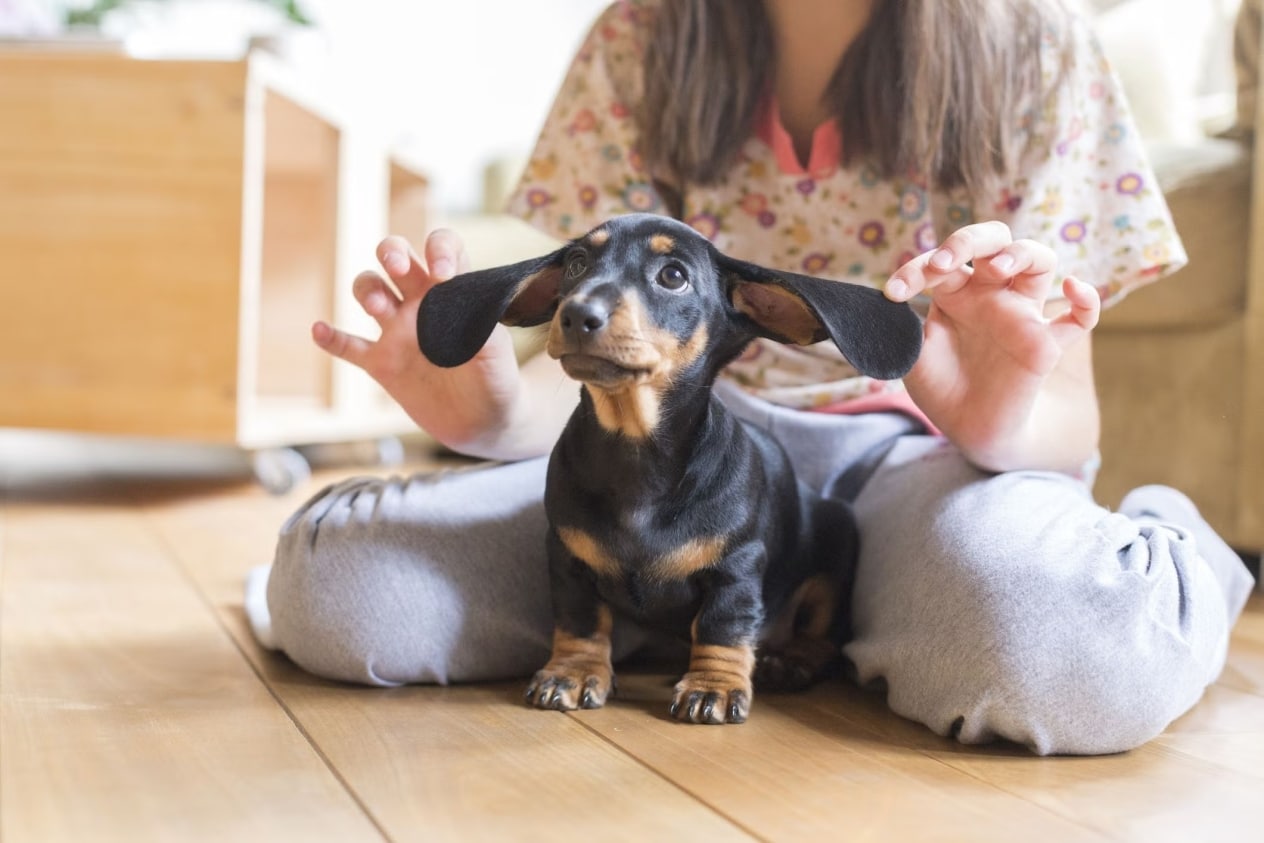
How to care for long ears?
The main rule is not to turn grooming into a struggle. It’s best to gradually get your dog used to ear checks, brushing, and drying, combining these procedures with calm praise and treats.
After a walk, check to see if burrs, twigs, or grass seeds have gotten caught in their fur. After a bath, gently dry the outer part of the ear. If your dog’s ears get in the way of eating, a narrow bowl or a special snout cover can help. And the fur behind the ears should be brushed not just on top, but layer by layer—tangles most often hide right next to the skin.
During grooming, it’s important to do more than just make those long ears look beautiful. Professional care helps you spot irritation, dirt, matted fur, or other changes early on—issues that can easily go unnoticed beneath that lush “ear attire.”
Ears That Tell the Breed’s Story
Long ears aren’t just a funny physical feature. In hounds, they worked in tandem with the nose; in spaniels, they became part of a recognizable hunting type; and in toy breeds, they’ve turned into a true natural hairstyle.
However, whether they resemble the velvet ribbons of a Bloodhound, the curls of a Spaniel, or the silky hair of an Afghan Hound, these ears require attention. After all, they look their best not when they’re setting length records, but when they’re clean, healthy, and fluttering carefree toward new adventures.