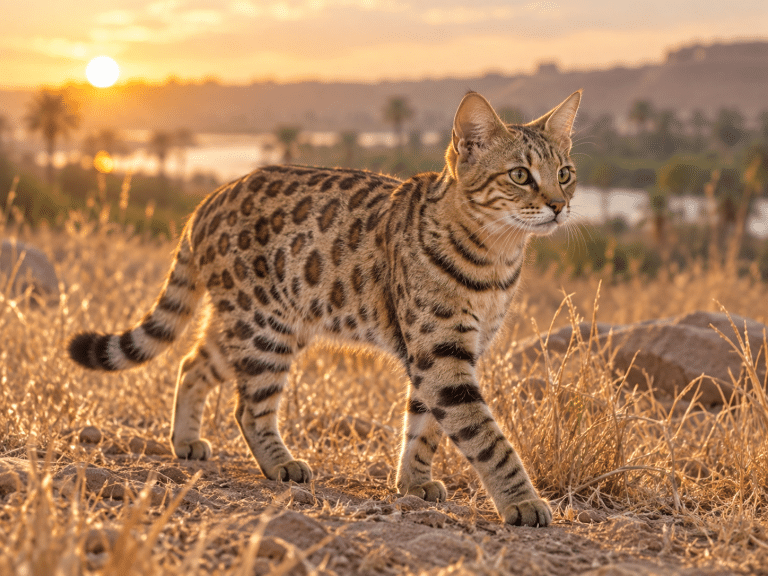
The Nillian cat, also known as the Nubian wildcat, is a rare natural variety of domestic cat that originated in Egypt. These animals lack ostentatious ornamentation: their beauty lies in their graceful build, attentive gaze, and appearance reminiscent of the cats depicted in ancient Egyptian frescoes.
Origin
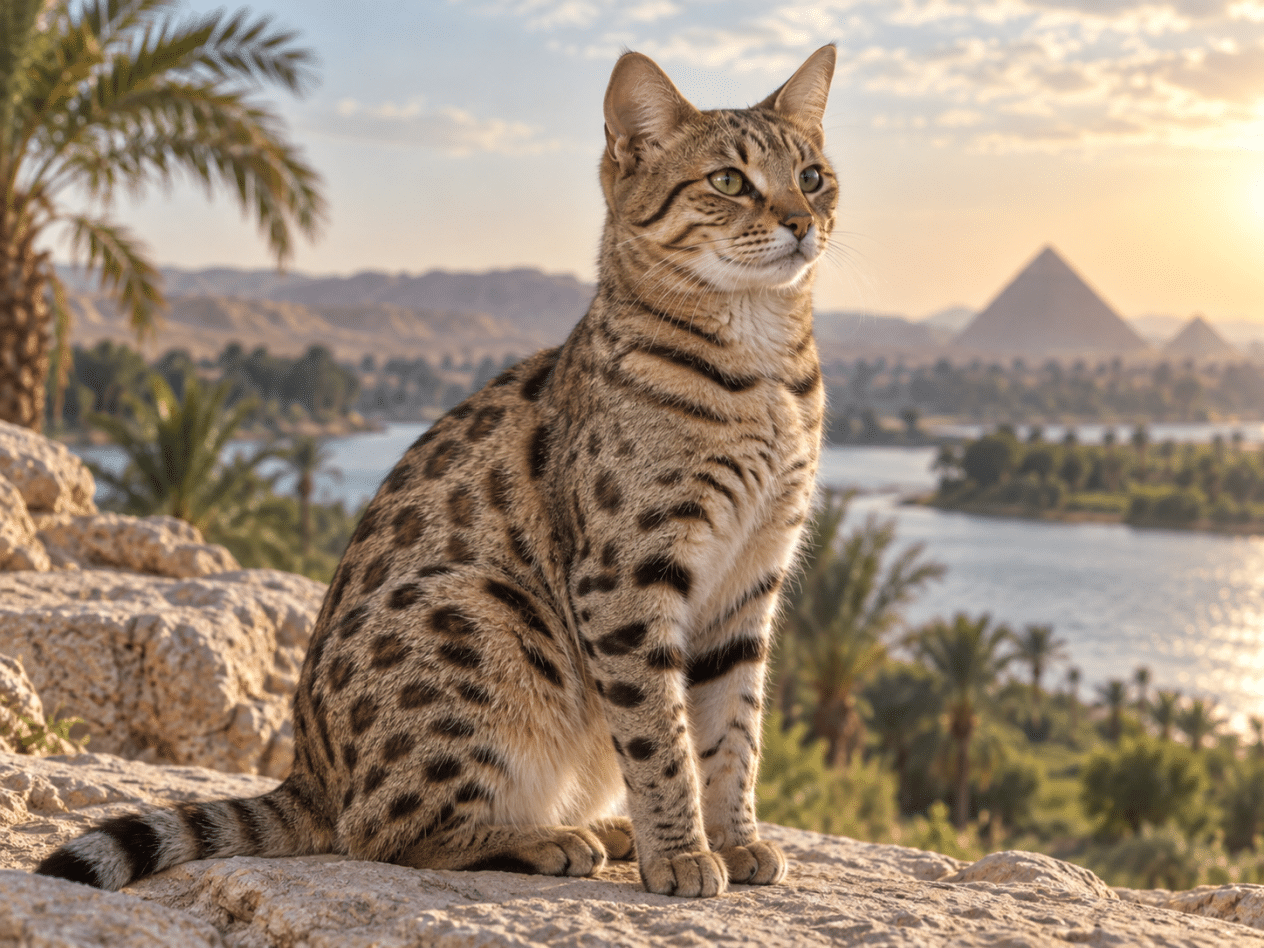
The Nile Valley is considered the birthplace of these cats. For many generations, they lived alongside humans, hunted rodents, and adapted to Egypt’s hot climate. Ancient DNA studies confirm that Egypt played an important role in the spread of domestic cats around the world. However, it is not yet possible to prove that the modern Nile cat is a direct descendant of the very animals that were revered during the time of the pharaohs.
The Nile cat is sometimes confused with the Egyptian Mau. However, the Mau is a standardized breed with specific requirements for appearance and coat color. Nile cats remain a natural, native population and therefore can vary significantly from one another. Major felinological organizations do not yet have a single, approved standard for them.
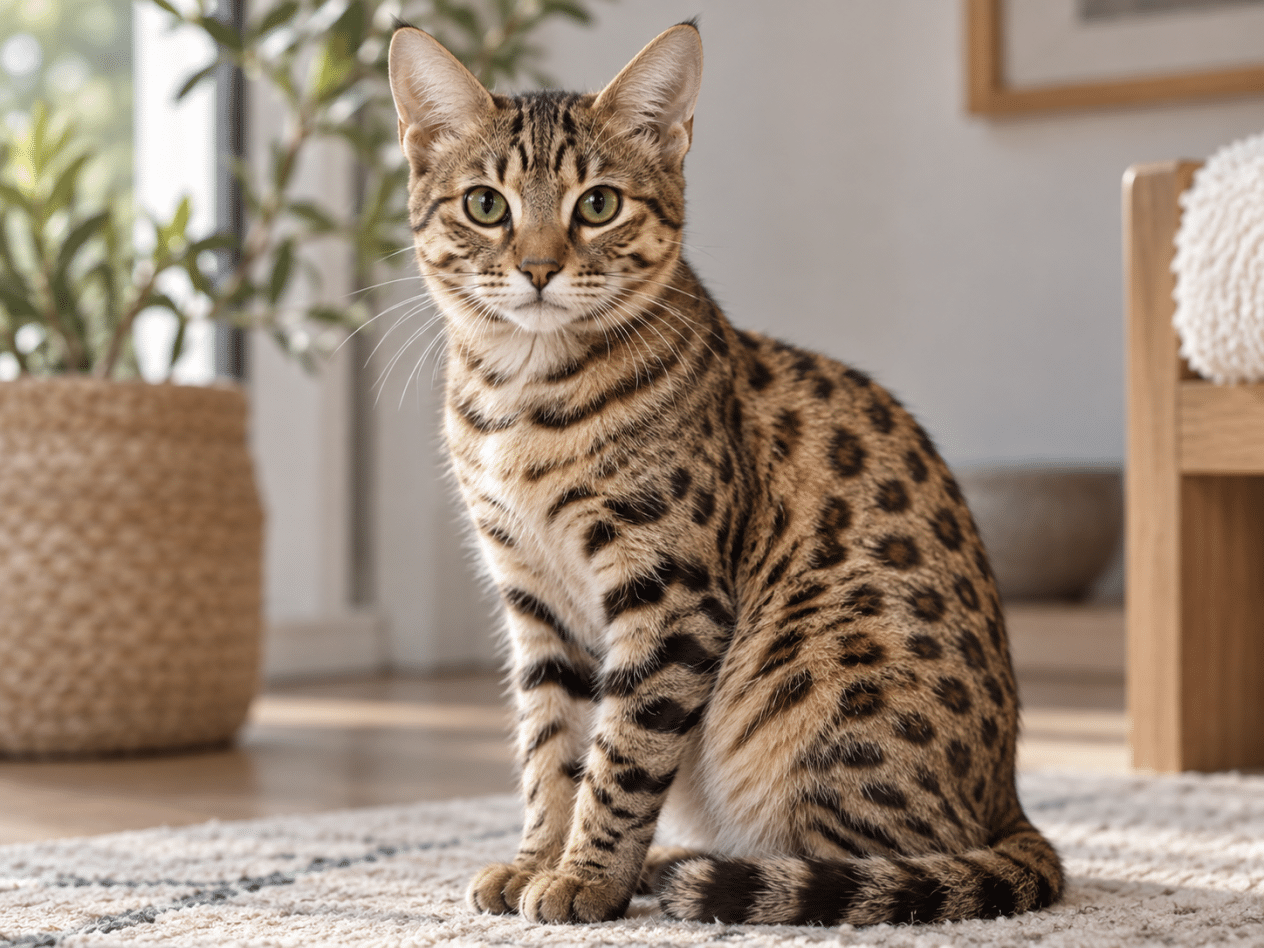
What does a Nile cat look like?
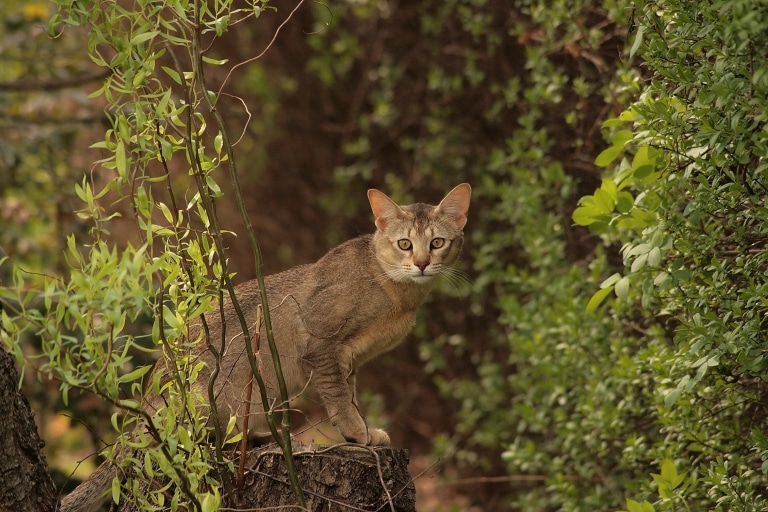
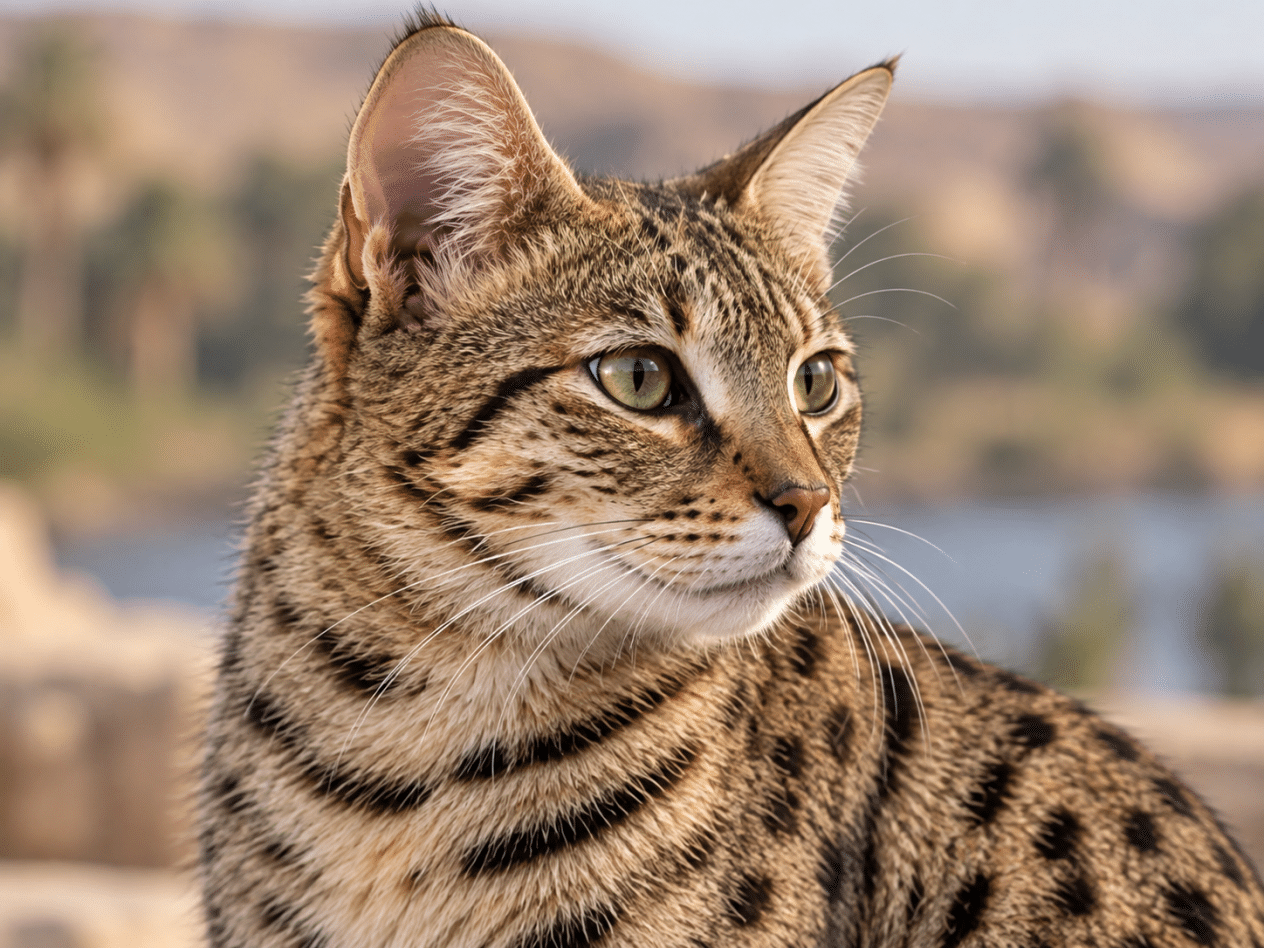
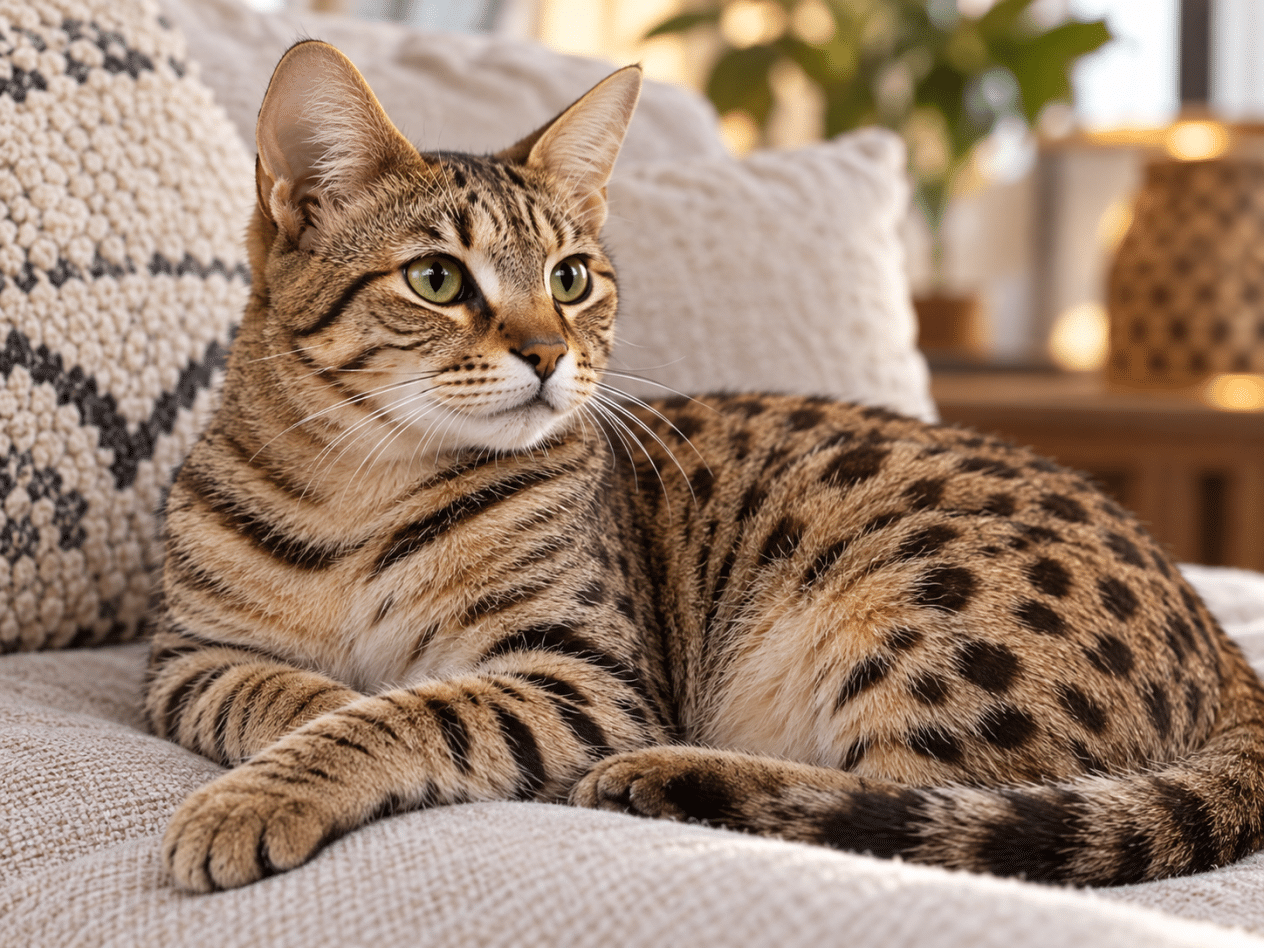
Most often, they are slender, medium-sized cats with long legs, a supple body, large ears, and almond-shaped eyes. Thanks to this build, they appear light, graceful, and at the same time strong.
Their coat is generally short and lies close to the body. The coat color can be spotted, striped, solid, or a combination of colors. It is precisely this diversity in appearance that distinguishes Nile cats from breeds developed according to strict standards.
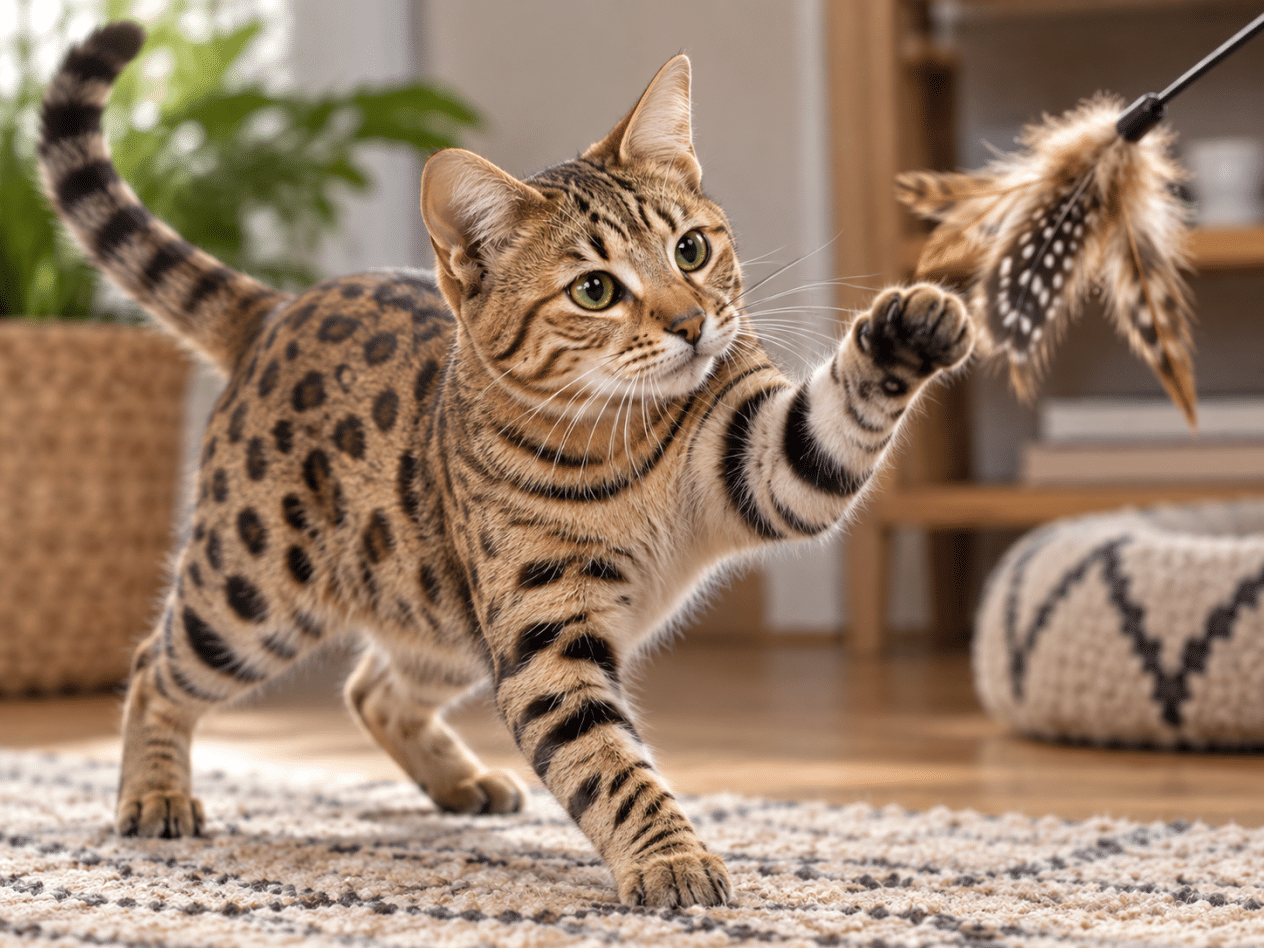
Nile cats are typically active, intelligent, and observant. They are good jumpers, love high places, and explore their surroundings with curiosity. At home, such a pet will need toys, scratching posts, shelves, or a tall play structure. Their temperament depends largely on socialization. Cats that have interacted with people since childhood often become affectionate, loyal, and sociable. Animals rescued from the streets may initially be afraid of strangers, loud noises, and being touched. They need patience, a calm environment, and time to begin trusting their new family.
Care Guidelines
It’s enough to brush their short coat about once a week, and a little more often during shedding season. Avoid bathing your cat unless necessary. It’s also important to regularly check their ears, eyes, and teeth, and to trim their claws. An active Nile cat needs a balanced diet with sufficient animal protein. Portion size should be determined based on the cat’s age, weight, activity level, and your veterinarian’s recommendations.
If the cat was rescued from the street or brought from another country, it needs a full veterinary examination, parasite treatment, vaccinations, and the necessary tests. At home, it’s best not to let the cat roam freely outdoors. A safe, mesh-protected balcony or walks on a leash will allow it to explore the world without unnecessary risk.