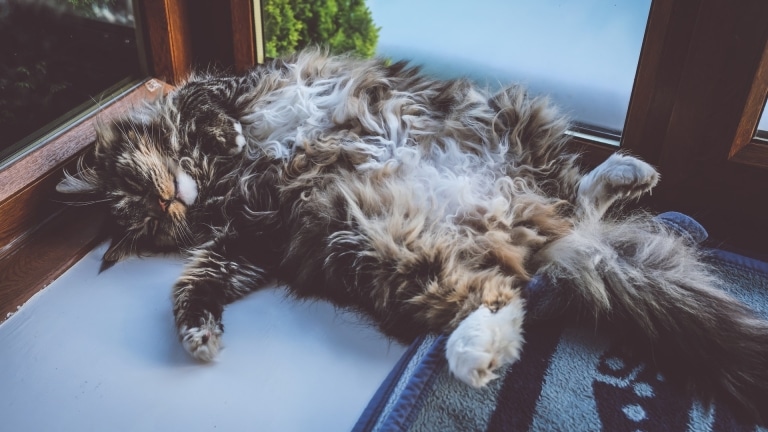
The cat suddenly collapses right in the middle of the room, rolls onto its back, and starts rolling from side to side. It seems like just another moment—and it’ll ask to have its belly rubbed. But the moment you reach out, all four paws and teeth might come into play.
Rolling on its back isn’t just one specific command for a person—it’s an entire feline language. This is how your pet can show trust, demand attention, leave its scent, or simply enjoy the pleasant sensations.
The cat feels safe or wants your attention
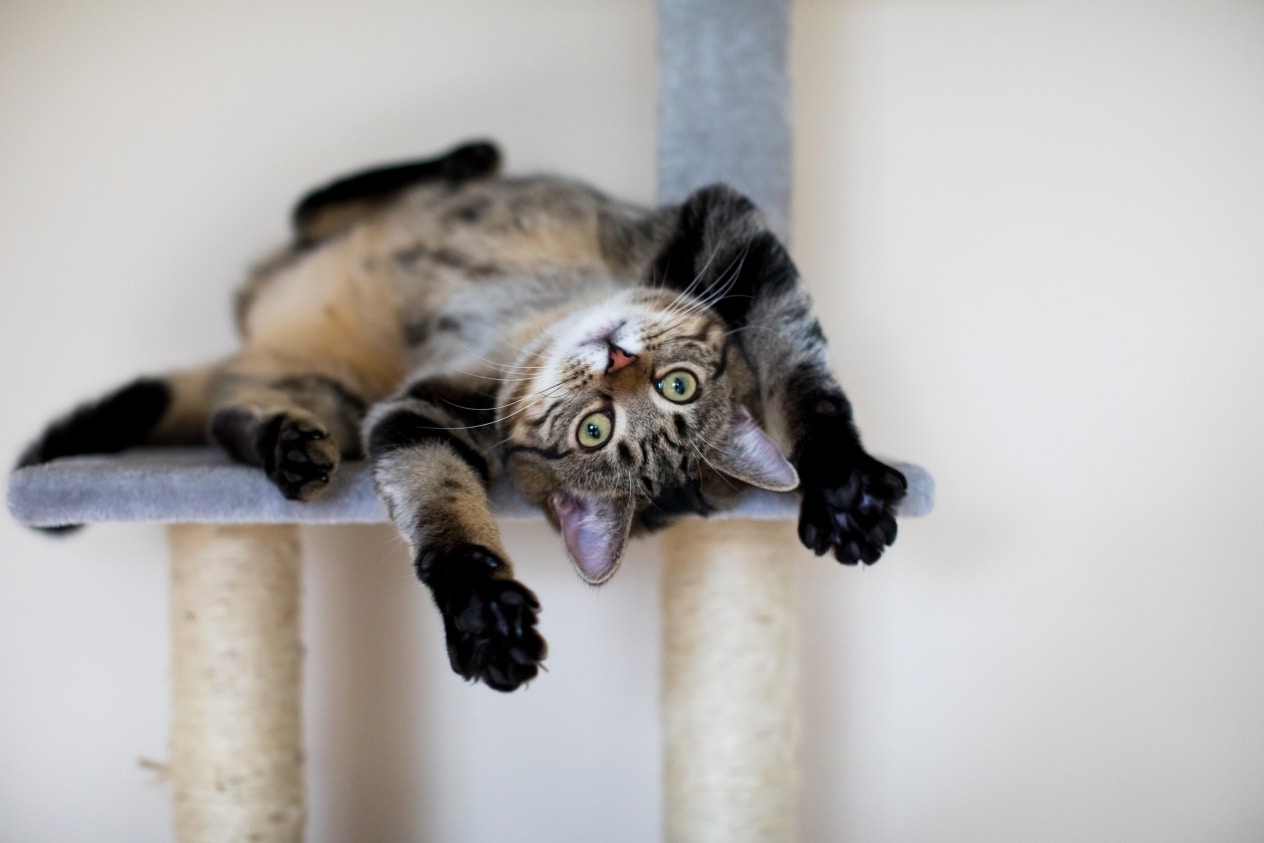
The belly is one of the most vulnerable parts of a cat’s body. When a cat lies calmly on its back next to a person, it’s showing that it doesn’t expect any danger. This is especially true if its body is relaxed, its paws are loosely curled, its eyes are slightly half-closed, and its tail lies still.
Cats often put on this kind of show for their owners: they flop down at their feet, roll over, stretch out, and watch their reaction closely. This is how they might say hello, invite you to play, or remind you that it’s time to pay them some attention.
However, an exposed belly doesn’t always mean permission to pet it. For many cats, this is merely a sign of trust, not an invitation to be touched. If, in response to your hand, the cat wraps its front paws around it, pushes it away with its hind legs, or bites, it hasn’t “changed its mind”—you simply misread the signal.
It’s usually safer to scratch their cheeks, chin, or the area near their ears. And leave their belly alone unless the cat shows that it enjoys it.
A cat rubs against things, scratches, or leaves its scent
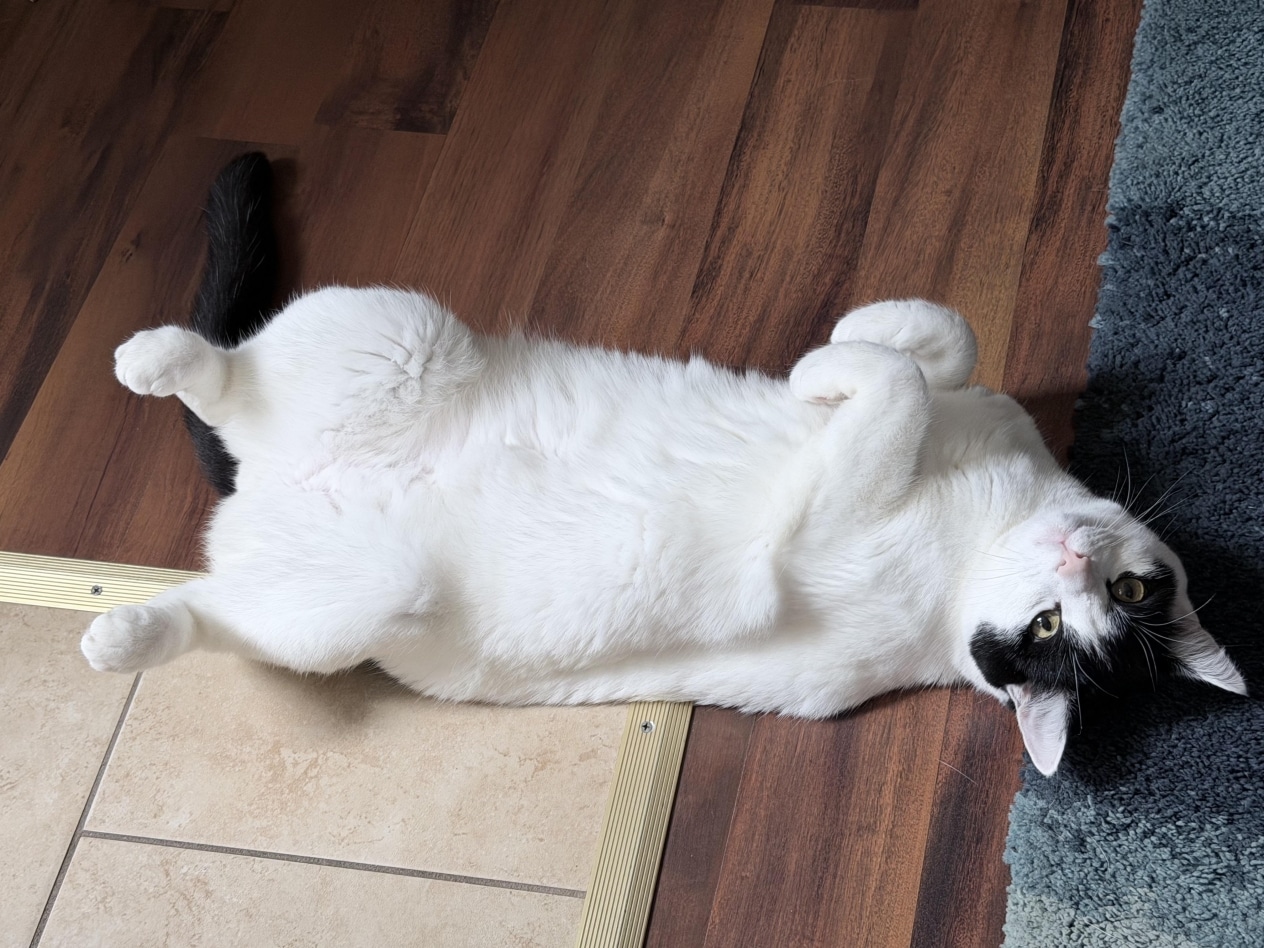
Cats have scent glands on their backs and sides. By rolling around on the floor, a rug, or the ground, the animal leaves its own scent and makes the space feel more “like its own.” This scent is almost imperceptible to humans, but for a cat, it’s an important part of communicating with the world around it.
Rolling around can also just be pleasant. A hard or slightly rough surface massages their back and helps them scratch spots that are hard to reach with their tongue. Some cats especially love warm floors, sun-warmed ground, or a freshly laid-out clean rug—preferably right when the owner is trying to smooth it out.
After coming into contact with catnip, rolling around can become much more vigorous. The cat rubs its face, rolls around, purrs, and grabs a toy with its paws. This reaction usually doesn’t last long and isn’t dangerous.
In an unspayed cat, frequent rolling on the floor, loud meowing, arching the back, and holding the tail to the side may be signs of being in heat.
At the same time, constant, compulsive rolling should not be ignored. If the cat also scratches frequently, licks one spot, pulls out fur, or has redness on the skin, the cause may be parasites, allergies, or irritation. And if she’s rolling around, meowing in pain, unable to find a comfortable position, or behaving unusually, you should consult a veterinarian.
The cat has gone into heat
Unspayed cats especially often roll on their backs and writhe on the floor during heat. This is a sign of hormonal changes and the animal’s readiness to mate.
Other signs usually appear as well: the cat meows loudly and drawn-out, becomes extremely affectionate, rubs against furniture and your legs, raises its hindquarters, and holds its tail to the side. She may also try to run out of the house in search of a male cat, so it’s especially important to make sure windows and doors are closed during this period.
Conclusion
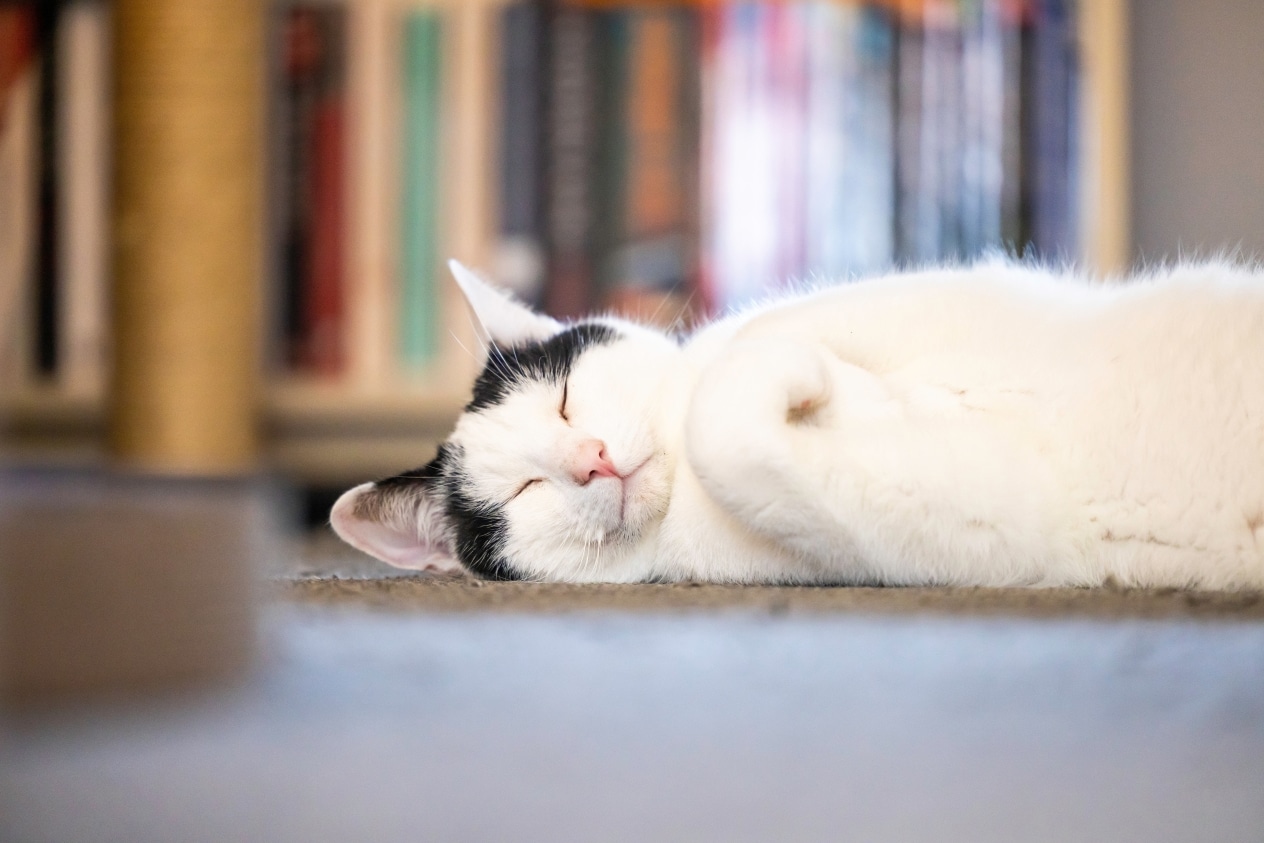
Most often, a cat rolls onto its back because it feels calm, wants to play, is seeking attention, or is marking its territory. This is normal behavior if the animal looks relaxed and acts as usual.
The main thing is not to interpret every exposed belly as an invitation to pet them. Sometimes it’s a genuine sign of trust, sometimes a request to play, and sometimes just a cat’s way of saying, “I’m comfortable here—don’t bother me.”