Imagine this scene: a clown solemnly announces a difficult trick, but the dog grabs the prop he needs and runs off. The performer catches up to him, the audience laughs, and a moment later the dog returns and helps finish the act. The audience didn’t just see a “fetch” command. They saw a little story in which the animal has its own role.
This is what makes a circus performance with animals so special. A dog can be an agile partner to an acrobat or a playful “rival” to a clown. And a cat can keep the entire audience on the edge of their seats, waiting for a single leap. Their actions become part of the storyline that the performer acts out before the audience.
How Animals Became Part of the Circus
The origins of the modern circus are linked to equestrian performances. In 1768, Philip Astley began performing stunts on horseback, and later acrobats, clowns, and other animals were added to the program.
Horses helped create spectacular movement in the large arena. With dogs and cats, it was possible to create scenes that felt more intimate to the audience. People recognize a dog excitedly chasing a ball or a cat that first decides to sniff out the props. In the arena, familiar behaviors take on new meaning: the performer sets the scene, and the animal plays its part within it.
A dog can perform an entire scene
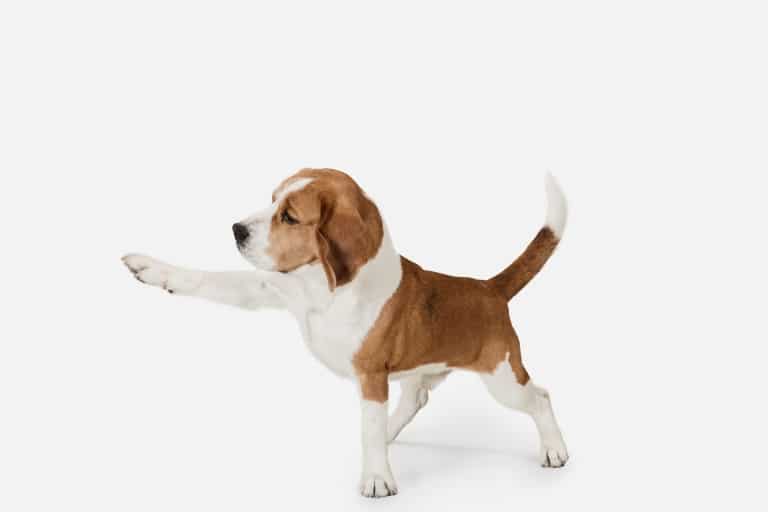
A dog quickly runs to a partner, jumps over an obstacle, catches an object, or switches places with other dogs. But the jump itself lasts only a second. For it to become a routine, the performer must weave it into the story.
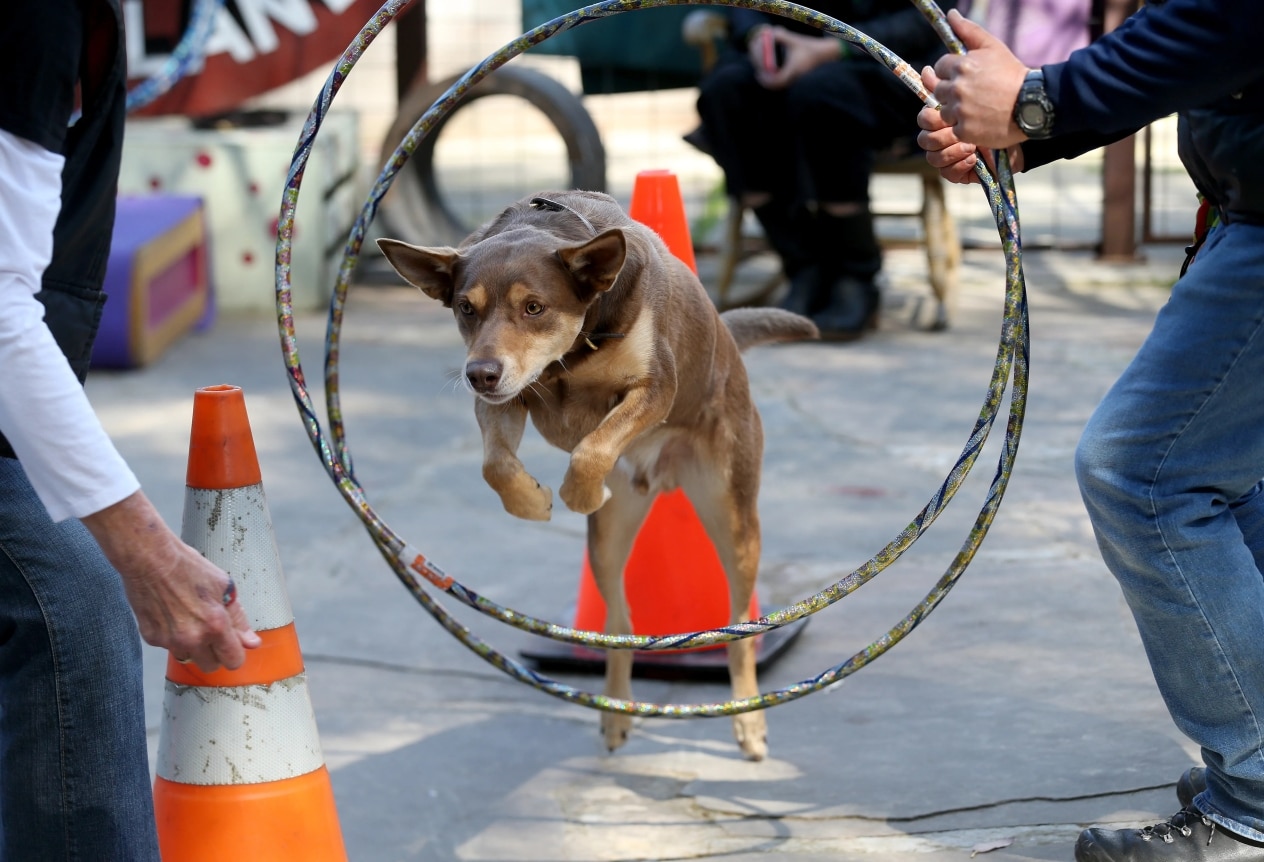
For example, a dog easily jumps through a hoop. A clown tries to imitate the movement, gets awkwardly stuck, and the dog runs around him and jumps again. It’s no longer the height of the jump that amuses the audience: in this scene, the dog has proven to be more agile than the human. The joke consists of several rehearsed actions by the animal and the performer’s reaction to them.
In an acrobatic act, the dog’s role may be different. While the person prepares for their move, the dog runs through obstacles and keeps the pace of the performance. A group of dogs can turn a sequence of steps, turns, and jumps into a dance. Here, the animals help the performers lead the act: they set the rhythm, create surprises, and capture some of the audience’s attention.
Why a cat act looks different
A cat’s act can hinge on a single precise action. The cat walks along a path, jumps onto a pedestal, touches a bell or a key with its paw, or hops onto a skateboard. It all happens quickly, but the audience has time to feel the anticipation: will it make it or not? Will it jump now or in a moment?
It’s a common misconception that cats can’t be trained to perform such actions. In fact, using a clicker and rewards, cats are taught to move to a specific spot, go through a hoop, and ring a bell. At the same time, the specific animal’s personality matters: one might be more interested in jumping, while another prefers to explore objects and touch them with its paw.
The performer in such a routine leaves room for a pause. They show an object and wait for the cat to move; the entire audience waits along with them. Even a brief hesitation can be incorporated into the routine as part of the performance. It is the interaction between the human and the cat—not the complexity of any single trick—that makes the performance interesting.
Conclusion
We love our pets for those quiet evenings spent together on a blanket, but their capabilities don’t end there. They amaze us in all sorts of ways, and the circus arts are one of the most striking examples: dogs and cats take the stage and bring joy to the whole world.