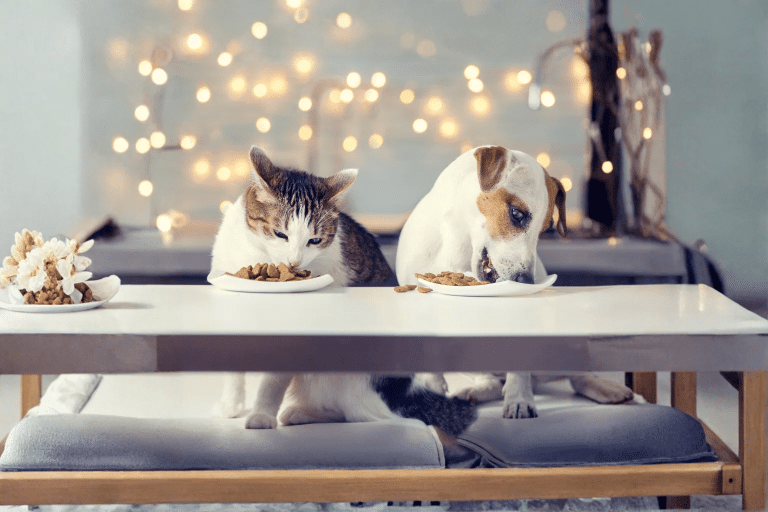
A dog is capable of finding a cat’s food bowl even in an apartment where it seems to have been securely hidden. Cat food smells like meat, has a rich flavor, and often seems much more appealing to dogs than their own food. But can a few stolen kibbles really do any harm?
The short answer: if a healthy dog accidentally eats a little cat food, most likely nothing dangerous will happen. However, you shouldn’t feed it to your dog on a regular basis—cat and dog diets have different compositions and are formulated to meet the specific needs of each species.
How does cat food differ from dog food?
Cats are obligate carnivores, so their bodies require more animal protein and certain nutrients that dogs are partially able to produce on their own. Because of this, cat food is often more concentrated, higher in fat, and more calorie-dense, and it has a different ratio of vitamins and minerals.
It is the fat and the distinct meaty smell that make the contents of a cat’s bowl so tempting to dogs. However, “more nutritious” does not mean “healthier.” A complete and balanced cat food is formulated for cats, not dogs. Conversely, a dog’s diet is not suitable for cats, as it may not provide them with sufficient amounts of taurine, preformed vitamin A, arachidonic acid, and other essential nutrients.
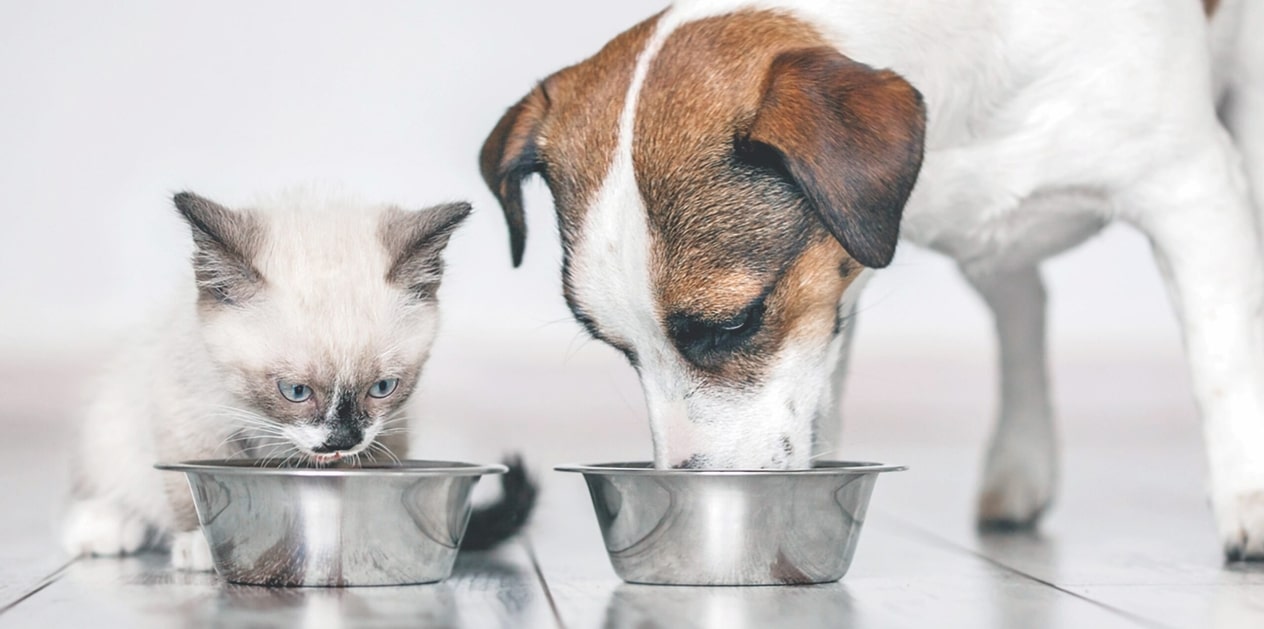
What happens if a dog eats cat food?
A few kibbles or a small portion are usually not toxic to a healthy dog. Sometimes this incident passes without any consequences at all, and sometimes it causes short-term vomiting, diarrhea, gas, or abdominal discomfort.
The risk increases if the dog:
- has eaten a large amount of food at once;
- has a sensitive digestive system;
- is prone to obesity;
- has a history of pancreatitis;
- has liver, kidney, or pancreatic disease;
- must follow a therapeutic diet.
Pay special attention to the fat content of the food. An excess of fatty food can cause digestive upset, and in susceptible dogs, it can be a contributing factor to the development of pancreatitis—a painful inflammation of the pancreas.
If the dog has only tasted a small amount of cat food and is behaving normally, it’s enough to remove the bowl, ensure access to fresh water, and monitor its condition. There’s no need to induce vomiting on your own or give medication “just in case.”
You should call your veterinarian if your dog has eaten a large amount of cat food or is experiencing repeated vomiting, severe diarrhea, marked lethargy, refusal to eat, or abdominal bloating or tenderness. An animal requires immediate medical attention if it cannot lie down comfortably, is whining, is arching its back, or is assuming a posture with its front legs lowered and its hindquarters raised.
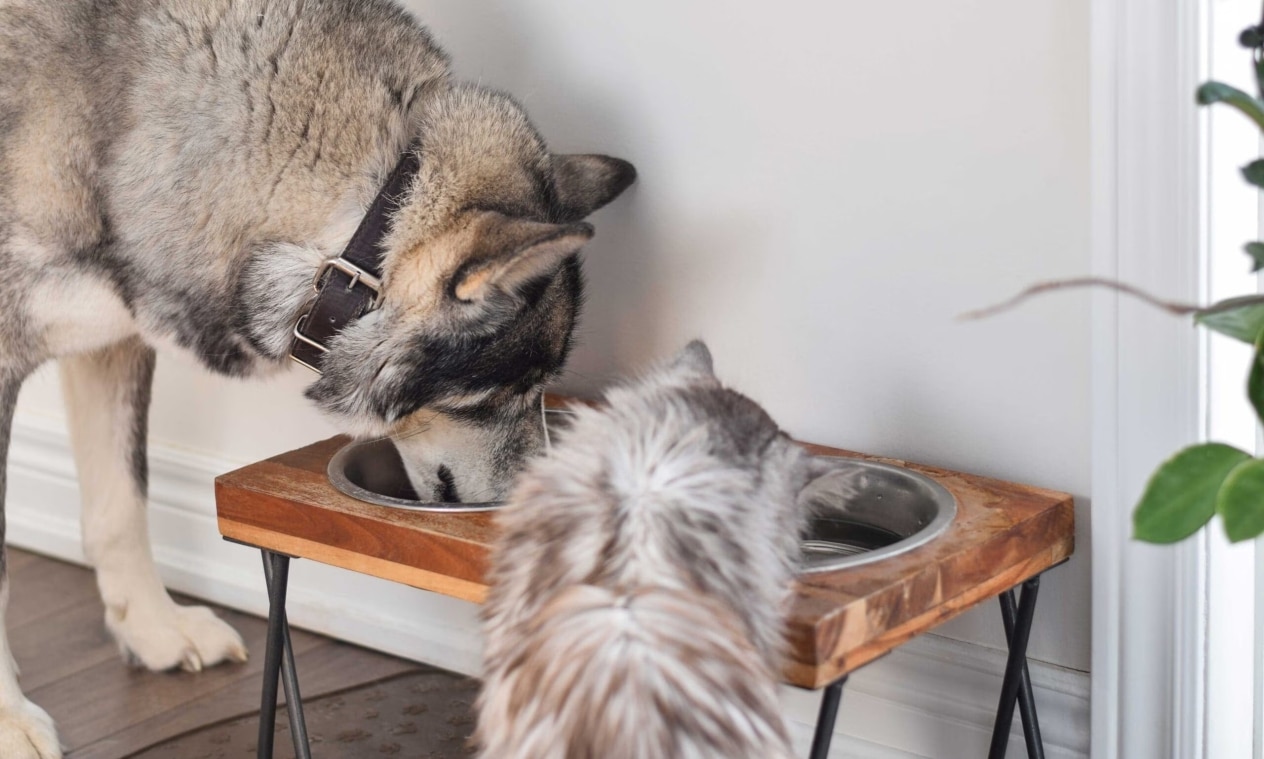
Why shouldn’t you feed your dog cat food all the time?
The problem lies not in a single “forbidden” ingredient, but in a consistently unbalanced diet. If a dog regularly scavenges from the cat’s bowl or is fed cat food instead of dog food, it may consume too many calories and too much fat, and not enough fiber or other nutrients in the proportions it actually needs.
Over time, this can lead to:
- weight gain;
- chronic digestive problems;
- an unbalanced intake of nutrients;
- an increased risk of pancreatitis in susceptible animals;
- interference with a therapeutic diet if the dog has a chronic condition.
Cat food should also not be used as a regular treat. Unless your veterinarian has advised otherwise, it’s best to choose dog treats and factor their calorie content into the dog’s daily diet.
In a household where a cat and a dog live together, it’s best to feed the animals in separate rooms or at a specific time, after which the bowls are removed. Cat food can be placed on a raised surface out of the dog’s reach, but only if the cat can comfortably climb up there. It’s best to store bags and cans of food in a locked cabinet or container—a persistent dog’s nose rarely considers a regular shelf a serious obstacle.
Conclusion
Accidentally eating a small amount of cat food usually poses no danger to a healthy dog. However, you should not make such food a regular part of their diet or a frequent treat.
Every animal needs a complete and balanced diet specifically formulated for its species, age, and health condition. Therefore, a cat’s food bowl should remain a cat’s—even if the dog strongly disagrees with this arrangement.